
Chef Lesia
Arnautka (арнаутка, southern durum-wheat loaf)
Durum wheat makes bread the color of late steppe sun: golden, firm, nutty, and strong enough to hold salo, tomato juice, and green sunflower oil without collapsing.
A cooking platform built around craft, culture, and the stories behind what we eat.
Created by
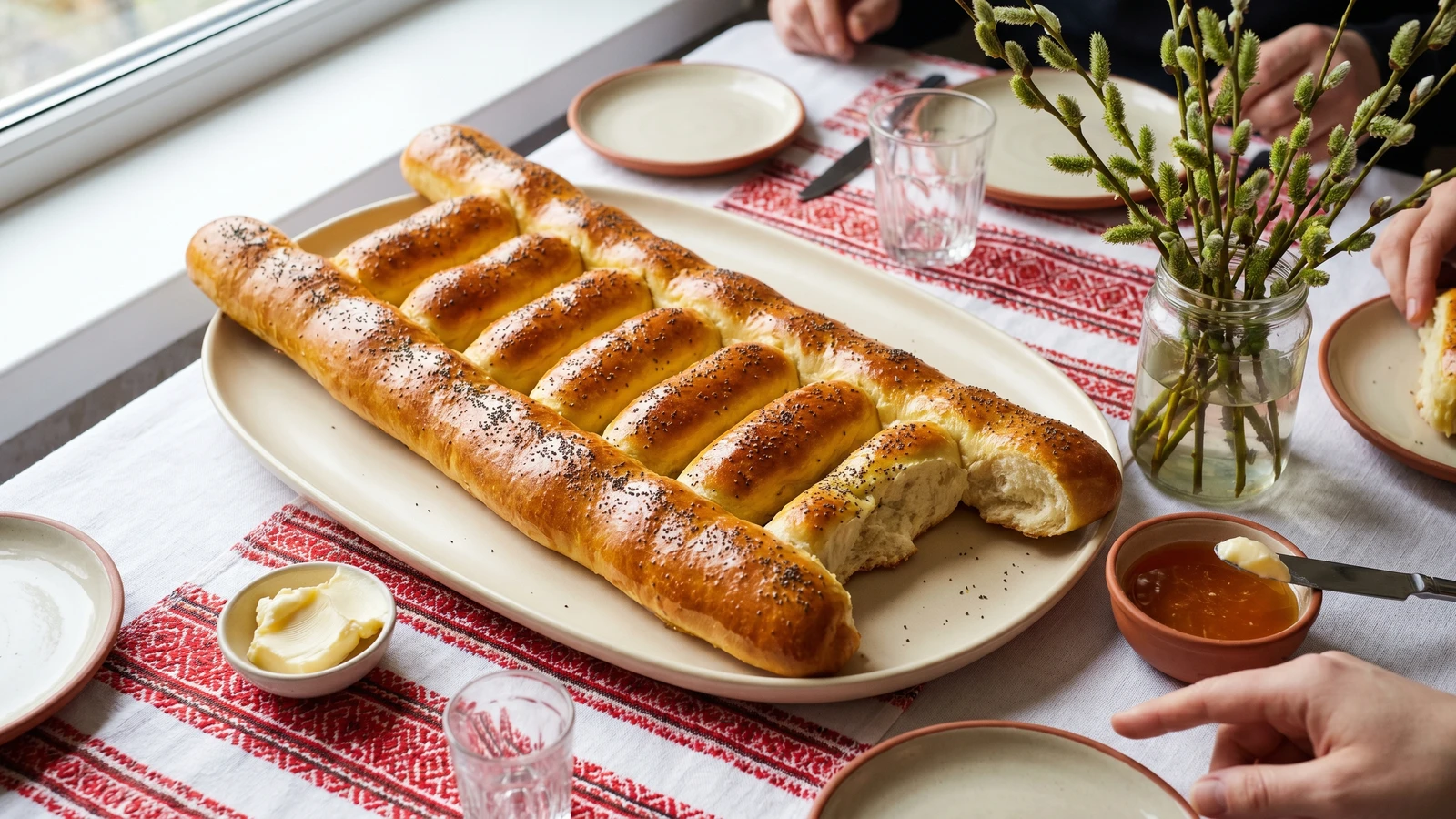
A ladder made from dough is not subtle, and that is its beauty: soft golden rungs for Ascension, brushed with honey, then broken and shared at the table.
Aladder made from dough is faith with flour on its hands. Two long rails, little rungs laid across them, egg glaze turning gold in the oven, honey catching in the joins. Nothing hidden. The bread tells you exactly what it is for: climbing.
Drabynka, little ladder, belongs to Voznesinnia, Ascension, the fortieth day after Easter, when spring has properly taken the yard and the dough rises as if it has understood the feast. Some families made small ladders for each child, some baked one large one for the table, and some carried them to church or to graves before the meal. I make one generous loaf because my table is greedy and because symbolic bread should still be good bread.
The one thing that decides it is the dough's strength. Enrich it with milk, egg, butter, and a little honey, but knead until it pulls smooth and elastic under your palms, otherwise the rungs slump and the ladder loses its back. Aunt Nadia would have written, "until it sounds right," and here she would mean the soft slap of living dough against the board. Listen for that.
Eat it warm or cooled, with butter, honey, or sour cherry preserves if you've a jar open. The shape carries the old meaning, but the bread only lives because somebody tears a rung off and passes it across the table.
Drabynky are Ukrainian ritual breads or biscuits associated with Voznesinnia, Ascension, celebrated forty days after Easter, with the ladder shape understood as a path for Christ's ascent and, in some village practice, for the souls of the dead. Ethnographers recorded ladder breads in parts of western and central Ukraine, where holiday baking often carried Christian meaning over older spring household rites. The form varies by region: some cooks make crisp little ladder cookies, others a soft braided bread, which is exactly how living ritual food behaves.
Quantity
500g
plus extra for dusting
Quantity
7g
Quantity
180ml
Quantity
2 large
1 for the dough and 1 for glazing
Quantity
60g
melted and cooled
Quantity
2 tablespoons, plus 1 tablespoon for glazing
Quantity
1 tablespoon
Quantity
1 teaspoon
Quantity
1 teaspoon
Quantity
1 tablespoon
Quantity
to serve
| Ingredient | Quantity |
|---|---|
| strong white bread flourplus extra for dusting | 500g |
| dried yeast | 7g |
| warm whole milk | 180ml |
| eggs1 for the dough and 1 for glazing | 2 large |
| unsalted buttermelted and cooled | 60g |
| honey | 2 tablespoons, plus 1 tablespoon for glazing |
| unrefined sunflower oil | 1 tablespoon |
| fine sea salt | 1 teaspoon |
| sugar | 1 teaspoon |
| poppy seeds (optional) | 1 tablespoon |
| butter and honey (optional) | to serve |
Stir the warm milk with the sugar and yeast and leave it until the surface looks creamy and smells faintly bready. If your kitchen is cool, give it patience. If nothing happens, your yeast is tired and no amount of faith will lift the dough.
Put the flour and salt in a wide bowl. Add the foamy yeast milk, 1 egg, the melted butter, 2 tablespoons honey, and the sunflower oil. Mix until the flour disappears into a shaggy dough, then scrape everything onto the table and begin kneading.
Knead until the dough turns smooth, warm, and springy, with a soft slap against the board when you fold it over itself. It should stretch without tearing at once. This strength matters because the ladder has to hold its shape; weak dough makes tired rungs.
Oil the bowl lightly, tuck the dough inside, cover it, and leave it until doubled and full of small bubbles under the skin. Press it with one finger: the dent should rise back slowly, like it is thinking about it.
Cut off one third of the dough and keep it covered. Divide the larger piece into two long ropes, about the length of your baking tray, and set them parallel on a lined tray. Divide the smaller piece into 7 or 9 short rungs, then lay them across the rails and press each join firmly so the bread bakes as one piece.
Cover the shaped ladder and let it puff until the ropes look rounded and the joins no longer seem harsh. Beat the remaining egg with a pinch of salt and brush it over every rail and rung. Scatter with poppy seeds if you like their nutty little bite.
Bake at 190C until the bread is deep golden, the underside sounds hollow when tapped, and the kitchen smells of honeyed crust rather than raw dough. Warm the remaining tablespoon of honey with a spoonful of water and brush it over the hot bread so the surface shines.
Let the drabynka cool until the crumb settles, then bring it to the table whole. Tear the rungs by hand. Serve with butter, more honey, or sour cherry preserves, and don't fuss if the shape goes quickly. That is what bread is for.
1 serving (about 105g)
Culinary guides, cultural storytelling, and the editorial depth that makes cooking meaningful.
Discover Culinary ExplorerChef Lesia
Durum wheat makes bread the color of late steppe sun: golden, firm, nutty, and strong enough to hold salo, tomato juice, and green sunflower oil without collapsing.

Chef Lesia
A proper hearth loaf announces itself before you cut it: dark crust, hollow knock, flour caught in the blisters, and that deep oven smell that makes people move closer.
Chef Lesia
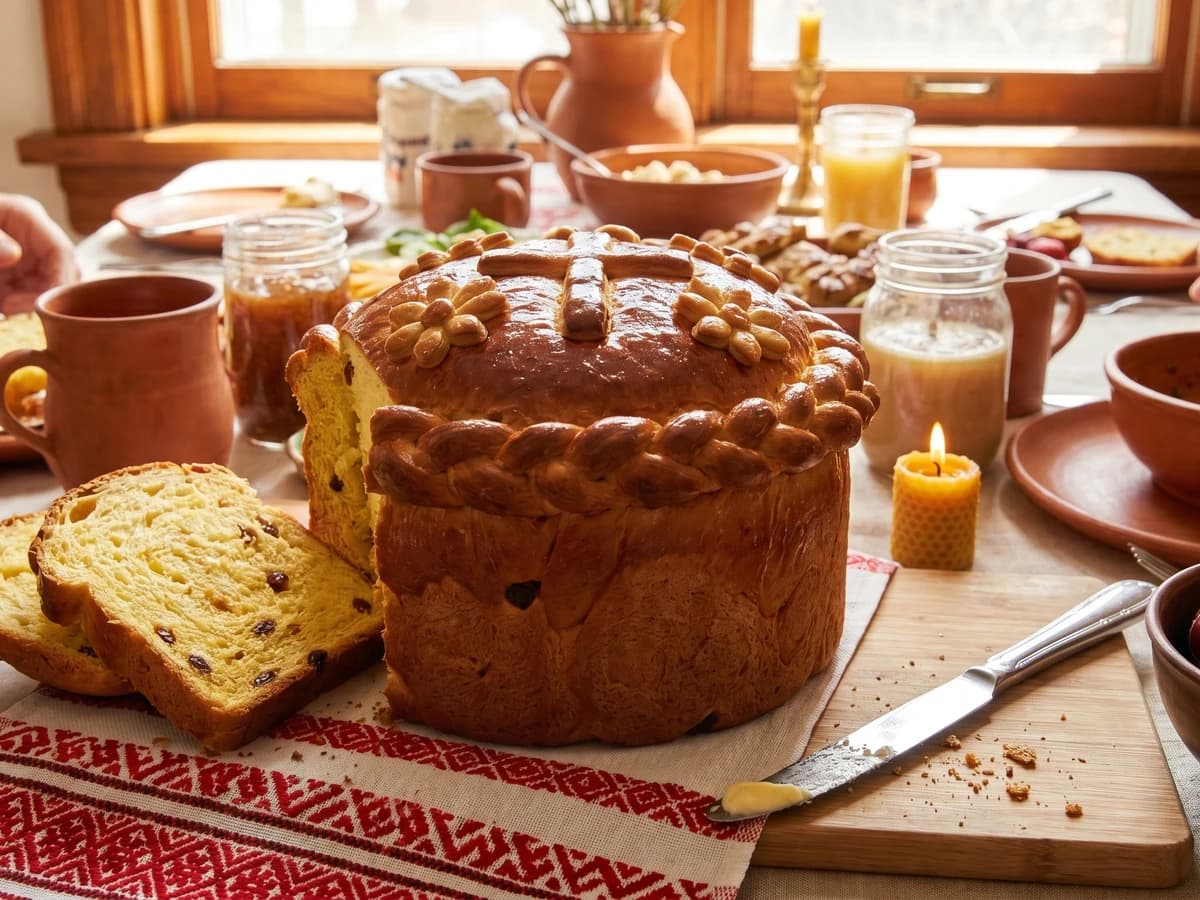
This is the Easter bread that climbs upward before it spreads out, a golden tower of eggs, butter, braids, flowers and crosses from Bukovyna's western table.
Chef Lesia
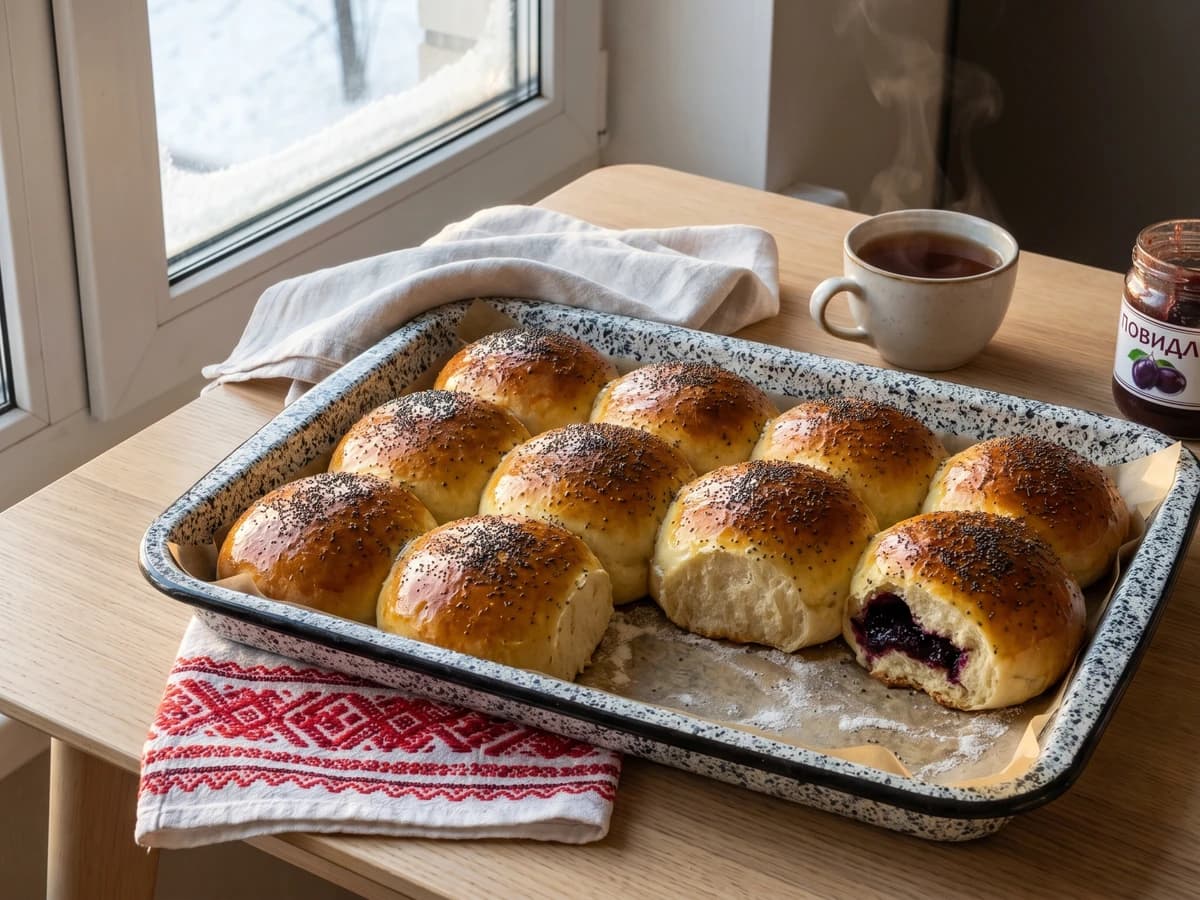
The sweetest part of bulochky is not sugar but milk: it makes a dough that pulls apart in pale threads, ready to stay plain or hide a spoon of thick povydlo.