
Chef Lesia
Arnautka (арнаутка, southern durum-wheat loaf)
Durum wheat makes bread the color of late steppe sun: golden, firm, nutty, and strong enough to hold salo, tomato juice, and green sunflower oil without collapsing.
A cooking platform built around craft, culture, and the stories behind what we eat.
Created by
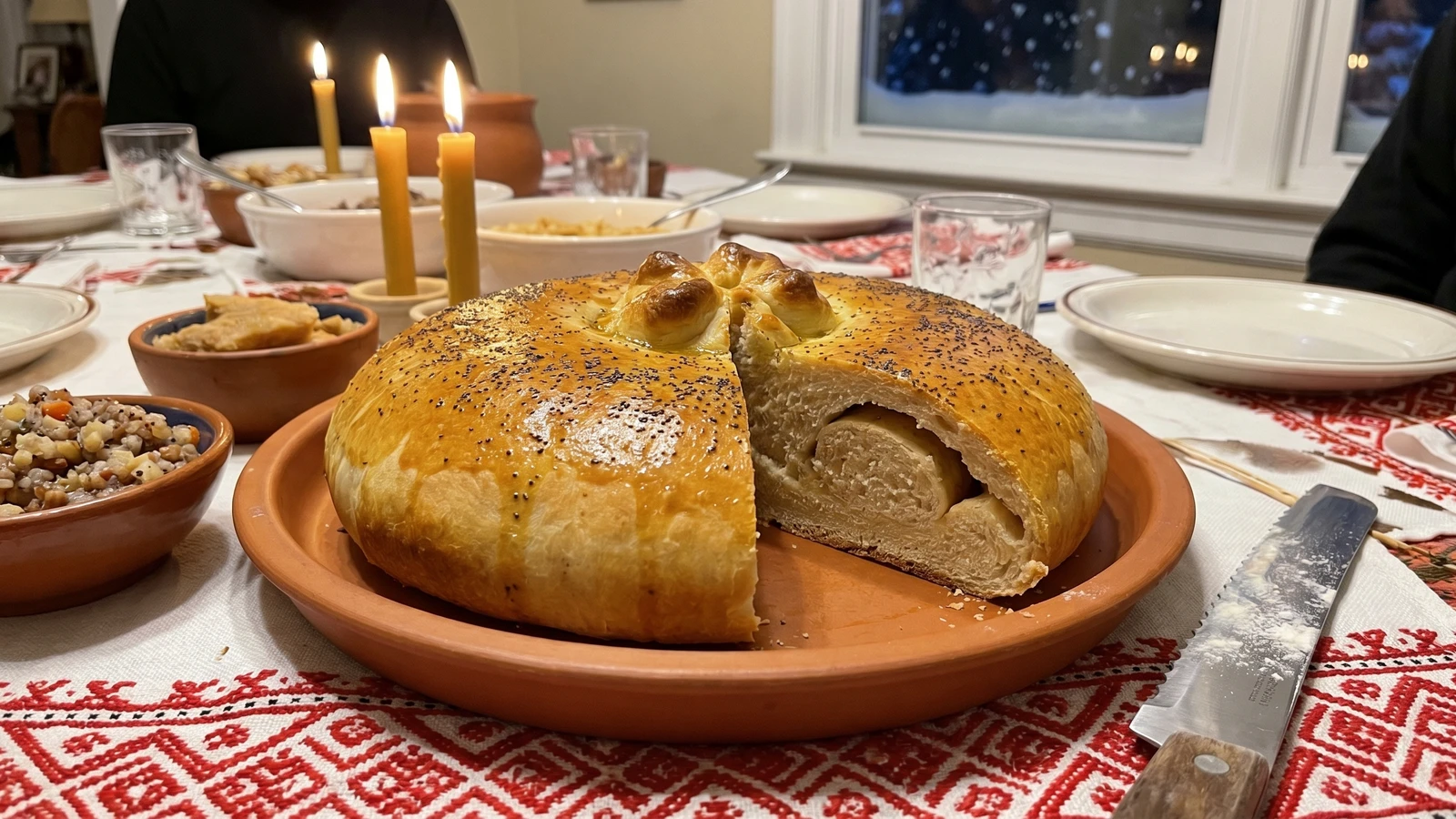
A smaller loaf is tucked inside the larger one, like a name kept warm in bread, then pinched up at the centre for the Christmas table.
The arresting thing is not the crust. It is the little loaf hidden inside the big one, the dusha, the soul, tucked into wheat dough as if bread could keep someone a seat. Knysh comes to the Sviata Vecheria table golden and quiet, rounded like a sun in the darkest part of the year, with its centre pinched up so your eye knows there is something held there.
This is Podillia's Christmas bread, not a sweet show-off loaf. The dough should be soft from oil and a little honey, pale at first, then warm gold after baking, with a close tender crumb that tears rather than flakes. Christmas Eve was traditionally a lean table, so I make mine with water and unrefined sunflower oil, Ukraine in a bottle of oil, instead of milk and butter. A bit more modern if you brush it with egg, but the oil-only version has its own dignity.
The one why that decides the dish is the fold. You don't just put dough on dough; you wrap the smaller piece so it belongs to the larger bread, then pinch the centre up firmly, because the shape is the meaning. Aunt Nadia wrote only, "close it like you close a letter," which is beautiful and useless until your hands learn it. If the first one sits slightly crooked, let it. A living bread is allowed to breathe.
Knysh is a ritual wheat bread strongly associated with Podillia and the Christmas Eve meal, Sviata Vecheria, where breads often marked hospitality not only to the living but also to the remembered dead. In some villages the smaller enclosed loaf was called the dusha, the soul, and the bread sat near kutia, the wheat-berry dish that also carries ancestral meaning at the winter table. Like many Ukrainian ceremonial breads, knysh survived more in household practice than in standardized Soviet cookbooks, which flattened local ritual forms into simpler holiday baking.
Quantity
500g
plus extra for dusting
Quantity
7g
Quantity
1 1/2 teaspoons
Quantity
250ml
Quantity
2 tablespoons
Quantity
4 tablespoons
plus more for the bowl
Quantity
1 tablespoon
for tenderness
Quantity
1 tablespoon
for brushing
Quantity
1 teaspoon
for the glaze
Quantity
1 tablespoon
| Ingredient | Quantity |
|---|---|
| strong white bread flourplus extra for dusting | 500g |
| instant yeast | 7g |
| fine sea salt | 1 1/2 teaspoons |
| warm water | 250ml |
| honey or sugar | 2 tablespoons |
| unrefined sunflower oilplus more for the bowl | 4 tablespoons |
| vodka or neutral spirit (optional)for tenderness | 1 tablespoon |
| strong black tea or waterfor brushing | 1 tablespoon |
| honeyfor the glaze | 1 teaspoon |
| sesame seeds or poppy seeds (optional) | 1 tablespoon |
Stir the honey into the warm water, then sprinkle in the yeast and leave it until the surface looks creamy and a little lively. It should smell sweet and faintly bready, not sharp. If your kitchen is cold, give it patience; dough knows the weather better than the clock.
Put the flour and salt in a large bowl, pour in the yeast mixture, sunflower oil, and vodka if using, then mix until no dry flour remains. The dough will look rough at first. Keep going until it gathers itself into one soft mass and pulls away from the bowl in long stretchy pieces.
Knead on a lightly oiled surface until the dough turns smooth, elastic, and warm under your palms. When you press it, it should slowly push back, like it has an opinion. Add flour only if it truly sticks; too much flour makes a ceremonial bread sulk.
Set the dough in a lightly oiled bowl, cover it, and leave it until it has grown generous and airy. It does not need to hit a ruler's idea of doubled. Look for puffed sides, a softened surface, and that yeasty smell changing from raw flour to warm bread.
Turn the dough out and cut off one small piece, about one fifth of the dough, for the dusha, the soul. Roll the larger piece into a thick round, then roll the small piece into a neat little ball or short bun. Set the small one in the centre of the larger dough.
Bring the edges of the larger round up and around the small loaf so it is tucked inside, then turn the bread seam-side down. Now pinch the centre upward with floured fingers to make the raised navel that marks the soul beneath. Close it like you close a letter: firmly enough that it holds, gently enough that it still looks alive.
Place the shaped knysh on a lined baking tray or in a round tin, cover it, and let it rise again until swollen and light. Mix the black tea or water with the teaspoon of honey and brush the surface. Scatter seeds over the top if you like them. The glaze should make the dough shine, not drown it.
Bake at 190C until the loaf is deep golden, the pinched centre has browned at the ridges, and the underside sounds hollow when tapped. If the top colors too quickly, lay a loose sheet of foil over it. Let the bread cool on a rack before cutting, because hot ceremonial bread tears like wet paper and deserves better.
1 serving (about 90g)
Culinary guides, cultural storytelling, and the editorial depth that makes cooking meaningful.
Discover Culinary ExplorerChef Lesia
Durum wheat makes bread the color of late steppe sun: golden, firm, nutty, and strong enough to hold salo, tomato juice, and green sunflower oil without collapsing.

Chef Lesia
A proper hearth loaf announces itself before you cut it: dark crust, hollow knock, flour caught in the blisters, and that deep oven smell that makes people move closer.
Chef Lesia
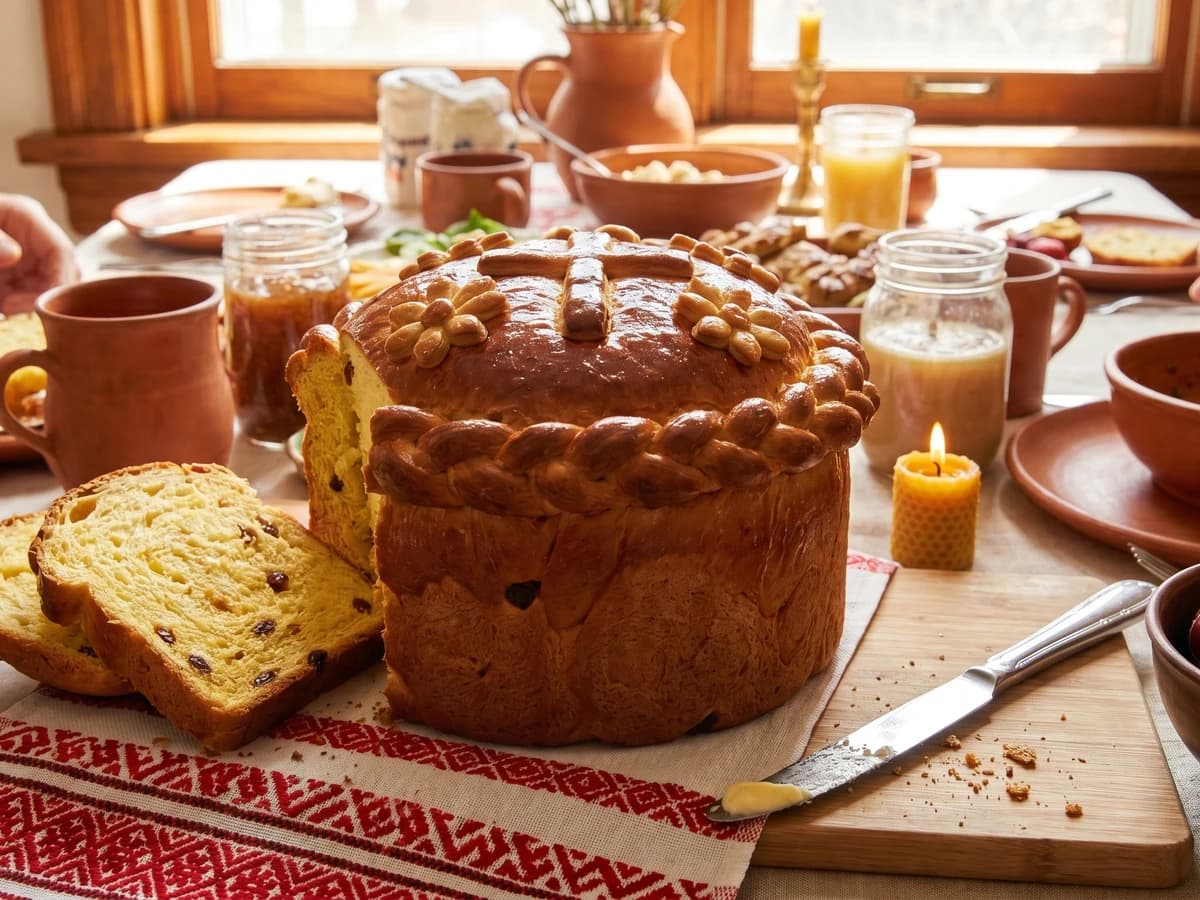
This is the Easter bread that climbs upward before it spreads out, a golden tower of eggs, butter, braids, flowers and crosses from Bukovyna's western table.
Chef Lesia
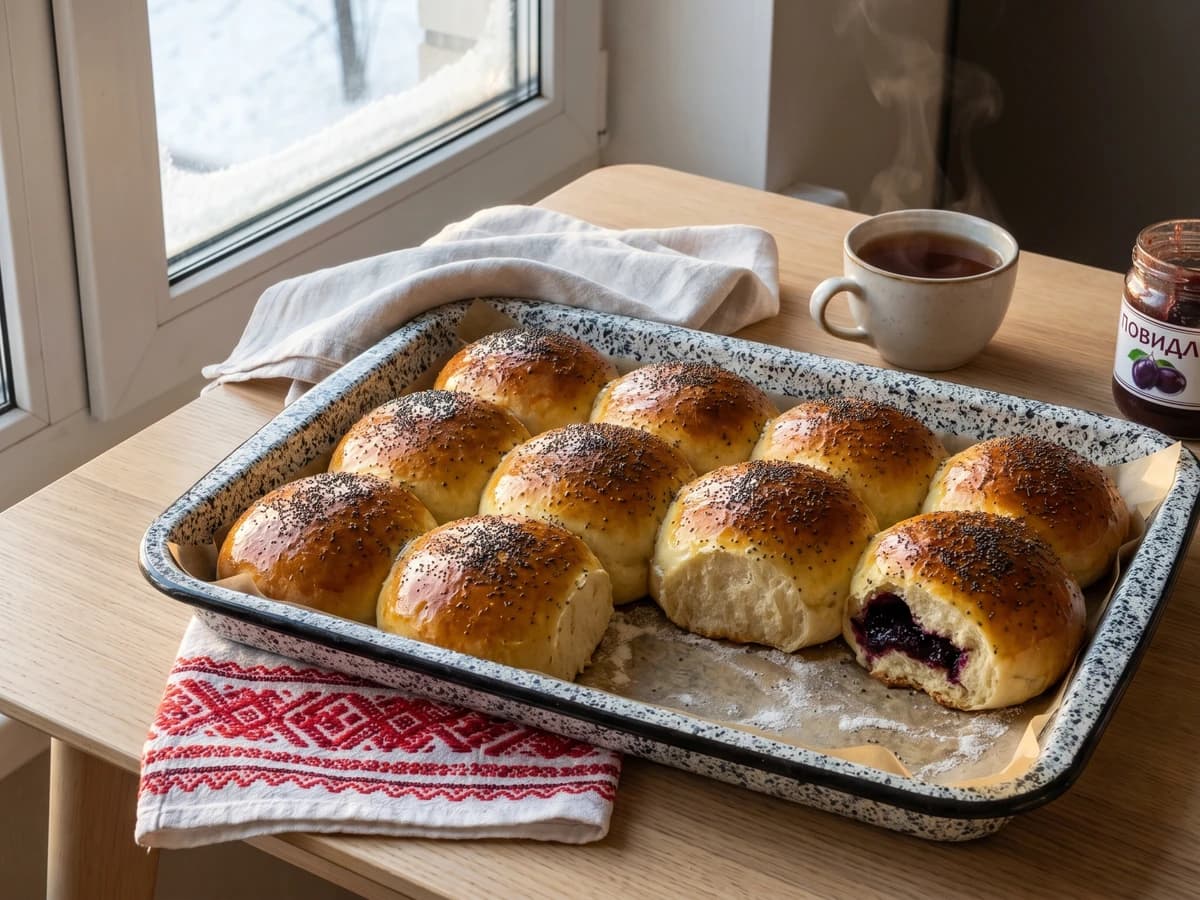
The sweetest part of bulochky is not sugar but milk: it makes a dough that pulls apart in pale threads, ready to stay plain or hide a spoon of thick povydlo.