
Chef Lesia
Arnautka (арнаутка, southern durum-wheat loaf)
Durum wheat makes bread the color of late steppe sun: golden, firm, nutty, and strong enough to hold salo, tomato juice, and green sunflower oil without collapsing.
A cooking platform built around craft, culture, and the stories behind what we eat.

Created by
This is the Easter bread that climbs upward before it spreads out, a golden tower of eggs, butter, braids, flowers and crosses from Bukovyna's western table.
The first thing you notice is the height. Not the sweetness, not the decorations, though they come shouting after, but the way this bread rises like it has somewhere important to go. Bukovynska dora is a festive loaf with a back straight enough for Easter morning: egg-yellow crumb, glossy crust, ropes of dough crossing the top, little flowers pressed in like someone's hands could not stop blessing it.
Bukovyna sits in the west, where Ukrainian, Romanian, Jewish, Armenian and Hutsul kitchens have been passing flour, walnuts, honey and habits across the table for centuries. This is not my southern steppe bread, and I say that with respect. I learned it from notes sent by a woman in Chernivtsi who wrote, very helpfully, "knead until it sighs." Aunt Nadia would have approved. It took me three attempts to understand that she meant the dough stops tearing and starts moving as one soft body under your palms.
The one thing that decides this loaf is the first rise. Enriched dough is heavy with yolks, butter and sugar, so it has to wake slowly and properly before you start dressing it up. Rush that, and the braids look proud while the inside sulks. Wait until the dough is light, domed, and smells buttery and faintly yeasty, then decorate. Bread forgives many things, but it does not forgive being hurried on a feast day.
Dora is a regional Bukovynian Easter bread, part of the broader Ukrainian paska family but known for its tall shape and dense ornament: braids, crosses, flowers and small dough birds depending on the household. Bukovyna, centered around Chernivtsi and the Carpathian foothills, has long been a borderland kitchen, and its festive breads show that layering through enriched doughs, elaborate decoration and table ritual. Soviet-era standard recipes flattened many Easter breads into one generic paska, but village and family practice kept names like dora alive.
Quantity
500g
plus more for dusting
Quantity
7g
Quantity
160ml
warm, not hot
Quantity
90g
Quantity
4
Quantity
1
Quantity
90g
softened
Quantity
1 tablespoon
Quantity
1 teaspoon
Quantity
1 teaspoon
Quantity
1 unwaxed lemon
Quantity
60g
soaked and drained
Quantity
1 tablespoon
for soaking raisins
Quantity
1 yolk plus 1 teaspoon milk
for glazing
Quantity
1 teaspoon
for greasing the tin
| Ingredient | Quantity |
|---|---|
| strong white flourplus more for dusting | 500g |
| dried yeast | 7g |
| whole milkwarm, not hot | 160ml |
| sugar | 90g |
| egg yolks | 4 |
| whole egg | 1 |
| unsalted buttersoftened | 90g |
| smetana or sour cream | 1 tablespoon |
| fine sea salt | 1 teaspoon |
| vanilla sugar or vanilla extract | 1 teaspoon |
| lemon zest | 1 unwaxed lemon |
| raisinssoaked and drained | 60g |
| golden rum or warm tea (optional)for soaking raisins | 1 tablespoon |
| egg yolk mixed with milkfor glazing | 1 yolk plus 1 teaspoon milk |
| neutral oil or melted butterfor greasing the tin | 1 teaspoon |
Stir the yeast into the warm milk with a spoonful of the sugar and two spoonfuls of the flour. Leave it until the surface looks foamy and smells alive, like sweet beer and warm bread. If it sits there flat and silent, start again; Easter bread needs yeast that wants the job.
Beat the yolks, whole egg, remaining sugar, salt, vanilla and lemon zest until glossy. Add the foamy yeast mixture, then work in most of the flour. Knead until the dough gathers itself from sticky scraps into one soft piece. It will look messy before it becomes bread. Let it.
Add the soft butter a little at a time, kneading well after each addition, then knead in the smetana. At first the dough will slip and complain under your hands, then it will tighten, shine and stretch without tearing. This is the sigh. When it starts to feel elastic and warm from your palms, fold in the drained raisins.
Cover the dough and leave it somewhere warm until it is doubled, domed, and full of small bubbles under the surface. Do not bully it with heat. Enriched dough moves slowly because it is carrying butter, eggs and sugar, and that slow rise is what gives the loaf its tender crumb.
Grease a tall 18cm round tin or paska mould and line the base. Cut off about one quarter of the dough for decoration. Shape the larger piece into a tight round and set it in the tin, smooth side up. It should fill about half the height, because dora needs room to climb.
Divide the reserved dough into thin ropes for braids, a small cross, and little flowers or leaves. Keep the pieces delicate; heavy decoration can pull the top down. Brush the loaf lightly with water where the ornaments will sit, then press them on gently so they grip without sinking.
Cover loosely and let the shaped dora rise until the dough looks puffed and the decorations have settled into it rather than sitting stiffly on top. Touch the side with a floured finger: the dent should come back slowly, not spring shut at once.
Brush carefully with the egg yolk and milk glaze, getting around the braids without flooding them. Bake at 180C until the crust is deep golden chestnut, the loaf feels light for its size, and the bottom sounds hollow when tapped. If the top darkens before the middle is ready, cover it loosely with foil and let the inside catch up.
Let the dora cool in the tin until it can stand without slumping, then lift it out and cool completely before slicing. I know. The smell will test your character. Cut too early and the crumb turns damp and tight; wait, and it slices into soft yellow ribbons.
1 serving (about 85g)
Culinary guides, cultural storytelling, and the editorial depth that makes cooking meaningful.
Discover Culinary ExplorerChef Lesia
Durum wheat makes bread the color of late steppe sun: golden, firm, nutty, and strong enough to hold salo, tomato juice, and green sunflower oil without collapsing.

Chef Lesia
A proper hearth loaf announces itself before you cut it: dark crust, hollow knock, flour caught in the blisters, and that deep oven smell that makes people move closer.
Chef Lesia
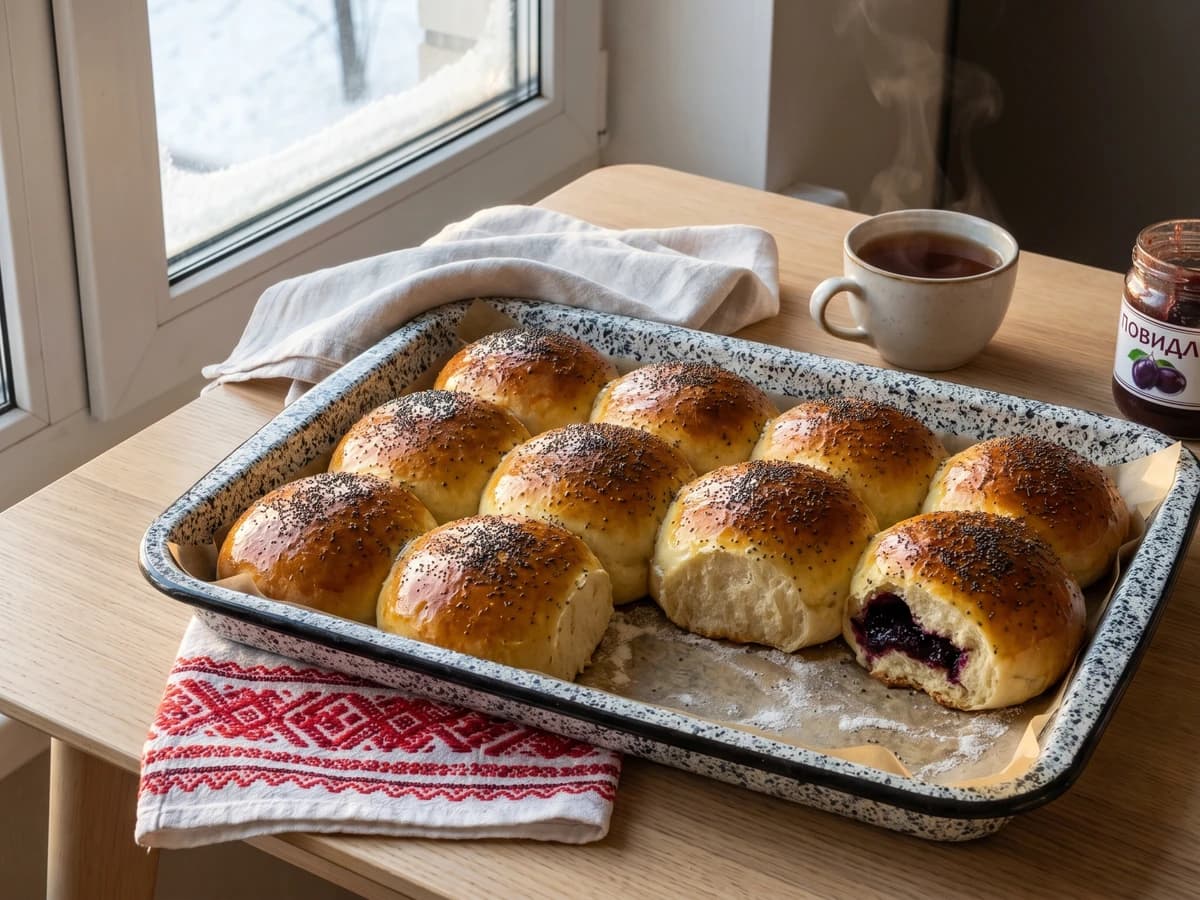
The sweetest part of bulochky is not sugar but milk: it makes a dough that pulls apart in pale threads, ready to stay plain or hide a spoon of thick povydlo.

Chef Lesia
This is the loaf that does not perform for you. Dark-crusted, close-crumbed, faintly sour, it sits on the board all week and makes butter, soup, and salo behave.