Culinary Explorer
A cooking platform built around craft, culture, and the stories behind what we eat.
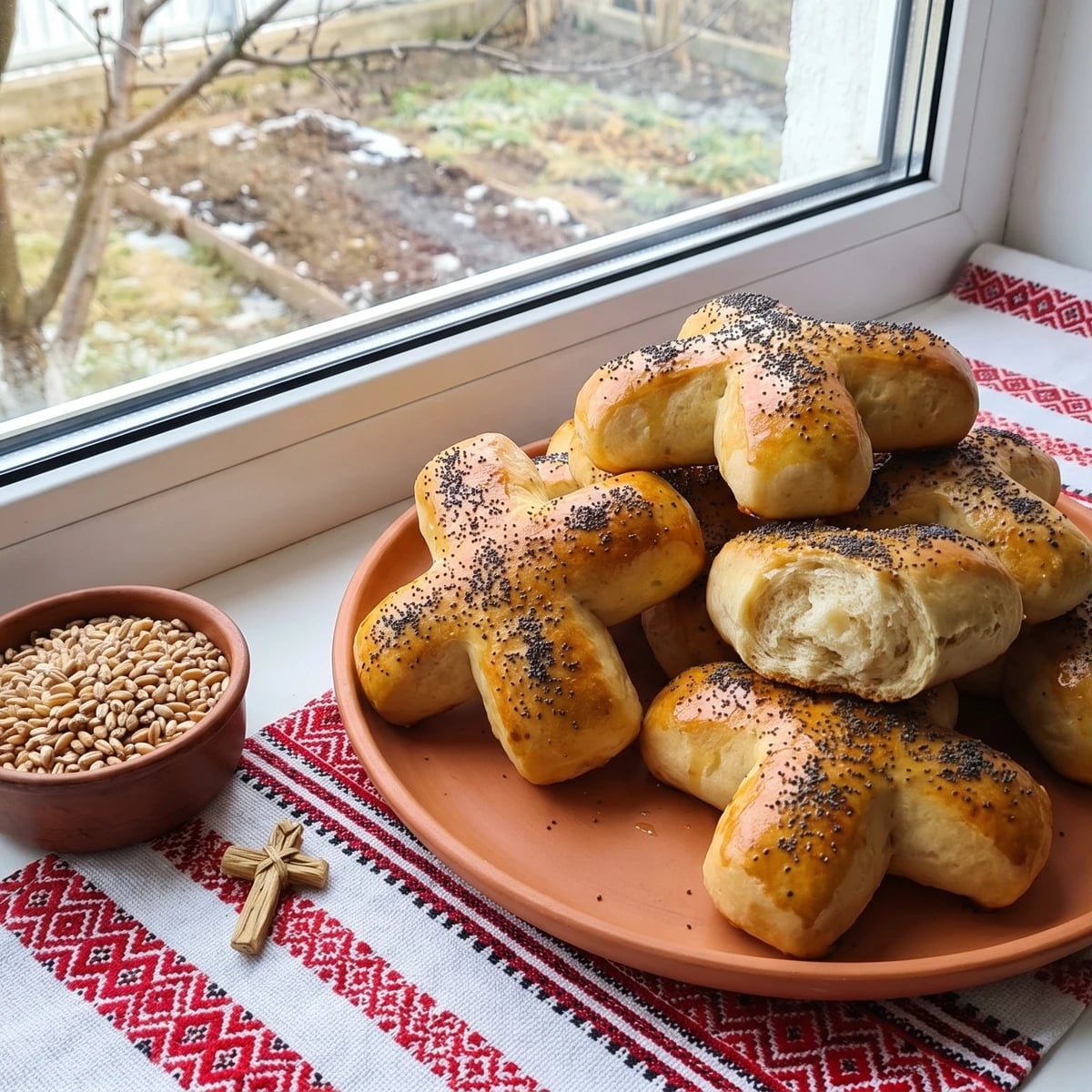
Khresty (хрести, Mid-Lent Cross Bread)
Created by Chef Lesia
The most important piece is the one you don't eat: a poppy-speckled Lenten cross, honey-brushed after baking, saved with seed grain so spring goes into the field fed.
The strangest piece of this bread is the one you don't eat. It gets broken from the small cross, dried hard on the windowsill, then tucked into the seed grain, so spring goes into the field carrying a crumb from Lent. Food becomes a promise with flour on its hands.
Khresty, from khrest, cross, belong to the Wednesday when Great Lent reaches its middle and people say the fast has broken in half. The dough is lean because the season asks it to be: flour, water, yeast, sunflower oil, a little honey if your household allows it, poppy seeds caught in the crust like black soil after rain. My Aunt Nadia wrote only, "make them firm enough to travel to the field," which is comedy as a measurement, but she was right. These are not soft dinner rolls. They should have a tender middle and a dry, keeping crust, bread for hands, pockets, and children stealing the poppy corners.
The one why that decides the dish is the shape. You don't cut a cross out of dough; you build it from two ropes, so the center swells where the arms meet and the bread tears in four honest directions. Press that join well or it lifts and sulks in the oven. Brush with honey water after baking, not before, so the poppy stays crisp and the crust shines without burning.
Ingredients
strong white bread flour
Quantity
500g
plus extra for dusting
instant dried yeast
Quantity
7g
warm water
Quantity
300ml
| Ingredient | Quantity |
|---|---|
| strong white bread flourplus extra for dusting | 500g |
| instant dried yeast | 7g |
| warm water | 300ml |
Where cooking meets culture.
Culinary guides, cultural storytelling, and the editorial depth that makes cooking meaningful.
Discover Culinary Explorer