
Chef Lesia
Arnautka (арнаутка, southern durum-wheat loaf)
Durum wheat makes bread the color of late steppe sun: golden, firm, nutty, and strong enough to hold salo, tomato juice, and green sunflower oil without collapsing.
A cooking platform built around craft, culture, and the stories behind what we eat.
Created by
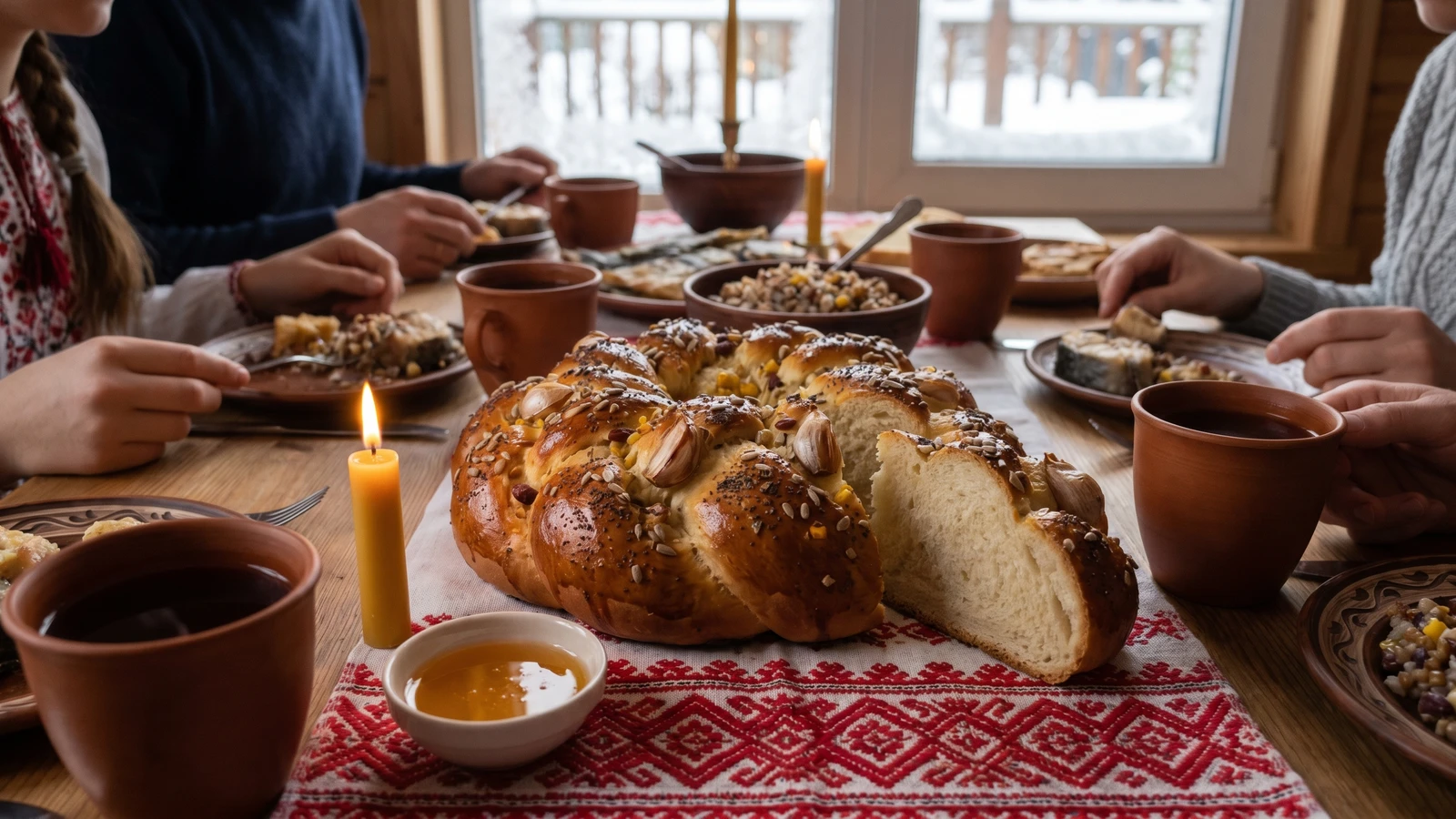
A winter loaf goes into the oven with garlic cloves and handfuls of grain tucked under its skin, because Christmas bread in the Carpathians is asked to feed more than hunger.
AChristmas loaf with garlic baked into it tells you at once that this bread is not trying to be polite. It is round, low, golden, and watchful, with a braid like a little fence around the edge and grains pressed into the dough for the household's luck: wheat for bread, corn for animals, beans for fullness, garlic for protection. On the Sviat Vechir table it sits among the fasting dishes like a small sun brought indoors for the longest nights.
Korochun belongs to Zakarpattia, where the mountains keep their own kitchen and don't ask permission from the steppe. I cook it with honey, unrefined sunflower oil, and a little milk because my London table is not a monastery, but if your Christmas Eve is strict, use water and oil and let the loaf be lean. That's a bit more old-fashioned, not more correct. The tradition lives because somebody mixes the dough.
The one thing that decides this bread is the first rise. Don't rush it. The dough should swell slowly until it feels puffy and calm under your fingers, and when you lift the cloth the smell should change from flour to warm grain and honey. Aunt Nadia would have written, "until it sounds right," and here that means a hollow loaf when tapped underneath, a crust firm enough to hold its blessing, and a crumb soft enough to tear at the table.
Korochun, also called krachun in parts of Zakarpattia and among Carpathian Rusyn communities, is a ritual Christmas loaf tied to Sviat Vechir, the Holy Supper on Christmas Eve. Its name is linked by many ethnographers to old Slavic words for the winter solstice and the shortening of days, and village versions often bake in or press on grains, garlic, beans, or small symbolic decorations for health, livestock, and household abundance. The loaf shows how Ukrainian Christmas food carried pre-Christian winter signs into Christian table ritual without making a fuss about the border.
Quantity
500g
plus extra for dusting
Quantity
7g
Quantity
1 teaspoon
Quantity
2 tablespoons
Quantity
220ml
Quantity
60ml
plus extra for the bowl
Quantity
1
beaten
Quantity
1
for glazing
Quantity
6 whole
unpeeled
Quantity
2 tablespoons
wheat berries, corn kernels, oats, or dried beans
Quantity
1 teaspoon
Quantity
1 teaspoon
Quantity
2 tablespoons
1 tablespoon honey mixed with 1 tablespoon warm water, for brushing
| Ingredient | Quantity |
|---|---|
| strong white bread flourplus extra for dusting | 500g |
| instant yeast | 7g |
| fine sea salt | 1 teaspoon |
| honey | 2 tablespoons |
| warm whole milk or water | 220ml |
| unrefined sunflower oilplus extra for the bowl | 60ml |
| eggbeaten | 1 |
| egg yolkfor glazing | 1 |
| garlic clovesunpeeled | 6 whole |
| mixed grainswheat berries, corn kernels, oats, or dried beans | 2 tablespoons |
| poppy seeds | 1 teaspoon |
| sesame seeds or hulled sunflower seeds | 1 teaspoon |
| honey water1 tablespoon honey mixed with 1 tablespoon warm water, for brushing | 2 tablespoons |
Stir the flour, yeast, and salt in a wide bowl. In a jug, loosen the honey into the warm milk or water, then add the sunflower oil and beaten egg. Pour the wet mixture into the flour and bring it together with your hand until no dry patches hide at the bottom of the bowl.
Turn the dough onto a lightly floured table and knead until it stops tearing and starts pushing back, soft but not sticky. It should feel warm under your palms and smooth at the edges. If it smears, dust with flour by the pinch, not the handful.
Oil the bowl, return the dough to it, cover, and leave it somewhere warm until it has doubled and looks puffy rather than tense. Lift the cloth and smell it. When the flour smell has turned to honeyed grain, the dough is ready.
Cut away one quarter of the dough for decoration. Shape the larger piece into a round loaf and set it on a lined baking tray. Roll the reserved dough into three long ropes, braid them, and lay the braid around the edge like a wreath. Press the ends together firmly so they don't pull apart in the oven.
Press the unpeeled garlic cloves into the loaf, spacing them around the top, then push the mixed grains gently into the dough between them. Scatter with poppy seeds and sunflower or sesame seeds. Cover again and let the loaf puff until the braid looks rounded and the center springs back slowly when touched.
Brush the loaf with egg yolk beaten with a spoon of water. Bake at 190C until the crust is deep gold, the garlic skins have darkened at the tips, and the underside sounds hollow when tapped. If the top colors too quickly, lay a loose sheet of foil over it and let the middle finish.
Brush the hot crust with the honey water so it catches the light without turning sticky. Let the loaf cool at least until warm before cutting, or better, bring it whole to the table first. A ritual bread should be seen before it is eaten.
1 serving (about 100g)
Culinary guides, cultural storytelling, and the editorial depth that makes cooking meaningful.
Discover Culinary ExplorerChef Lesia
Durum wheat makes bread the color of late steppe sun: golden, firm, nutty, and strong enough to hold salo, tomato juice, and green sunflower oil without collapsing.

Chef Lesia
A proper hearth loaf announces itself before you cut it: dark crust, hollow knock, flour caught in the blisters, and that deep oven smell that makes people move closer.
Chef Lesia
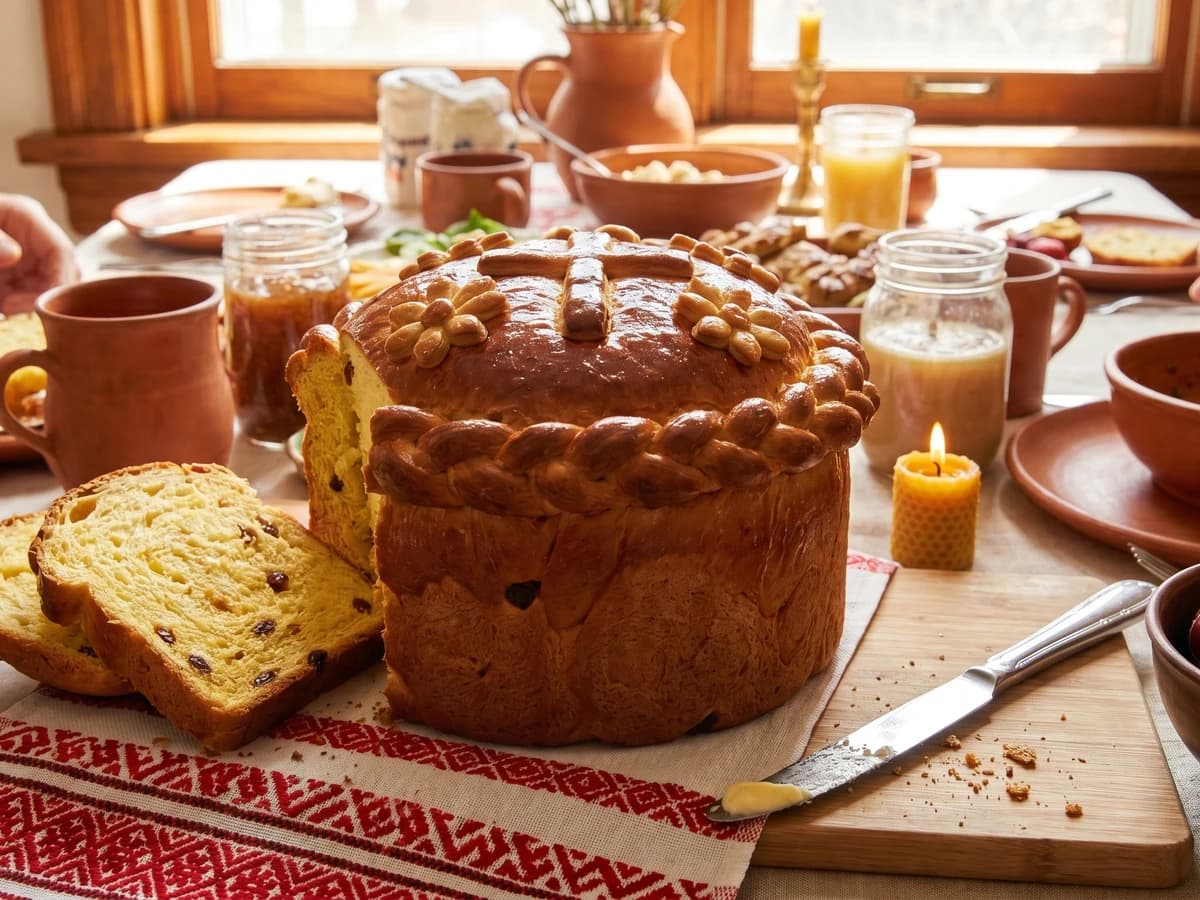
This is the Easter bread that climbs upward before it spreads out, a golden tower of eggs, butter, braids, flowers and crosses from Bukovyna's western table.
Chef Lesia
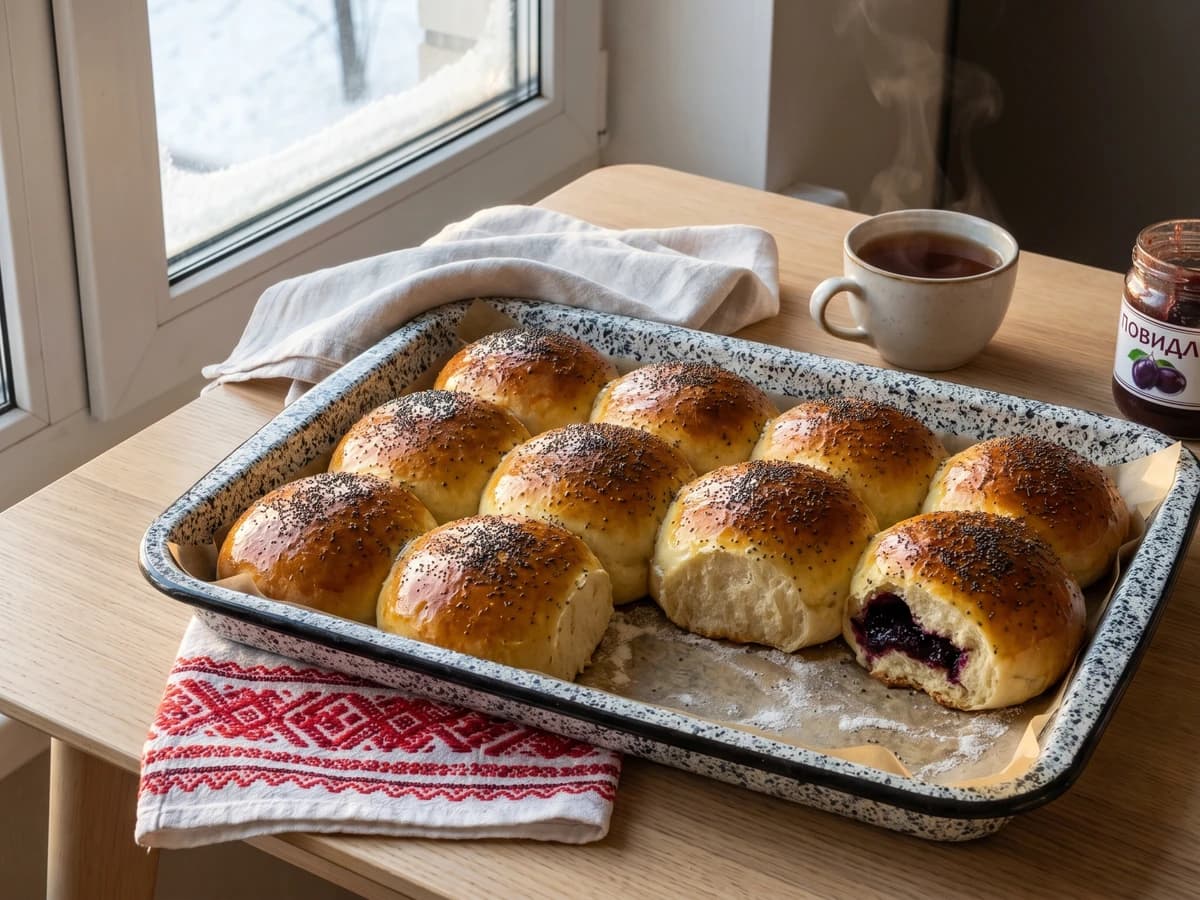
The sweetest part of bulochky is not sugar but milk: it makes a dough that pulls apart in pale threads, ready to stay plain or hide a spoon of thick povydlo.