
Chef Lesia
Arnautka (арнаутка, southern durum-wheat loaf)
Durum wheat makes bread the color of late steppe sun: golden, firm, nutty, and strong enough to hold salo, tomato juice, and green sunflower oil without collapsing.
A cooking platform built around craft, culture, and the stories behind what we eat.

Created by
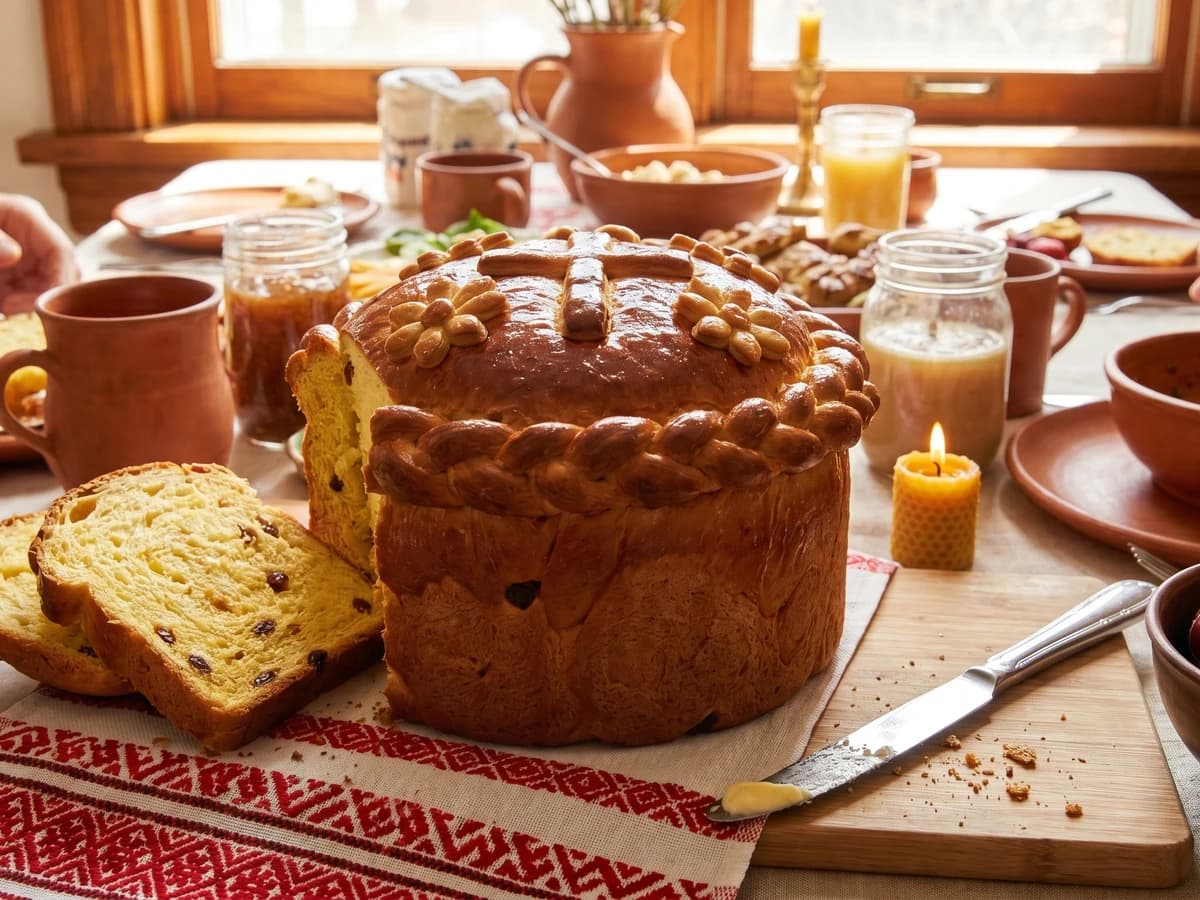
This Easter bread rises like a tower: golden from yolks, sweet with raisins, baked in a tall tin, then glazed warm so the sugar runs down its sides.
The first thing you notice is the height. Not a loaf, not a cake pretending to be bread, but a golden tower that climbs up the tin and makes everyone at the Easter table lean in a little. Velykodni baby, Easter babas, are sweeter and more delicate than paska, egg-rich enough to glow, with raisins tucked through the crumb and a warm glaze sliding over the dome.
This is celebration dough, which means it asks for patience before it asks for strength. The butter and sugar make it soft and slow, and the yolks make it tender, so you let the yeast wake properly before asking it to lift all that richness. The dough should feel elastic and alive, not stiff. Aunt Nadia wrote, "until it breathes under the cloth," which took me three attempts and one very sulky brick to understand.
The one thing that decides the dish is the rise in the tin. Fill it only halfway and wait until the dough domes close to the rim; that last quiet swell gives you the tall crumb instead of a squat sweet bread. If your kitchen is cold, give it time. Easter bread does not care about your schedule.
Bake enough for the basket, the table, and the neighbour who says she only wants a small slice. There is no such slice.
Velykodni baby belong to the Ukrainian Easter table beside paska, especially in western and central regions where tall cylindrical sweet breads were baked in metal forms, old tins, or deep pots. Nineteenth-century household recipes for Easter babas across the Ukrainian and Polish-Lithuanian borderlands often used extravagant numbers of egg yolks, a festive signal after the fasting season. Soviet-era standard recipes flattened many holiday breads into one category, but village and family kitchens kept the difference clear: paska is ceremonial bread, baba is the tall, sweet, egg-rich one.
Quantity
180ml
warm but not hot
Quantity
12g instant or 18g fresh
Quantity
120g
divided
Quantity
600g
plus more for dusting
Quantity
6 large
at room temperature
Quantity
2 large
at room temperature
Quantity
1 teaspoon
Quantity
120g
very soft
Quantity
1 tablespoon
for the bowl and tins
Quantity
120g
Quantity
2 tablespoons
for soaking the raisins
Quantity
1 orange
Quantity
1 lemon
Quantity
1 teaspoon
Quantity
1 yolk plus 1 tablespoon milk
for brushing
Quantity
120g
Quantity
2 to 3 tablespoons
for the glaze
Quantity
1 tablespoon
finely chopped
| Ingredient | Quantity |
|---|---|
| whole milkwarm but not hot | 180ml |
| instant yeast or fresh yeast | 12g instant or 18g fresh |
| sugardivided | 120g |
| strong white bread flourplus more for dusting | 600g |
| egg yolksat room temperature | 6 large |
| whole eggsat room temperature | 2 large |
| fine sea salt | 1 teaspoon |
| unsalted buttervery soft | 120g |
| unrefined sunflower oilfor the bowl and tins | 1 tablespoon |
| raisins | 120g |
| rum, brandy, or strong black teafor soaking the raisins | 2 tablespoons |
| orange zest | 1 orange |
| lemon zest | 1 lemon |
| vanilla extract | 1 teaspoon |
| egg yolk beaten with milkfor brushing | 1 yolk plus 1 tablespoon milk |
| icing sugar | 120g |
| lemon juice or warm milkfor the glaze | 2 to 3 tablespoons |
| candied citrus peel (optional)finely chopped | 1 tablespoon |
Stir the warm milk with the yeast, 1 tablespoon of the sugar, and 2 tablespoons of the flour. Leave it until the surface is foamy and the smell turns creamy and bready. If it sits there flat and sulking, start again; Easter is no time to argue with dead yeast.
Put the raisins in a small bowl with the rum, brandy, or strong black tea. They should plump and soften while the dough begins. Drain them well before adding, because wet fruit tears soft dough.
Whisk the yolks, whole eggs, remaining sugar, salt, citrus zests, and vanilla until the mixture lightens and falls from the whisk in a thick ribbon. Add the yeast mixture and most of the flour, then knead until the dough gathers. Work in the soft butter a spoonful at a time. It will look messy before it becomes smooth; keep going until it stretches instead of breaking.
Spread the dough slightly, scatter over the drained raisins, and fold them in gently with your hands. You want the fruit tucked through the dough, not crushed into it. Oil a bowl lightly with sunflower oil, set the dough inside, cover, and leave it until doubled and softly swollen.
Oil and flour two tall cylindrical tins, about 12 to 14cm wide and 14 to 16cm high. Divide the dough in two, shape each piece into a smooth round, and place one in each tin. The dough should fill only halfway. Cover and wait until it rises close to the rim and trembles a little when you move the tin.
Brush the tops gently with the yolk and milk. Bake at 180C until the domes are deep gold, the sides pull slightly from the tins, and the bread sounds hollow when tapped. If the tops color too quickly, lay a loose sheet of foil over them. Let them rest in the tins for 10 minutes, then turn out carefully and cool upright.
Stir the icing sugar with enough lemon juice or warm milk to make a thick pourable glaze. Spoon it over the still-warm domes so it runs down the sides in slow white ribbons. Add candied citrus peel if you like. Let the glaze set before slicing, if your household has that kind of discipline.
1 serving (about 90g)
Culinary guides, cultural storytelling, and the editorial depth that makes cooking meaningful.
Discover Culinary ExplorerChef Lesia
Durum wheat makes bread the color of late steppe sun: golden, firm, nutty, and strong enough to hold salo, tomato juice, and green sunflower oil without collapsing.

Chef Lesia
A proper hearth loaf announces itself before you cut it: dark crust, hollow knock, flour caught in the blisters, and that deep oven smell that makes people move closer.
Chef Lesia
This is the Easter bread that climbs upward before it spreads out, a golden tower of eggs, butter, braids, flowers and crosses from Bukovyna's western table.
Chef Lesia
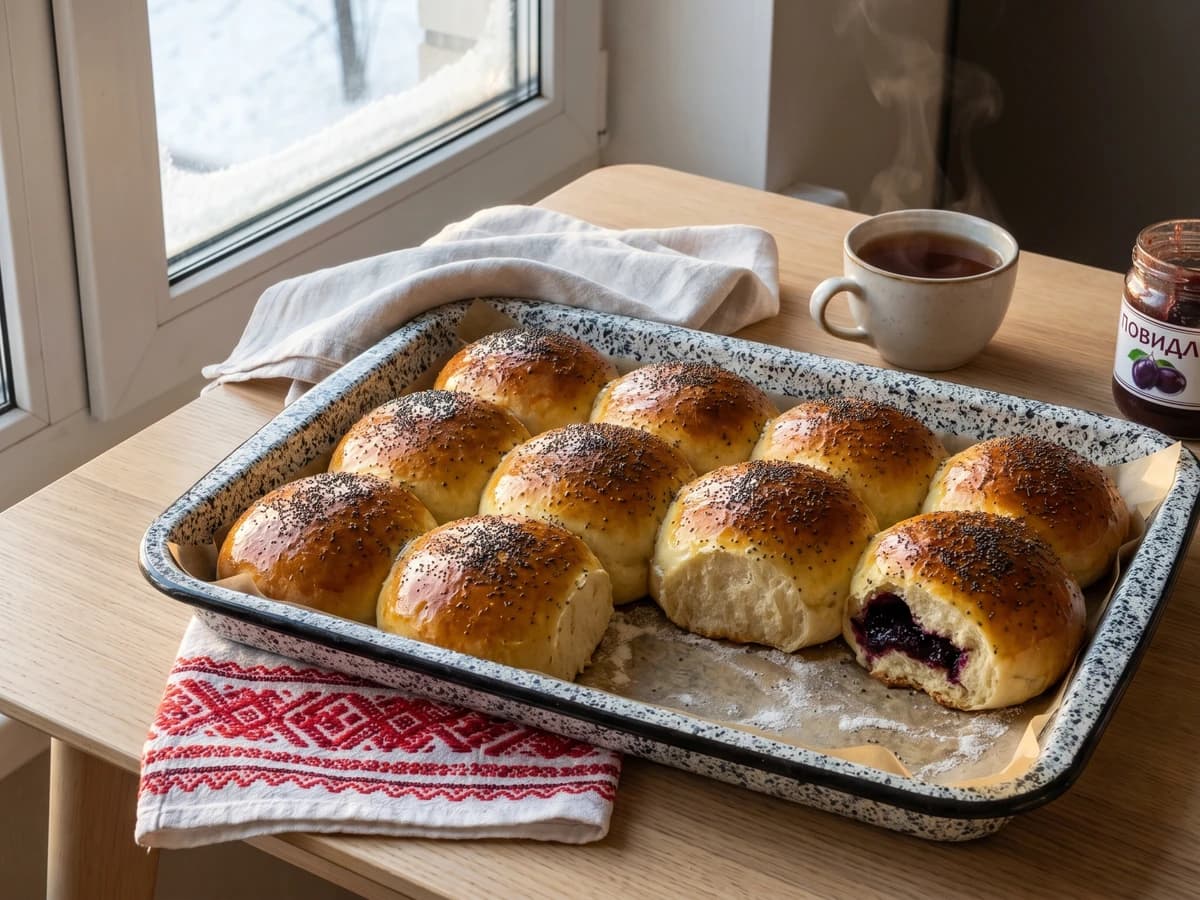
The sweetest part of bulochky is not sugar but milk: it makes a dough that pulls apart in pale threads, ready to stay plain or hide a spoon of thick povydlo.