
Chef Lesia
Arnautka (арнаутка, southern durum-wheat loaf)
Durum wheat makes bread the color of late steppe sun: golden, firm, nutty, and strong enough to hold salo, tomato juice, and green sunflower oil without collapsing.
A cooking platform built around craft, culture, and the stories behind what we eat.

Created by
This bread is baked to stand, not to be sliced: a tall Podillia memorial loaf, braided and flowered like a korovai, then given away whole.
The most arresting thing is the restraint: you make a beautiful bread and you do not cut it. Pomana stands whole, glossy and braided, near the grave from burial to the ninth day, holding its shape while the family holds itself together. Then it is passed to a stranger, because grief should still feed someone.
Podillia knows ritual bread with a serious face. This one borrows the festive hands of korovai, the plaits, rosettes, little birds if your hands know them, but the meaning is different. The dough should be enriched enough to feel tender, not cake-like, and firm enough to stand tall without slumping. That is the one thing that decides the dish: beauty has to carry weight.
Aunt Nadia wrote once, maddening woman, "make it proud, not soft." I know now what she meant. Knead until the dough pushes back under your palms, proof until it looks breathed into rather than swollen, and bake until the bottom sounds right when tapped. The loaf is for memory, yes, but it is still bread. It must smell alive.
Pomana belongs to memorial customs in Podillia, especially along the Dniester borderlands where Ukrainian, Moldovan, and Romanian funeral food traditions have long spoken to one another. The word carries the sense of alms or a memorial offering, and in this Podillian form the bread is decorated with the language of celebration but used for mourning: it stands by the grave until the ninth day, then is given away whole rather than cut at the family table.
Quantity
500g
plus extra for dusting
Quantity
7g
Quantity
60g
Quantity
10g
Quantity
180ml
warm to the touch
Quantity
2 large
Quantity
80g
softened
Quantity
2 tablespoons
plus more for the bowl
Quantity
1 teaspoon
Quantity
1 yolk plus 1 teaspoon milk
for glazing
Quantity
120g
for decoration dough
Quantity
50ml
for decoration dough
Quantity
1 teaspoon
for decoration dough
Quantity
pinch
for decoration dough
| Ingredient | Quantity |
|---|---|
| strong white bread flourplus extra for dusting | 500g |
| dried yeast | 7g |
| sugar | 60g |
| fine sea salt | 10g |
| whole milkwarm to the touch | 180ml |
| eggs | 2 large |
| unsalted buttersoftened | 80g |
| unrefined sunflower oilplus more for the bowl | 2 tablespoons |
| honey | 1 teaspoon |
| egg yolk beaten with milkfor glazing | 1 yolk plus 1 teaspoon milk |
| plain flourfor decoration dough | 120g |
| waterfor decoration dough | 50ml |
| sunflower oilfor decoration dough | 1 teaspoon |
| saltfor decoration dough | pinch |
Stir the yeast, honey, and a spoonful of the sugar into the warm milk. Leave it until the surface looks creamy and lightly bubbled. If nothing happens, start again; funeral bread asks for enough from the living without making you fight dead yeast.
Put the bread flour, remaining sugar, and salt in a wide bowl. Add the foamy milk, eggs, softened butter, and sunflower oil, then mix until the flour disappears and the dough comes together rough and sticky. Let it sit for ten minutes so the flour drinks properly before you judge it.
Knead until the dough turns smooth, elastic, and a little stubborn under your hands. It should pull away from the table but still feel tender when you press it. Add flour only by dusting, not by handfuls; too much makes a loaf that stands but eats like a lesson.
Oil the bowl lightly, tuck the dough inside, cover, and leave it until it has risen generously and feels full of breath. Don't wait for it to collapse at the edges. You want strength kept in the dough, because this loaf must stand tall.
Mix the plain flour, water, sunflower oil, and pinch of salt into a firm, pale dough. Knead it until smooth, then cover it so it doesn't crust over. This dough is less rich on purpose: it holds lines, plaits, leaves, crosses, and birds without melting into the loaf.
Knock back the risen dough gently and shape most of it into a tight, high round. Set it on a parchment-lined tray or in a tall round tin if you want help keeping the sides upright. Use any remaining enriched dough for a thick base braid around the edge.
Roll the decoration dough into thin ropes, leaves, small flowers, or two simple birds, and press them onto the loaf with a little water as glue. Keep the decorations clear and bold rather than tiny and fussy. Pomana may borrow korovai's beauty, but it has its own silence.
Cover the shaped loaf loosely and let it rise until the sides look rounded and the dough springs back slowly when pressed. If the decorations lift, press them down again with damp fingers. Stop before the loaf becomes wobbly; proud, not soft.
Brush the enriched dough with the egg yolk glaze, touching the pale decoration dough lightly if you want contrast. Bake at 180C until the loaf is deep golden, the plaits are set, and the bottom sounds hollow when tapped. If the top darkens too quickly, cover it loosely with foil and let the centre finish.
Cool the bread completely on a rack before moving it. Do not cut it for serving if you are keeping the custom. It leaves the family whole, and only then becomes food in someone else's hands.
1 serving (about 95g)
Culinary guides, cultural storytelling, and the editorial depth that makes cooking meaningful.
Discover Culinary ExplorerChef Lesia
Durum wheat makes bread the color of late steppe sun: golden, firm, nutty, and strong enough to hold salo, tomato juice, and green sunflower oil without collapsing.

Chef Lesia
A proper hearth loaf announces itself before you cut it: dark crust, hollow knock, flour caught in the blisters, and that deep oven smell that makes people move closer.
Chef Lesia
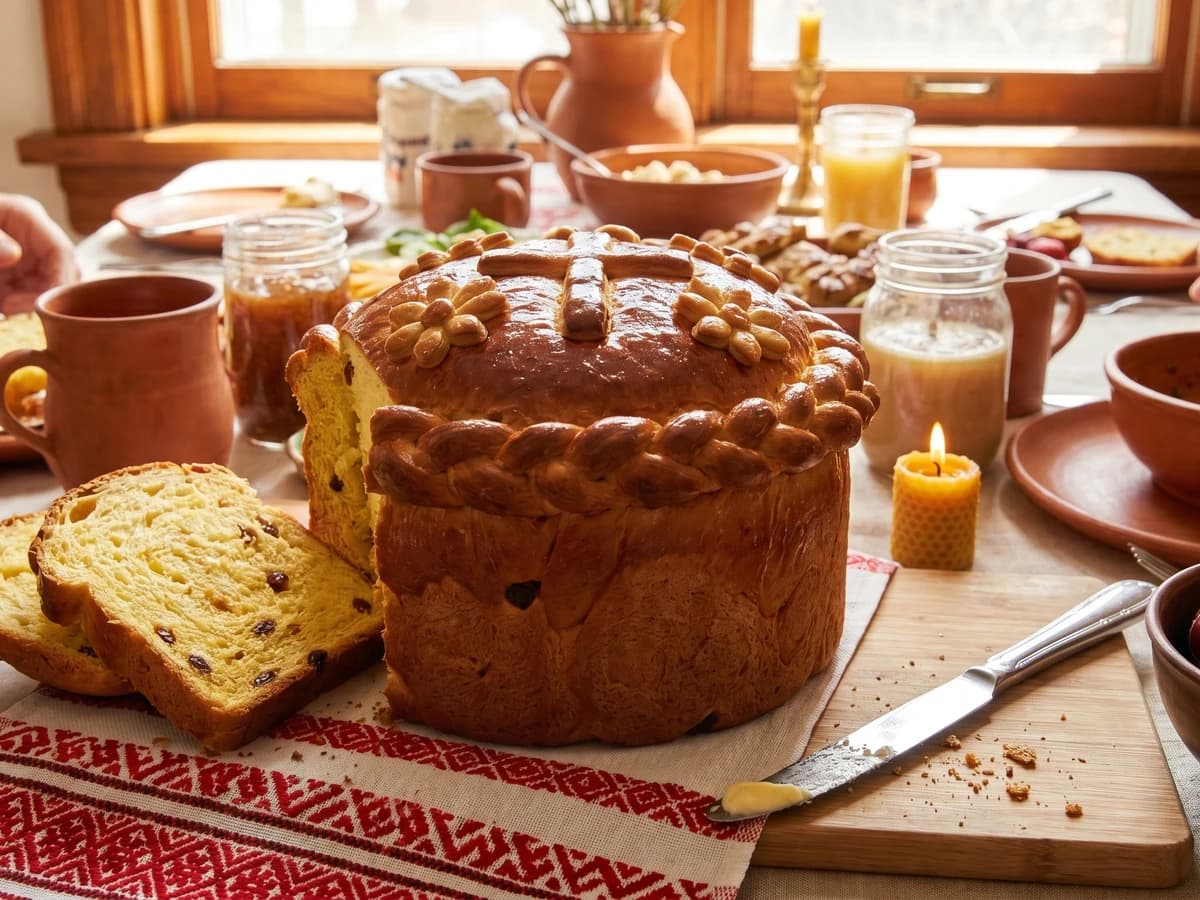
This is the Easter bread that climbs upward before it spreads out, a golden tower of eggs, butter, braids, flowers and crosses from Bukovyna's western table.
Chef Lesia
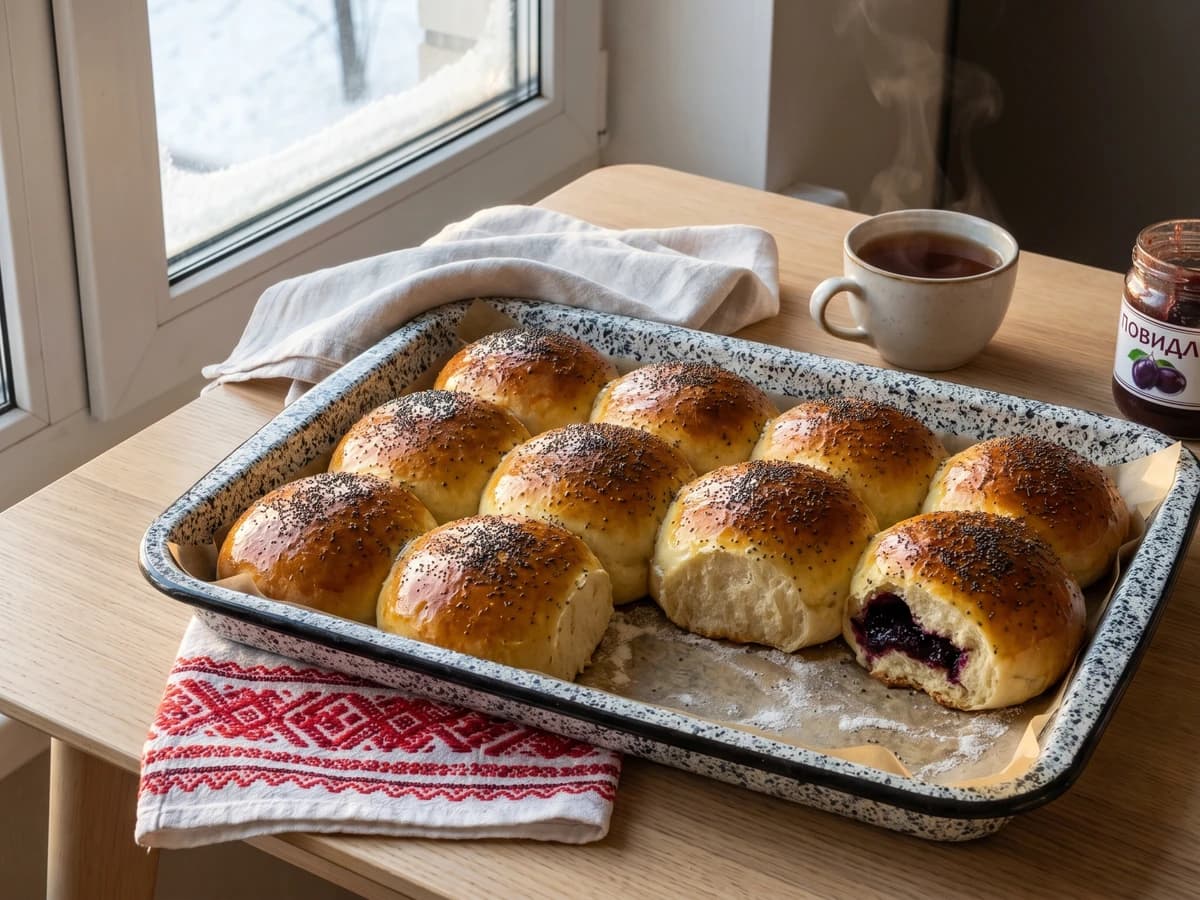
The sweetest part of bulochky is not sugar but milk: it makes a dough that pulls apart in pale threads, ready to stay plain or hide a spoon of thick povydlo.