
Chef Lesia
Arnautka (арнаутка, southern durum-wheat loaf)
Durum wheat makes bread the color of late steppe sun: golden, firm, nutty, and strong enough to hold salo, tomato juice, and green sunflower oil without collapsing.
A cooking platform built around craft, culture, and the stories behind what we eat.

Created by
A wedding bread should enter the room like good news: round, high, egg-gold, crowded with dough birds and braids, then cut and shared so the blessing goes home in every pocket.
Awedding bread should enter the room like good news. Round, tall, egg-gold, carrying birds, braids, wheat ears, little dough suns, all the things a family hopes will keep flying after the music stops. Korovai is not a quiet loaf. It sits on a rushnyk, the embroidered cloth, and asks everyone at the table to look at it before anyone dares take a knife to it.
The old rule says it is baked by korovainytsi, women with happy marriages, while songs run through the kitchen. I won't police your guest list. Invite the hands that bring calm and good will, because the point is not superstition dressed as manners; the point is that a wedding bread is made in company. One person mixes, another rolls braids, somebody makes birds that look more like shoes, and the whole thing becomes itself anyway.
What decides the bread is strength under decoration. The main dough is rich with milk, eggs, and butter, so it rises soft and golden; the ornaments are made from a leaner dough, firm as modelling clay, so the birds and wheat ears keep their shape while the loaf swells beneath them. Bake until the smell changes from sweet dough to toasted wheat and butter. Then tap the bottom with a wooden spoon. It must sound right.
Make one big loaf. There is no tradition of a shy korovai, and there is no wedding blessing in a bread too small to share.
Korovai is one of Ukraine's oldest wedding ritual breads, with pre-Christian agrarian symbols absorbed into Christian wedding practice: the round loaf for the sun, wheat ears for abundance, birds for the new household taking flight. In many central and northern Ukrainian villages, korovainytsi, usually married women whose family lives were considered fortunate, baked it together while singing korovai songs, and the loaf was later divided by the elder or starosta so each guest carried home a piece of good fortune. Soviet civil ceremonies pushed some of these rituals into private kitchens, but the songs, symbols, and regional shapes survived because people kept baking them.
Quantity
240ml
warmed to body temperature
Quantity
10g
Quantity
100g
Quantity
600g
plus more for dusting
Quantity
10g
Quantity
3
Quantity
2
Quantity
100g
very soft
Quantity
1 tablespoon
for the bowl
Quantity
180g
for the decoration dough
Quantity
1 teaspoon
for the decoration dough
Quantity
1 pinch
for the decoration dough
Quantity
1
for the decoration dough and attaching ornaments
Quantity
60ml
plus more if needed
Quantity
1 yolk plus 1 tablespoon milk
for glazing
Quantity
a small handful
to serve around the loaf
| Ingredient | Quantity |
|---|---|
| whole milkwarmed to body temperature | 240ml |
| instant yeast | 10g |
| caster sugar | 100g |
| strong white bread flourplus more for dusting | 600g |
| fine sea salt | 10g |
| large eggs | 3 |
| large egg yolks | 2 |
| unsalted buttervery soft | 100g |
| unrefined sunflower oilfor the bowl | 1 tablespoon |
| plain flourfor the decoration dough | 180g |
| caster sugarfor the decoration dough | 1 teaspoon |
| fine sea saltfor the decoration dough | 1 pinch |
| egg whitefor the decoration dough and attaching ornaments | 1 |
| waterplus more if needed | 60ml |
| egg yolk mixed with milkfor glazing | 1 yolk plus 1 tablespoon milk |
| kalyna berries or red currants (optional)to serve around the loaf | a small handful |
Stir the warm milk with the yeast, 1 tablespoon of the sugar, and 150g of the bread flour until you have a thick batter. Cover it and leave it somewhere warm until it rises, bubbles, and smells milky-sweet, like bread already thinking about becoming bread. This opara, the sponge, gives the yeast a head start before the butter and eggs slow it down.
Add the remaining bread flour, remaining sugar, salt, whole eggs, and egg yolks to the sponge. Mix until shaggy, then knead in the soft butter a spoonful at a time. At first it will look like comedy. Keep going until the dough turns smooth, glossy, and elastic, soft enough to press with a fingertip but strong enough to pull back.
Oil a large bowl with sunflower oil, tuck the dough inside, cover it, and let it rise until full and puffy, about doubled. It should feel lighter when you lift it, with a faint buttery smell that has lost its raw flour edge. Punching it down is too violent for wedding bread; press it gently and fold the edges toward the middle.
Line a deep 23cm round tin with baking paper. Shape the risen dough into a tight round, pulling the surface smooth underneath your hands, and set it seam-side down in the tin. Cover and let it rise again until it sits high and proud, just below the rim. A tin is a bit more modern, but it helps a home oven give you the height a korovai deserves.
While the loaf rises, mix the plain flour, sugar, salt, egg white, and water into a firm decoration dough. It should feel like children's modelling clay, not soft bread dough. Roll thin ropes for braids, pinch little leaves and wheat ears with scissors, and shape two small birds by knotting short ropes of dough and pinching one end into a beak. Keep the pieces covered so they don't dry before they meet the loaf.
Brush the risen loaf lightly with beaten egg white where the ornaments will sit. Lay a braid around the rim, cross another over the crown if you like, then add birds, leaves, wheat ears, and small coils. Don't overload the centre or it can sink. My aunt wrote only, "make it joyful," which is useful and completely unhelpful, so I tell you this: leave breathing room between the symbols.
Brush the whole loaf gently with the egg yolk and milk glaze, getting into the braid without flooding the little cuts. Bake at 180C for 15 minutes, then lower to 160C and keep baking until the crust is deep egg-gold, the kitchen smells of sweet butter and wheat, and a wooden spoon tapped on the bottom answers hollow. If the ornaments darken too quickly, tent the loaf loosely with foil.
Lift the korovai from the tin and cool it completely on a rack before cutting. Warm bread tears, and this one has ceremony to carry. Set it on a rushnyk, an embroidered cloth, with a little salt and a few kalyna berries or red currants around the base if you have them. Cut generous slices. The blessing only works if everybody gets some.
1 serving (about 60g)
Culinary guides, cultural storytelling, and the editorial depth that makes cooking meaningful.
Discover Culinary ExplorerChef Lesia
Durum wheat makes bread the color of late steppe sun: golden, firm, nutty, and strong enough to hold salo, tomato juice, and green sunflower oil without collapsing.

Chef Lesia
A proper hearth loaf announces itself before you cut it: dark crust, hollow knock, flour caught in the blisters, and that deep oven smell that makes people move closer.
Chef Lesia
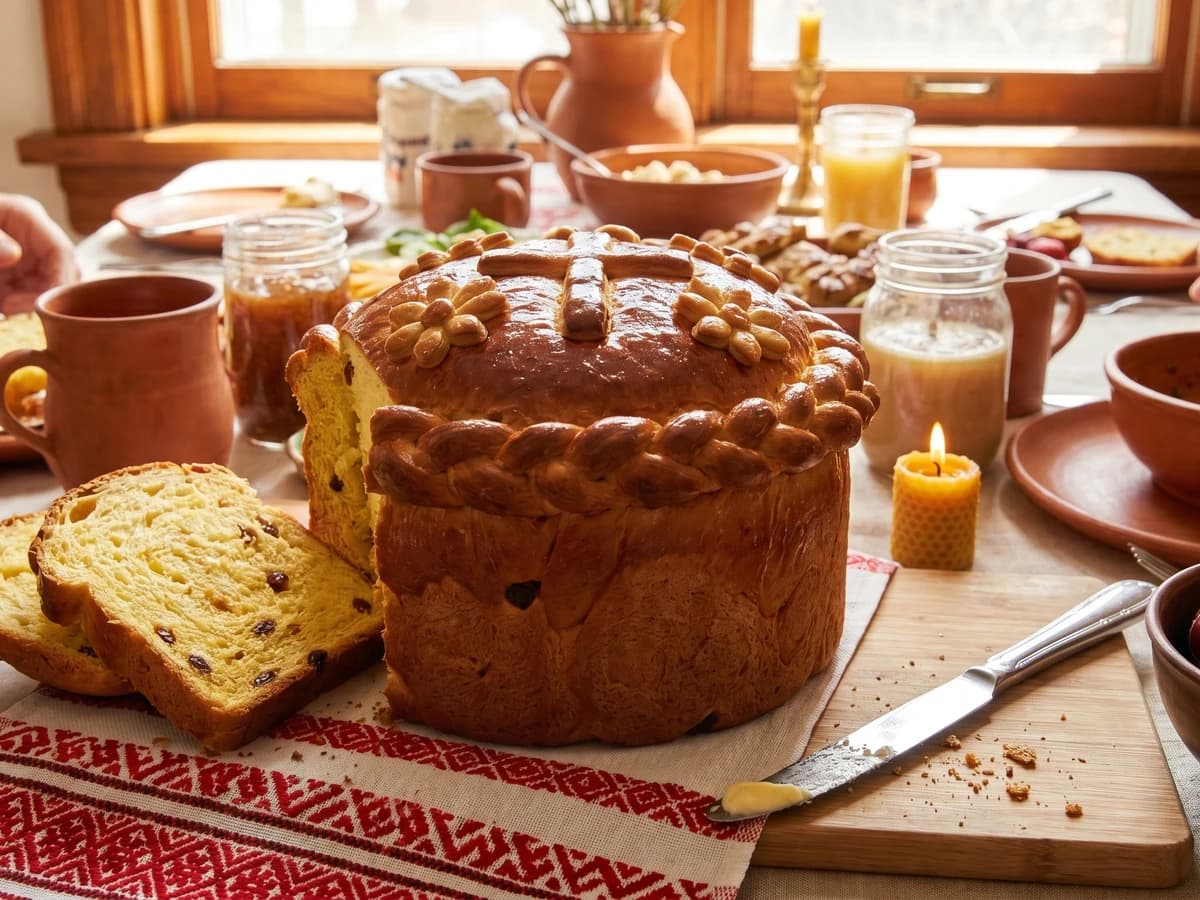
This is the Easter bread that climbs upward before it spreads out, a golden tower of eggs, butter, braids, flowers and crosses from Bukovyna's western table.
Chef Lesia
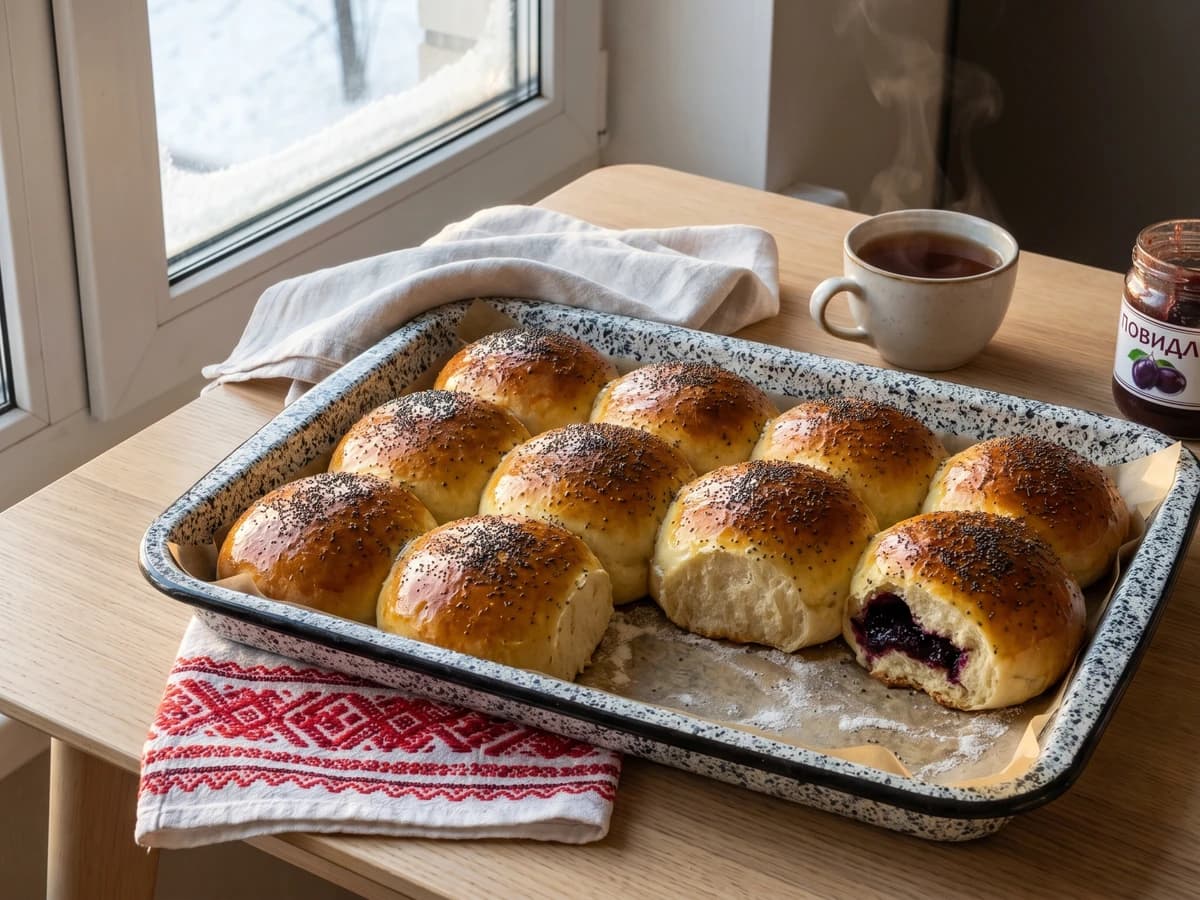
The sweetest part of bulochky is not sugar but milk: it makes a dough that pulls apart in pale threads, ready to stay plain or hide a spoon of thick povydlo.