
Chef Lesia
Arnautka (арнаутка, southern durum-wheat loaf)
Durum wheat makes bread the color of late steppe sun: golden, firm, nutty, and strong enough to hold salo, tomato juice, and green sunflower oil without collapsing.
A cooking platform built around craft, culture, and the stories behind what we eat.

Created by
The hole in the middle is not emptiness. It is the place set for the dead, a ring of sweet bread carried after Easter and broken with the living.
The hole in the middle is not emptiness. It is the place set for the dead. A pomynalnyi kalach is carried to the cemetery on Proviody, the after-Easter day when families go back to the graves with bread, eggs, sweets, and the kind of quiet conversation that doesn't need everyone present to answer.
This is not paska, though it lives near Easter. It is less showy, braided into a ring, glossy with egg, tender from milk and butter, and sturdy enough to travel wrapped in a clean cloth. You bring it whole, then break or slice it among kin, because remembrance at our table is never only private. Someone eats. Someone says a name.
The dough asks for patience, not drama. Enriched dough rises more slowly because butter and eggs make it rich, so don't bully it with too much flour. It should feel soft and warm under your hands, a little tacky at first, then smooth after kneading, and when it is ready it smells milky and faintly yeasty, like a kitchen that has decided to be kind. Aunt Nadia wrote once, "let it grow until it looks pleased with itself," which is terrible measurement and quite correct.
Keep the braid even and the middle open. That is the step that decides the bread: the ring must bake as a ring, not swell shut into a sweet loaf with a memory of a hole. Put a small buttered jar or metal cutter in the center if your dough is ambitious. Bread has opinions.
Kalach, from the Ukrainian word for a rounded or ring-shaped bread, appears across Ukrainian ritual life at weddings, Christmas tables, funerals, and memorial meals, with local shapes and meanings changing by region. On Proviody, also called Hrobky or Radonytsia in different parts of Ukraine, families visit graves after Easter and bring food to share, a Christian calendar practice layered over older spring rites of kinship with the dead. Memorial breads were often distributed to relatives, neighbours, clergy, or the poor, so the loaf carried remembrance outward from the grave into the living community.
Quantity
500g
plus a little for dusting
Quantity
7g
Quantity
180ml
warm to the touch
Quantity
70g
Quantity
2
at room temperature
Quantity
80g
softened
Quantity
8g
Quantity
1 teaspoon vanilla sugar or 1/2 teaspoon extract
Quantity
1 lemon
finely grated
Quantity
1 yolk plus 1 tablespoon milk
beaten together for glazing
Quantity
1 tablespoon
| Ingredient | Quantity |
|---|---|
| strong white bread flourplus a little for dusting | 500g |
| instant yeast | 7g |
| whole milkwarm to the touch | 180ml |
| sugar | 70g |
| large eggsat room temperature | 2 |
| unsalted buttersoftened | 80g |
| fine sea salt | 8g |
| vanilla sugar or vanilla extract (optional) | 1 teaspoon vanilla sugar or 1/2 teaspoon extract |
| lemon zest (optional)finely grated | 1 lemon |
| egg yolk and milkbeaten together for glazing | 1 yolk plus 1 tablespoon milk |
| sesame seeds or poppy seeds (optional) | 1 tablespoon |
In a large bowl, stir the warm milk with the yeast, sugar, eggs, vanilla if using, and lemon zest if using. Add the flour and salt, then mix until you have a rough, shaggy dough with no dry patches hiding at the bottom. Let it sit for ten minutes so the flour drinks properly before you ask anything serious of it.
Work the softened butter into the dough a little at a time. It will smear, sulk, and look briefly like a mistake. Keep going. Knead until the dough turns smooth, elastic, and lightly tacky, pulling away from the bowl or worktop in long stretchy sheets rather than tearing at once.
Set the dough in a lightly buttered bowl, cover it, and leave it somewhere warm until it has grown full and airy, usually one and a half to two hours. Press it gently with a floured finger. If the dent fills back slowly, the dough is ready; if it springs back like it has been insulted, give it more time.
Turn the dough onto a lightly floured surface and divide it into three equal pieces. Roll each piece into a long rope, about 55 to 60 cm, keeping the thickness even from end to end. Plait the ropes firmly but not tightly, then bring the two ends together into a ring and pinch them well underneath so the join disappears.
Move the kalach onto a lined baking tray. Butter the outside of a small ovenproof jar, ramekin, or metal cutter and set it in the center to keep the hole open as the dough rises. Cover loosely and leave until puffy, light, and almost doubled; when you touch the braid, it should wobble slightly and keep a soft dent.
Brush the kalach gently with the egg yolk and milk glaze, getting into the curves of the braid without flattening them. Scatter sesame or poppy seeds if you like. Bake at 180C until the crust is deep golden, the sides feel set, and the bottom sounds hollow when tapped, about thirty to thirty-five minutes.
Lift out the center support while the bread is still warm enough to move but not so hot that it tears. Cool the kalach on a rack until the crust settles and the crumb finishes itself inside. Wrap it in a clean cloth for carrying, then serve in generous slices or broken pieces at the table.
1 serving (about 80g)
Culinary guides, cultural storytelling, and the editorial depth that makes cooking meaningful.
Discover Culinary ExplorerChef Lesia
Durum wheat makes bread the color of late steppe sun: golden, firm, nutty, and strong enough to hold salo, tomato juice, and green sunflower oil without collapsing.

Chef Lesia
A proper hearth loaf announces itself before you cut it: dark crust, hollow knock, flour caught in the blisters, and that deep oven smell that makes people move closer.
Chef Lesia
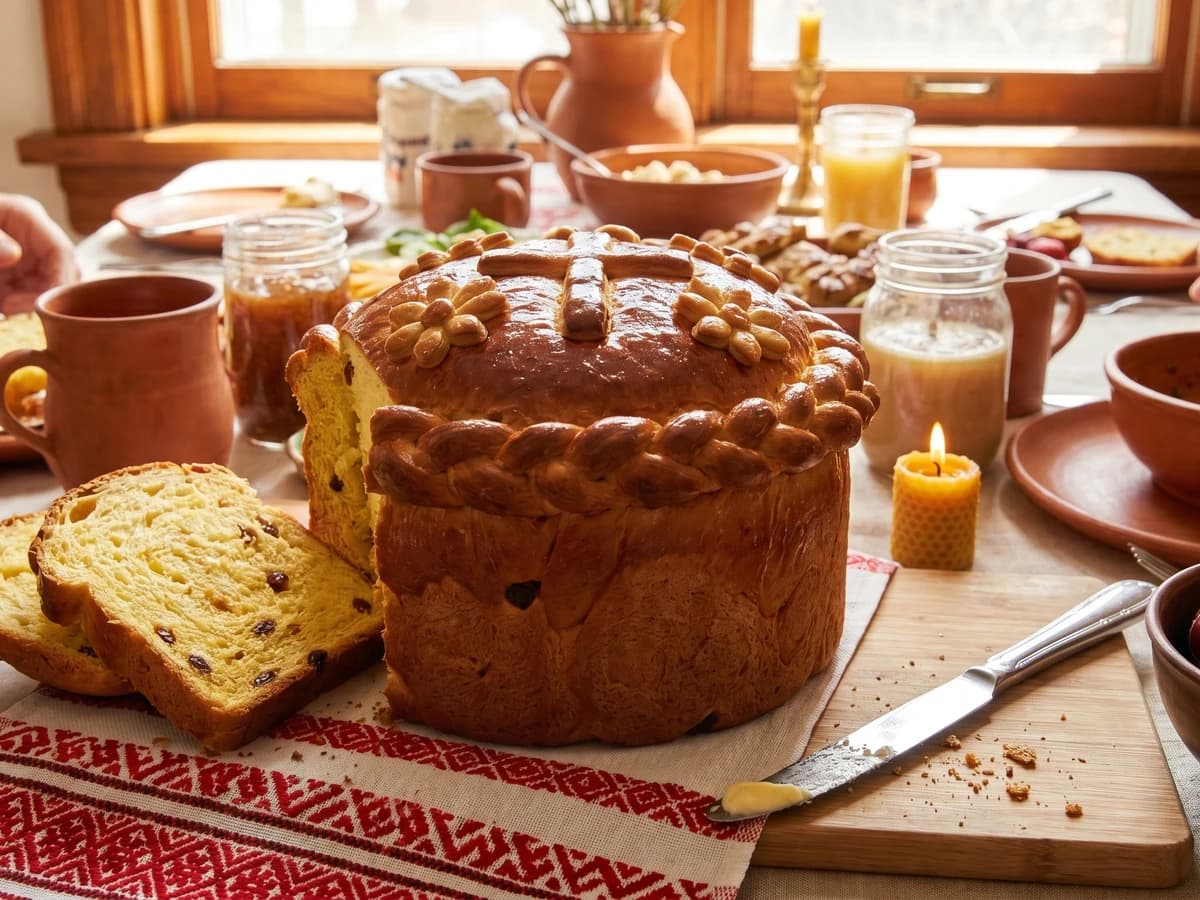
This is the Easter bread that climbs upward before it spreads out, a golden tower of eggs, butter, braids, flowers and crosses from Bukovyna's western table.
Chef Lesia
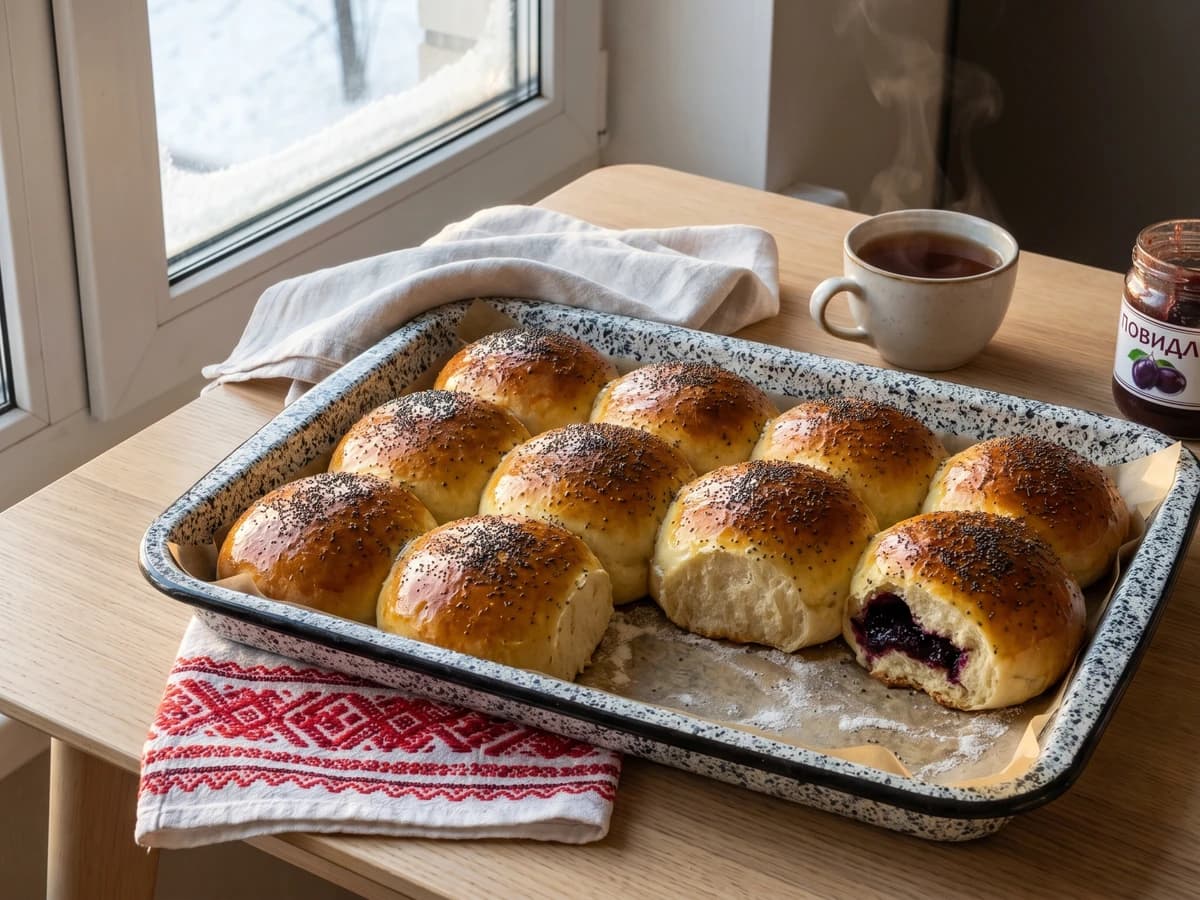
The sweetest part of bulochky is not sugar but milk: it makes a dough that pulls apart in pale threads, ready to stay plain or hide a spoon of thick povydlo.