
Chef Lesia
Arnautka (арнаутка, southern durum-wheat loaf)
Durum wheat makes bread the color of late steppe sun: golden, firm, nutty, and strong enough to hold salo, tomato juice, and green sunflower oil without collapsing.
A cooking platform built around craft, culture, and the stories behind what we eat.
Created by
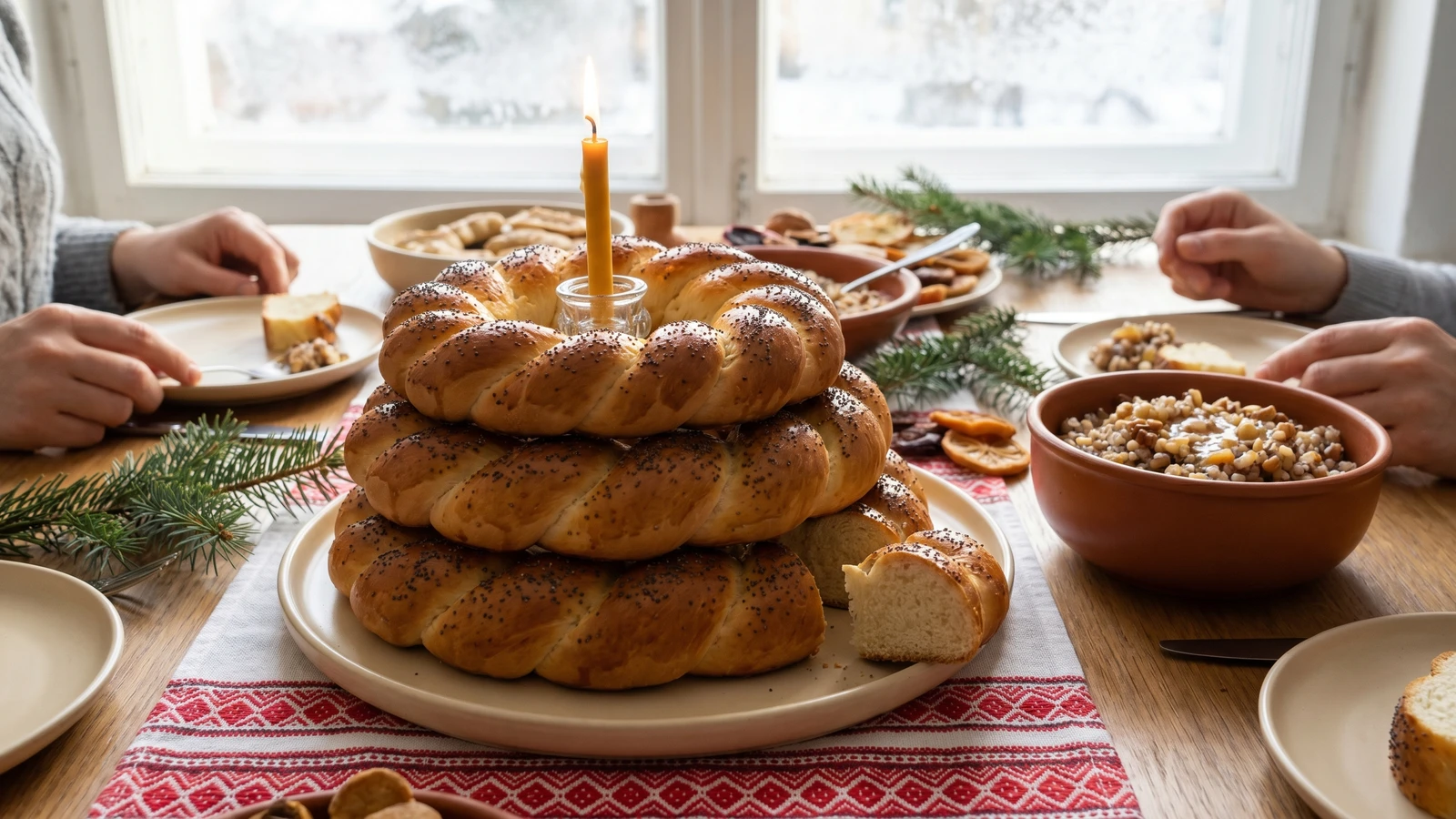
A Christmas loaf with a deliberate hollow: three braided rings stacked around candlelight, white wheat and honey holding the table's blessing in a form your hands can learn.
The hollow is the first thing you make, even before anyone lights the candle. White dough is rolled into ropes, twisted, braided, and coaxed into a ring so the middle stays open for light; then three rings are stacked on the Holy Supper table, not because bread needs height, but because Christmas needs a center. It is flour made into a place for blessing to sit.
This is not cake pretending to be bread. The crumb should be white, fine, lightly sweet, with honey in the smell and enough butter to soften the chew, but the braid must still hold its shoulders. That is the one thing that decides the loaf: keep the dough supple, not slack. Too wet and the ring spreads into a cushion; knead it until it feels smooth under your palms and springs back like it has an opinion.
At my table I make the enriched version, milk, eggs, butter, honey, because after the long fast everyone has been circling the bread with their eyes already. Some families keep the Christmas Eve kalach lean with water and sunflower oil, and that belongs too. Aunt Nadia's letter only said, "braid tight, let it wake, bake until it sounds right," which is both infuriating and completely clear once you tap the bottom.
Stack it only when cold. Warm bread is generous but weak, and it will sag under its own ceremony. Let the rings firm, set the candle in a small holder through the hollow, and give the table a minute to look before anyone reaches for the knife.
Kalach takes its name from kolo, meaning circle, and Ukrainian Christmas versions keep that round form as a sign of sun, continuity, and household blessing. In Halychyna, Podillia, Volhynia, and parts of central Ukraine, three braided rings are often set on the Sviata Vecheria table around a candle for the Trinity, beside kutia and the didukh. Soviet anti-religious public culture pushed such ritual breads out of official celebration, but they stayed in home kitchens, where a grandmother's braid is harder to erase than a paragraph in a cookbook.
Quantity
900g
plus more for dusting
Quantity
360ml
lukewarm, divided
Quantity
7g instant or 20g fresh
crumbled if fresh
Quantity
80g
Quantity
2 tablespoons
Quantity
2
room temperature
Quantity
90g
melted and cooled
Quantity
12g
Quantity
1 tablespoon
for the bowl
Quantity
1
beaten with 1 tablespoon milk and a pinch of salt for glazing
Quantity
1 tablespoon
| Ingredient | Quantity |
|---|---|
| strong white bread flourplus more for dusting | 900g |
| whole milklukewarm, divided | 360ml |
| instant yeast or fresh yeastcrumbled if fresh | 7g instant or 20g fresh |
| caster sugar | 80g |
| honey | 2 tablespoons |
| large eggsroom temperature | 2 |
| unsalted buttermelted and cooled | 90g |
| fine sea salt | 12g |
| sunflower oilfor the bowl | 1 tablespoon |
| egg yolkbeaten with 1 tablespoon milk and a pinch of salt for glazing | 1 |
| poppy seeds or sesame seeds (optional) | 1 tablespoon |
Pour 200ml of the lukewarm milk into a large bowl. It should feel like a warm hand, never hot. Stir in the yeast, one spoonful of the sugar, and 200g of the flour until you have a thick batter, then cover and leave it until it rises, bubbles, and smells faintly sweet and beery.
Add the remaining flour, remaining milk, sugar, honey, eggs, melted butter, and salt. Mix until no dry flour is hiding at the bottom of the bowl. The dough should look a little rough at first, then gather itself into one soft mass as the flour drinks.
Knead by hand on a lightly floured table until the dough is smooth, satiny, and springs back when you press it, or use a mixer on low until it pulls cleanly from the bowl. It should be firmer than pampushky dough because it has a job to do: hold the braid, keep the ring open, carry the candle hollow without slumping.
Oil the bowl lightly, tuck the dough inside, cover it, and leave it in a warm place until doubled and puffy. When you press it with one finger, the dent should stay for a moment before slowly filling. Watch that, not the clock; winter kitchens have their own opinions.
Turn the dough out and press the air from it gently. For a stable stack, divide it into three piles: one large, one medium, one small. If you like numbers, aim for about 700g, 520g, and whatever remains. Divide each pile into three equal pieces, so you have nine pieces in all.
Roll each piece into a long rope, thinner at the very ends and even through the middle. These are the krucheni ropes, the twisted strands. If a rope snaps back like an elastic band, cover it and leave it alone for a few minutes; dough relaxes when you stop arguing with it.
For each ring, lay three ropes side by side, pinch the top ends together, and braid with steady hands, not pulling too tight and not leaving it loose. Bring the two ends together to form a circle, tucking one braid end under the other so the join sits neat and strong. Make the center hole wider than seems sensible; it will shrink as the dough wakes again.
Move the rings to parchment-lined baking sheets. Set a small oiled metal ring or ovenproof ramekin in each hollow to keep the opening clean, then cover loosely and leave until the braids look puffed and rounded. A light touch should leave a slow, soft dent. If the dough sighs flat, it has gone too far.
Brush the rings with the egg-yolk glaze, let it settle for a few minutes, then brush again for a deeper golden crust. Scatter poppy or sesame seeds if using. Bake at 180C until the plaits are honey-gold, the sides feel firm, and the bottom sounds hollow when tapped. The small ring may finish first; pull it out when it sounds right.
Cool the rings completely on a rack before stacking, largest on the bottom and smallest on top. Set a small heatproof candle holder through the hollow, not wax directly into the bread. Light it at the table, then slice the kalach thick once everyone has had their look.
1 serving (about 105g)
Culinary guides, cultural storytelling, and the editorial depth that makes cooking meaningful.
Discover Culinary ExplorerChef Lesia
Durum wheat makes bread the color of late steppe sun: golden, firm, nutty, and strong enough to hold salo, tomato juice, and green sunflower oil without collapsing.

Chef Lesia
A proper hearth loaf announces itself before you cut it: dark crust, hollow knock, flour caught in the blisters, and that deep oven smell that makes people move closer.
Chef Lesia
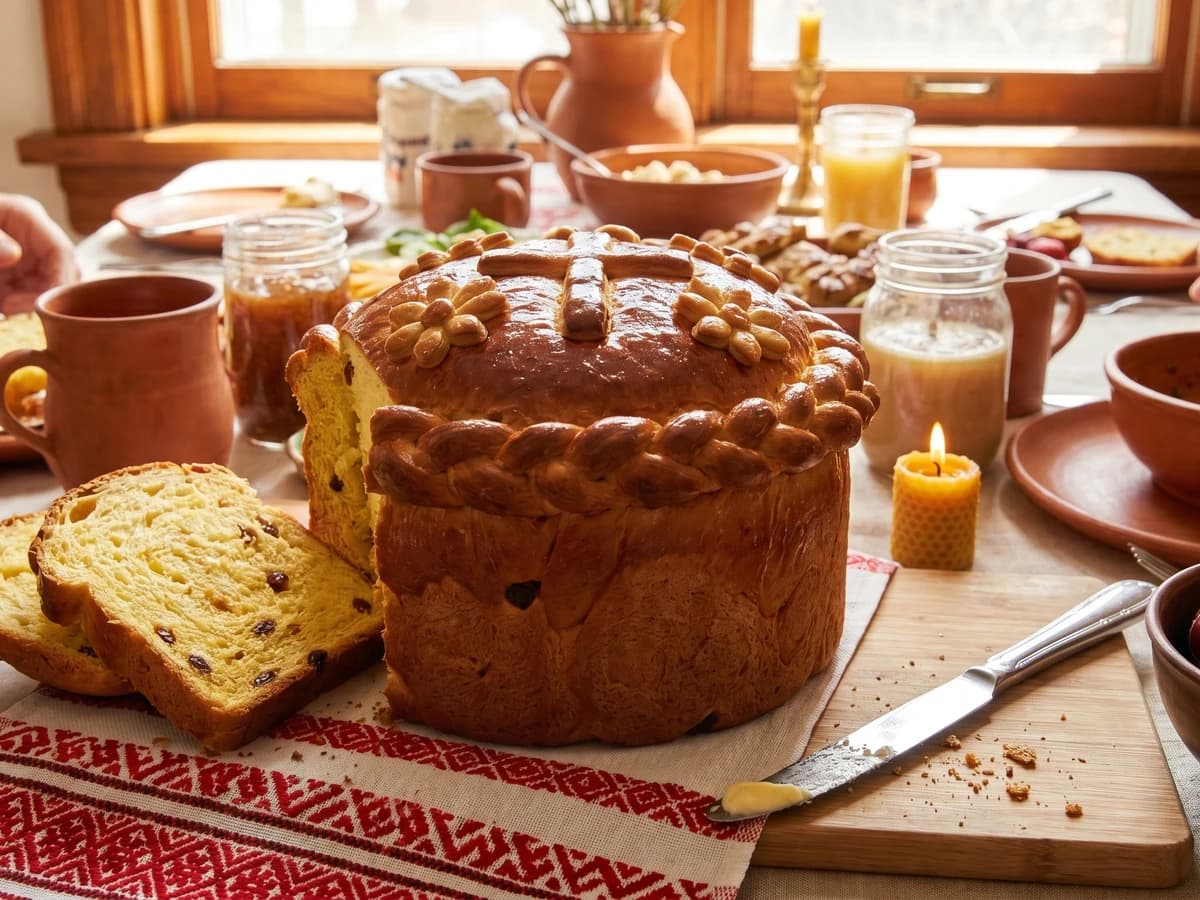
This is the Easter bread that climbs upward before it spreads out, a golden tower of eggs, butter, braids, flowers and crosses from Bukovyna's western table.
Chef Lesia
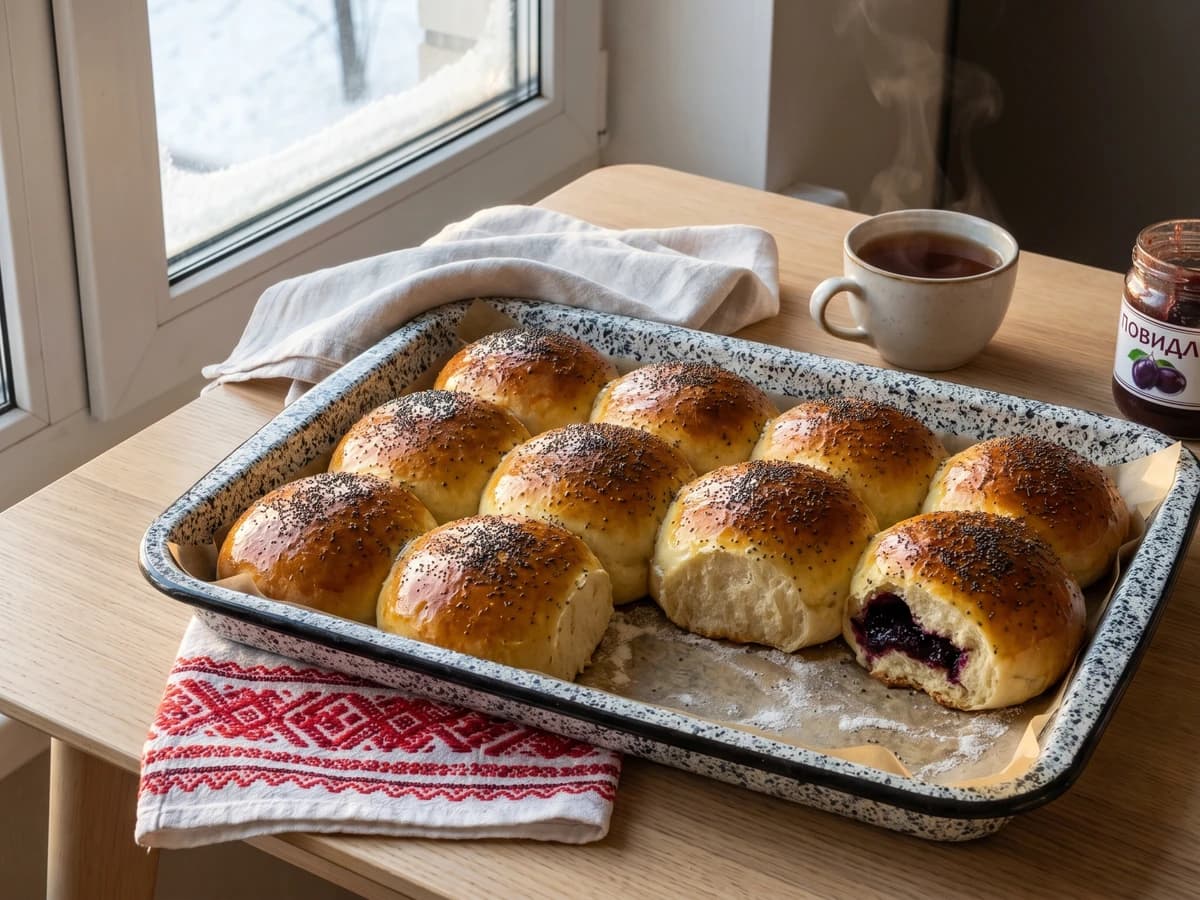
The sweetest part of bulochky is not sugar but milk: it makes a dough that pulls apart in pale threads, ready to stay plain or hide a spoon of thick povydlo.