
Chef Lesia
Arnautka (арнаутка, southern durum-wheat loaf)
Durum wheat makes bread the color of late steppe sun: golden, firm, nutty, and strong enough to hold salo, tomato juice, and green sunflower oil without collapsing.
A cooking platform built around craft, culture, and the stories behind what we eat.
Created by
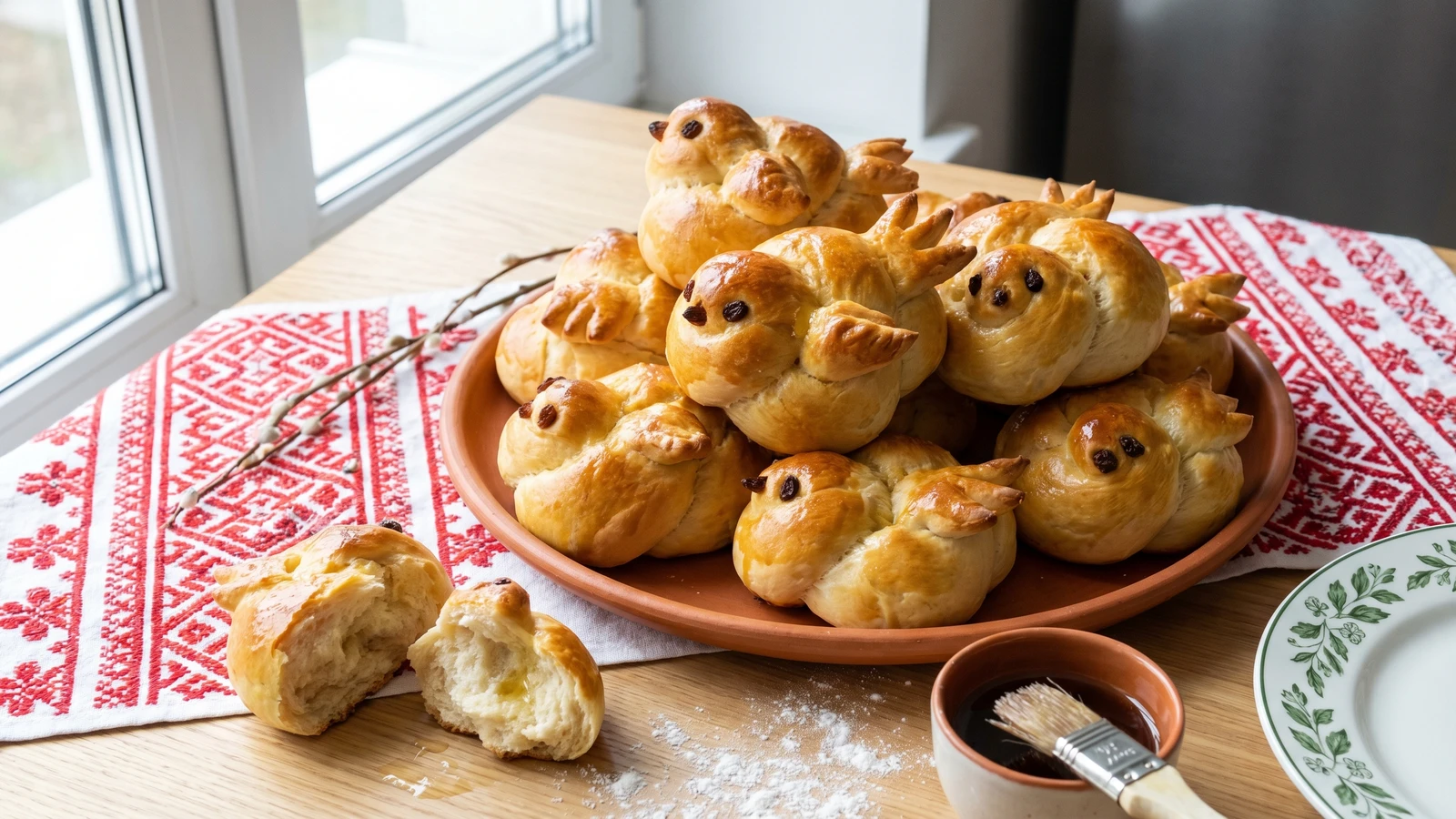
The first birds of spring are sometimes baked before the sky sends the real ones: knotted dough bodies, raisin eyes, wings pinched up, carried outside by children singing warmth home.
The first birds of spring are sometimes baked before the sky sends the real ones. A tray of zhaivoronky comes out golden and ridiculous in the best way, little dough bodies tied in knots, raisin eyes staring bravely ahead, wings snipped or pinched upward as if they might lift off the cloth. Children carried them outside for Soroky, the Forty Martyrs day, and sang the larks back. Bread as weather work. I love that kind of confidence.
This is a Lenten dough, so it gets its softness from oil, sugar, and patience instead of butter and eggs. Use unrefined sunflower oil if you can; it gives a warm seed smell and a yellow glow, Ukraine in a bottle of oil. The one thing that decides the buns is the first rise. Let the dough swell until it feels airy under your palm and the smell changes from raw flour to sweet yeast. The clock can only guess. Your hands will know faster.
Aunt Nadia wrote about them only once, in the margin of another recipe, which is exactly how family food behaves: "for children, make birds." No quantity, of course. Comedy. I make them big enough for a child to hold in one fist, and I brush them with tea syrup after baking so the crust shines without needing an egg wash.
If your birds look slightly cross-eyed or more sparrow than lark, good. They are not museum pieces. They are spring buns, meant to be eaten warm, shared loudly, and remembered by someone smaller than you.
Zhaivoronky are ritual spring breads tied to Soroky, the feast of the Forty Martyrs of Sebaste, marked on 22 March in many Ukrainian communities and older folk calendars as a turning point toward spring. Across regions, especially in central and northern villages, children carried bird-shaped buns outdoors and sang vesnianky, spring songs, to call migrating larks back. Because the date falls during Great Lent, many home versions use a lean sweet dough with sunflower oil rather than milk, butter, or eggs.
Quantity
500g
plus extra for dusting
Quantity
7g
Quantity
80g
Quantity
1 teaspoon
Quantity
260ml
Quantity
70ml
plus extra for the bowl
Quantity
1 tablespoon
Quantity
1 teaspoon
Quantity
32
for eyes
Quantity
2 tablespoons
for glaze
Quantity
1 tablespoon
for glaze
| Ingredient | Quantity |
|---|---|
| strong white flourplus extra for dusting | 500g |
| dried yeast | 7g |
| sugar | 80g |
| fine sea salt | 1 teaspoon |
| warm water | 260ml |
| unrefined sunflower oilplus extra for the bowl | 70ml |
| honey or sugar syrup | 1 tablespoon |
| vanilla sugar or grated lemon zest (optional) | 1 teaspoon |
| small raisins or currantsfor eyes | 32 |
| strong black teafor glaze | 2 tablespoons |
| sugarfor glaze | 1 tablespoon |
Stir the warm water with a spoonful of the sugar and the yeast, then leave it until the surface looks creamy and smells alive, not dusty. If your kitchen is cool, give it more time. Yeast is not late; it is just cold.
In a large bowl, mix the flour, remaining sugar, salt, and vanilla sugar or lemon zest if you're using it. Pour in the foamy yeast water, sunflower oil, and honey or syrup. Stir until the shaggy bits gather into one soft mass, then scrape the bowl clean with the dough itself.
Knead on the table until the dough turns smooth, elastic, and a little glossy from the oil. It should be soft under your palms but not smear itself across the table. Add flour only by the pinch; too much makes dry birds, and nobody wants a dry bird.
Oil the bowl lightly, tuck the dough inside, cover it, and leave it until doubled and airy. Press it gently with a floured finger: the dent should rise back slowly, as if waking. The smell changes here, from raw flour to sweet yeast and sunflower oil. That is your real measure.
Divide the dough into 16 pieces. Roll each piece into a short rope, about the length of your hand, then tie it into a loose knot. Shape one end into a small head and pinch the other flat for a tail. Snip the tail into feathers with scissors, press in two raisin eyes, and pinch tiny wings up from the sides if you like a proud bird.
Set the birds on lined baking trays with space between them, cover lightly, and leave until puffed and softer at the edges. They should no longer feel tight. Press one gently near the tail; it should hold the mark for a moment before rounding out.
Bake at 190C until the birds are golden brown, light in the hand, and the bottoms sound hollow when tapped. The raisin eyes may sink a little; push them back in while the buns are still soft if they try to escape.
While the buns bake, warm the strong tea with the sugar until dissolved. Brush the hot birds with this tea syrup so the crust shines amber and softens slightly. Let them settle on a cloth, then eat them the same day, preferably with children nearby and crumbs everywhere.
1 serving (about 55g)
Culinary guides, cultural storytelling, and the editorial depth that makes cooking meaningful.
Discover Culinary ExplorerChef Lesia
Durum wheat makes bread the color of late steppe sun: golden, firm, nutty, and strong enough to hold salo, tomato juice, and green sunflower oil without collapsing.

Chef Lesia
A proper hearth loaf announces itself before you cut it: dark crust, hollow knock, flour caught in the blisters, and that deep oven smell that makes people move closer.
Chef Lesia
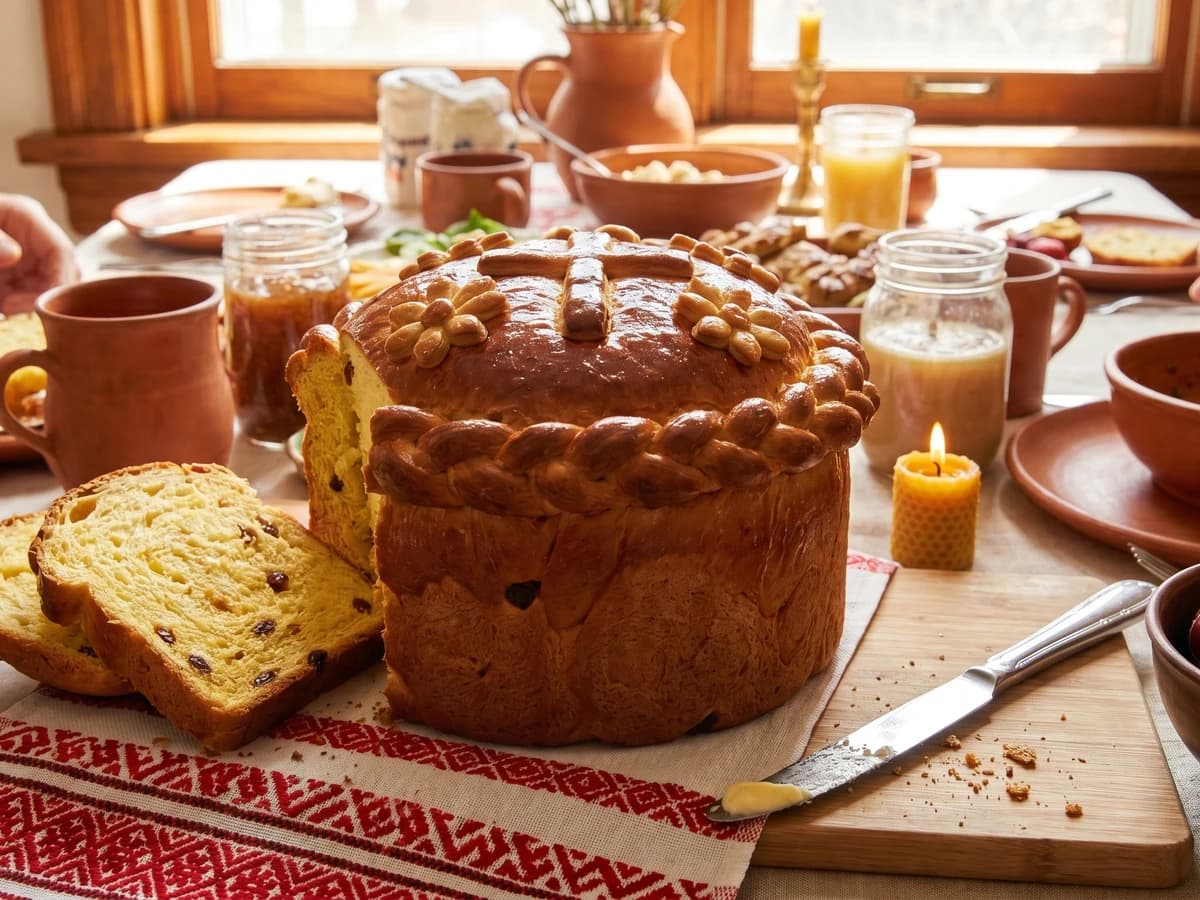
This is the Easter bread that climbs upward before it spreads out, a golden tower of eggs, butter, braids, flowers and crosses from Bukovyna's western table.
Chef Lesia
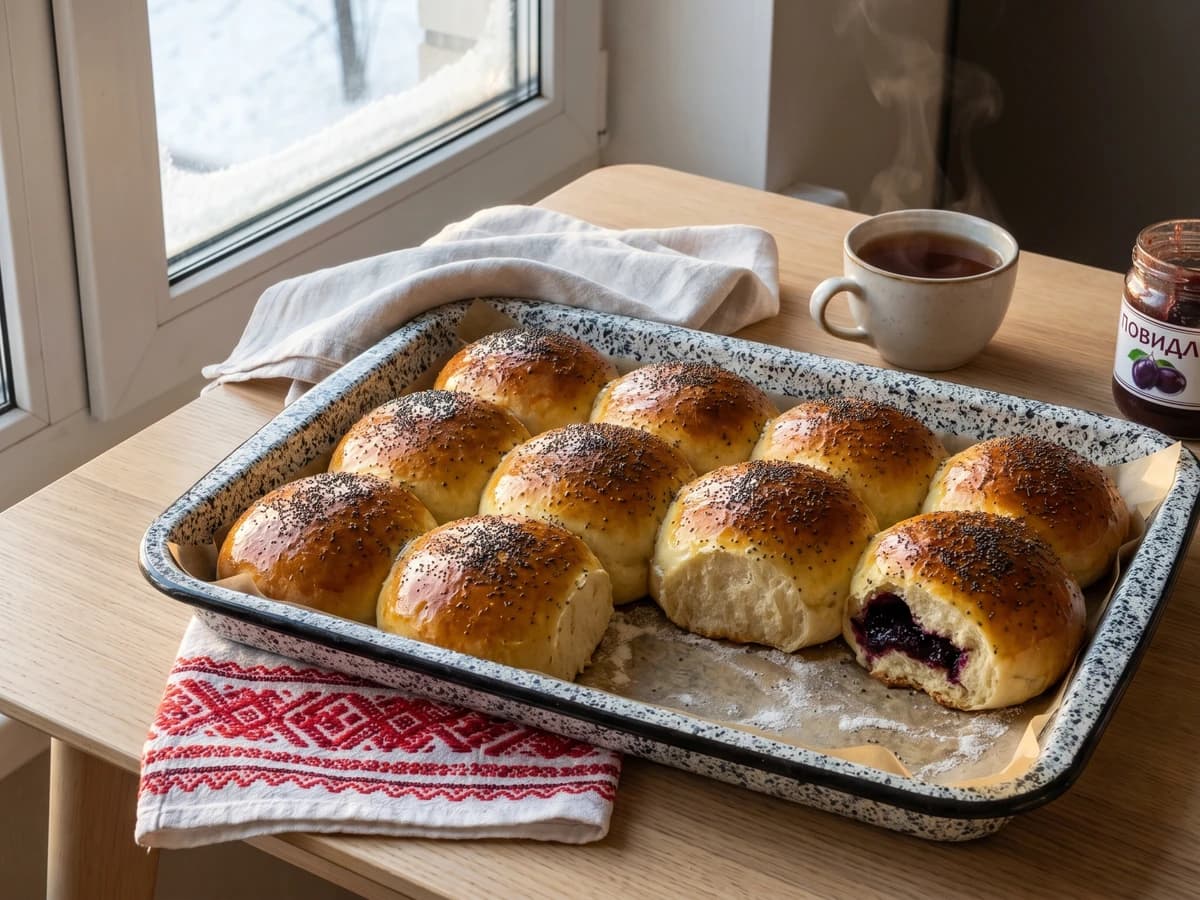
The sweetest part of bulochky is not sugar but milk: it makes a dough that pulls apart in pale threads, ready to stay plain or hide a spoon of thick povydlo.