
Chef Joost
Babi Pangang
Babi pangang means roasted pork, but in the Netherlands it also means the Chinees-Indisch table: crisp-edged pork, red sweet-sour sauce, and colonial history served in a white takeaway tray.

Updated June 12, 2026
The mains of the Indo-Dutch rice table: nasi and bami goreng as the base, saté in five proteins, the coconut-braised and ketjap-dark meat and chicken dishes (rendang, opor, roedjak, besengek, babi pangang) the Dutch carried home from Nederlands-Indië. Documented colonial history, never fusion.
A cooking platform built around craft, culture, and the stories behind what we eat.
Chef Joost
Babi pangang means roasted pork, but in the Netherlands it also means the Chinees-Indisch table: crisp-edged pork, red sweet-sour sauce, and colonial history served in a white takeaway tray.

Chef Joost
The old Dutch spelling says it plainly: Indonesian chicken skewers, carried home through the Indo-Dutch table, grilled until smoky at the edges and served with the thick, sweet peanut sauce Dutch parties now expect.

Chef Joost
Lapis means layers, and here the word does honest work: thin beef tucked through sweet ketjap, nutmeg, clove, and tamarind, the Indo-Dutch rice table reduced to one patient braadpan.

Chef Joost
The old spelling roedjak carries a whole colonial table in it: beef simmered until tender in coconut, chili, tamarind, and trassi, sweet, sour, hot, and deeply savoury.

Chef Joost
Saté udang is the small skewer with a long voyage: Indonesian prawns, Dutch ketjap bottles, charcoal smoke, and the rijsttafel memory carried into summer gardens.

Chef Joost
Daging opor is the pale, fragrant beef stew of the Indo-Dutch table, where coconut milk, candlenut, and lemongrass soften the louder dishes around it.

Chef Joost
The name means simply fried chicken, but the Dutch spelling carries a whole Indies kitchen: turmeric, coriander, garlic, and a golden crust that remembers the boemboe.

Chef Joost
The name means fried rice, but on the Indo-Dutch table it became supper itself: ketjap-dark, garlicky, edged with chili, and crowned with a yolk.

Chef Joost
The old Dutch spelling already tells you this chicken has crossed oceans: ajam roedjak, sweet, sour, hot, and salty, the Indo family table in one braising pan.

Chef Joost
Ajam Besengek is the golden chicken stew of the Indo-Dutch table: coconut milk, turmeric, and candlenut cooked down until the sauce clings to the meat like memory.

Chef Joost
The name says it plainly, beef on skewers, but on the Dutch table saté sapi carries Java, colonial appetite, and the sweet black gloss of ketjap manis.

Chef Joost
The old Dutch spelling says ajam, the city says Batavia, and the pot says exactly what the rijsttafel always was: memory, trade, and dinner in one dish.

Chef Joost
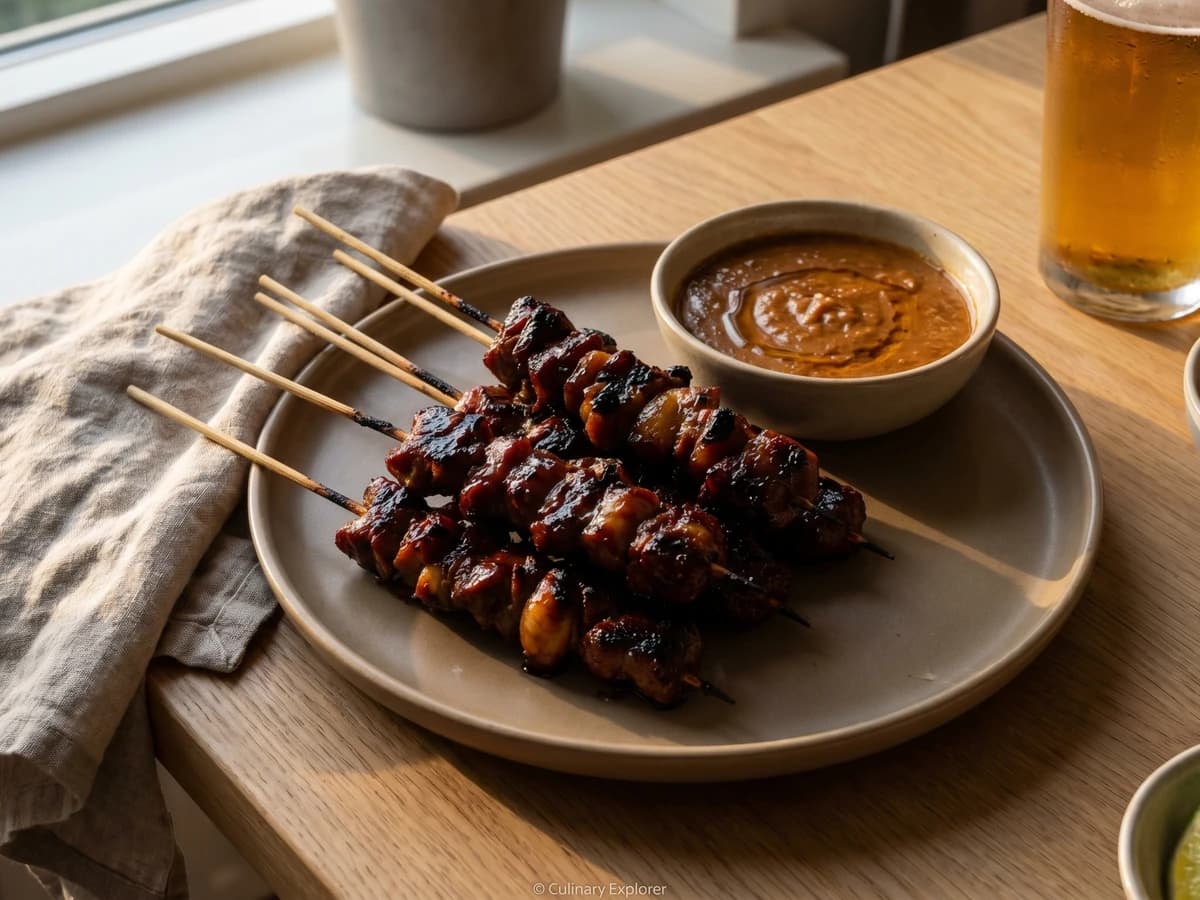
The name means sweet, and the skewer carries an Indo-Dutch journey: Indonesian sate, Dutch party tables, and ketjap manis glossing pork until the fire writes caramel at the edges.
Chef Joost
Saté kambing is goat over fire, ketjap turning glossy at the edges, the Indo-Dutch party skewer that carries Java, Den Haag, and a little smoke in every bite.

Chef Joost
Ajam is the old Dutch spelling of ayam, chicken, and opor is the pale coconut braise that lets a rijsttafel breathe between its darker, hotter dishes.

Chef Joost
Pork on a bamboo skewer, ketjap lacquered at the edges, peanut sauce waiting beside it: saté babi is the Indo-Dutch table speaking plainly and very well.

Chef Joost
The name means fried noodles, but the Dutch plate carries more than that: Chinese-Indonesian roots, colonial return, and the quiet weeknight genius of one hot wok.

Chef Joost
Ajam Paniki is an Indische recipe card with a Manado heart: chicken standing in for paniki, fruit bat, then simmered in coconut milk, ginger, lemongrass, and chilli until the sauce turns gold.

Chef Joost
Rendang is West Sumatra's patient beef, cooked through gulai and kalio into dark, dry tenderness, then carried onto Dutch rijsttafel tables by a colonial history we must name plainly.
Culinary guides, cultural storytelling, and the editorial depth that makes cooking meaningful.
Discover Culinary ExplorerChef Joost is a fictional culinary guide to Dutch Regional Cuisine, written with the assistance of AI.