Culinary Explorer

A cooking platform built around craft, culture, and the stories behind what we eat.
Discover Culinary Explorer
Babi Pangang

Babi Pangang

Created by

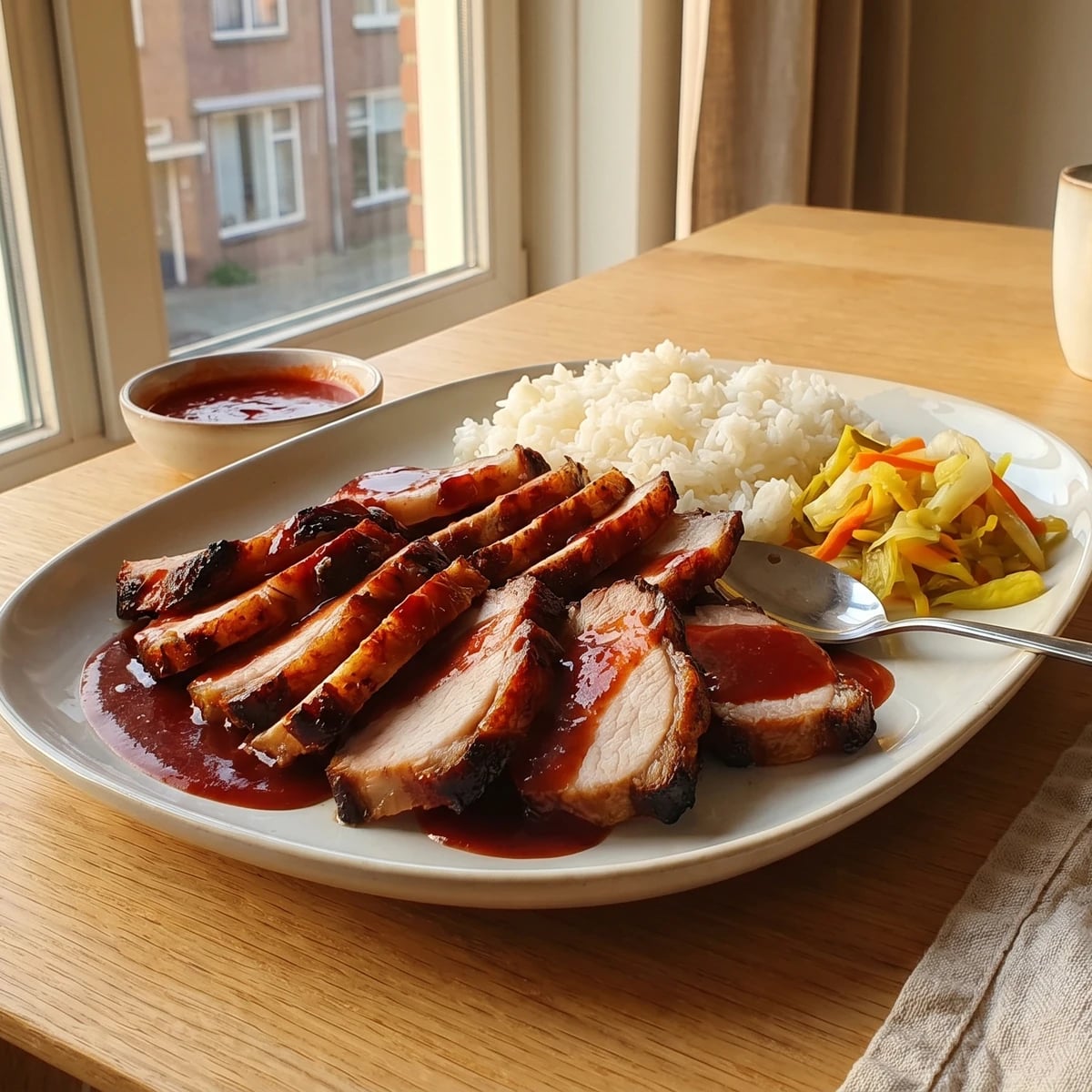
Babi pangang means roasted pork, but in the Netherlands it also means the Chinees-Indisch table: crisp-edged pork, red sweet-sour sauce, and colonial history served in a white takeaway tray.

Main Dishes
Dutch
Dinner Party
Comfort Food
Make Ahead
25 min
Active Time
1 hr 20 min cook2 hr 15 min total
Yield4 servings

The name already tells you the first truth, if you let it speak in the right language. Babi is pork in Malay and Indonesian, panggang is roasted or grilled, and there you have the plain grammar of the dish before the Dutch got involved. Plain grammar, never plain history.

But let me tell you a secret. The babi pangang most Dutch people know is not simply an Indonesian dish copied into Dutch kitchens. It is a Chinees-Indisch restaurant dish, born from migration, colonial memory, and practical restaurant genius: pork roasted until the edges catch, sliced, and served with a glossy red sweet-sour sauce that no Batak grandmother in Sumatra needed but every Dutch child learned to recognise from the takeaway counter. History and cookery, they cannot be separated, even when they arrive in a foil tray with kroepoek tucked beside them.

So we cook it honestly. The pork needs salt, five-spice, garlic, and time; the sauce needs tomato, vinegar, sugar, ginger, and restraint. Hou het altijd simpel, always keep it simple. Roast the meat ahead, let it cool enough to slice cleanly, then crisp it hard and fast before serving. The sauce goes alongside or over, depending on the household argument. I put it partly over and partly beside, for obvious reasons: peace at the table.

Babi pangang takes its name from Indonesian and Malay, where babi means pig or pork and panggang means roasted or grilled, and related pork dishes are especially associated with non-Muslim communities in Indonesia, including Batak, Balinese, and Chinese-Indonesian cooks. The Dutch version developed after the Second World War in the Chinees-Indisch restaurants that spread across the Netherlands, run largely by Chinese restaurateurs who adapted Indonesian and Cantonese cooking to Dutch expectations. Its bright sweet-sour tomato sauce is part of that Dutch restaurant evolution, making the dish less a direct import than a record of colonial return, migration, and the Dutch habit of adopting a taste until it feels like home.

The technique, the tradition, and the story behind every dish.

Discover Culinary Explorer

Ingredients

pork shoulder or pork belly, skin removed

Quantity

900g

in one piece

fine sea salt

Quantity

2 teaspoons

light soy sauce

Quantity

1 tablespoon

sunflower oil

Quantity

1 tablespoon

garlic cloves

Quantity

2

grated

Chinese five-spice powder

Quantity

1 teaspoon

ground coriander

Quantity

1/2 teaspoon

white pepper

Quantity

1/2 teaspoon

sunflower oil for crisping

Quantity

2 tablespoons

small onion

Quantity

1

finely grated

garlic cloves

Quantity

2

minced

fresh ginger

Quantity

2 teaspoons

grated

passata or smooth tomato purée

Quantity

200ml

water

Quantity

75ml

rice vinegar or mild white vinegar

Quantity

3 tablespoons

sugar

Quantity

3 tablespoons

light soy sauce

Quantity

1 tablespoon

ketjap manis

Quantity

1 tablespoon

sambal oelek (optional)

Quantity

1 teaspoon

potato starch or cornstarch

Quantity

1 teaspoon

cold water

Quantity

1 tablespoon

cooked white rice

Quantity

to serve

atjar tjampoer (optional)

Quantity

to serve

Equipment Needed

  • Roasting rack and tin
  • Small saucepan
  • Wide frying pan
  • Instant-read thermometer

Instructions

  1. 1

    Season the pork

    Pat the pork very dry. Mix the salt, soy sauce, oil, grated garlic, five-spice, coriander, and white pepper into a paste, then rub it all over the meat. Cover and refrigerate for at least 1 hour, or overnight if you can. Time is doing quiet work here: salt seasons the centre, and the surface dries enough to brown properly.

  2. 2

    Roast until tender

    Heat the oven to 180C. Set the pork on a rack over a roasting tin and roast for 55 to 70 minutes, until the centre reaches 72C and the outside is deep brown in patches. Rest it for 20 minutes. If you slice too soon, the juices run onto the board instead of staying where you paid for them.

    Pork belly gives the richest restaurant-style result; pork shoulder is meatier and easier to slice. Both are honest choices. Avoid lean loin here, which dries before the edges crisp.
  3. 3

    Make the sauce

    While the pork rests, put a small saucepan over medium heat with the grated onion, garlic, ginger, passata, water, vinegar, sugar, soy sauce, ketjap manis, and sambal. Simmer for 12 to 15 minutes, stirring now and then, until the raw onion smell is gone and the sauce tastes bright rather than sharp.

  4. 4

    Thicken the sauce

    Stir the potato starch with the cold water, then whisk it into the simmering sauce. Let it bubble for 1 minute until glossy and just thick enough to coat a spoon. Don't make pudding of it; the sauce should run around the pork, not sit on it like paint.

  5. 5

    Slice and crisp

    Slice the rested pork into pieces about 1cm thick. Heat 2 tablespoons of oil in a wide frying pan over medium-high heat and fry the slices in a single layer until the edges are crisp and browned, 2 to 3 minutes per side. This last pan is where the Dutch takeaway memory happens: roasted meat becoming something sharper, darker, and more eager under the teeth.

  6. 6

    Serve with sauce

    Spoon a little sauce onto a warm serving plate, lay the crisp pork over it, and pour more sauce across the centre, leaving some edges bare. Serve with white rice and atjar tjampoer, the sweet-sour pickled vegetables that keep the richness in line. Put extra sauce on the table, because somebody will ask, and they will be right.

Chef Tips

  • Make the pork a day ahead, chill it uncovered once cool, and slice it cold. Cold pork cuts cleanly, and the dry surface crisps faster in the pan.
  • Ketjap manis is sweet Indonesian soy sauce, not ordinary soy with sugar stirred in at the last minute. Use it if you can; it brings dark sweetness and a little molasses depth.
  • The red sauce should be sweet, sour, and lightly hot, not sugary ketchup. Taste it after simmering: add vinegar if it feels flat, sugar if it bites too hard, sambal if the table can bear it.
  • Serve with atjar tjampoer, mixed pickled vegetables. That sour crunch is not decoration; it is the small argument that makes the pork taste richer.

Advance Preparation

  • The pork can be seasoned up to 24 hours ahead and roasted the day before serving. Chill it, then slice and crisp just before dinner.
  • The sauce keeps three days in the refrigerator and reheats gently in a small pan. Add a spoonful of water if it thickens too much.
  • Leftover crisped pork keeps two days refrigerated, though it is best reheated in a dry frying pan rather than a microwave.

Frequently Asked Questions

Nutrition Information

1 serving (about 470g)

Calories
905 calories
Total Fat
50 g
Saturated Fat
15 g
Trans Fat
0 g
Unsaturated Fat
33 g
Cholesterol
160 mg
Sodium
2150 mg
Total Carbohydrates
66 g
Dietary Fiber
3 g
Sugars
18 g
Protein
46 g

Note: Chef personas and recipes are created with AI assistance. Cook with care: follow safe food-handling practices, check doneness with a thermometer when needed, and adapt for allergies and your kitchen.

Where cooking meets culture.

Culinary guides, cultural storytelling, and the editorial depth that makes cooking meaningful.

Discover Culinary Explorer

More from De Rijsttafel: Hoofdgerechten & Saté

Browse the full collection