
Chef Joost
Aardappelschotel met Gehakt
A plain name for a quietly clever dish: fresh mince, sweet fried onion, nutmeg, and mashed potato baked until the top goes golden and the table goes silent.
A cooking platform built around craft, culture, and the stories behind what we eat.
Created by
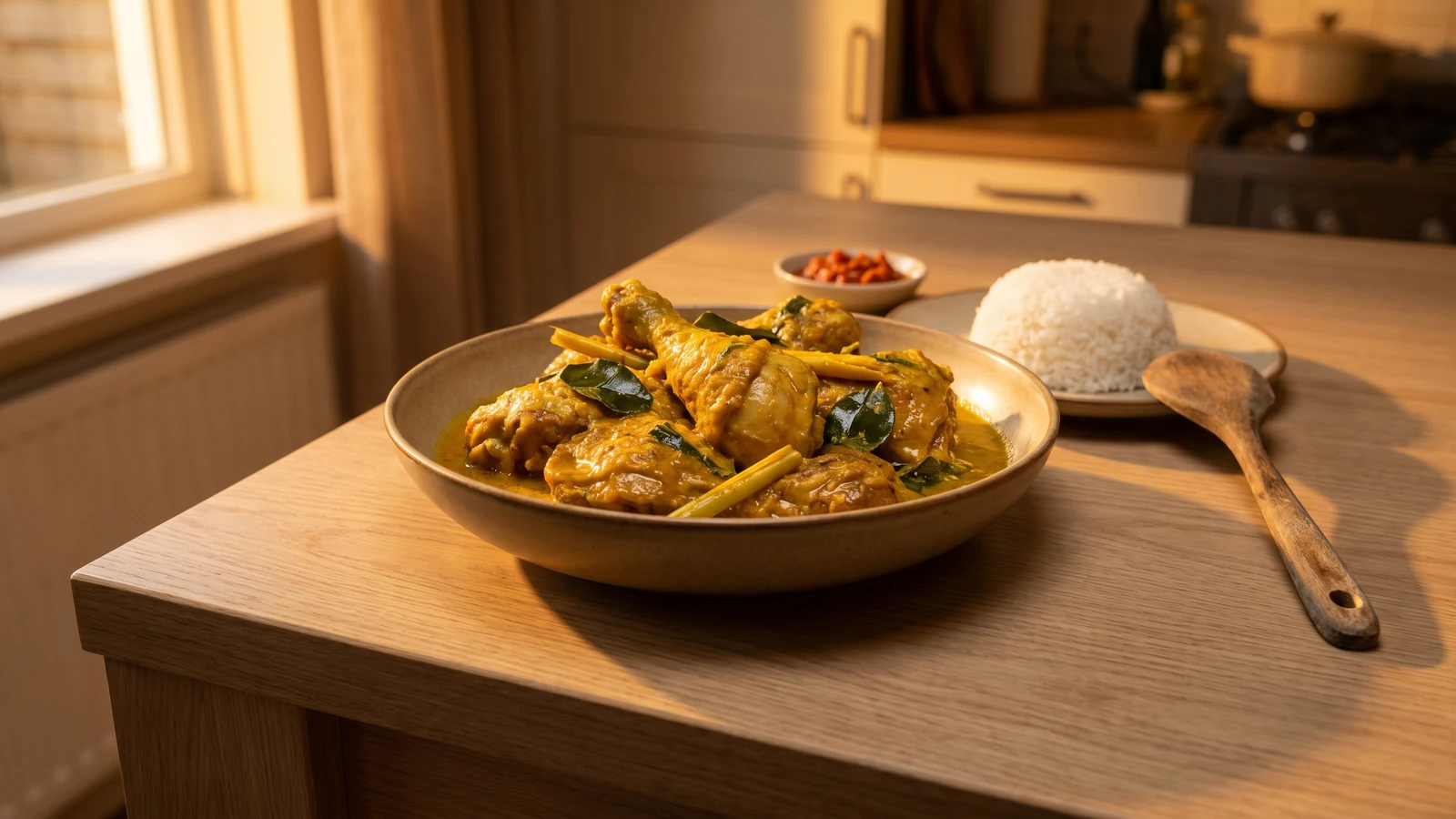
Ajam Besengek is the golden chicken stew of the Indo-Dutch table: coconut milk, turmeric, and candlenut cooked down until the sauce clings to the meat like memory.
The first time I understood the Indo-Dutch table properly was not in a restaurant, but in a living room where every dish arrived in a modest bowl, and every bowl carried a family route across water. Rice at the centre, sambal nearby, chicken here, vegetables there, pickles bright as punctuation. Rijsttafel, literally rice table, is not one dish. It is a conversation in many small plates, and Ajam Besengek speaks in a low golden voice.
The name already tells you part of the journey. Ajam is the old spelling of ayam, chicken, the form preserved in Dutch-Indonesian cookbooks before Indonesian spelling reform changed the j to y in 1972. Besengek is the sauce and method: a Javanese coconut-milk braise, thickened with ground candlenuts and stained yellow with turmeric. I will not pretend to pull that second word further apart for sport. A forced etymology is worse than none, and the pot already has enough to say.
But let me tell you a secret. The Dutch table people call plain has been eating turmeric, coriander, galangal, coconut, and sambal for generations, because colonial history came home and sat down to dinner. This is documented history, not a fashion. The candlenuts matter because they thicken the sauce without flour; the coconut milk must simmer gently because it can split when bullied; the chicken is better on the bone because bones give the sauce its quiet depth. Hou het altijd simpel, always keep it simple: pound the paste, brown the chicken, let the sauce reduce until it clings. Then put rice on the table and let people help themselves.
Ajam Besengek entered Dutch home cooking through the Indo-Dutch community, especially after the Indonesian War of Independence and the migration of hundreds of thousands of people from the former Dutch East Indies to the Netherlands between 1945 and the early 1960s. The spelling ajam reflects the pre-1972 Indonesian orthography retained in many Dutch-Indonesian cookbooks, while modern Indonesian writes ayam. Besengek belongs to the Javanese family of coconut-milk braises thickened with bumbu, a ground spice paste, and in Dutch rijsttafel it became a dependable poultry dish because it can be made ahead and served beside rice, sambal, pickles, and vegetables.
Quantity
1.2kg
skin removed if preferred
Quantity
1 teaspoon
Quantity
2 tablespoons
Quantity
6
roughly chopped
Quantity
4
roughly chopped
Quantity
4
Quantity
3cm fresh or 1 1/2 teaspoons ground
peeled and chopped if fresh
Quantity
3cm
sliced
Quantity
2cm
chopped
Quantity
2 teaspoons
Quantity
1/2 teaspoon
Quantity
1 teaspoon
Quantity
2 stalks
bruised
Quantity
3 daun salam or 2 bay leaves
Quantity
3
torn
Quantity
400ml
Quantity
250ml
Quantity
1 tablespoon tamarind water or 2 teaspoons lime juice
Quantity
to taste
Quantity
to serve
Quantity
to serve
| Ingredient | Quantity |
|---|---|
| bone-in chicken thighs and drumsticksskin removed if preferred | 1.2kg |
| fine sea salt | 1 teaspoon |
| neutral oil | 2 tablespoons |
| shallotsroughly chopped | 6 |
| garlic clovesroughly chopped | 4 |
| candlenuts (kemiri), or macadamia nuts | 4 |
| fresh turmeric, or ground turmericpeeled and chopped if fresh | 3cm fresh or 1 1/2 teaspoons ground |
| fresh galangalsliced | 3cm |
| fresh gingerchopped | 2cm |
| ground coriander | 2 teaspoons |
| ground cumin | 1/2 teaspoon |
| palm sugar or light brown sugar | 1 teaspoon |
| lemongrassbruised | 2 stalks |
| Indonesian bay leaves (daun salam), or fresh bay leaves | 3 daun salam or 2 bay leaves |
| kaffir lime leavestorn | 3 |
| full-fat coconut milk | 400ml |
| chicken stock or water | 250ml |
| tamarind water, or lime juice | 1 tablespoon tamarind water or 2 teaspoons lime juice |
| salt | to taste |
| cooked white rice | to serve |
| sambal (optional) | to serve |
Season the chicken pieces with the teaspoon of salt and leave them on the counter while you make the paste. Twenty minutes is enough. The salt wakes the meat before it meets the coconut, and bone-in pieces will give the sauce more body than neat little cubes ever could.
Grind the shallots, garlic, candlenuts, turmeric, galangal, ginger, coriander, cumin, and sugar into a rough paste, called bumbu, the spice paste that carries the dish. Use a mortar if the evening is kind to you, or a small food processor with a spoonful of water if it isn't. Candlenuts must be cooked, so don't taste the raw paste and don't leave it pale in the pan later.
Heat the oil in a heavy braadpan, a Dutch braising pot, over medium heat. Add the bumbu and fry it for 6 to 8 minutes, stirring often, until it darkens from raw yellow to deep gold and the sharp smell of raw shallot turns sweet. This step is the spine of the dish. Hurry it and the sauce tastes unfinished.
Push the paste to the side of the pan and add the chicken pieces, turning them so they pick up the golden paste and lightly colour on the outside. You are not building a roast crust here. You are waking the chicken and letting the spice fat coat every piece before the coconut milk arrives.
Add the bruised lemongrass, daun salam, kaffir lime leaves, coconut milk, and stock or water. Stir carefully, bring just to a low simmer, then lower the heat so the surface trembles rather than boils. Cook uncovered for 40 to 45 minutes, turning the chicken once or twice, until the meat is tender and the sauce has reduced enough to cling thickly to a spoon.
Stir in the tamarind water, or lime juice if that is what you have, then taste for salt. The sauce should be rich, yellow, lightly tart, and thick from coconut and candlenut, not flour. Remove the lemongrass and whole leaves before serving, unless your table enjoys fishing for evidence.
Serve the chicken with plenty of plain white rice and sambal at the table. For a rijsttafel, keep the portions modest and let this sit among vegetables, pickles, eggs, and something crisp. For dinner at home, a bowl of rice and a spoonful of sauce are already enough.
1 serving (about 430g)
Culinary guides, cultural storytelling, and the editorial depth that makes cooking meaningful.
Discover Culinary ExplorerChef Joost
A plain name for a quietly clever dish: fresh mince, sweet fried onion, nutmeg, and mashed potato baked until the top goes golden and the table goes silent.

Chef Joost
The old Dutch spelling says ajam, the city says Batavia, and the pot says exactly what the rijsttafel always was: memory, trade, and dinner in one dish.

Chef Joost
The name means simply fried chicken, but the Dutch spelling carries a whole Indies kitchen: turmeric, coriander, garlic, and a golden crust that remembers the boemboe.

Chef Joost
Ajam is the old Dutch spelling of ayam, chicken, and opor is the pale coconut braise that lets a rijsttafel breathe between its darker, hotter dishes.