
Chef Joost
Aardappelschotel met Gehakt
A plain name for a quietly clever dish: fresh mince, sweet fried onion, nutmeg, and mashed potato baked until the top goes golden and the table goes silent.
A cooking platform built around craft, culture, and the stories behind what we eat.
Created by
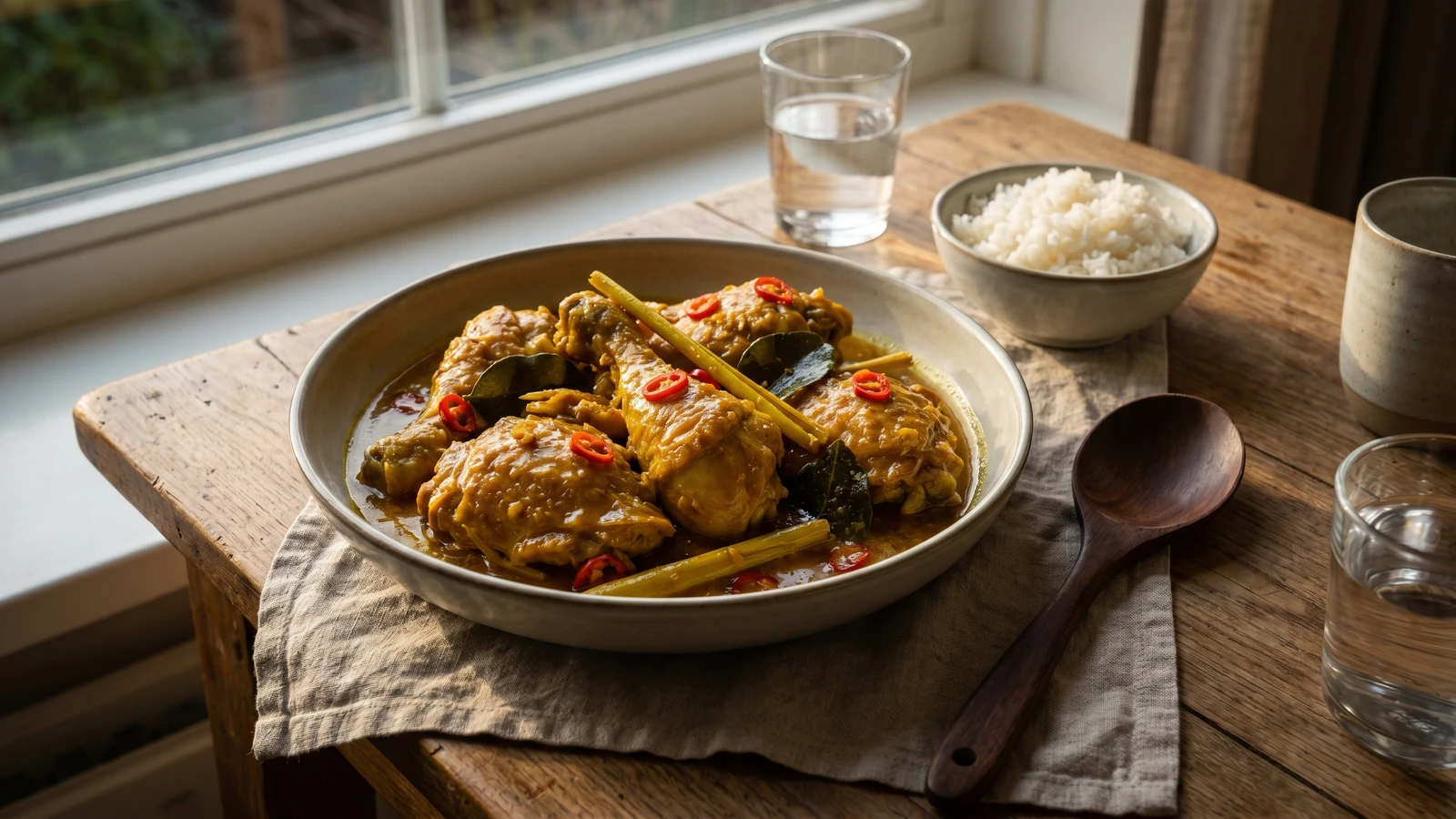
Ajam Paniki is an Indische recipe card with a Manado heart: chicken standing in for paniki, fruit bat, then simmered in coconut milk, ginger, lemongrass, and chilli until the sauce turns gold.
The first time I saw Ajam Paniki, it was not in Manado. It was on an old Dutch recipe card, typed slightly crooked, with oil marks at the corner and that little spelling fossil in the title: ajam, with a j. In modern Indonesian it is ayam, chicken, but the Netherlands kept the older spelling in cupboards and community cookbooks, folded between rijsttafel menus and recipes carried across the sea after empire had made its bill and left ordinary families to cook the consequences.
The second word is the secret. Paniki, in North Sulawesi, names fruit bat, a traditional Minahasan meat cooked with coconut, chilli, ginger, turmeric, and lemongrass. Dutch home kitchens did what home kitchens always do when the real ingredient is absent, inconvenient, or unlikely to survive a Tuesday supper table: they kept the method, changed the meat, and did not throw away the name. History and cookery, they cannot be separated, even when the chicken is doing diplomatic work.
But let me tell you a secret: the honest thing here is not to make the dish timid because it has reached a Dutch table. Manado cooking is bright, hot, and aromatic. You may soften the chillies if your table asks for mercy, but the ginger, lemongrass, turmeric, and coconut must still speak clearly. The work is simple. Fry the bumbu, the spice paste, until its raw sharpness is gone, then simmer the chicken gently in coconut milk until the sauce beads with oil at the edge and clings to the spoon. Hou het altijd simpel, always keep it simple, but do not skip the frying of the paste. That is where the dish becomes itself.
Ajam Paniki belongs to the Minahasan cooking of Manado in North Sulawesi, where paniki refers to fruit bat, a traditional meat in the region; chicken versions use the same coconut, chilli, ginger, turmeric, and lemongrass profile while replacing the animal. In the Netherlands the dish entered the Indische keuken, the Indo-Dutch home table shaped by the former Dutch East Indies and by the post-1949 migration of roughly 300,000 people from Indonesia to the Netherlands. The spelling ajam preserves older Indonesian orthography used in colonial-era Dutch cookbooks before the 1972 Indonesian spelling reform made ayam standard.
Quantity
1.2kg
skin removed
Quantity
1
juiced
Quantity
1 1/2 teaspoons
divided
Quantity
6
roughly chopped
Quantity
4
roughly chopped
Quantity
3
roughly chopped, seeds removed if you want gentler heat
Quantity
1 to 2
Quantity
4 candlenuts or 2 tablespoons macadamias
toasted
Quantity
3cm piece
peeled and sliced
Quantity
3cm piece or 1 teaspoon
peeled and sliced if fresh
Quantity
3 tablespoons
Quantity
2
bruised
Quantity
4
torn
Quantity
400ml
Quantity
150ml
Quantity
1 teaspoon
Quantity
1 tablespoon
extra if needed
Quantity
small handful
Quantity
to serve
| Ingredient | Quantity |
|---|---|
| bone-in chicken thighs and drumsticksskin removed | 1.2kg |
| limejuiced | 1 |
| fine sea saltdivided | 1 1/2 teaspoons |
| shallotsroughly chopped | 6 |
| garlic clovesroughly chopped | 4 |
| large red chilliesroughly chopped, seeds removed if you want gentler heat | 3 |
| bird's eye chillies (optional) | 1 to 2 |
| candlenuts (kemiri), or unsalted macadamiastoasted | 4 candlenuts or 2 tablespoons macadamias |
| fresh gingerpeeled and sliced | 3cm piece |
| fresh turmeric, or ground turmericpeeled and sliced if fresh | 3cm piece or 1 teaspoon |
| neutral oil | 3 tablespoons |
| lemongrass stalksbruised | 2 |
| makrut lime leavestorn | 4 |
| full-fat coconut milk | 400ml |
| water | 150ml |
| palm sugar or light brown sugar | 1 teaspoon |
| lime juiceextra if needed | 1 tablespoon |
| lemon basil (kemangi) or Thai basil (optional) | small handful |
| cooked white rice | to serve |
Put the chicken pieces in a bowl with the juice of one lime and 1 teaspoon of the salt. Turn them with your hands and leave them for 15 minutes while you make the paste. The lime is not there to perfume the chicken politely; it wakes the meat up before the coconut arrives.
Blend the shallots, garlic, red chillies, bird's eye chillies if using, candlenuts, ginger, and turmeric into a rough paste. Add a spoonful of water only if the blender refuses to move. A bumbu, the Indonesian spice paste, should have body, not swim around like soup.
Heat the oil in a heavy braadpan, a lidded Dutch casserole, over medium heat. Add the bumbu and fry for 7 to 9 minutes, stirring often, until it darkens slightly, smells cooked rather than raw, and the oil begins to show at the edges. This is the step people hurry, for obvious reasons, and it is also the step that decides whether the sauce tastes deep or merely busy.
Add the chicken and turn every piece through the fried paste. Add the lemongrass, makrut lime leaves, coconut milk, water, palm sugar, and the remaining 1/2 teaspoon salt. Bring it just to a simmer, then lower the heat, cover partly, and cook for 35 to 40 minutes, turning the pieces once or twice. The coconut milk should move lazily at the edge of the pan, not boil hard. The chicken is done when it pulls easily at the bone and reads 74C at the thickest part if you check with a thermometer.
Uncover the pan and simmer for another 10 to 15 minutes until the sauce thickens to a golden coating and clings to the spoon. Taste for salt and sharpen with the tablespoon of lime juice. Pull out the lemongrass, scatter over lemon basil if using, and let the pan rest for 10 minutes before serving with white rice. The rest matters. Coconut, chilli, and chicken need a little quiet together before they meet the table.
1 serving (about 420g)
Culinary guides, cultural storytelling, and the editorial depth that makes cooking meaningful.
Discover Culinary ExplorerChef Joost
A plain name for a quietly clever dish: fresh mince, sweet fried onion, nutmeg, and mashed potato baked until the top goes golden and the table goes silent.

Chef Joost
Ajam Besengek is the golden chicken stew of the Indo-Dutch table: coconut milk, turmeric, and candlenut cooked down until the sauce clings to the meat like memory.

Chef Joost
The old Dutch spelling says ajam, the city says Batavia, and the pot says exactly what the rijsttafel always was: memory, trade, and dinner in one dish.

Chef Joost
The name means simply fried chicken, but the Dutch spelling carries a whole Indies kitchen: turmeric, coriander, garlic, and a golden crust that remembers the boemboe.