
Chef Joost
Aardappelschotel met Gehakt
A plain name for a quietly clever dish: fresh mince, sweet fried onion, nutmeg, and mashed potato baked until the top goes golden and the table goes silent.
A cooking platform built around craft, culture, and the stories behind what we eat.
Created by
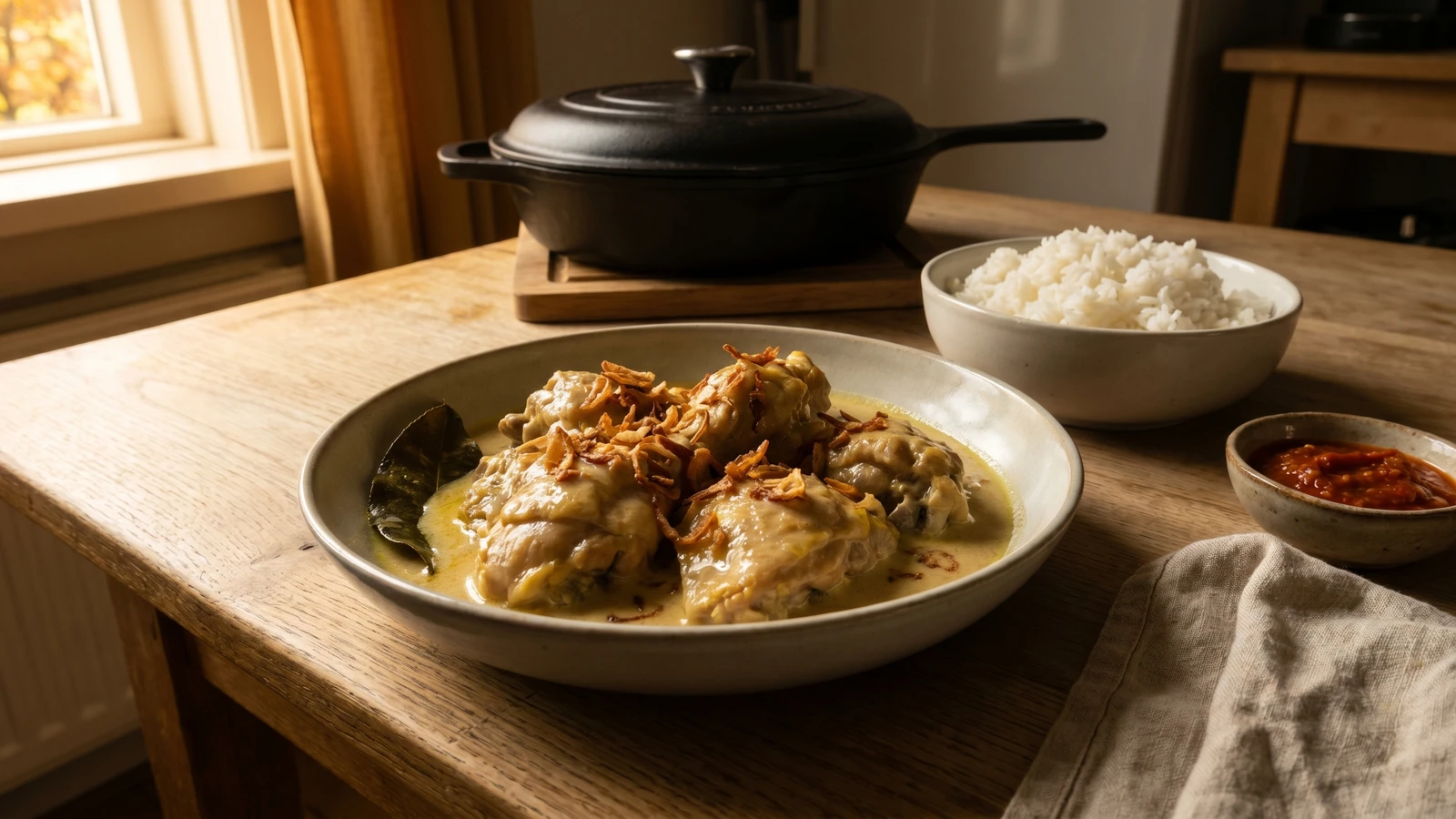
Ajam is the old Dutch spelling of ayam, chicken, and opor is the pale coconut braise that lets a rijsttafel breathe between its darker, hotter dishes.
The quietest dish at a rijsttafel is often the one doing the most work. At an Indo-Dutch table, where sambal flashes red and soy-dark stews sit beside pickles sharp enough to wake the grandfather in the next room, ajam opor arrives pale, soft, and almost shy. That is its trick. It is not there to compete. It lets the table breathe.
The name already tells you who wrote it down. Today Indonesian writes ayam for chicken; the Dutch cookbooks of the Indies wrote ajam, with the old j doing the work that y does now. Opor I will not decorate beyond its right: a Javanese coconut-milk braise, especially at Lebaran tables with ketupat, then carried into Dutch home cooking through the Indo-Dutch kitchen and the rijsttafel, rice table. History and cookery, they cannot be separated, least of all when the spelling itself has crossed the sea.
But let me tell you a secret: the mild dish is not the weak dish. Coconut milk is generous only if you don't shout at it. Boil it hard and it breaks; coax it and it carries lemongrass, salam leaf, galangal, and the round little weight of candlenut into the chicken. So we keep the flame low, the sauce glossy, and the cooking honest. Hou het altijd simpel, always keep it simple, and let the pale bowl do its old work at the table.
Ajam is the old colonial spelling of Indonesian ayam, chicken; the Van Ophuijsen spelling system of 1901 used j for the sound modern Indonesian writes as y. Opor ayam is a Javanese coconut-milk braise closely associated with Lebaran, when it is served with ketupat or lontong after the fasting month of Ramadan. In the Netherlands it entered home cooking through the Indo-Dutch table and the rijsttafel, especially after Indonesian independence and the post-1949 migration of Indo-European families, where its mild pale sauce became the necessary counterweight to darker, hotter dishes.
Quantity
1.4kg
skin removed
Quantity
1 tablespoon
Quantity
1 1/2 teaspoons, plus more to taste
Quantity
6
chopped
Quantity
4
chopped
Quantity
5
Quantity
2 teaspoons
Quantity
1/2 teaspoon
Quantity
1/2 teaspoon
Quantity
1/2 teaspoon
Quantity
3 tablespoons
Quantity
2
bruised
Quantity
5cm piece
sliced and bruised
Quantity
3
Quantity
3
Quantity
800ml
divided
Quantity
300ml
Quantity
2 teaspoons
Quantity
to serve
Quantity
to serve
Quantity
to serve
| Ingredient | Quantity |
|---|---|
| bone-in chicken thighs and drumsticksskin removed | 1.4kg |
| lime juice | 1 tablespoon |
| fine salt | 1 1/2 teaspoons, plus more to taste |
| shallotschopped | 6 |
| garlic cloveschopped | 4 |
| candlenuts (kemiri) or macadamia nuts | 5 |
| ground coriander | 2 teaspoons |
| ground cumin | 1/2 teaspoon |
| ground white pepper | 1/2 teaspoon |
| ground turmeric | 1/2 teaspoon |
| neutral oil | 3 tablespoons |
| lemongrass stalksbruised | 2 |
| fresh galangalsliced and bruised | 5cm piece |
| salam leaves (Indonesian bay leaves) | 3 |
| makrut lime leaves (optional) | 3 |
| full-fat coconut milkdivided | 800ml |
| chicken stock or water | 300ml |
| palm sugar or light brown sugar | 2 teaspoons |
| fried shallots (bawang goreng) (optional) | to serve |
| steamed rice, lontong, or ketupat | to serve |
| sambal oelek (optional) | to serve |
Toss the chicken pieces with the lime juice and 1 1/2 teaspoons salt. Let them stand for 15 minutes while you make the bumbu, the spice paste. This short rest seasons the meat all the way to the bone and gives the finished sauce a cleaner taste.
Blend or pound the shallots, garlic, candlenuts, coriander, cumin, white pepper, and turmeric into a smooth paste, adding a spoonful of coconut milk only if the machine needs help. The candlenuts are not there for drama; they thicken the sauce and give it that soft, rounded body that makes opor opor.
Warm the oil in a heavy braadpan or Dutch oven over medium heat. Add the bumbu and cook for 6 to 8 minutes, stirring often, until the raw onion smell has gone and the paste looks glossy with tiny beads of oil at the edge. Add the lemongrass, galangal, salam leaves, and makrut lime leaves for the last minute so their fragrance opens in the oil.
Add the chicken pieces and turn them through the paste until every surface is coated. Cook for 5 minutes, moving the pieces gently. You are not browning them hard; opor should stay pale, and the flavor comes from the patient paste rather than a dark crust.
Pour in 400ml of the coconut milk and the chicken stock or water, scraping the bottom of the pot. Bring it only to a bare simmer, then cover partly and cook for 30 to 35 minutes, turning the chicken once. The sauce should tremble, not boil. Coconut milk forgives many things, but not being bullied.
Stir in the remaining 400ml coconut milk and the palm sugar. Simmer uncovered for 10 to 15 minutes, still gently, until the chicken is tender and the sauce coats a spoon in a pale ivory-gold layer. Taste for salt now, because the sauce has reduced and the chicken has given back what it took.
Turn off the heat and let the opor rest for 10 minutes. Lift out the lemongrass and galangal if you like a neater table. Serve with steamed rice, lontong, or ketupat, and scatter fried shallots over the top. Put sambal oelek beside it, not in it; the mildness is the point.
1 serving (about 320g)
Culinary guides, cultural storytelling, and the editorial depth that makes cooking meaningful.
Discover Culinary ExplorerChef Joost
A plain name for a quietly clever dish: fresh mince, sweet fried onion, nutmeg, and mashed potato baked until the top goes golden and the table goes silent.

Chef Joost
Ajam Besengek is the golden chicken stew of the Indo-Dutch table: coconut milk, turmeric, and candlenut cooked down until the sauce clings to the meat like memory.

Chef Joost
The old Dutch spelling says ajam, the city says Batavia, and the pot says exactly what the rijsttafel always was: memory, trade, and dinner in one dish.

Chef Joost
The name means simply fried chicken, but the Dutch spelling carries a whole Indies kitchen: turmeric, coriander, garlic, and a golden crust that remembers the boemboe.