
Chef Joost
Ajam Besengek
Ajam Besengek is the golden chicken stew of the Indo-Dutch table: coconut milk, turmeric, and candlenut cooked down until the sauce clings to the meat like memory.
A cooking platform built around craft, culture, and the stories behind what we eat.
Created by
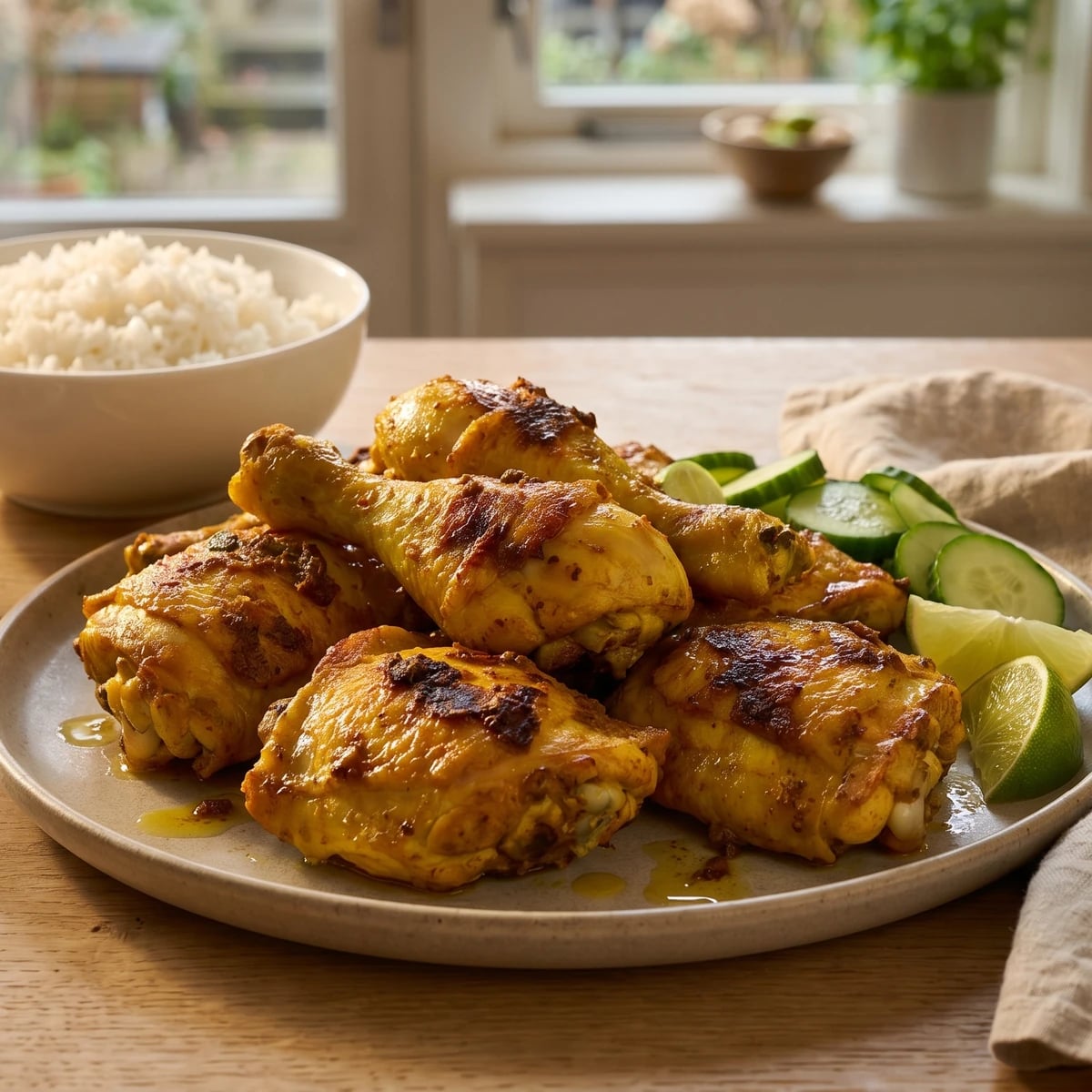
The name means simply fried chicken, but the Dutch spelling carries a whole Indies kitchen: turmeric, coriander, garlic, and a golden crust that remembers the boemboe.
The name already tells you the secret, if you let the old spelling speak. Ajam is the Dutch-Indies spelling of what modern Indonesian writes ayam, chicken. Goreng means fried. So yes, this is fried chicken. But let me tell you a secret: some names are plain only because they are honest.
Ajam goreng came to Dutch tables through the Indo-Dutch kitchen, through family rice tables, paper-wrapped toko dinners, and the quiet stubbornness of people who carried recipes across an empire's collapse and into small Dutch kitchens with linoleum floors. This is not a borrowed garnish. It is documented history on a plate, the afterlife of the Netherlands East Indies in the Netherlands itself, where boemboe, a spice paste, became as familiar to some families as gravy was to others.
The method is the whole lesson. You don't throw raw chicken into oil and hope courage will season it. First you simmer it gently with garlic, shallot, turmeric, coriander, laos (galangal), and sereh (lemongrass), so the chicken cooks through and the spices enter the flesh. Then you fry it briefly and fiercely, just long enough for the outside to go golden and aromatic. Hou het altijd simpel, always keep it simple. The stew gives you flavor and safety; the frying gives you the crust.
Ajam goreng belongs to the Indo-Dutch table that took shape in the former Netherlands East Indies and became part of everyday Dutch food culture after Indonesian independence in 1945, especially through Indo-European repatriate households and tokos in Dutch cities. The old spelling ajam reflects Dutch colonial orthography, while modern Indonesian writes ayam; goreng means fried in Indonesian and Malay. Its familiar Dutch home version often cooks the chicken first in a boemboe, from Indonesian bumbu, before frying, a practical technique that gives seasoned meat and a quick crisp finish.
Quantity
1.2kg
Quantity
6
roughly chopped
Quantity
5
roughly chopped
Quantity
2 teaspoons
Quantity
1 1/2 teaspoons
Quantity
1 teaspoon
Quantity
1 teaspoon
Quantity
3cm
sliced
Quantity
1 teaspoon
Quantity
1 stalk
bruised
Quantity
2
Quantity
250ml
Quantity
1 tablespoon
Quantity
as needed
for shallow frying
Quantity
to serve
Quantity
to serve
Quantity
to serve
| Ingredient | Quantity |
|---|---|
| bone-in chicken thighs and drumsticks | 1.2kg |
| shallotsroughly chopped | 6 |
| garlic clovesroughly chopped | 5 |
| ground coriander | 2 teaspoons |
| ground turmeric | 1 1/2 teaspoons |
| fine salt | 1 teaspoon |
| palm sugar or light brown sugar | 1 teaspoon |
| fresh galangal (laos)sliced | 3cm |
| ground galangal (optional) | 1 teaspoon |
| lemongrass (sereh)bruised | 1 stalk |
| Indonesian bay leaves (daun salam) (optional) | 2 |
| coconut water or plain water | 250ml |
| lime juice | 1 tablespoon |
| neutral oilfor shallow frying | as needed |
| cucumber slices (optional) | to serve |
| sambal oelek (optional) | to serve |
| cooked white rice | to serve |
Pound or blend the shallots, garlic, coriander, turmeric, salt, and sugar into a rough paste. This is the boemboe, the spice paste, and it does not need to be silky. A little texture clings to the chicken later, which is exactly where the flavor should sit.
Put the chicken in a wide pan with the boemboe, galangal, lemongrass, daun salam if using, and coconut water. Turn the pieces until they are yellow all over, then bring the liquid to a gentle simmer. Cover and cook for 25 minutes, turning once, until the chicken is cooked through and the spice has stained the meat down to the bone.
Uncover the pan and simmer for another 8 to 10 minutes, turning the chicken gently, until most of the liquid has reduced to a thick yellow coating. Lift the chicken onto a rack or plate and let it dry for 10 minutes. Wet chicken spits in oil and steams its own crust, for obvious reasons.
Pour 1cm of neutral oil into a heavy frying pan and heat it over medium-high heat. Fry the chicken in batches, skin side down first, for 3 to 4 minutes per side until the outside is deep golden and the boemboe has formed a fragrant crust. The meat is already cooked; you are finishing the surface, not punishing the bird.
Drain the chicken briefly on a rack, then sprinkle with lime juice. Serve with white rice, cucumber slices, and sambal oelek at the table. I prefer to keep it a bit more relaxed, in the Dutch way: one platter, rice nearby, and everyone reaching across.
1 serving (about 415g)
Culinary guides, cultural storytelling, and the editorial depth that makes cooking meaningful.
Discover Culinary Explorer
Chef Joost
Ajam Besengek is the golden chicken stew of the Indo-Dutch table: coconut milk, turmeric, and candlenut cooked down until the sauce clings to the meat like memory.

Chef Joost
The old Dutch spelling says ajam, the city says Batavia, and the pot says exactly what the rijsttafel always was: memory, trade, and dinner in one dish.

Chef Joost
Ajam is the old Dutch spelling of ayam, chicken, and opor is the pale coconut braise that lets a rijsttafel breathe between its darker, hotter dishes.

Chef Joost
Ajam Paniki is an Indische recipe card with a Manado heart: chicken standing in for paniki, fruit bat, then simmered in coconut milk, ginger, lemongrass, and chilli until the sauce turns gold.