
Chef Joost
Rempejek Katjang (Indo-Dutch Peanut Fritters)
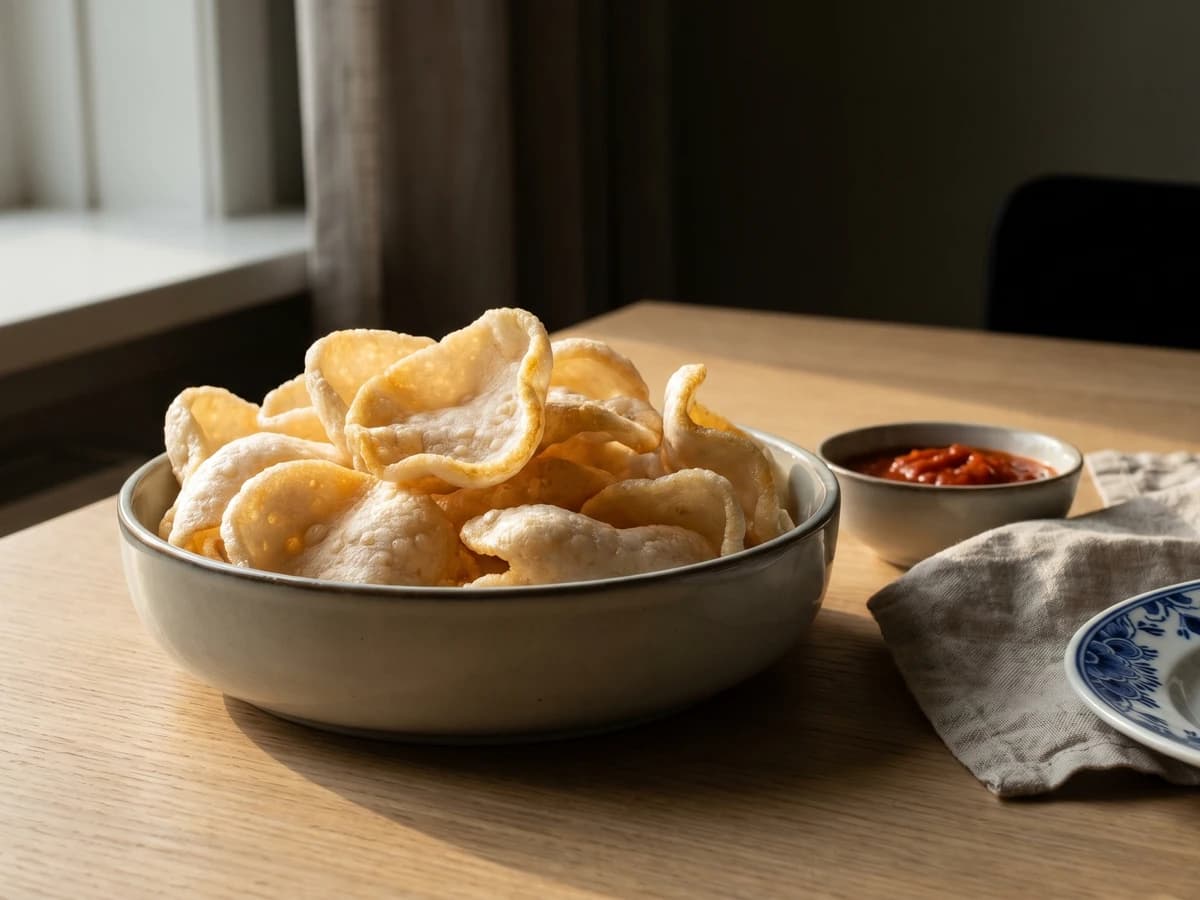
Old spelling, clean crackle at the table: rempejek katjang turns rice flour, coconut milk, lime leaf, and pinda's into the lacy peanut crisp that makes rijsttafel feel complete.

Updated June 12, 2026
The many small dishes that make a rice table a rijsttafel: sambal goreng telor and boontjes, gado-gado, sajoer lodeh, seroendeng, kroepoek, pisang goreng, and the pindasaus that binds it. The bijgerechten are the point; the rice is only the table. Documented Indo-Dutch colonial history, never "fusion."
A cooking platform built around craft, culture, and the stories behind what we eat.
Chef Joost
Old spelling, clean crackle at the table: rempejek katjang turns rice flour, coconut milk, lime leaf, and pinda's into the lacy peanut crisp that makes rijsttafel feel complete.
Chef Joost
The crackle at the start of a Dutch rijsttafel is Indonesian in name and memory: cassava starch, prawn, hot oil, and a whole colonial table speaking at once.

Chef Joost
The connoisseur's cracker of the Indo-Dutch table: bitter, crisp, pounded from melinjo seeds, and fried so quickly that hesitation is the only real danger.

Chef Joost
Banana-leaf parcels of coconut sticky rice wrapped around spiced chicken, the Javanese snack that crossed into Dutch party tables through the Indo-Dutch kitchen and still disappears first at a rijsttafel.

Chef Joost
Urap is the green, coconut-bright dish that keeps a rijsttafel honest: vegetables barely cooked, coconut warmly spiced, and every bite reminding the Dutch table where its colonial memory still sits.

Chef Joost
The name means a jumble, and the plate proves it: green beans, cabbage, egg, potatoes, and tofu gathered under pindasaus, Java carried into the Dutch rijsttafel.

Chef Joost
The peanut sauce the Dutch learned through Indonesia, where peanuts, ketjap, sambal, and santen became the brown, glossy thread tying saté, rijsttafel, gado-gado, and even fries together.

Chef Joost
Acar means pickle, ketimun means cucumber, and this little bowl of sweet vinegar, chilli, and crunch is the cool note that lets an Indo-Dutch rijsttafel keep its balance.

Chef Joost
The little bowl beside the rice tells a large history: toasted coconut, peanuts, palm sugar, and spice, made patient and golden for the Indo-Dutch table.

Chef Joost
Before rijsttafel becomes a table of plenty, it begins here: red chilies, salt, and the stone-mortar logic that taught Dutch kitchens a sharper language.

Chef Joost
This is the sambal that learned patience in the pan: fried until the raw fire softens, the shallots sweeten, and the rijsttafel finds its red punctuation.

Chef Joost
Bawang goreng means fried onion, but on the Indo-Dutch table it is far more precise: the crisp golden shallot that makes nasi, soto, and sajoer taste finished.

Chef Joost
Pungent in the jar, necessary on the plate: sambal trassi is the small red spoonful that makes the Indo-Dutch table speak plainly.

Chef Joost
Pisang means banana, goreng means fried, and on the Indo-Dutch table this small golden side dish does the clever work of sweetness among sambal, rice, and ketjap.

Chef Joost
The Dutch frikadel went east, learned potato, shallot, and nutmeg, and came home as perkedel kentang: crisp-edged, tender-hearted proof that history can fit on a side plate.

Chef Joost
The name carries a Dutch word through an Indonesian kitchen: frikadel became perkedel, corn became jagung, and the rijsttafel gained its most dangerous little fritter.
Chef Joost
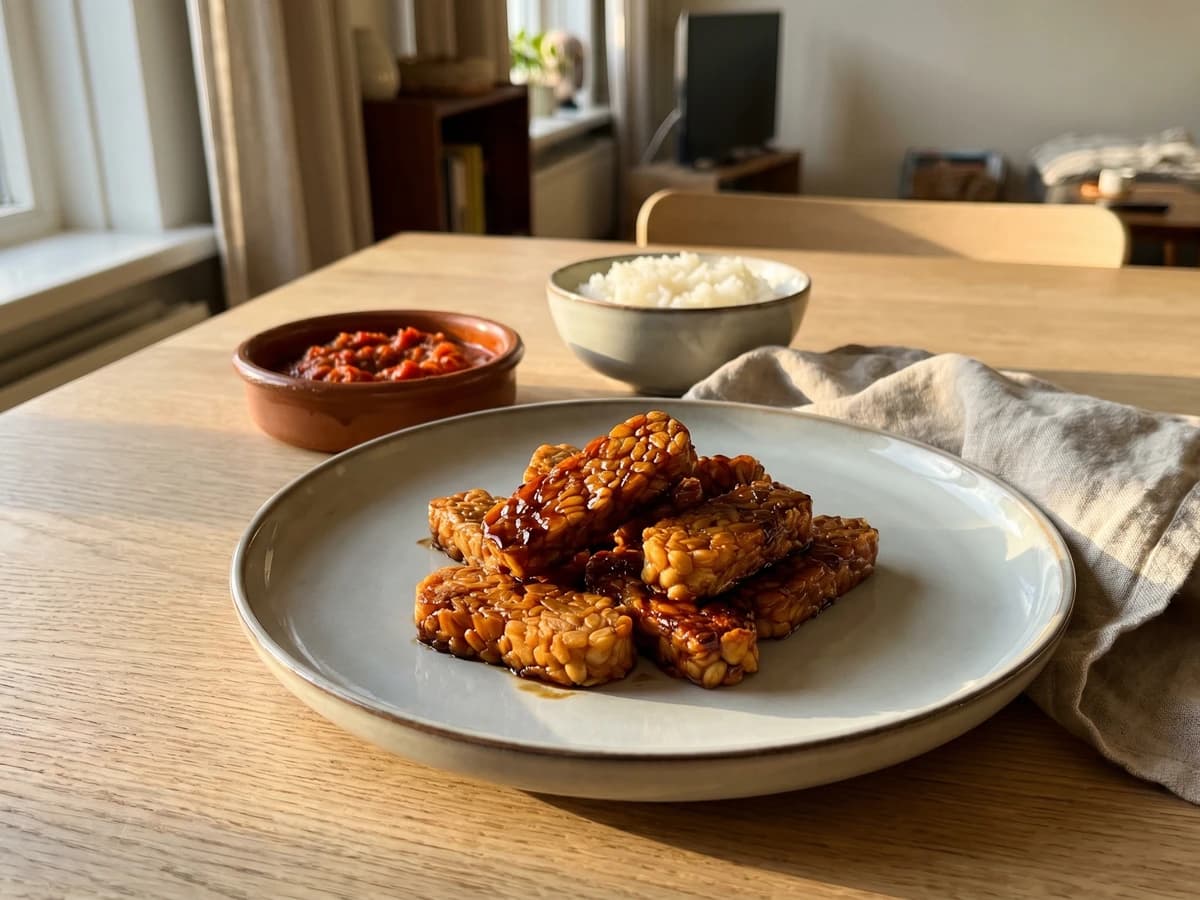
A Javanese soybean cake, a Dutch colonial table, and one honest pan of hot oil: tempeh goreng proves the Indo-Dutch side dish can be both spare and generous.

Chef Joost
Old Dutch spelling, Javanese broth, and vegetables in santen, coconut milk: sajoer lodeh is the mild dish that lets a rijsttafel breathe between sambal, satay, and rice.

Chef Joost
The name is half Indonesian and half Dutch, which is exactly the point: green beans softened in santen, shallot, and laos, quiet enough to sit beside every sambal on the table.

Chef Joost
Sambal goreng boontjes is the workhorse vegetable of the Indo-Dutch rijsttafel: green beans kept crisp in fried chile paste, coconut cream, and ketjap, bright enough to steady a table of many dishes.

Chef Joost
The brown-sauced egg of the Indo-Dutch rijsttafel: boiled, fried, then simmered until chile, coconut, and ketjap cling to it like family memory.

Chef Joost
The Indo-Dutch rijsttafel would be poorer without these crisp potato matchsticks, fried first, then lacquered in sambal, ketjap manis, garlic, and tamarind.

Chef Joost
The name says exactly what the dish is: liver carried through fried chili paste and coconut milk, a small fierce plate from the Indo-Dutch rijsttafel.

Chef Joost
Fermented soybean tempeh, fried crisp and lacquered with sweet chili, ketjap, and coconut, carries the Indo-Dutch table's most practical wisdom: make it ahead, then pass it generously.
Culinary guides, cultural storytelling, and the editorial depth that makes cooking meaningful.
Discover Culinary ExplorerChef Joost is a fictional culinary guide to Dutch Regional Cuisine, written with the assistance of AI.