Chef Joost
Aardappelgratin
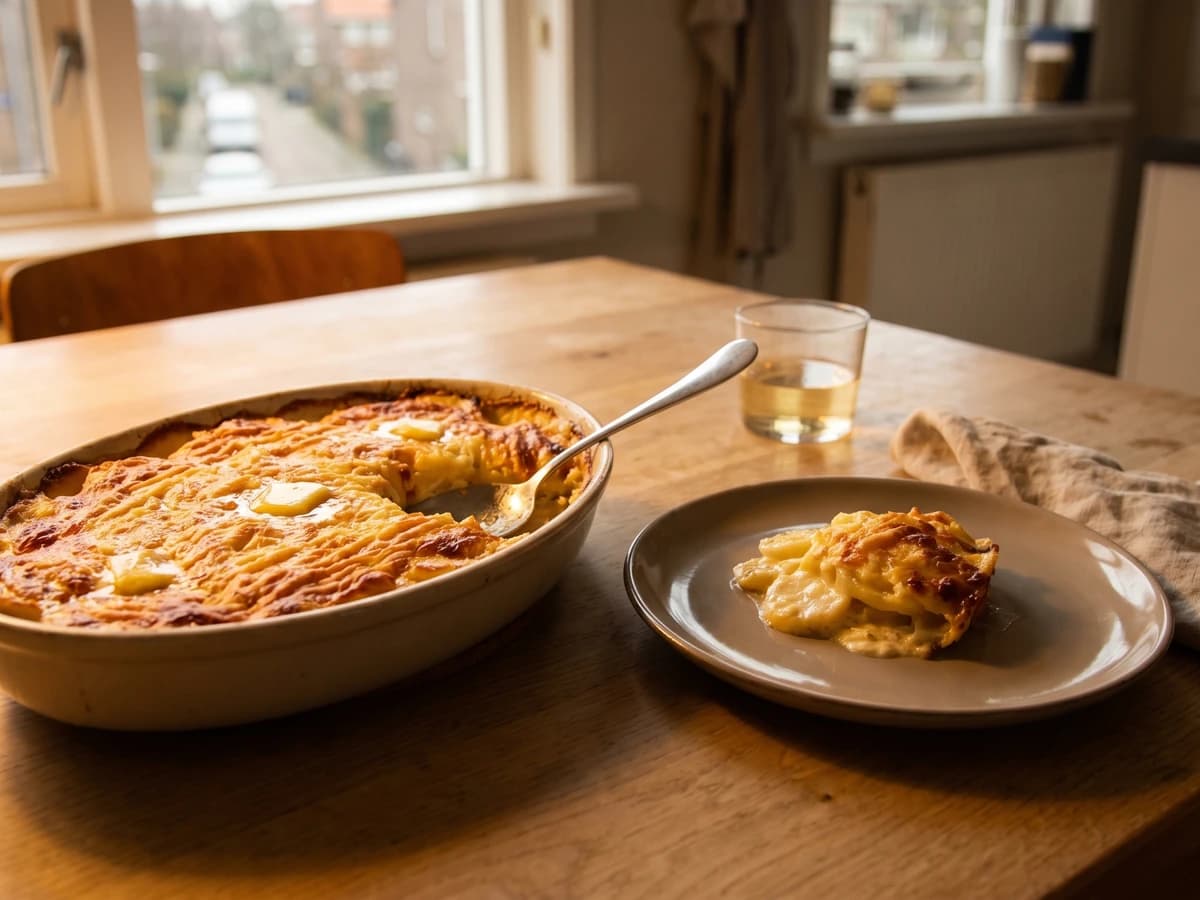
A French name, a Dutch potato, and a Sunday table: aardappelgratin is what happens when a frugal kitchen borrows richness and behaves as if it had always belonged.
A cooking platform built around craft, culture, and the stories behind what we eat.

Created by
The name carries a Dutch word through an Indonesian kitchen: frikadel became perkedel, corn became jagung, and the rijsttafel gained its most dangerous little fritter.
But let me tell you a secret: some Dutch dishes were never born in the Netherlands. They came back by ship, by memory, by colonial habit, and by families who knew that a proper table needs small fried things people pretend to take only one of. Perkedel jagung belongs to that Indo-Dutch table, the rijsttafel, rice table, where many small dishes gather around rice and make moderation impossible.
The name already tells you the journey. Perkedel is widely understood as an Indonesian reshaping of the Dutch frikadel, a minced-meat patty or sausage word that travelled under colonial rule and came home changed. Jagung is corn. In older Dutch recipe books you may find frikadel djagoeng, the old spelling sitting there like a passport stamp. History and cookery, they cannot be separated, though the fritter itself has the good manners to be simple.
The trick is moisture. Sweetcorn wants to give you water, and water is the enemy of a crisp edge. So you crush part of the kernels for sweetness and body, leave part whole for pop under the teeth, then bind the lot with just enough egg and flour to hold it together. Hou het altijd simpel, always keep it simple: a spoon, a hot pan, shallow oil, and the discipline not to crowd. The fritters should leave the pan golden, craggy, and gone before the rice has any chance to feel important.
Perkedel jagung entered Dutch home cooking through the Indo-Dutch rijsttafel, a colonial-era rice table developed in the Dutch East Indies and later carried to the Netherlands by Indo-European families and postwar repatriates. The word perkedel is commonly traced to Dutch frikadel, adapted into Indonesian usage for small fried patties, while jagung is Indonesian for maize. In older Dutch-Indonesian cookbooks the dish appears as frikadel djagoeng, preserving the pre-1947 Dutch spelling of Indonesian words.
Quantity
3 ears or 450g frozen
kernels cut off, or thawed and patted dry
Quantity
2
finely chopped
Quantity
2
finely grated
Quantity
2
thinly sliced
Quantity
2 tablespoons
chopped
Quantity
1
Quantity
75g
Quantity
2 tablespoons
Quantity
1 teaspoon
Quantity
1/2 teaspoon
Quantity
1/2 teaspoon, plus more to finish
Quantity
1/2 teaspoon
Quantity
as needed
for shallow frying
Quantity
to serve
| Ingredient | Quantity |
|---|---|
| fresh sweetcornkernels cut off, or thawed and patted dry | 3 ears or 450g frozen |
| shallotsfinely chopped | 2 |
| garlic clovesfinely grated | 2 |
| spring onionsthinly sliced | 2 |
| celery leaf or flat-leaf parsleychopped | 2 tablespoons |
| large egg | 1 |
| plain flour | 75g |
| rice flour or cornflour | 2 tablespoons |
| ground coriander | 1 teaspoon |
| ground white pepper | 1/2 teaspoon |
| fine salt | 1/2 teaspoon, plus more to finish |
| baking powder | 1/2 teaspoon |
| neutral oilfor shallow frying | as needed |
| sambal oelek (optional) | to serve |
Put half the sweetcorn into a bowl and crush it roughly with a fork or potato masher until the kernels split and turn juicy. Leave the rest whole. This gives you the right bargain: sweetness worked into the batter, and whole kernels that burst under the teeth.
Add the shallots, garlic, spring onions, celery leaf, egg, plain flour, rice flour, coriander, white pepper, salt, and baking powder. Stir until the mixture holds together in a thick spoonable batter. If it runs like pancake batter, add a tablespoon more flour; if it sits like dough, loosen it with a teaspoon of water.
Pour neutral oil into a heavy frying pan to a depth of about 1cm and heat it over medium-high heat. Drop in one corn kernel as a test; it should sizzle at once without darkening too quickly. Too cool, and the fritter drinks oil. Too fierce, and the outside browns before the centre sets.
Spoon heaped tablespoons of batter into the pan and flatten them lightly with the back of the spoon. Fry in batches for 2 to 3 minutes per side, until deep golden at the edges and set through the middle. Give them space. A crowded pan lowers the heat and turns frying into a committee meeting.
Lift the fritters onto a rack or paper towel and sprinkle lightly with salt while the surface is still glossy with oil. Serve them warm with sambal oelek if you like, beside rice, satay, or any dinner table that understands small fried things are never merely side dishes.
1 serving (about 36g)
Culinary guides, cultural storytelling, and the editorial depth that makes cooking meaningful.
Discover Culinary ExplorerChef Joost
A French name, a Dutch potato, and a Sunday table: aardappelgratin is what happens when a frugal kitchen borrows richness and behaves as if it had always belonged.
Chef Joost
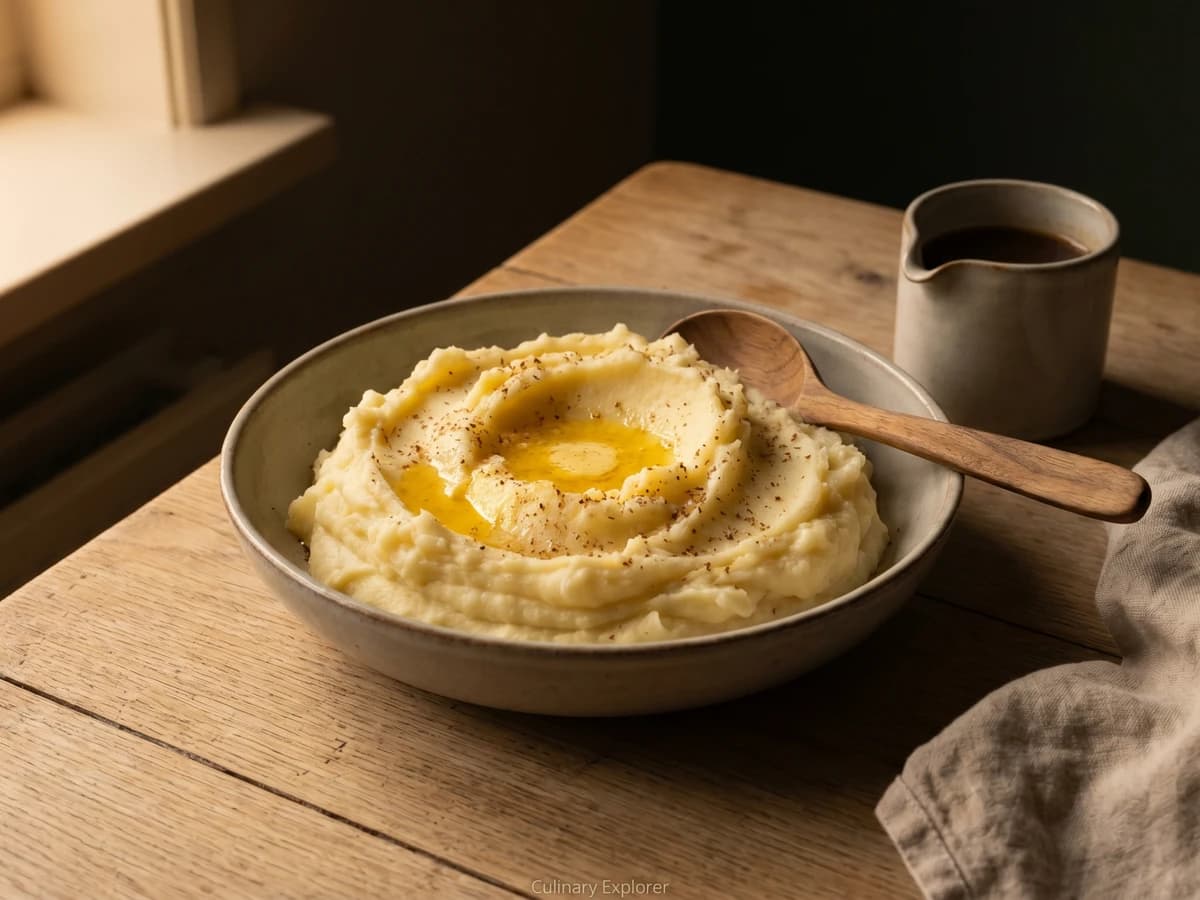
Aardappelpuree is the quiet heart of the Dutch AVG'tje: floury potatoes, warm milk, butter, nutmeg, and a small kuiltje, little well, built for the jus.

Chef Joost
Flower cabbage under old Gouda sauce: the quiet Dutch side dish that turns one boiled vegetable into the reason everyone reaches for the spoon twice.

Chef Joost
White beans peeking through green snijbonen give this old Dutch side its nursery-table joke: bare little children in the grass, sweet garden thrift with butter, nutmeg, and no apology.