
Chef Joost
Acar Ketimun (Indo-Dutch Cucumber Pickle)
Acar means pickle, ketimun means cucumber, and this little bowl of sweet vinegar, chilli, and crunch is the cool note that lets an Indo-Dutch rijsttafel keep its balance.
A cooking platform built around craft, culture, and the stories behind what we eat.
Created by
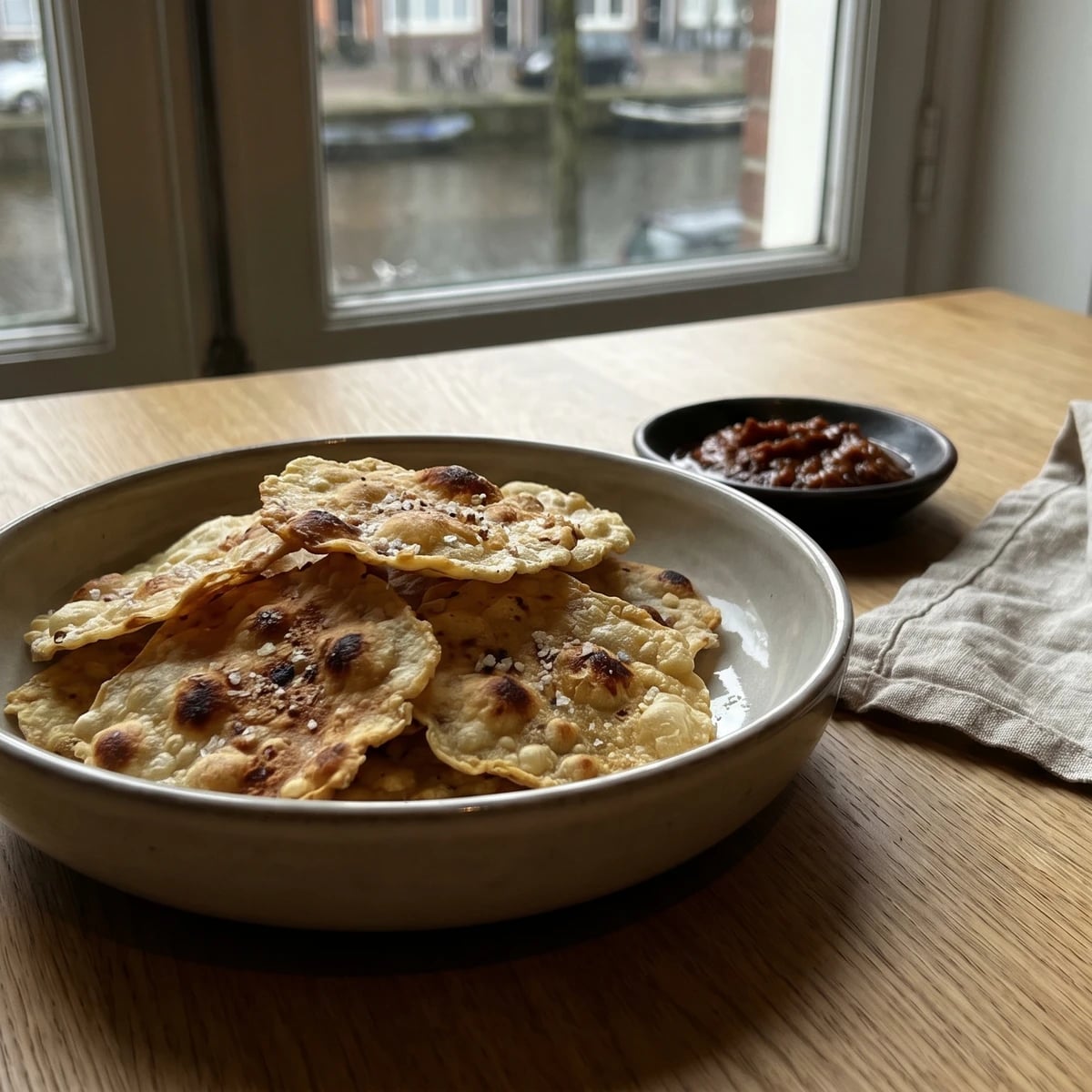
The connoisseur's cracker of the Indo-Dutch table: bitter, crisp, pounded from melinjo seeds, and fried so quickly that hesitation is the only real danger.
At an Indo-Dutch table, the loud cracker usually wins first attention. Kroepoek arrives pale and theatrical, swelling in the oil like a ship's sail. Emping is quieter. Smaller, darker, more adult. It tastes faintly bitter, nutty, and clean at the edge, the kind of bitterness that tells you this is not children's party food, though children learn to love it anyway if the sambal is kept at a respectful distance.
The name doesn't need a grand Latin ladder. In Indonesian kitchens, emping is a thin chip made by pounding seeds or grains flat, and emping melinjo is the famous one, made from the seeds of the melinjo tree, Gnetum gnemon. They are called nuts in many shops, for obvious reasons, because nobody sells romance under the label gymnosperm seed. The seed is roasted, peeled, pounded into little discs, dried in the sun, and sent into the world waiting for hot oil.
But let me tell you a secret: frying emping is not cooking so much as catching a moment. The dried discs hit the oil, open, blister, and turn lightly golden in seconds. Wait for a dark brown colour and you've made bitterness into punishment. Hou het altijd simpel, always keep it simple: good dried emping from a toko, clean oil, a spider, salt while the surface still shines, and a bowl placed where people can reach it without ceremony. That is how the Indo-Dutch table understands hospitality.
Emping melinjo belongs to the Indonesian pantry and entered Dutch domestic life through the colonial and postcolonial Indo-Dutch table, especially the rijsttafel, the rice-table spread popularised in the Netherlands in the twentieth century by repatriated Indo families and Indonesian restaurants. The crackers are made from melinjo seeds, traditionally roasted or boiled, peeled, pounded thin, and sun-dried before frying. In Dutch toko culture, emping sits beside kroepoek but carries a different status: less sweet, faintly bitter, and prized by diners who want the sharper edge of the meal.
Quantity
150g
Quantity
750ml
sunflower or peanut oil
Quantity
1/2 teaspoon
or to taste
Quantity
to serve
| Ingredient | Quantity |
|---|---|
| dried emping melinjo | 150g |
| neutral frying oilsunflower or peanut oil | 750ml |
| fine sea saltor to taste | 1/2 teaspoon |
| sambal oelek or sambal badjak (optional) | to serve |
Spread the dried emping on a tray and pick out any broken dust or very dark pieces. A few cracks are no tragedy, but powder will burn in the oil and make the whole pan taste tired. Keep the good discs close to the stove; once you begin, this goes quickly.
Pour the oil into a small heavy pan so it sits at least four centimetres deep, then heat it to 175C. If you don't have a thermometer, drop in one piece of emping. It should sink, rise, blister, and open almost at once. If it darkens before it opens, the oil is too hot; if it sulks at the bottom, the oil is too cool.
Slide in a small handful of emping and stir once with a spider or slotted spoon. They will blister and expand in ten to twenty seconds. Lift them out while they are still pale gold with only a few deeper toasted freckles. Don't chase brownness here; melinjo already brings bitterness, and the oil can turn it stern.
Transfer the fried emping to kitchen paper or a rack and salt lightly while the surface still holds a fine oil sheen. Repeat with the remaining discs, letting the oil return to heat between batches. Serve once fully crisp, with sambal alongside if the table wants a little fire.
1 serving (about 30g)
Culinary guides, cultural storytelling, and the editorial depth that makes cooking meaningful.
Discover Culinary Explorer
Chef Joost
Acar means pickle, ketimun means cucumber, and this little bowl of sweet vinegar, chilli, and crunch is the cool note that lets an Indo-Dutch rijsttafel keep its balance.

Chef Joost
Bawang goreng means fried onion, but on the Indo-Dutch table it is far more precise: the crisp golden shallot that makes nasi, soto, and sajoer taste finished.

Chef Joost
The name means a jumble, and the plate proves it: green beans, cabbage, egg, potatoes, and tofu gathered under pindasaus, Java carried into the Dutch rijsttafel.

Chef Joost
The crackle at the start of a Dutch rijsttafel is Indonesian in name and memory: cassava starch, prawn, hot oil, and a whole colonial table speaking at once.