Chef Joost
Amsterdamse Ossenworst
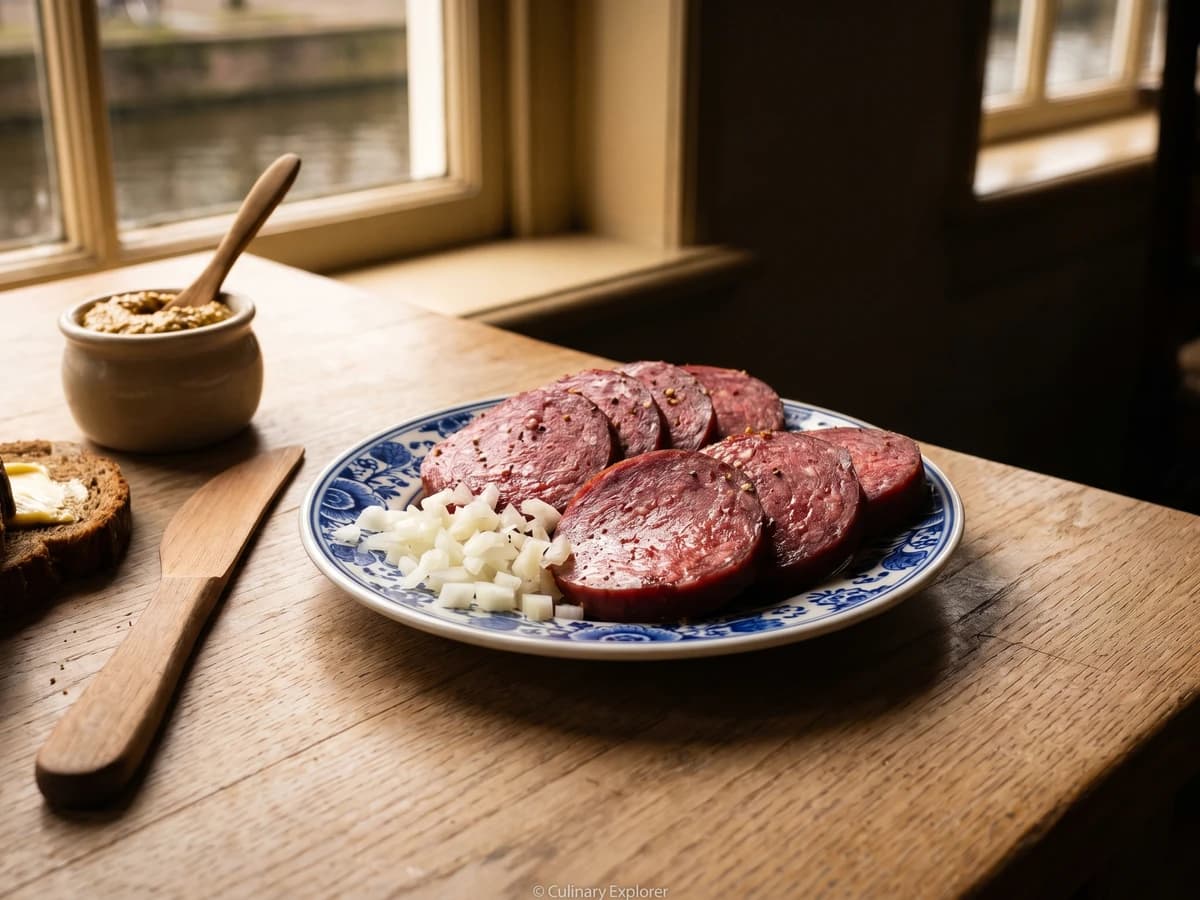
The name means ox sausage, but the real story is Amsterdam itself: cattle trade, Jewish butchers, VOC spices, and raw beef sliced thin with onion.
A cooking platform built around craft, culture, and the stories behind what we eat.
Created by
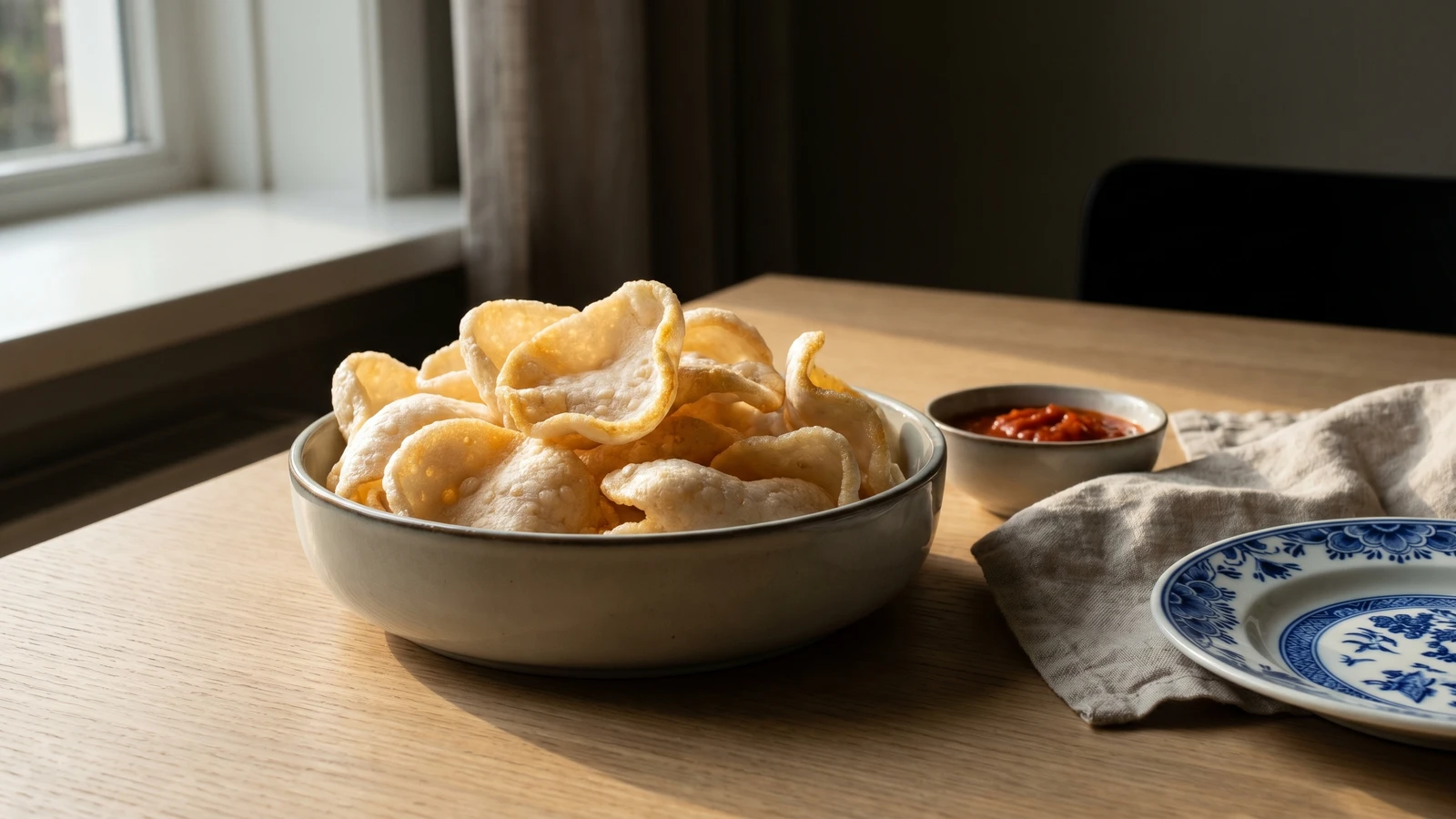
The crackle at the start of a Dutch rijsttafel is Indonesian in name and memory: cassava starch, prawn, hot oil, and a whole colonial table speaking at once.
Kroepoek is the sound a rijsttafel makes before anyone has lifted a spoon. That first brittle crack between the teeth, then the faint sweetness of prawn and cassava, tells you where the Dutch table had to widen to understand itself. In many houses it comes from a packet, and I don't sneer at packets. Dutch kitchens have always been practical. But let me tell you a secret: the packet is only the final page of the story.
The name already tells you the journey, if you let it. Kroepoek is the Dutch spelling of Indonesian kerupuk or krupuk, the family of crackers made from starch and flavouring, dried hard, then startled open in hot oil. Oedang is the old Dutch spelling of udang, prawn or shrimp. There it is: a Malay-Indonesian word carried into Dutch cupboards, keeping its sea-scented meaning even after the spelling put on a Dutch coat.
This is not difficult cookery, only patient cookery. The paste is cassava starch and prawn, steamed into a firm log, chilled so it behaves under the knife, sliced thin, and dried until every slice is hard enough to sound like a coin on the table. Then, and only then, the oil does its little theatre. Hou het altijd simpel, always keep it simple: dry them properly, fry them hot, and don't crowd the pan. The cracker should bloom in seconds, not sit there drinking oil like a bad guest.
Kroepoek entered Dutch domestic life through the colonial Netherlands Indies, especially as rijsttafel became fashionable among Dutch families returning from Java and Sumatra in the nineteenth and early twentieth centuries. The Dutch spelling kroepoek reflects older Dutch orthography, while oedang preserves the Indonesian udang, meaning prawn or shrimp. Its place at the opening of rijsttafel shows how the Indo-Dutch table became part of Dutch food history, not as decoration, but as a lasting household habit shaped by migration, trade, and empire.
Quantity
300g
very cold
Quantity
350g
plus extra for dusting
Quantity
2
finely grated
Quantity
1 teaspoon
Quantity
1 teaspoon
Quantity
1/2 teaspoon
Quantity
2 tablespoons
only if needed
Quantity
as needed
| Ingredient | Quantity |
|---|---|
| raw peeled prawns or shrimpvery cold | 300g |
| tapioca starchplus extra for dusting | 350g |
| garlic clovesfinely grated | 2 |
| fine sea salt | 1 teaspoon |
| sugar | 1 teaspoon |
| ground white pepper | 1/2 teaspoon |
| cold water (optional)only if needed | 2 tablespoons |
| neutral oil for deep-frying | as needed |
Pat the prawns very dry, then pulse them in a food processor with the garlic, salt, sugar, and white pepper until you have a sticky paste. Add the tapioca starch and pulse again until the mixture gathers into a firm, tacky dough. If it stays crumbly, add cold water one teaspoon at a time. You want clay, not batter.
Dust your hands and board with tapioca starch, then divide the dough into two logs about 4 centimetres thick. Roll them firmly so there are no air pockets hiding inside; those pockets become weak spots later. Wrap each log tightly in parchment, then in foil, twisting the ends like a sweet wrapper.
Set the wrapped logs in a steamer over simmering water and steam for 50 to 60 minutes, until they feel firm all the way through. Let them cool, then refrigerate for at least 4 hours or overnight. The chilling is not fussiness. A warm log smears under the knife; a cold one slices cleanly, and clean slices dry evenly.
Unwrap the chilled logs and slice them as thinly as you can, about 1 to 2 millimetres. Lay the slices in a single layer on racks. Dry them in a dehydrator at 55C for 8 to 10 hours, or in a very low oven with the door slightly ajar, until the slices are hard, pale, and brittle. They must snap rather than bend. Bendable kroepoek is unfinished business.
Heat 5 to 7 centimetres of neutral oil in a heavy pan to 180C. Fry 3 or 4 dried slices at a time, pressing them gently under the oil if needed. They should balloon and turn ivory within 5 to 10 seconds. Lift them out at once with a spider or slotted spoon and drain on paper towels. If they brown, the oil is too hot or you waited too long.
Serve the kroepoek the same day, piled high beside sambal or at the edge of a rijsttafel. They should be dry, light, and crisp under the teeth, with the prawn flavour arriving after the first crackle. Salt only if you must; the sea is already in the dough.
1 serving (about 7g)
Culinary guides, cultural storytelling, and the editorial depth that makes cooking meaningful.
Discover Culinary ExplorerChef Joost
The name means ox sausage, but the real story is Amsterdam itself: cattle trade, Jewish butchers, VOC spices, and raw beef sliced thin with onion.

Chef Joost
The little yellow onion on the Amsterdam borrel board looks modest, until vinegar, turmeric, and patience turn it into the sharp bite that wakes cheese, herring, and sausage.

Chef Joost
The bear's claw of the northern snackbar: a seasoned gehaktbal, Dutch meatball, cut into thick discs, skewered with onion, fried until the edges catch, then dragged through peanut sauce.

Chef Joost
The name points to the drink, not the mood: bitterballen are crisp little balls of beef ragout made for the borrel table, mustard beside them, fingers slightly burned by impatience.