Chef Joost
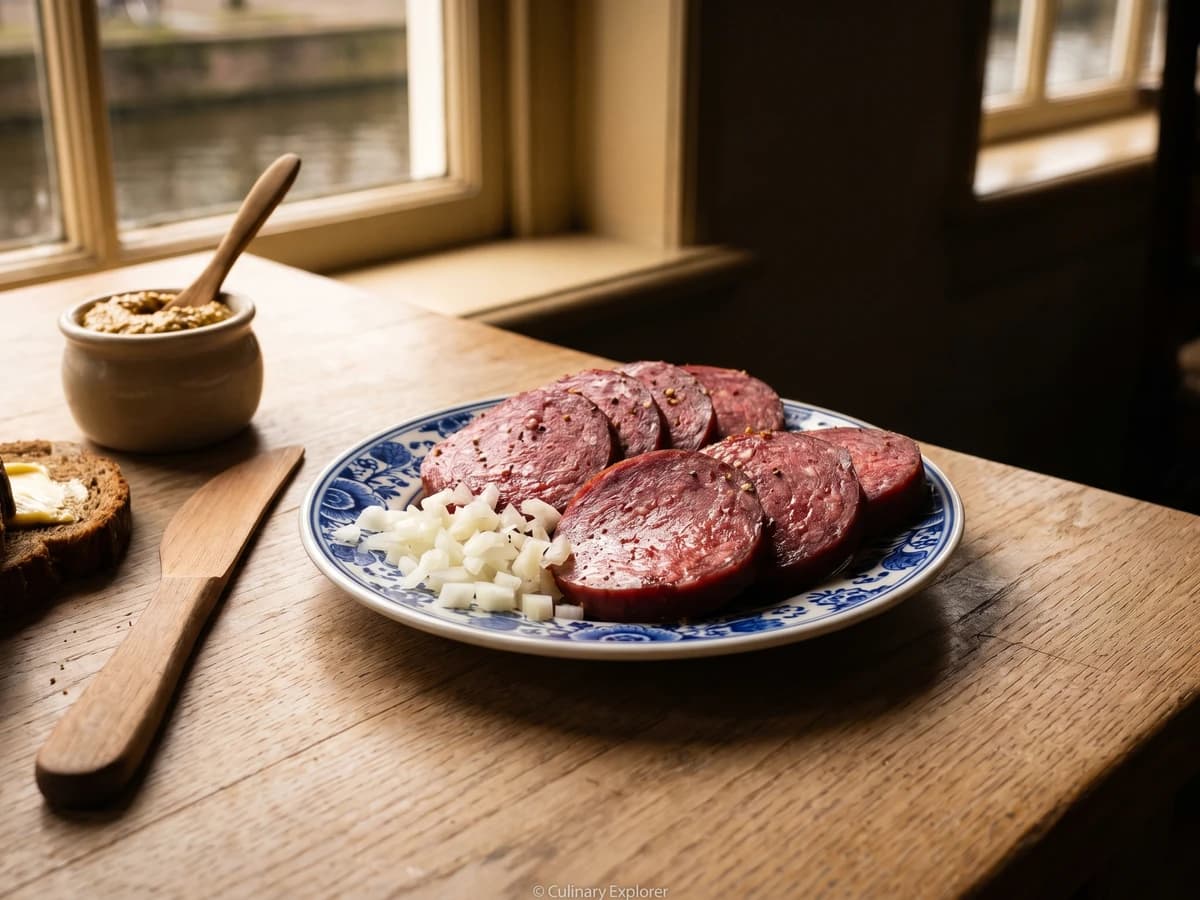
Amsterdamse Ossenworst
The name means ox sausage, but the real story is Amsterdam itself: cattle trade, Jewish butchers, VOC spices, and raw beef sliced thin with onion.
A cooking platform built around craft, culture, and the stories behind what we eat.

Created by
Banana-leaf parcels of coconut sticky rice wrapped around spiced chicken, the Javanese snack that crossed into Dutch party tables through the Indo-Dutch kitchen and still disappears first at a rijsttafel.
Some Dutch party food arrives from the deep fryer with all the subtlety of a brass band. Lemper arrives quietly, wrapped in banana leaf, and still empties the platter first. I learned that at Indo-Dutch tables where the good things were never shouted about: satay browning at the edge of the garden, sambal in a small bowl, and these green parcels waiting under a cloth like letters.
But let me tell you a secret. Lemper is not a Dutch invention, and pretending otherwise would be bad manners before it became bad history. The name belongs to Java; ayam is the everyday Indonesian word for chicken. What made it Dutch, in the complicated postcolonial sense of that word, was the journey through the former Dutch East Indies, through rijsttafel, the rice table, repatriate kitchens after 1945, and the toko's, Indonesian-Dutch shops where half the Netherlands learned to buy banana leaves from the freezer.
The method has a lovely discipline. Ketan, glutinous rice, is cooked first by water and then by santen, coconut milk, so it turns glossy and holds together without becoming paste. The chicken filling must be seasoned bravely and cooked dry; if it is wet, the parcel sulks and opens. Banana leaf is not only wrapping paper. It lends a green, warm scent and tells the hand where the food begins.
Hou het altijd simpel, always keep it simple. Lemper has no strict Dutch calendar season; its season is the borrel, a drink-and-snack gathering, and the feast day when the kitchen needs food made before guests arrive. Soak the rice, cook the filling until it no longer weeps, roll firm little parcels, and let the steamer finish the work. Serve them before dinner or beside a rijsttafel. They are made for being unwrapped with fingers, which is often how scholarship should be eaten.
Lemper is a Javanese snack made from ketan, glutinous rice, filled most often with seasoned chicken or abon, spiced meat floss, and wrapped in banana leaf; it became familiar to Dutch diners through the nineteenth-century colonial food culture of the Dutch East Indies, including rijsttafel, literally rice table. After Indonesian independence in 1945, Indo-European families and repatriates brought household snack traditions into Dutch city life, where the toko made ingredients such as banana leaf, santen, and ketan easier to buy. Its place on modern Dutch party platters is a small but precise record of colonial history becoming domestic habit, especially in The Hague, Amsterdam, and other cities with strong Indo-Dutch communities.
Quantity
500g
rinsed and soaked 4 hours or overnight
Quantity
350ml
Quantity
100ml
Quantity
1 teaspoon
Quantity
2
knotted
Quantity
2 leaves
Quantity
1 stalk
bruised
Quantity
500g
Quantity
250ml
Quantity
2 tablespoons
Quantity
4
finely chopped
Quantity
3
minced
Quantity
2 teaspoons
Quantity
1 teaspoon
Quantity
1/2 teaspoon
Quantity
2cm fresh or 1 teaspoon ground
grated if fresh
Quantity
1 stalk
bruised
Quantity
2
torn
Quantity
150ml
Quantity
1 tablespoon
Quantity
1 teaspoon, plus more to taste
Quantity
to taste
Quantity
16, about 20x25cm each
thawed if frozen and wiped clean
Quantity
16 pieces
| Ingredient | Quantity |
|---|---|
| glutinous rice (ketan)rinsed and soaked 4 hours or overnight | 500g |
| full-fat coconut milk (santen), for the rice | 350ml |
| water, for the rice | 100ml |
| fine salt, for the rice | 1 teaspoon |
| pandan leaves (optional)knotted | 2 |
| daun salam (Indonesian bay leaves) (optional) | 2 leaves |
| lemongrass, for the ricebruised | 1 stalk |
| boneless skinless chicken thighs | 500g |
| water, for poaching | 250ml |
| neutral oil | 2 tablespoons |
| shallotsfinely chopped | 4 |
| garlic clovesminced | 3 |
| ground coriander | 2 teaspoons |
| ground cumin | 1 teaspoon |
| ground turmeric | 1/2 teaspoon |
| fresh galangal or ground galangalgrated if fresh | 2cm fresh or 1 teaspoon ground |
| lemongrass, for the fillingbruised | 1 stalk |
| makrut lime leaves (optional)torn | 2 |
| full-fat coconut milk (santen), for the filling | 150ml |
| palm sugar (gula djawa) or light brown sugar | 1 tablespoon |
| fine salt | 1 teaspoon, plus more to taste |
| freshly ground white pepper | to taste |
| banana leaf rectanglesthawed if frozen and wiped clean | 16, about 20x25cm each |
| toothpicks or kitchen string | 16 pieces |
Rinse the ketan in several changes of cool water, then cover it by 5cm and soak for at least 4 hours, or overnight if the day allows. This is not fussing. Glutinous rice needs the soak so the centre cooks before the outside turns to paste; rush it and you get a hard little heart inside every grain.
Put the chicken thighs in a saucepan with 250ml water and a pinch of salt. Bring to a gentle simmer, cover, and cook for 15 to 18 minutes, until the meat is opaque all through and pulls apart easily. Lift the chicken out, save 150ml of the broth, and shred the meat finely once it is cool enough to handle.
Heat the oil in a wide pan and cook the shallots until soft and lightly golden. Add the garlic, coriander, cumin, turmeric, galangal, lemongrass, and makrut lime leaves, and stir for one minute until the spices smell awake. Add the shredded chicken, 150ml coconut milk, 100ml saved broth, palm sugar, salt, and white pepper. Cook over medium heat, stirring often, until the pan looks almost dry and a spoon leaves a clean track through the filling. Remove the lemongrass and lime leaves, then let the filling cool.
Drain the soaked rice well. Line a steamer basket with a banana leaf offcut or parchment and spread the rice in an even layer. Steam over lively water for 20 minutes, until the grains are swollen but still firm in the centre.
While the rice steams, warm the 350ml coconut milk with 100ml water, the salt, pandan, daun salam, and lemongrass until just fragrant. Don't boil it hard or the coconut milk turns grainy. Tip the hot rice into a wide bowl, pour over the hot coconut milk, fold gently, cover, and rest for 10 minutes so the rice drinks it in. Return the rice to the steamer for 20 to 25 minutes, until glossy, tender, and sticky enough to clump. Remove the aromatics and keep the rice covered.
Wipe both sides of the banana leaf rectangles. Pass each leaf briefly over a gas flame with tongs, or dip it in very hot water for 10 seconds, until it darkens, softens, and bends without cracking. Dry the leaves before filling. A stiff banana leaf tears exactly when your hands are full of rice, for obvious reasons.
Keep a small bowl of water beside you for your hands. Lay one banana leaf dull side up, with the grain running left to right. Spread about 2 heaped tablespoons of rice into a 10 by 8cm rectangle, place 1 tablespoon of chicken filling down the centre, and use the leaf to bring the rice up and around the filling. Roll into a firm cylinder about 10cm long, fold in the sides, wrap the leaf around the parcel, and secure with a toothpick or string. The leaf is wrapper, not salad.
Set the parcels seam-side down in the steamer, with a little room between them. Steam for 15 minutes to warm them through and set the rice around the filling. Rest for 10 minutes before serving so the rolls hold when unwrapped. Serve warm or at room temperature with sambal oelek on the side; the first one should be eaten standing by the kitchen counter, for obvious reasons.
1 serving (about 105g)
Culinary guides, cultural storytelling, and the editorial depth that makes cooking meaningful.
Discover Culinary ExplorerChef Joost
The name means ox sausage, but the real story is Amsterdam itself: cattle trade, Jewish butchers, VOC spices, and raw beef sliced thin with onion.

Chef Joost
The little yellow onion on the Amsterdam borrel board looks modest, until vinegar, turmeric, and patience turn it into the sharp bite that wakes cheese, herring, and sausage.

Chef Joost
The bear's claw of the northern snackbar: a seasoned gehaktbal, Dutch meatball, cut into thick discs, skewered with onion, fried until the edges catch, then dragged through peanut sauce.

Chef Joost
The name points to the drink, not the mood: bitterballen are crisp little balls of beef ragout made for the borrel table, mustard beside them, fingers slightly burned by impatience.