
Chef Joost
Acar Ketimun (Indo-Dutch Cucumber Pickle)
Acar means pickle, ketimun means cucumber, and this little bowl of sweet vinegar, chilli, and crunch is the cool note that lets an Indo-Dutch rijsttafel keep its balance.
A cooking platform built around craft, culture, and the stories behind what we eat.
Created by
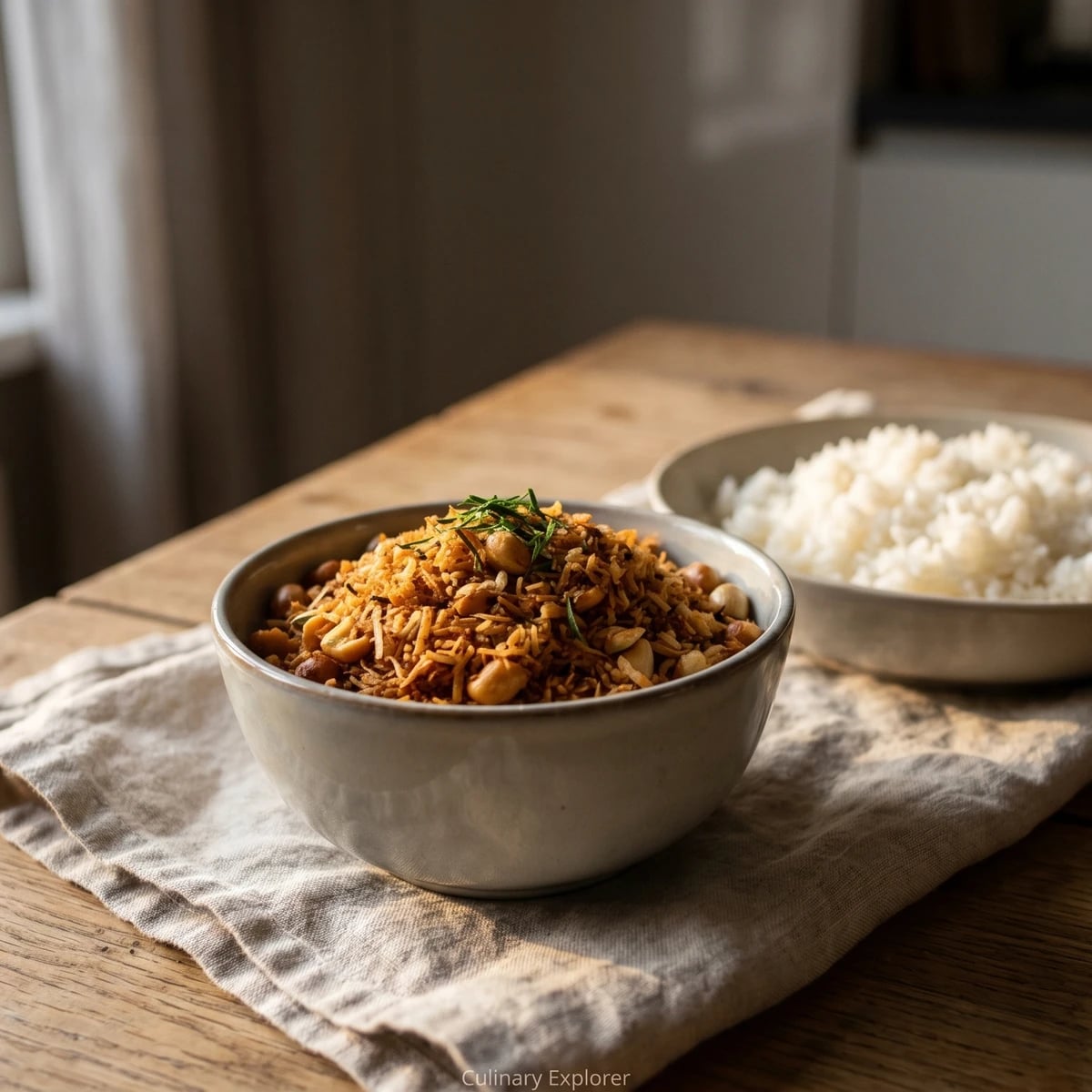
The little bowl beside the rice tells a large history: toasted coconut, peanuts, palm sugar, and spice, made patient and golden for the Indo-Dutch table.
The name already tells you this dish has crossed water. Seroendeng is the old Dutch spelling of Indonesian serundeng, with that colonial oe carrying the sound we now write as u, the same small ghost you see in Soekarno and Soerabaja. A condiment can keep an archive, if you know where to look.
In my Leiden years, the Indo-Dutch table was where spice stopped being theory. Nutmeg and clove I had met in VOC papers, tidy in ink and brutal in history. But seroendeng was different: coconut toasted until nut-brown, peanuts chopped rough, palm sugar melting into tamarind and laos, the old Dutch word for galangal. It sat beside rice at the rijsttafel, not as decoration, but as the crunch that made the spoon wake up.
But let me tell you a secret. The work here is not difficult; it is patient. Beb Vuyk, who wrote about Indonesian cooking for Dutch kitchens with rare authority, roasts seroendeng slowly, and she is right. Rush it and the coconut burns in bitter little freckles while the middle stays pale. Keep it moving, keep the heat modest, and you get the deep gold that tastes of nuts, sugar, spice, and distance. Hou het altijd simpel, always keep it simple: one wide pan, one wooden spoon, and enough restraint to let the coconut become itself.
Seroendeng is the Dutch colonial spelling of Indonesian serundeng, a dry coconut condiment known especially in Javanese and broader Indonesian cooking; the oe reflects the older Dutch-based spelling system used before Indonesian spelling reforms replaced it with u. It entered Dutch home kitchens through the Indo-Dutch table, especially after Indonesian independence and the migration of Indische families to the Netherlands in the late 1940s and 1950s. Beb Vuyk's Groot Indonesisch Kookboek, first published in 1973, helped fix dishes like seroendeng in Dutch domestic cooking, where they became part of the rijsttafel vocabulary.
Quantity
200g
Quantity
100g
roughly chopped
Quantity
2 tablespoons
Quantity
2
very finely chopped
Quantity
2
very finely chopped
Quantity
2 teaspoons
Quantity
1 teaspoon
Quantity
1 teaspoon ground or 2 teaspoons fresh grated
Quantity
2
finely shredded
Quantity
1 tablespoon
Quantity
2 tablespoons
Quantity
1 teaspoon
Quantity
1
crumbled
| Ingredient | Quantity |
|---|---|
| unsweetened grated coconut | 200g |
| roasted unsalted peanutsroughly chopped | 100g |
| neutral oil | 2 tablespoons |
| shallotsvery finely chopped | 2 |
| garlic clovesvery finely chopped | 2 |
| ground coriander | 2 teaspoons |
| ground cumin | 1 teaspoon |
| ground galangal or fresh galangal | 1 teaspoon ground or 2 teaspoons fresh grated |
| makrut lime leaves (optional)finely shredded | 2 |
| tamarind paste | 1 tablespoon |
| palm sugar or dark brown sugar | 2 tablespoons |
| salt | 1 teaspoon |
| small dried red chilli (optional)crumbled | 1 |
Warm the oil in a wide, heavy frying pan over medium-low heat. Add the shallots and garlic and cook for 4 to 5 minutes, stirring often, until they soften and lose their raw sharpness but do not brown hard. Add the coriander, cumin, galangal, lime leaves if using, and chilli if using, and stir for 1 minute, just until the pan smells warm and spicy.
Stir in the tamarind paste, palm sugar, and salt. The sugar will melt into the oil and catch the spice, making a dark, sticky base. If your tamarind paste is very stiff, add 1 tablespoon of water to loosen it; the water will cook away.
Add the grated coconut and stir until every thread is coated. Keep the heat low and cook for 20 to 25 minutes, stirring and scraping the bottom almost constantly. This is the whole recipe hiding in one step: the coconut must dry and toast slowly, moving from ivory to beige to deep gold. If it browns in spots before the rest changes colour, the heat is too high.
Stir in the chopped peanuts and cook for another 5 to 8 minutes, until the mixture is dry, loose, and evenly golden brown. It should sound sandy against the spoon and smell nutty rather than sweet. Taste for salt now; rice will soften the seasoning, so the seroendeng should be a little more assertive than you think.
Spread the seroendeng on a tray and let it cool completely before storing. Warm coconut trapped in a jar makes condensation, and condensation makes a fine dry condiment turn sulky. Once cool, spoon it into a clean airtight jar.
1 serving (about 25g)
Culinary guides, cultural storytelling, and the editorial depth that makes cooking meaningful.
Discover Culinary Explorer
Chef Joost
Acar means pickle, ketimun means cucumber, and this little bowl of sweet vinegar, chilli, and crunch is the cool note that lets an Indo-Dutch rijsttafel keep its balance.

Chef Joost
Bawang goreng means fried onion, but on the Indo-Dutch table it is far more precise: the crisp golden shallot that makes nasi, soto, and sajoer taste finished.

Chef Joost
The connoisseur's cracker of the Indo-Dutch table: bitter, crisp, pounded from melinjo seeds, and fried so quickly that hesitation is the only real danger.

Chef Joost
The name means a jumble, and the plate proves it: green beans, cabbage, egg, potatoes, and tofu gathered under pindasaus, Java carried into the Dutch rijsttafel.