Chef Joost
Aardappelgratin
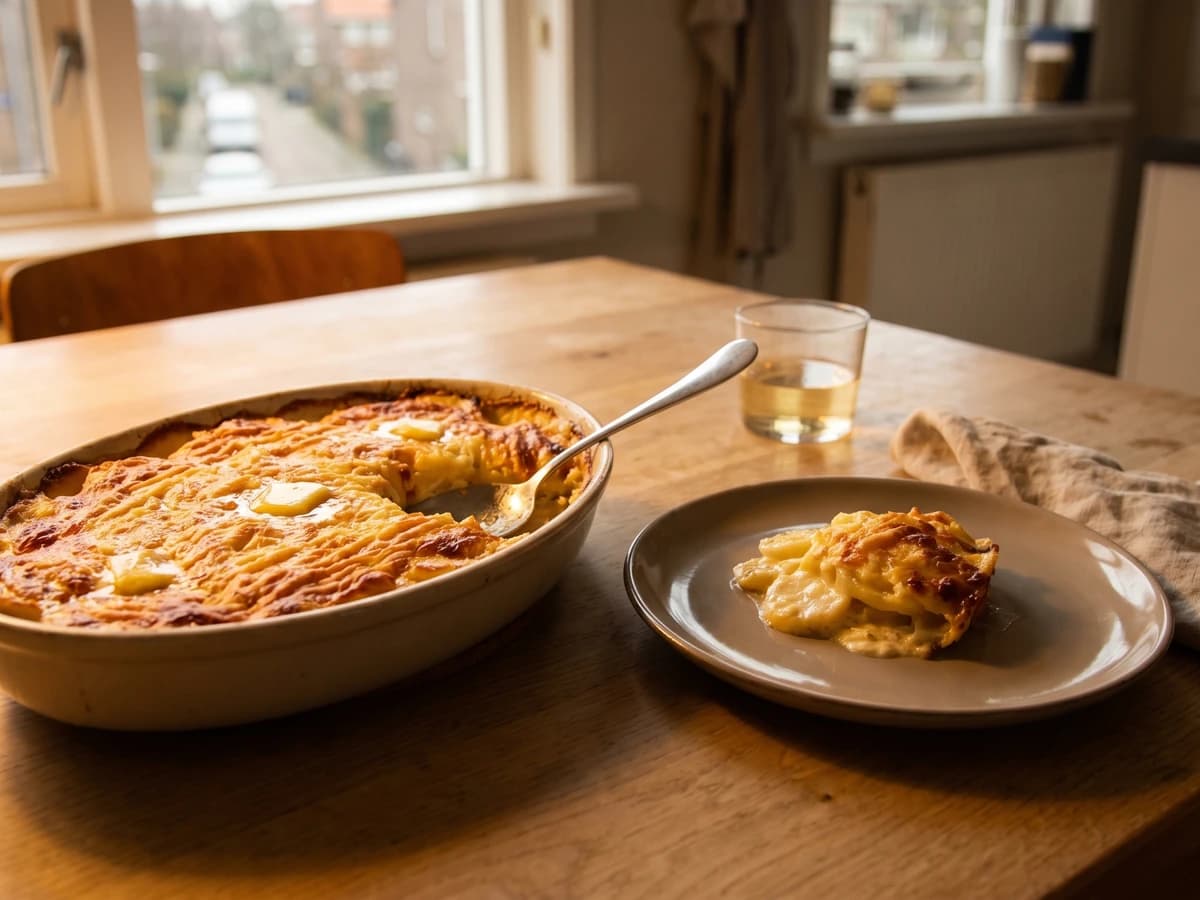
A French name, a Dutch potato, and a Sunday table: aardappelgratin is what happens when a frugal kitchen borrows richness and behaves as if it had always belonged.
A cooking platform built around craft, culture, and the stories behind what we eat.
Created by
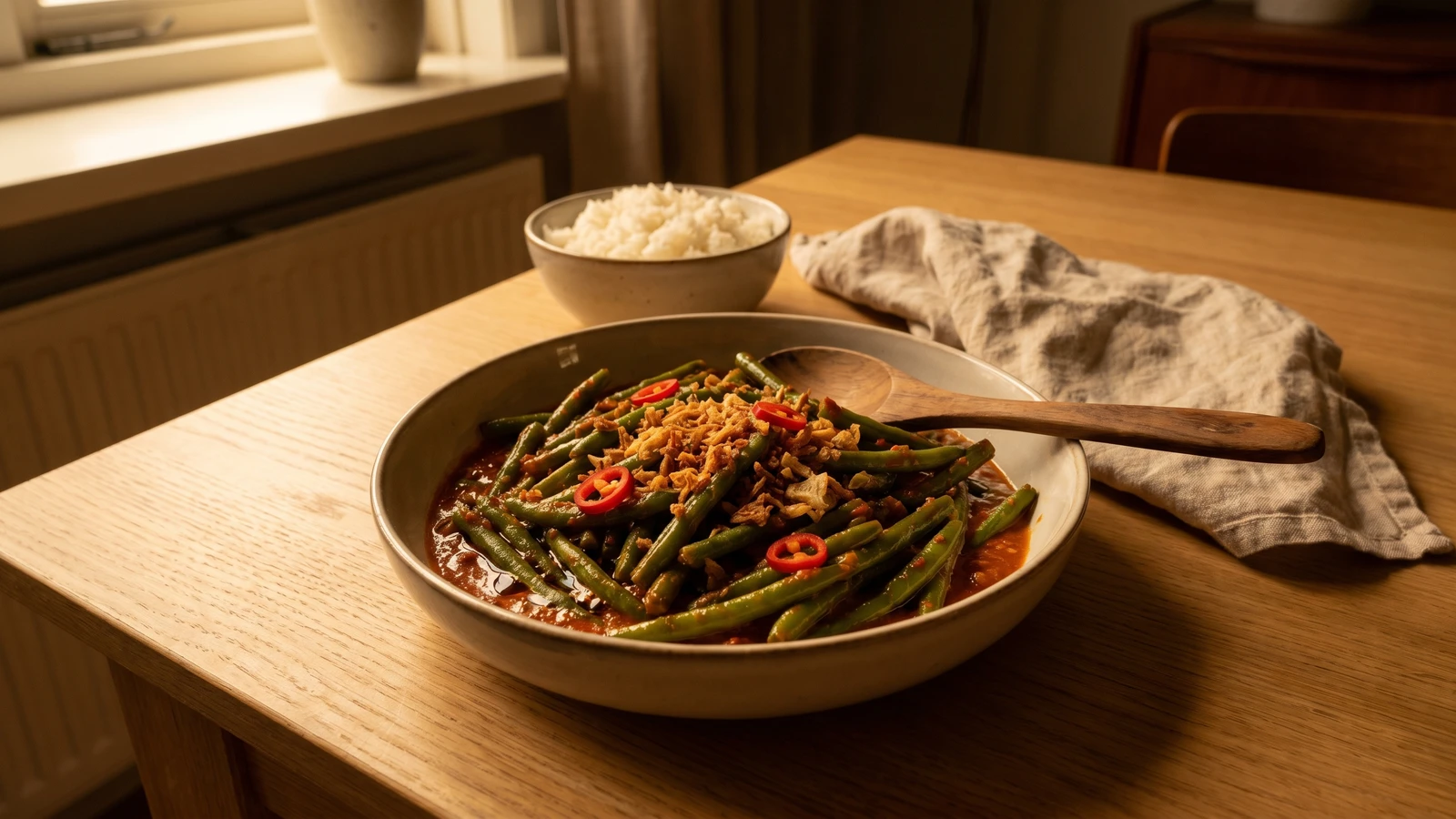
Sambal goreng boontjes is the workhorse vegetable of the Indo-Dutch rijsttafel: green beans kept crisp in fried chile paste, coconut cream, and ketjap, bright enough to steady a table of many dishes.
Some dishes carry their passport in the title. Sambal goreng boontjes is one of them: Indonesian at the front, Dutch at the end, and completely at home on the Indo-Dutch rijsttafel, the rice table where a dozen little dishes teach one another manners. The name already tells you. Sambal is the chile paste, goreng means fried, and boontjes are little beans, the Dutch diminutive that makes even vegetables sound as if they have had their hair combed.
But let me tell you a secret. On the Dutch rijsttafel this is often treated as the modest green thing between richer bowls, yet it is doing serious work. The beans bring snap, the santen, coconut cream, brings roundness, the ketjap manis, sweet soy sauce, brings dark sweetness, and the fried sambal wakes the whole table. History and cookery, they cannot be separated: this is not a fashionable novelty, but one of the everyday dishes carried into Dutch kitchens through colonial Indonesia, postwar migration, and the beloved toko that now stocks half the Dutch pantry.
The method is hidden in the name, which is kind of a kindness. Sambal goreng means the chile paste must be fried first, in oil, until the raw edge of shallot, garlic, and chilli softens and the pan smells warm instead of sharp. Only then do you add santen and the beans. Boil everything together from the start and you get sauce. Fry first and you get character.
In July and August, Dutch sperziebonen, green beans, snap cleanly and need only a short braise. In winter, I prefer a good frozen fine bean to a tired import; the calendar has its pride, and so should we. Hou het altijd simpel, always keep it simple: fry the paste, melt the santen, let the beans finish in the sauce, and put the bowl on the table before anyone decides a vegetable must be obedient.
Rijsttafel, literally rice table, developed in the nineteenth-century Netherlands Indies as a colonial Dutch display meal built from many Indonesian dishes, and by the late 1800s hotels and households in Batavia served elaborate versions to European guests. After Indonesian independence in 1945 and the 1949 transfer of sovereignty, Indo-European families, Moluccan communities, and Indonesian restaurants brought these dishes into everyday Dutch city life. Sambal goreng boontjes preserves that history in its mixed title: Indonesian sambal goreng, fried chile paste, joined to Dutch boontjes, little beans.
Quantity
500g
trimmed and halved
Quantity
2 tablespoons
Quantity
4 small
finely chopped
Quantity
3
finely chopped
Quantity
2
finely chopped, seeds removed for less heat
Quantity
1 tablespoon
or more to taste
Quantity
1 teaspoon
Quantity
2cm piece
sliced and bruised
Quantity
1
bruised
Quantity
2
Quantity
50g
crumbled
Quantity
200ml
Quantity
1 tablespoon
Quantity
1 teaspoon paste or 1 tablespoon juice
Quantity
1 teaspoon
Quantity
1/2 teaspoon
plus more to taste
Quantity
1 tablespoon
Quantity
a few thin rings
| Ingredient | Quantity |
|---|---|
| green beans (sperziebonen)trimmed and halved | 500g |
| neutral oil | 2 tablespoons |
| shallotsfinely chopped | 4 small |
| garlic clovesfinely chopped | 3 |
| red chilliesfinely chopped, seeds removed for less heat | 2 |
| sambal oelekor more to taste | 1 tablespoon |
| terasi or trassi (fermented shrimp paste) (optional) | 1 teaspoon |
| fresh galangal (laos)sliced and bruised | 2cm piece |
| lemongrass stalkbruised | 1 |
| Indonesian bay leaves (daun salam) (optional) | 2 |
| santen (coconut cream block)crumbled | 50g |
| hot water | 200ml |
| ketjap manis | 1 tablespoon |
| tamarind paste or lime juice | 1 teaspoon paste or 1 tablespoon juice |
| palm sugar or light brown sugar | 1 teaspoon |
| fine sea saltplus more to taste | 1/2 teaspoon |
| fried shallots (bawang goreng) (optional) | 1 tablespoon |
| extra red chilli (optional) | a few thin rings |
Bring a pan of salted water to a brisk boil. Add the trimmed green beans and cook for 3 minutes, just until their colour deepens and they begin to bend. Drain and rinse briefly under cold water. You are not finishing them here; you are setting their colour and giving the final braise less work to do.
Heat the oil in a wok or wide saute pan over medium heat. Add the shallots, garlic, chopped chillies, sambal oelek, and trassi if using. Fry for 4 to 5 minutes, stirring often, until the shallots soften, the raw garlic smell disappears, and the oil takes on a red-orange sheen. Sambal goreng means fried sambal; this is the step that gives the dish its backbone.
Add the galangal, lemongrass, and daun salam if using. Stir in the crumbled santen and hot water until the coconut cream melts into a smooth sauce. Add the ketjap manis, tamarind or lime juice, sugar, and salt, then let the sauce simmer for 3 to 4 minutes until it thickens slightly and looks glossy.
Add the blanched beans and turn them through the sauce until every piece is coated. Simmer uncovered for 6 to 8 minutes, stirring now and then, until the beans are tender but still have bite and the sauce clings instead of pooling. If the pan dries too quickly, add a splash of water. If the sauce is loose, cook a minute longer.
Lift out the galangal, lemongrass, and daun salam. Taste for salt, sweetness, sourness, and heat; the dish should be rounded by coconut but still awake from the sambal. Scatter with fried shallots and thin red chilli rings if using. Serve with plain rice, or as one bowl among many on a rijsttafel.
1 serving (about 180g)
Culinary guides, cultural storytelling, and the editorial depth that makes cooking meaningful.
Discover Culinary ExplorerChef Joost
A French name, a Dutch potato, and a Sunday table: aardappelgratin is what happens when a frugal kitchen borrows richness and behaves as if it had always belonged.
Chef Joost
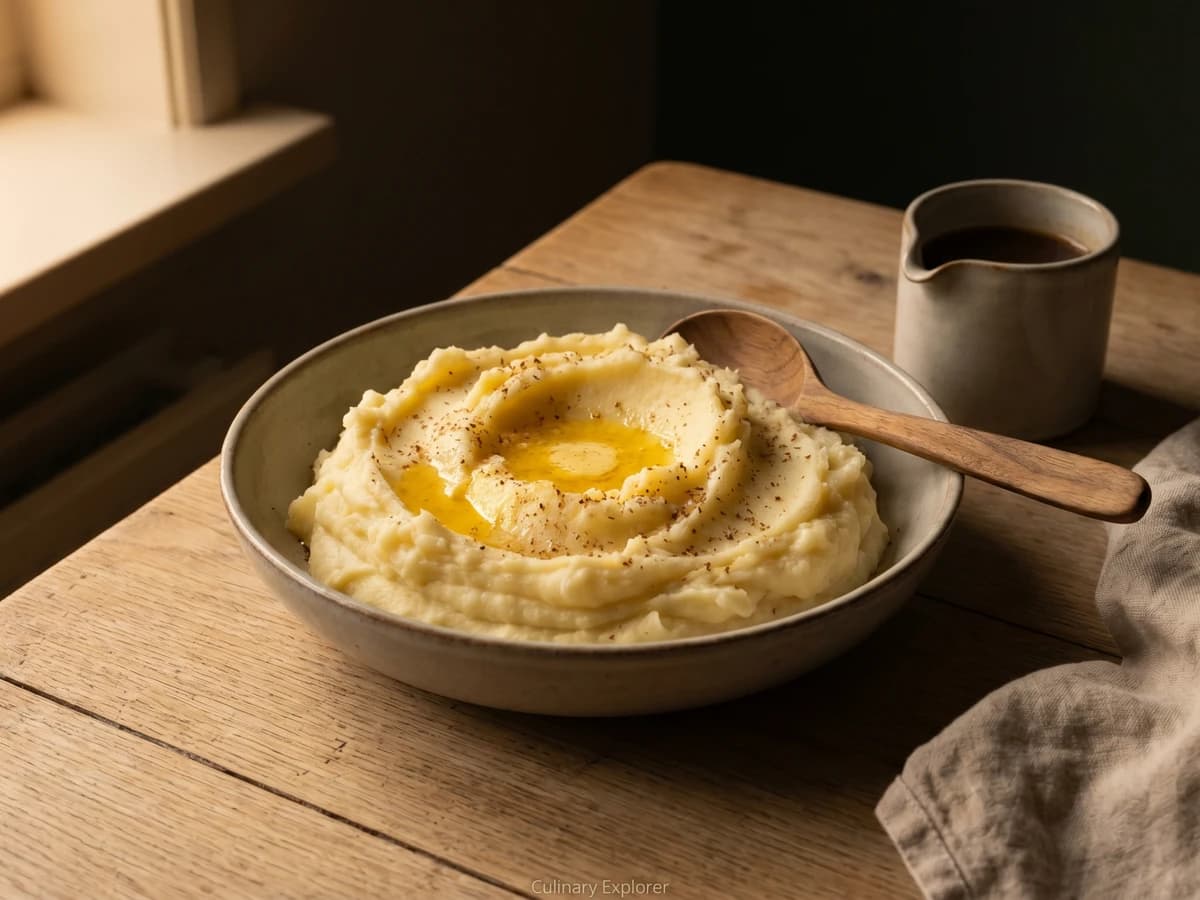
Aardappelpuree is the quiet heart of the Dutch AVG'tje: floury potatoes, warm milk, butter, nutmeg, and a small kuiltje, little well, built for the jus.

Chef Joost
Flower cabbage under old Gouda sauce: the quiet Dutch side dish that turns one boiled vegetable into the reason everyone reaches for the spoon twice.

Chef Joost
White beans peeking through green snijbonen give this old Dutch side its nursery-table joke: bare little children in the grass, sweet garden thrift with butter, nutmeg, and no apology.