Chef Joost
Aardappelgratin
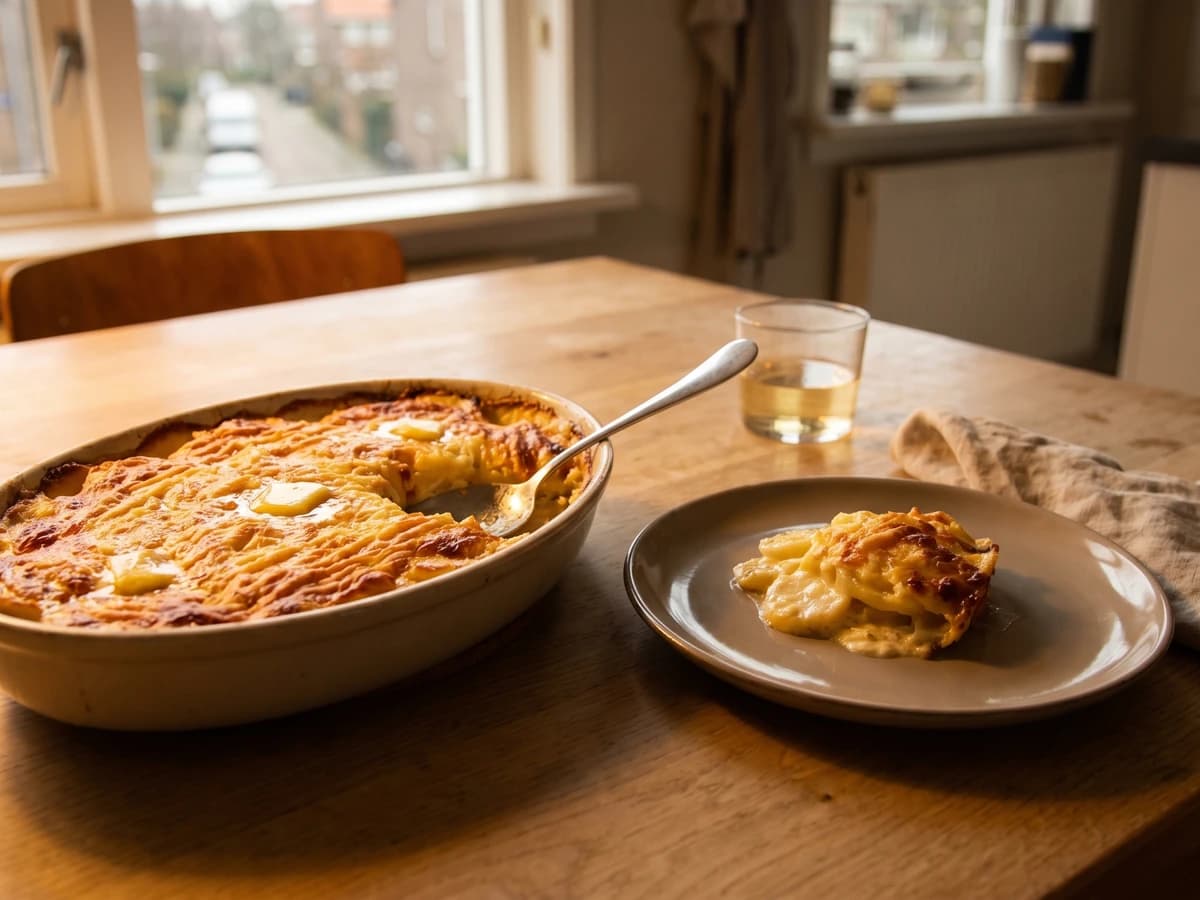
A French name, a Dutch potato, and a Sunday table: aardappelgratin is what happens when a frugal kitchen borrows richness and behaves as if it had always belonged.
A cooking platform built around craft, culture, and the stories behind what we eat.
Created by
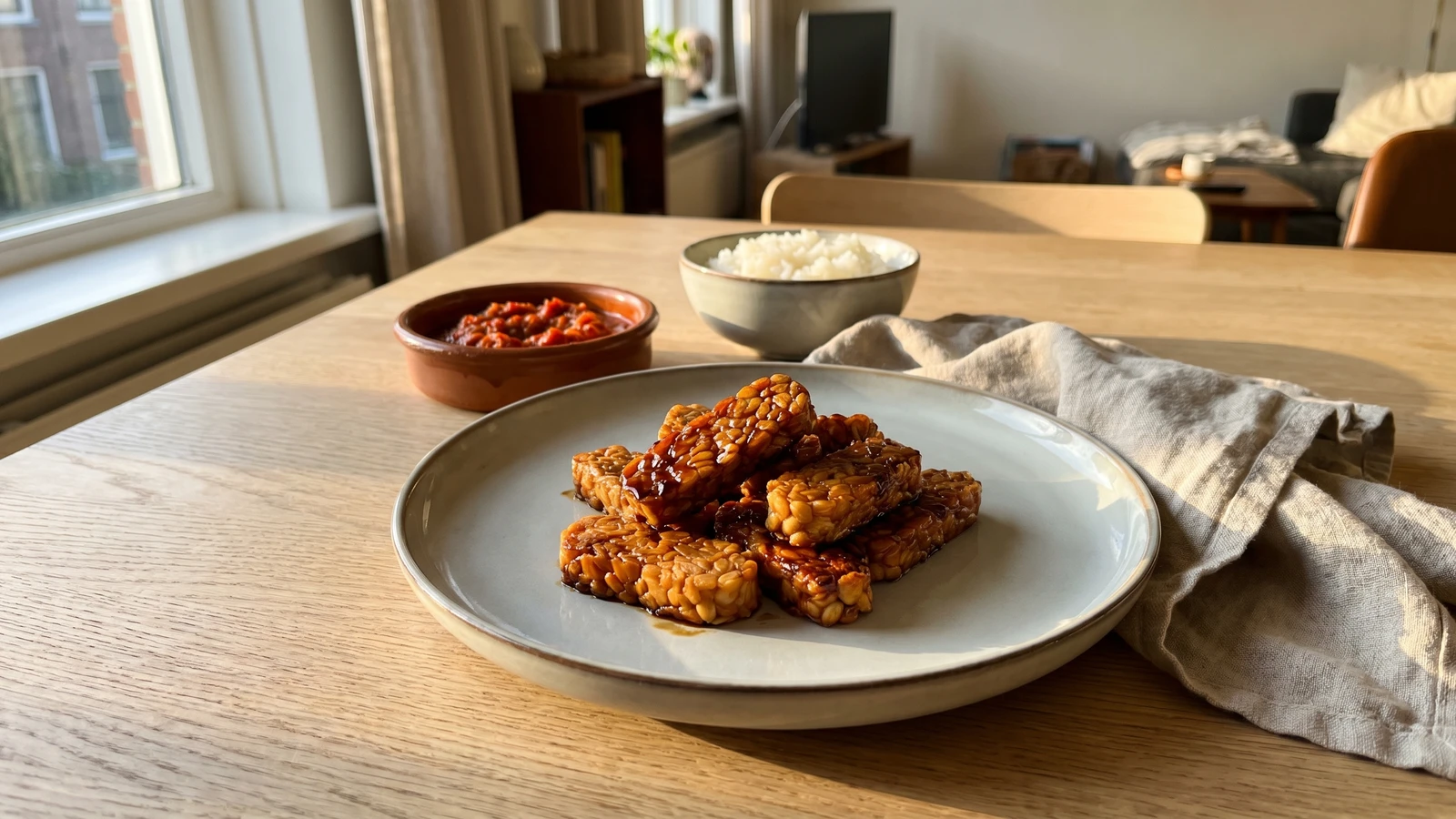
A Javanese soybean cake, a Dutch colonial table, and one honest pan of hot oil: tempeh goreng proves the Indo-Dutch side dish can be both spare and generous.
The first time I understood the Indo-Dutch table properly, it was not at a rijsttafel with silver warmers and too many small spoons. It was at a weeknight table where one dish of rice, one vegetable, one sambal, and a small heap of tempeh goreng did the work of a feast. But let me tell you a secret: the little fried side dishes are often where the meal speaks most clearly.
The name already tells you the method. Goreng means fried in Indonesian, plain as a kitchen instruction, and tempeh is the Javanese fermented soybean cake that Dutch cooks learned through Indonesia and then carried home through memory, migration, and the toko, the Indonesian-Dutch food shop. History and cookery, they cannot be separated. In the Netherlands, tempeh goreng sits comfortably beside boiled potatoes in one house and next to sambal goreng boontjes in the next, because Dutch food has never been as sealed off as outsiders like to imagine.
What matters here is dryness. Salt the tempeh lightly, let the surface lose its dampness, then fry the slices until the edges go nut-brown and crisp under your teeth. Finish with ketjap manis, the thick sweet soy sauce, only at the end, because sugar burns before wisdom arrives. Hou het altijd simpel: crisp tempeh, a dark glossy coat, and a bowl passed around the table before anyone starts making speeches.
Tempeh is a Javanese fermented soybean food, documented in the nineteenth-century Serat Centhini, the encyclopedic Javanese text compiled at the court of Surakarta around 1814. It entered Dutch home cooking through the colonial Dutch East Indies and became especially visible in the Netherlands after Indonesian independence, when Indo-Dutch families, repatriates, and toko shops made ingredients like tempeh, ketjap manis, and sambal part of ordinary Dutch pantry life. Tempeh goreng shows how the Indo-Dutch table preserved Javanese technique while adapting to Dutch weeknight cooking: few ingredients, clear method, and a side dish with more history than its size suggests.
Quantity
250g
sliced into thin rectangles
Quantity
1/2 teaspoon
Quantity
2 tablespoons
Quantity
1 small
finely grated
Quantity
250ml
for frying
Quantity
2 tablespoons
Quantity
1 teaspoon
Quantity
1 teaspoon
| Ingredient | Quantity |
|---|---|
| tempehsliced into thin rectangles | 250g |
| fine sea salt | 1/2 teaspoon |
| water | 2 tablespoons |
| garlic clovefinely grated | 1 small |
| neutral oilfor frying | 250ml |
| ketjap manis | 2 tablespoons |
| sambal oelek (optional) | 1 teaspoon |
| lime juice or rice vinegar (optional) | 1 teaspoon |
Cut the tempeh into thin rectangles, about 4mm thick. Too thick and the middle stays soft before the outside browns; too thin and you get chips instead of a side dish. You want a firm bite with crisp edges.
Stir the salt, water, and grated garlic together, then rub this lightly over the tempeh slices. Lay them on a plate for ten minutes, then pat them dry. This small wait matters: damp tempeh hisses in the oil and browns sulkily, while dry tempeh fries clean and crisp.
Heat the oil in a small heavy pan over medium-high heat until a corner of tempeh sizzles at once. Fry in two batches, turning once, until the slices are deep golden at the edges and feel light when lifted, about three to four minutes per batch. Drain on a rack or kitchen paper.
Pour off the frying oil and wipe the pan if crumbs have darkened. Return the tempeh to the pan over low heat, add the ketjap manis and sambal if using, and toss for thirty seconds until the slices are thinly lacquered. Do not cook the ketjap hard; its sugar turns from generous to bitter very quickly.
Taste and add a few drops of lime juice or rice vinegar if the sweetness needs a little edge. Serve the tempeh while the edges still answer back under your teeth, beside rice, vegetables, or as one crisp dish among several on an Indo-Dutch table.
1 serving (about 75g)
Culinary guides, cultural storytelling, and the editorial depth that makes cooking meaningful.
Discover Culinary ExplorerChef Joost
A French name, a Dutch potato, and a Sunday table: aardappelgratin is what happens when a frugal kitchen borrows richness and behaves as if it had always belonged.
Chef Joost
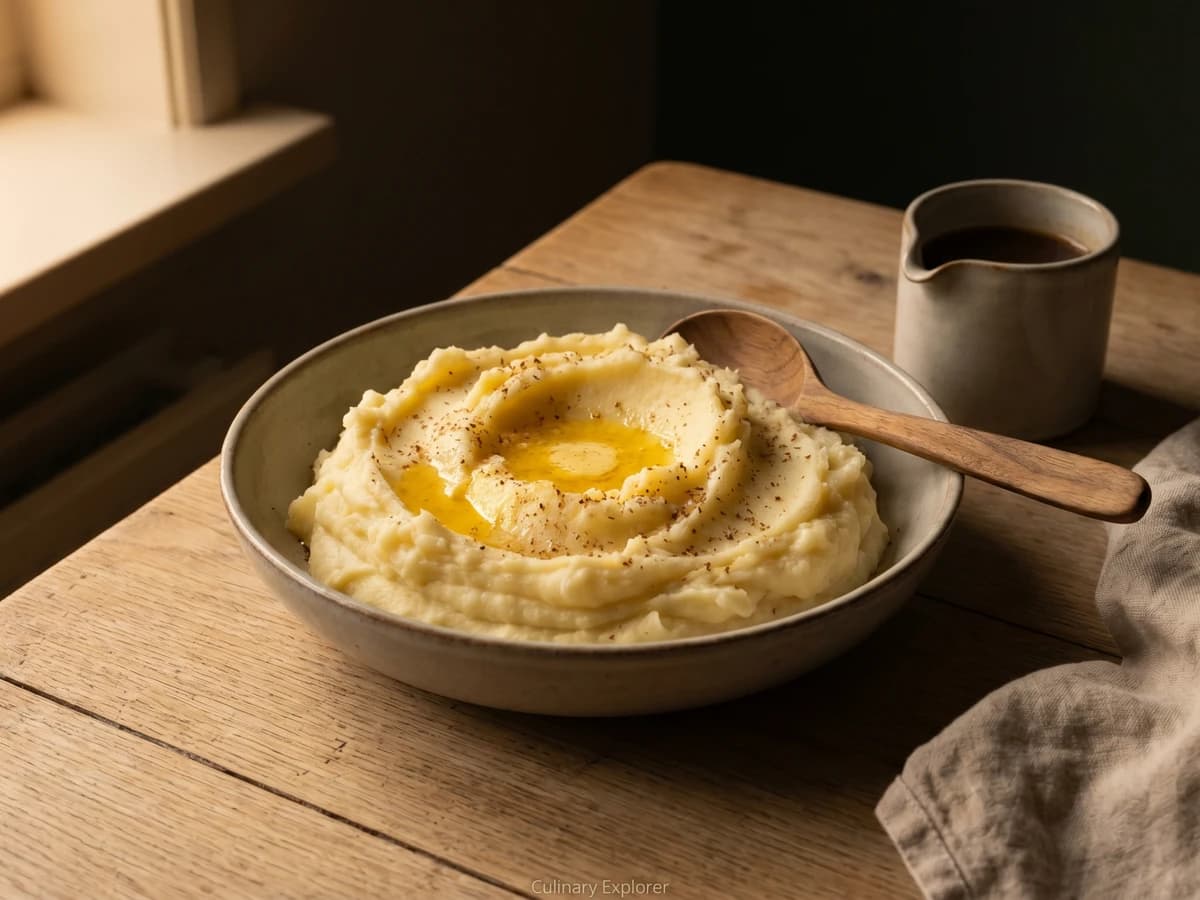
Aardappelpuree is the quiet heart of the Dutch AVG'tje: floury potatoes, warm milk, butter, nutmeg, and a small kuiltje, little well, built for the jus.

Chef Joost
Flower cabbage under old Gouda sauce: the quiet Dutch side dish that turns one boiled vegetable into the reason everyone reaches for the spoon twice.

Chef Joost
White beans peeking through green snijbonen give this old Dutch side its nursery-table joke: bare little children in the grass, sweet garden thrift with butter, nutmeg, and no apology.