Culinary Explorer

A cooking platform built around craft, culture, and the stories behind what we eat.
Discover Culinary Explorer
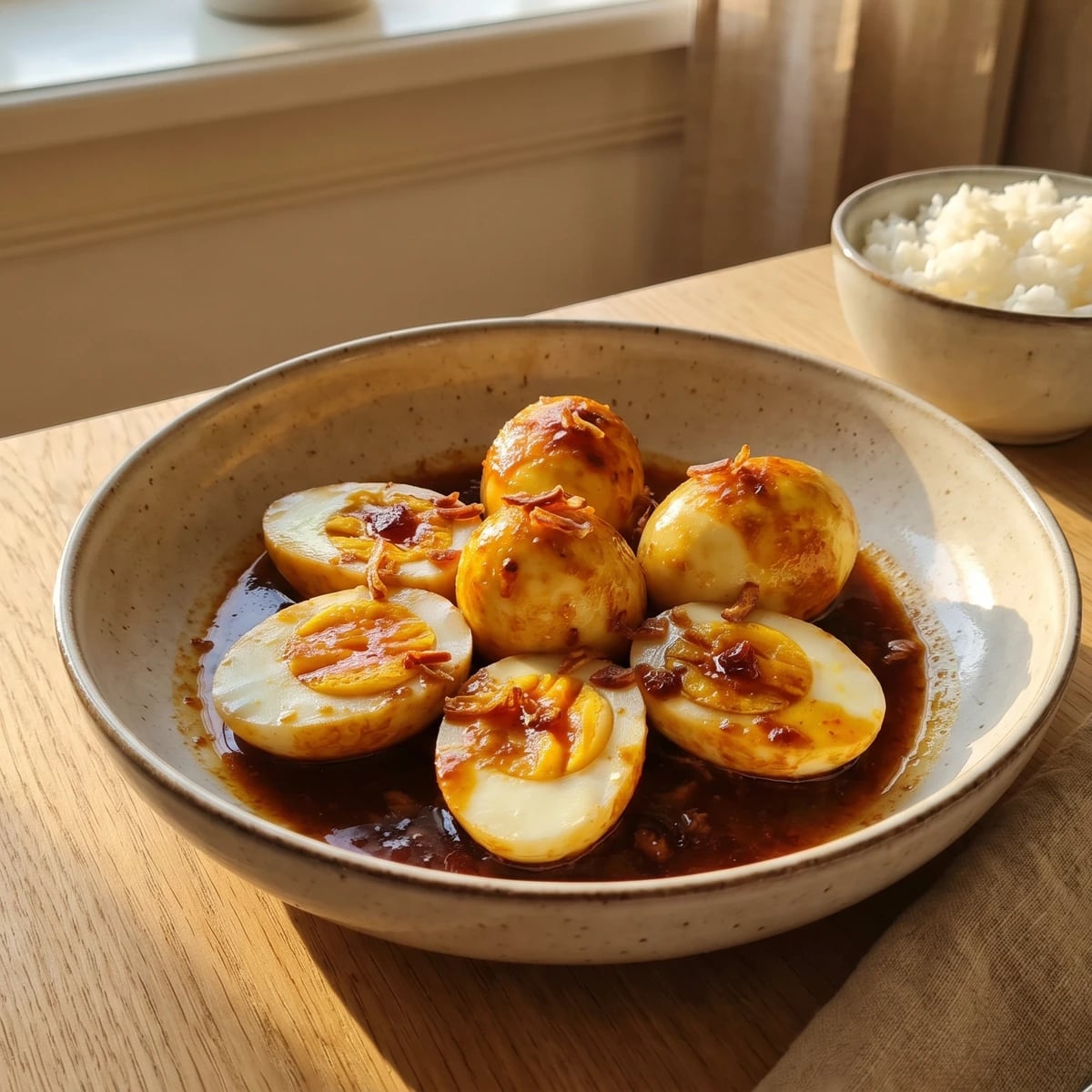
Sambal Goreng Telor

Sambal Goreng Telor

Created by

The brown-sauced egg of the Indo-Dutch rijsttafel: boiled, fried, then simmered until chile, coconut, and ketjap cling to it like family memory.

Side Dishes
Dutch
Dinner Party
Special Occasion
Celebration
20 min
Active Time
30 min cook50 min total
Yield6 side servings

The name already tells you how this dish moves. Sambal is the chile paste, goreng is fried, telor is the egg, the Indo-Dutch spelling that still sits on old recipe cards and rijsttafel menus even where modern Indonesian writes telur. Three small words, and a whole colonial table appears: rice in the middle, dishes circling it, and one brown-sauced egg that children reached for first because it looked harmless. It was not always harmless. Good sambal rarely is.

During my manuscript year in Fez, I learned again what the old spice routes had already taught the Dutch: a sauce can carry more history than a roast. Here the road runs through the former Dutch East Indies and back into Dutch kitchens after the war, when Indo families brought their table with them and changed the Netherlands more deeply than any official cookbook admitted at the time. But let me tell you a secret. The rijsttafel was never only grandeur, silverware, and hotel dining rooms. At home it was also leftovers, boiled eggs, a spoonful of sambal, a little santen, and the practical genius of making one modest ingredient taste invited.

The method matters because the egg is stubborn. Boil it and the sauce slides off. Fry it first, and the skin blisters just enough to catch the bumbu, the fried spice paste. Then you simmer it in coconut milk and ketjap manis, that dark sweet soy sauce the Dutch call ketjap, until the sauce turns brown-red and glossy. Hou het altijd simpel, always keep it simple: dry the eggs, fry the spice paste until it smells alive, and let the sauce reduce until it clings. After that, the dish knows what to do.

Sambal goreng telor belongs to the Indo-Dutch rijsttafel tradition, a colonial Dutch East Indies meal structure that gathered many Indonesian dishes around rice and became common in hotels and wealthy households by the late nineteenth century. After Indonesian independence, Indo-European families arriving in the Netherlands in the late 1940s and 1950s carried dishes like this into Dutch home cooking, helped by tokos, family recipe cards, and brands selling sambal, ketjap, and boemboe mixes. The spelling telor, still common in Dutch-Indonesian recipes, preserves the Indo-Dutch menu language even though modern standard Indonesian usually writes telur.

The technique, the tradition, and the story behind every dish.

Discover Culinary Explorer

Ingredients

large eggs

Quantity

8

neutral oil

Quantity

3 tablespoons, plus more if needed

for frying

shallots

Quantity

3

finely chopped

garlic cloves

Quantity

3

minced

sambal oelek

Quantity

2 tablespoons

ground coriander

Quantity

1 teaspoon

ground cumin

Quantity

1/2 teaspoon

lemongrass

Quantity

1 stalk

bruised

salam leaves or bay leaves

Quantity

2

galangal or ginger

Quantity

2cm piece

sliced

thick coconut milk or santen thinned with water

Quantity

200ml

ketjap manis

Quantity

2 tablespoons

tamarind paste

Quantity

1 teaspoon

palm sugar or dark brown sugar

Quantity

1 teaspoon

salt

Quantity

1/2 teaspoon, plus more to taste

fried shallots (optional)

Quantity

1 tablespoon

Equipment Needed

  • Medium saucepan for boiling eggs
  • Wide frying pan or saute pan
  • Slotted spoon

Instructions

  1. 1

    Boil the eggs

    Lower the eggs into a pan of gently boiling water and cook for 9 minutes. Cool them in cold water, then peel them carefully. Dry them very well with a towel; wet eggs meet hot oil badly, and the kitchen does not need that drama.

  2. 2

    Fry the eggs

    Warm the oil in a wide pan over medium-high heat. Fry the peeled eggs, turning them with a spoon, until their surfaces blister and turn golden in patches, about 5 minutes. You are not cooking the inside again. You are roughening the outside so the sauce can hold on.

  3. 3

    Build the bumbu

    Lift the eggs to a plate and lower the heat to medium. Add the shallots and cook until soft and golden, then stir in the garlic, sambal oelek, coriander, and cumin. Cook for 2 minutes, until the oil turns red and fragrant. This fried spice base is the bumbu, the little engine of the dish.

  4. 4

    Simmer the sauce

    Add the lemongrass, salam leaves, galangal, coconut milk, ketjap manis, tamarind, sugar, and salt. Stir well and let the sauce simmer gently for 8 to 10 minutes, until it darkens to a reddish brown and the oil begins to show at the edges. Taste now: it should be hot, sweet, salty, and a little sour, not merely one loud note of chile.

    If your sambal is very salty, hold back a little salt until the sauce has reduced. Ketjap brings sweetness and salt of its own.
  5. 5

    Coat the eggs

    Return the fried eggs to the pan and spoon the sauce over them. Simmer gently for 8 minutes, turning once or twice, until the sauce clings thickly to the eggs. Remove the lemongrass, salam leaves, and galangal before serving. Scatter with fried shallots if you like, but do not bury the eggs. The brown lacquer is the point.

Chef Tips

  • Dry the peeled eggs thoroughly before frying. Even a little water will make the oil spit, and a calm pan gives you a better blistered surface.
  • Use ketjap manis, not thin Japanese soy sauce. Ketjap gives the sauce its dark sweetness and the brown gloss that made this egg so recognizable on the rijsttafel.
  • Santen is concentrated coconut cream. If using a block, dissolve about 50g in 200ml hot water; if using canned coconut milk, choose a thick one and shake it well before measuring.
  • Serve with plain rice and other rijsttafel dishes, or keep it modest with cucumber, atjar, and a spoonful of sambal on the side.

Advance Preparation

  • The eggs can be boiled and peeled one day ahead; keep them covered in the refrigerator and dry them before frying.
  • The finished dish keeps well for two days refrigerated. Reheat gently with a splash of water or coconut milk so the sauce loosens without splitting.

Frequently Asked Questions

Nutrition Information

1 serving (about 125g)

Calories
270 calories
Total Fat
21 g
Saturated Fat
9 g
Trans Fat
0 g
Unsaturated Fat
12 g
Cholesterol
250 mg
Sodium
700 mg
Total Carbohydrates
11 g
Dietary Fiber
1 g
Sugars
7 g
Protein
10 g

Note: Chef personas and recipes are created with AI assistance. Cook with care: follow safe food-handling practices, check doneness with a thermometer when needed, and adapt for allergies and your kitchen.

Where cooking meets culture.

Culinary guides, cultural storytelling, and the editorial depth that makes cooking meaningful.

Discover Culinary Explorer

More from De Rijsttafel: Sambals & Bijgerechten

Browse the full collection