Chef Joost
Aardappelgratin
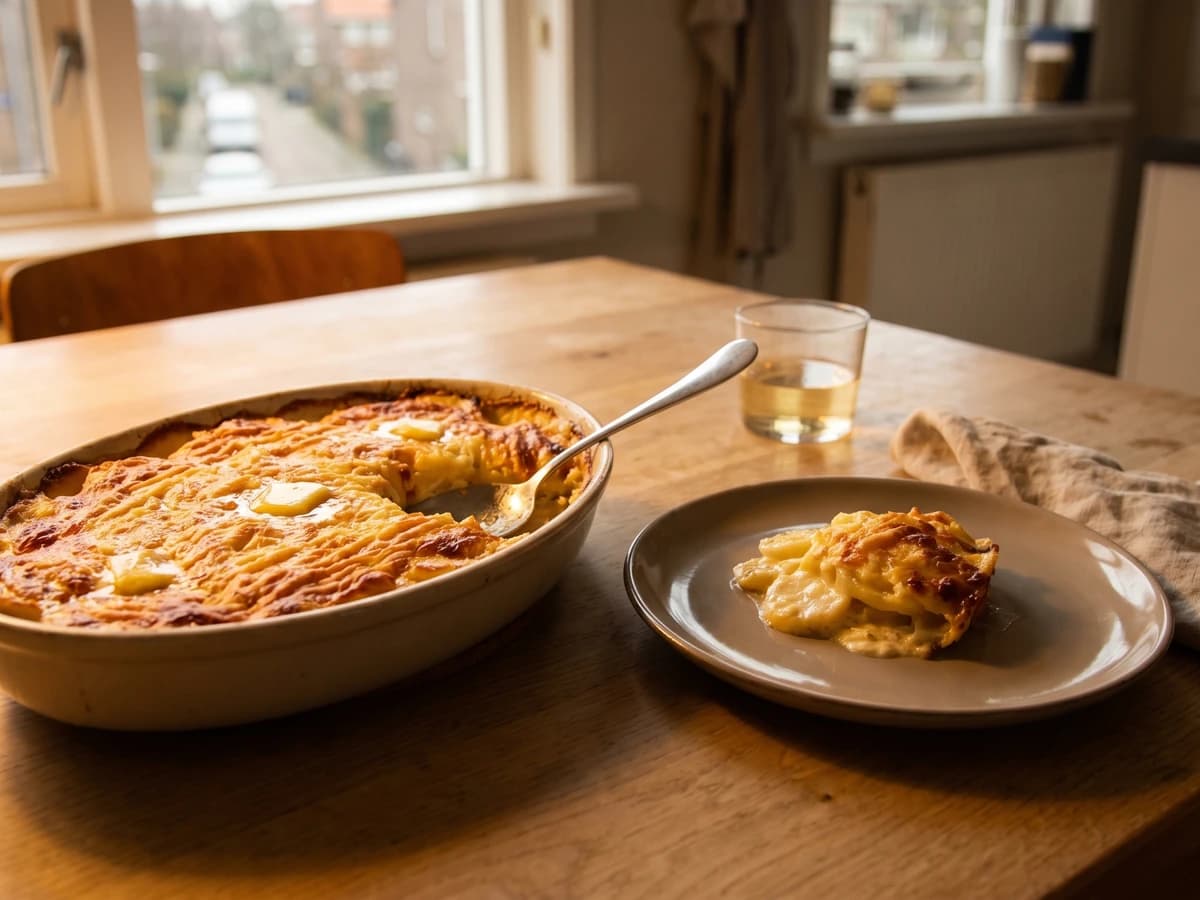
A French name, a Dutch potato, and a Sunday table: aardappelgratin is what happens when a frugal kitchen borrows richness and behaves as if it had always belonged.
A cooking platform built around craft, culture, and the stories behind what we eat.

Created by
The Dutch frikadel went east, learned potato, shallot, and nutmeg, and came home as perkedel kentang: crisp-edged, tender-hearted proof that history can fit on a side plate.
The name already tells you there has been travel. Perkedel is the Indonesian mouth making sense of the Dutch frikadel, once a little fried patty of minced meat, then carried into the kitchens of the Indies and taught a new grammar: kentang, potato, shallot, white pepper, nutmeg, egg. History and cookery, they cannot be separated, however inconvenient this is for people who like their side dishes innocent.
But let me tell you a secret. The Indo-Dutch table is not a footnote to Dutch cooking; it is one of the places where Dutch food learned to admit what it had already become. Nutmeg was never only for speculaas or hachee. It crossed the same waters as ledgers, sailors, cooks, and homesick appetites, and in perkedel kentang it warms mashed potato so quietly that you miss it only when it isn't there.
This is humble food with dinner-party manners. The potatoes must be fried or steamed dry before mashing, because wet potato collapses in hot oil and then blames you for it. Fried shallots bring sweetness, egg brings structure, and a quick dip in beaten egg gives the outside its golden skin. Hou het altijd simpel, always keep it simple: shape small patties, chill them if the kitchen is warm, and fry without fuss until they hold their own at the table.
Perkedel is widely understood as an Indonesian adaptation of the Dutch frikadel, a fried patty known in the Netherlands and carried to the Dutch East Indies during the colonial period. In Indonesia the dish shifted toward potato, often with fried shallot, white pepper, nutmeg, and sometimes minced meat, becoming a regular companion to rice meals, soto, and festive spreads. Its survival on the Indo-Dutch table shows how colonial dishes did not simply return unchanged; they came back bearing the taste of the kitchens that had remade them.
Quantity
800g
peeled and cut into large chunks
Quantity
3 tablespoons, plus more for frying
Quantity
4
thinly sliced
Quantity
2
finely grated
Quantity
2
finely sliced
Quantity
2 tablespoons
finely chopped
Quantity
1 teaspoon
Quantity
1/2 teaspoon
Quantity
1/4 teaspoon
Quantity
2
divided
Quantity
1 tablespoon
only if needed
| Ingredient | Quantity |
|---|---|
| floury potatoespeeled and cut into large chunks | 800g |
| neutral oil | 3 tablespoons, plus more for frying |
| shallotsthinly sliced | 4 |
| garlic clovesfinely grated | 2 |
| spring onionsfinely sliced | 2 |
| celery leaf or flat-leaf parsleyfinely chopped | 2 tablespoons |
| fine salt | 1 teaspoon |
| ground white pepper | 1/2 teaspoon |
| freshly grated nutmeg | 1/4 teaspoon |
| eggsdivided | 2 |
| plain flour or potato starch (optional)only if needed | 1 tablespoon |
Steam the potatoes until tender, about 18 to 22 minutes, then spread them on a tray for five minutes so their surface moisture escapes. Mash them while still warm until mostly smooth. If you boil them instead, drain them very well and let them sit uncovered in the hot pan for a minute; perkedel forgives many things, but watery potato is not one of them.
Warm 3 tablespoons oil in a small pan over medium heat and fry the sliced shallots until golden and crisp at the edges, 6 to 8 minutes. Lift them out with a slotted spoon and let them drain. Stir the grated garlic into the hot shallot oil for 20 seconds, just until fragrant, then scrape that oil and garlic into the mashed potato.
Crumble the fried shallots into the potato, then add the spring onions, celery leaf, salt, white pepper, nutmeg, and 1 beaten egg. Mix gently but thoroughly. The mixture should hold when pressed in your palm; if it feels slack, add 1 tablespoon flour or potato starch and let it stand for five minutes.
Shape the mixture into 16 small patties, each about 5 centimetres wide and 2 centimetres thick. Set them on a plate and chill for 15 minutes if the room is warm or the mixture feels soft. This little rest is not ceremony; it helps the egg bind and keeps the patties from sighing apart in the oil.
Beat the remaining egg in a shallow bowl. Dip each patty quickly into the egg, coating both sides and letting the excess drip away. You are not breading them. The egg is a thin skin, enough to turn gold and protect the soft potato inside.
Pour neutral oil into a heavy frying pan to a depth of about 1 centimetre and heat over medium-high heat. Fry the patties in batches for 2 to 3 minutes per side, turning once, until deep golden with crisp edges. Keep the oil lively but not angry; if the patties darken before they firm, lower the heat. Drain on paper towel and serve warm or at room temperature.
1 serving (about 55g)
Culinary guides, cultural storytelling, and the editorial depth that makes cooking meaningful.
Discover Culinary ExplorerChef Joost
A French name, a Dutch potato, and a Sunday table: aardappelgratin is what happens when a frugal kitchen borrows richness and behaves as if it had always belonged.
Chef Joost
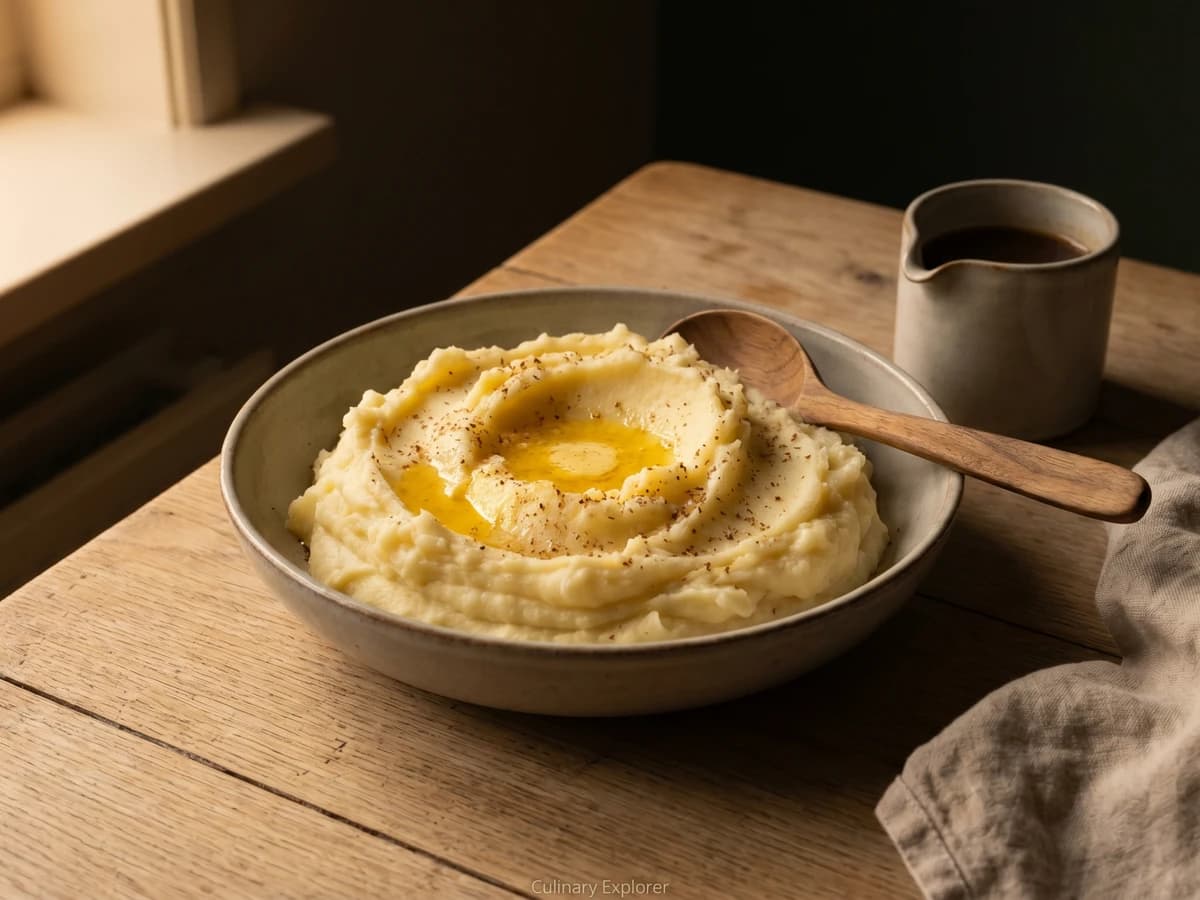
Aardappelpuree is the quiet heart of the Dutch AVG'tje: floury potatoes, warm milk, butter, nutmeg, and a small kuiltje, little well, built for the jus.

Chef Joost
Flower cabbage under old Gouda sauce: the quiet Dutch side dish that turns one boiled vegetable into the reason everyone reaches for the spoon twice.

Chef Joost
White beans peeking through green snijbonen give this old Dutch side its nursery-table joke: bare little children in the grass, sweet garden thrift with butter, nutmeg, and no apology.