Chef Joost
Aardappelgratin
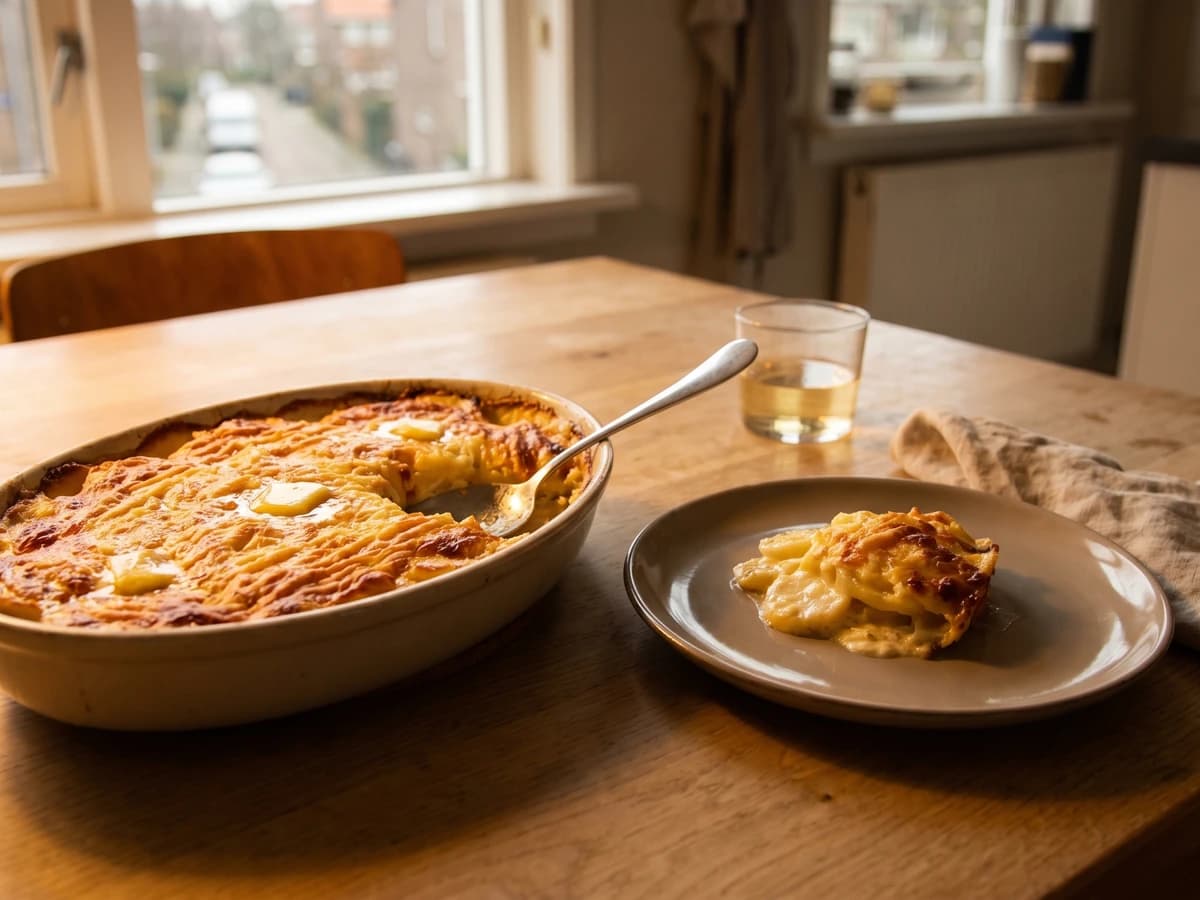
A French name, a Dutch potato, and a Sunday table: aardappelgratin is what happens when a frugal kitchen borrows richness and behaves as if it had always belonged.
A cooking platform built around craft, culture, and the stories behind what we eat.

Created by
Old Dutch spelling, Javanese broth, and vegetables in santen, coconut milk: sajoer lodeh is the mild dish that lets a rijsttafel breathe between sambal, satay, and rice.
At Leiden, after a day with old cookbooks whose Dutch spelling had not yet learned modern Indonesian, I would sometimes eat at an Indo-Dutch friend's family table. Rice in the middle, small dishes all around, sambal waiting with its little red warning, and then a quiet bowl of pale gold vegetables. Sajoer lodeh never tried to win the table. It saved it.
The name already tells you where to stand. Sajoer is old Dutch colonial spelling for Indonesian sayur, vegetables or a vegetable dish; lodeh is Javanese, a coconut-milk preparation whose exact word-history I won't pin down with borrowed certainty. In the Netherlands the word survived in the Indo-Dutch kitchen, where santen, coconut milk, softened the edges of a rijsttafel, the rice table, and gave the rice something mild and fragrant to drink. Not soup. That matters. You eat it with rice, spoon by spoon, as the gentle counterweight to the sambal and the darker meats.
What matters in the pot is the bumbu, the spice paste. Fry it until the raw garlic leaves and the oil turns yellow-gold, then add vegetables according to their patience: carrots and beans first, cabbage and courgette later. Hou het altijd simpel, always keep it simple. Coconut milk doesn't ask for drama; keep it gentle, let the broth thicken just enough to coat a spoon, and bring the pan to the table as if it belonged there, because it does.
Sajoer lodeh is the Dutch colonial spelling of Indonesian sayur lodeh: sayur means vegetables or a vegetable dish, while lodeh names a Javanese coconut-milk preparation. The old spelling preserves the Netherlands Indies writing system in which oe represented modern Indonesian u and j the y sound; after the 1947 Indonesian spelling reform, sayur became the standard form. Early twentieth-century Dutch East Indies cookbooks, including J.M.J. Catenius-van der Meijden's 1902 Groot Nieuw Volledig Oost-Indisch Kookboek, helped carry sajoer into Dutch household language, and after Indonesian independence in 1949 Indo-European families made dishes like this part of the everyday Indo-Dutch table in the Netherlands.
Quantity
2 tablespoons
Quantity
4
finely chopped
Quantity
3
finely chopped
Quantity
3 candlenuts or 25g macadamias
candlenuts lightly toasted
Quantity
1 teaspoon
Quantity
1 teaspoon
Quantity
1/2 teaspoon, plus more to taste
Quantity
2cm piece
sliced and bruised
Quantity
1
bruised
Quantity
2 salam leaves or 1 bay leaf
Quantity
300ml
Quantity
400ml
Quantity
1 medium
thinly sliced
Quantity
200g
trimmed and cut into 4cm pieces
Quantity
1 small
cut into 2cm pieces
Quantity
200g
sliced
Quantity
150g
cut into cubes
Quantity
1 teaspoon
Quantity
1/4 teaspoon
Quantity
2 tablespoons
| Ingredient | Quantity |
|---|---|
| neutral oil | 2 tablespoons |
| shallotsfinely chopped | 4 |
| garlic clovesfinely chopped | 3 |
| candlenuts (kemiri) or unsalted macadamiascandlenuts lightly toasted | 3 candlenuts or 25g macadamias |
| ground coriander | 1 teaspoon |
| ground turmeric | 1 teaspoon |
| salt | 1/2 teaspoon, plus more to taste |
| fresh galangalsliced and bruised | 2cm piece |
| lemongrass stalkbruised | 1 |
| salam leaves (Indonesian bay) or small bay leaf | 2 salam leaves or 1 bay leaf |
| water or light vegetable stock | 300ml |
| full-fat coconut milk | 400ml |
| carrotthinly sliced | 1 medium |
| green beans or long beanstrimmed and cut into 4cm pieces | 200g |
| chayote or courgettecut into 2cm pieces | 1 small |
| pointed cabbage or white cabbagesliced | 200g |
| tempeh or firm tofu (optional)cut into cubes | 150g |
| palm sugar or light brown sugar | 1 teaspoon |
| ground white pepper | 1/4 teaspoon |
| fried shallots (bawang goreng) (optional) | 2 tablespoons |
Pound the shallots, garlic, candlenuts, coriander, turmeric, and 1/2 teaspoon salt in a mortar until you have a rough paste, or pulse them in a small food processor with a spoonful of the measured water. It needn't be silk smooth. The paste only has to cook evenly, and a little texture is honest home cooking.
Warm the oil in a wide saucepan or braadpan over medium heat. Add the bumbu and cook for 5 to 7 minutes, stirring often, until the raw garlic smell is gone, the paste darkens from yellow to gold, and tiny beads of oil show at the edges. This is the slow step buying you flavour; if you rush it, coconut milk will politely carry raw shallot to every corner of the bowl.
Add the galangal, lemongrass, salam leaves, and the remaining water or stock, scraping the bottom of the pan. Bring it to a gentle simmer, then add the carrot and beans. Cook for 6 minutes, until the beans brighten and the carrot has begun to bend but still argues back when you bite it.
Lower the heat and stir in the coconut milk, chayote or courgette, cabbage, and tempeh or tofu if using. Keep the liquid at a quiet simmer for 10 to 12 minutes, stirring now and then, until the vegetables are tender but still separate. A hard boil can split the coconut milk; this is not ruin, but it does make the broth look tired.
Stir in the palm sugar and white pepper, then taste for salt. Fish out the lemongrass, galangal, and salam leaves if you see them. Let the pan stand off the heat for 5 minutes so the broth settles around the vegetables; the colour should be pale gold, not muddy, and the coconut should coat the back of a spoon.
Spoon the vegetables and enough broth to moisten the rice into a shallow bowl, and scatter over fried shallots if you are using them. Serve beside plain white rice as part of a rijsttafel, the rice table, or with one sharp sambal and one simple fried egg on a weeknight. Sajoer lodeh is eaten with rice, not ladled as soup. The distinction is small until you taste it.
1 serving (about 270g)
Culinary guides, cultural storytelling, and the editorial depth that makes cooking meaningful.
Discover Culinary ExplorerChef Joost
A French name, a Dutch potato, and a Sunday table: aardappelgratin is what happens when a frugal kitchen borrows richness and behaves as if it had always belonged.
Chef Joost
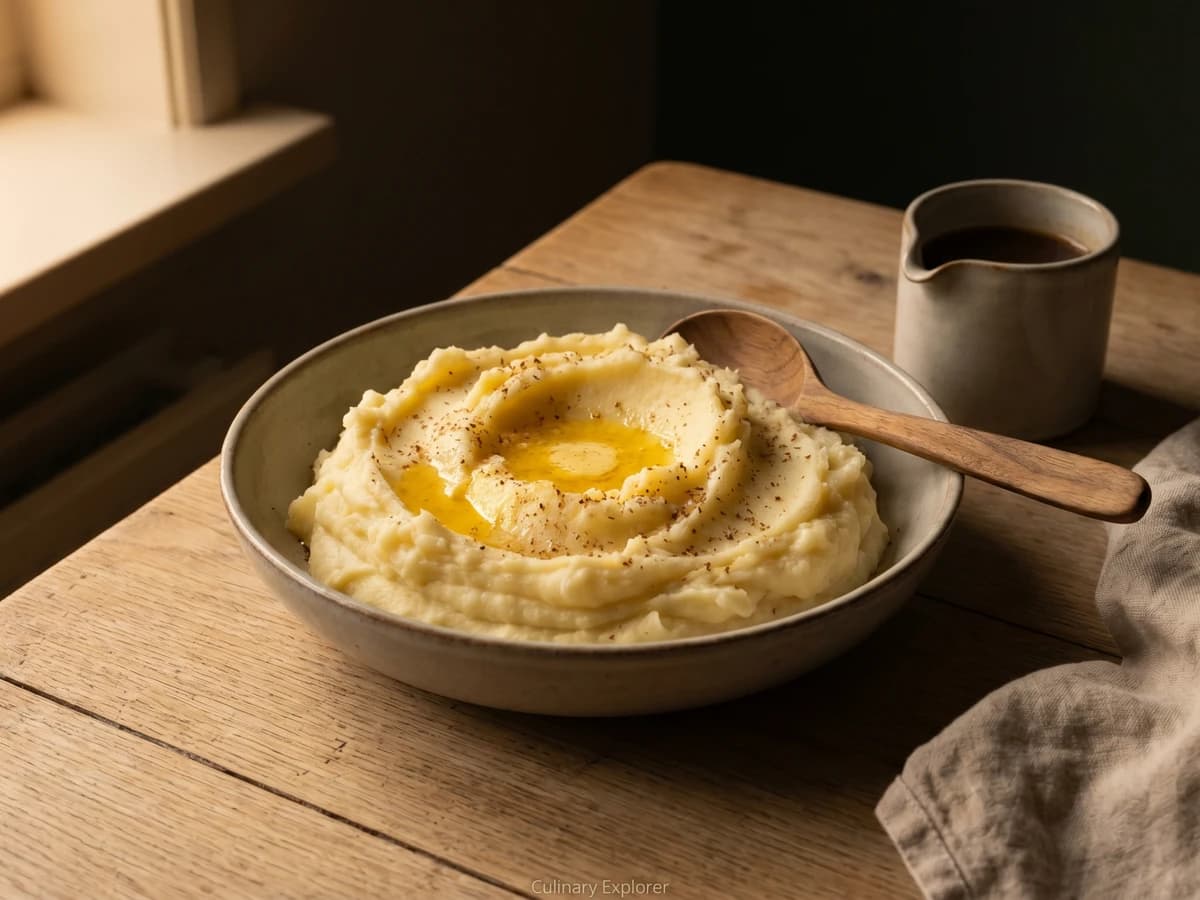
Aardappelpuree is the quiet heart of the Dutch AVG'tje: floury potatoes, warm milk, butter, nutmeg, and a small kuiltje, little well, built for the jus.

Chef Joost
Flower cabbage under old Gouda sauce: the quiet Dutch side dish that turns one boiled vegetable into the reason everyone reaches for the spoon twice.

Chef Joost
White beans peeking through green snijbonen give this old Dutch side its nursery-table joke: bare little children in the grass, sweet garden thrift with butter, nutmeg, and no apology.