
Chef Joost
Aardappelschotel met Gehakt
A plain name for a quietly clever dish: fresh mince, sweet fried onion, nutmeg, and mashed potato baked until the top goes golden and the table goes silent.
A cooking platform built around craft, culture, and the stories behind what we eat.
Created by
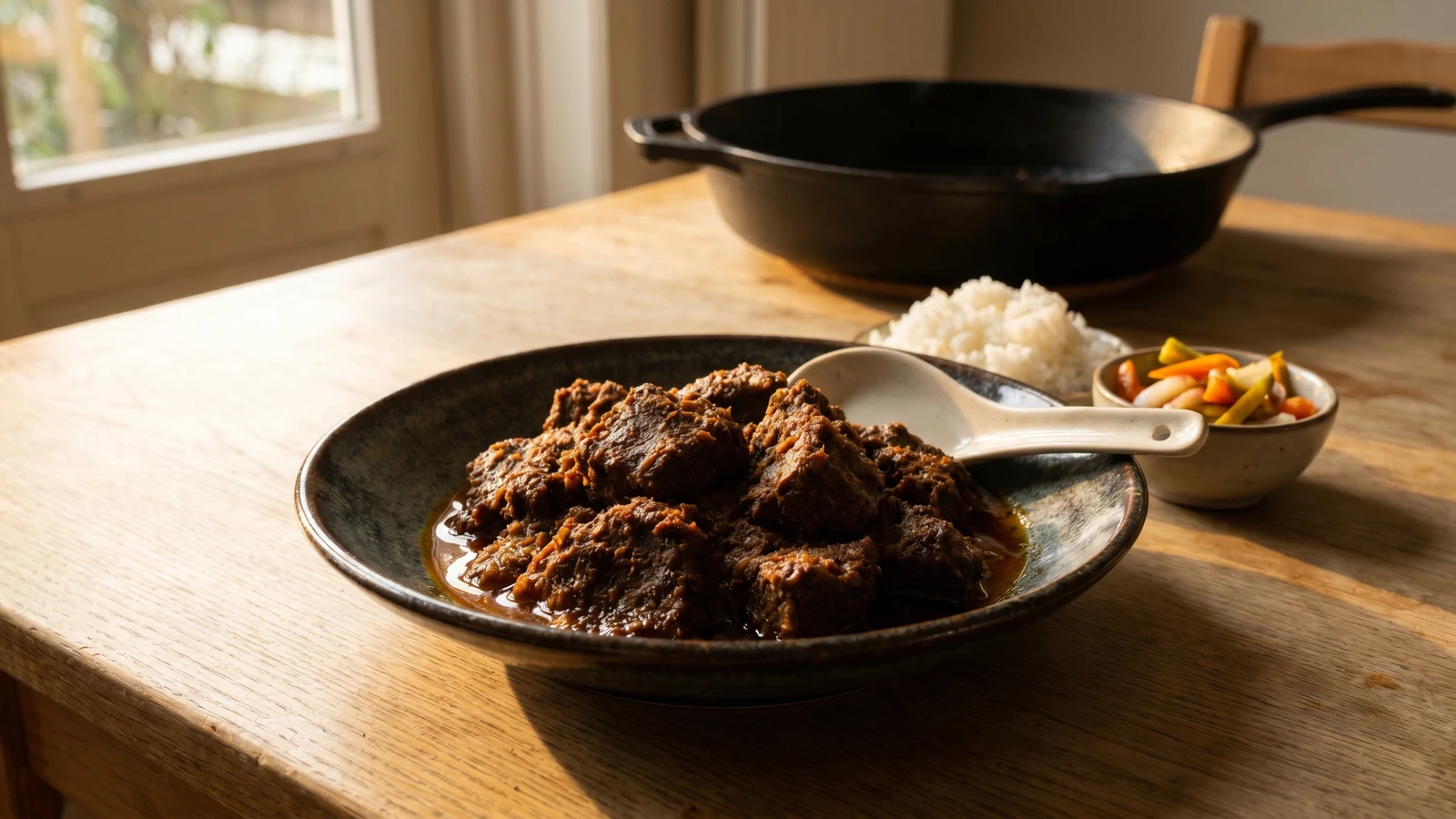
Rendang is West Sumatra's patient beef, cooked through gulai and kalio into dark, dry tenderness, then carried onto Dutch rijsttafel tables by a colonial history we must name plainly.
Ifirst met rendang at a Dutch table, which is both true and not the whole truth. It arrived in a small enamel dish beside rice, sambal, atjar, and half a dozen other bowls, part of a rijsttafel, a rice table, in a room where the old colonial words still hung in the air even when nobody said them. History and cookery, they cannot be separated. Sometimes the table is generous. Sometimes it is guilty. Often it is both.
But let me tell you a secret: rendang is not a beef stew with a good publicist. The name is commonly tied to the Minangkabau idea of merandang, the slow cooking and drying down of coconut milk and spices until the sauce stops being sauce and becomes a dark, fragrant paste clinging to the meat. The stages matter. First it is gulai, wet and yellow-red. Then kalio, thicker and brown. Only after patience, stirring, and the quiet breaking of coconut milk into oil does it become rendang. A forced shortcut gives you curry. A proper rendang has traveled further.
So yes, it belongs to West Sumatra before it belongs anywhere else. The Dutch table received it through the Indonesian archipelago, through colonial appetite, through Indo-Dutch families who carried recipes into postwar kitchens where the Netherlands had to learn that its own pantry was larger than it had admitted. I cook it with that in mind. No theatrical difficulty, no apology disguised as garnish. Hou het altijd simpel, always keep it simple: good beef, full-fat coconut milk, a paste cooked until its raw edge is gone, then time enough for the dish to darken honestly.
The last hour is the lesson. You stir more often as the liquid disappears because the coconut is no longer braising the beef, it is frying the spice paste around it. That is why rendang tastes deeper the next day. The oil settles, the spices stop shouting, and the meat becomes what it was meant to be: dark, dry, generous, and impossible to rush.
Rendang originates with the Minangkabau communities of West Sumatra, where long cooking in coconut milk and spices made meat durable for journeys and important enough for ceremonial meals such as weddings and Eid. In the Dutch colonial Indies, the rijsttafel, literally rice table, gathered regional Indonesian dishes into an elaborate colonial service, and rendang entered that Dutch-language dining world through an unequal history. After Indonesian independence in 1949 and the migration of Indo-European families to the Netherlands, rendang became a familiar dish in Dutch Indonesian restaurants and home kitchens, though its regional origin remains West Sumatran.
Quantity
1.2kg
cut into 4cm pieces
Quantity
2 teaspoons
divided
Quantity
3 tablespoons
Quantity
800ml
Quantity
200ml
plus more as needed
Quantity
75g
Quantity
12 small or 3 large
roughly chopped
Quantity
6
roughly chopped
Quantity
6
chopped, seeded if you want less heat
Quantity
5cm piece
peeled and sliced
Quantity
5cm piece
sliced
Quantity
3cm piece or 1 teaspoon
peeled if fresh
Quantity
4
Quantity
2 teaspoons
Quantity
1 teaspoon
Quantity
1/2 teaspoon
Quantity
3
bruised and tied in knots
Quantity
6
torn
Quantity
2
Quantity
1
tied in a knot
Quantity
1
Quantity
3
Quantity
1 tablespoon
Quantity
1 teaspoon
| Ingredient | Quantity |
|---|---|
| beef chuck or boneless short ribcut into 4cm pieces | 1.2kg |
| fine sea saltdivided | 2 teaspoons |
| neutral oil | 3 tablespoons |
| full-fat coconut milk | 800ml |
| waterplus more as needed | 200ml |
| unsweetened desiccated coconut | 75g |
| Asian shallots or banana shallotsroughly chopped | 12 small or 3 large |
| garlic clovesroughly chopped | 6 |
| large red chillieschopped, seeded if you want less heat | 6 |
| fresh gingerpeeled and sliced | 5cm piece |
| fresh galangalsliced | 5cm piece |
| fresh turmeric or ground turmericpeeled if fresh | 3cm piece or 1 teaspoon |
| candlenuts or macadamia nuts | 4 |
| coriander seeds | 2 teaspoons |
| cumin seeds | 1 teaspoon |
| fennel seeds | 1/2 teaspoon |
| lemongrass stalksbruised and tied in knots | 3 |
| makrut lime leavestorn | 6 |
| salam leaves (optional) | 2 |
| turmeric leaf (optional)tied in a knot | 1 |
| cinnamon stick | 1 |
| cloves | 3 |
| tamarind water | 1 tablespoon |
| palm sugar or dark brown sugar | 1 teaspoon |
Put the desiccated coconut in a dry pan over medium heat and stir until it turns deep golden and smells nutty, about 5 to 7 minutes. Tip it into a mortar or small food processor and pound or pulse until it becomes a coarse, damp paste. This is not decoration; it gives rendang its dry, clinging body at the end.
Toast the coriander, cumin, and fennel seeds in the same dry pan for a minute, then grind them. Blend the ground spices with the shallots, garlic, chillies, ginger, galangal, turmeric, candlenuts or macadamias, and a splash of water until you have a thick paste. Candlenuts must be cooked through, so don't taste the raw paste like jam on a spoon, for obvious reasons.
Heat the oil in a wide heavy pot or braadpan over medium heat. Add the spice paste and cook, stirring often, for 8 to 10 minutes until it darkens slightly, smells rounded rather than raw, and the oil begins to show at the edges. This small patience buys you a clean final flavour; raw shallot has no business surviving a three-hour dish.
Add the beef and 1 teaspoon of the salt, turning the pieces until they are coated in the paste. Pour in the coconut milk and water, then add the lemongrass, makrut lime leaves, salam leaves if using, turmeric leaf if using, cinnamon, cloves, tamarind water, and sugar. Bring it to a gentle simmer. At this stage it will look too wet, which is correct; rendang begins its life as something closer to gulai.
Simmer uncovered or with the lid slightly ajar for about 2 hours, stirring every 20 minutes and more often as it thickens. Keep the heat low enough that the coconut milk murmurs rather than boils hard. When the beef is nearly tender and the sauce has reduced to a thick brown gravy, you have reached kalio, the halfway house. If the meat is still firm and the pot is drying too quickly, add a splash of water and continue.
Stir in the toasted coconut paste. Keep cooking for 45 to 75 minutes, now stirring every few minutes and scraping the bottom of the pot with a wooden spoon. The coconut milk will split, the oil will appear, and the sauce will turn from gravy into a dark, rough paste that clings to the beef. This is where rendang earns its name. Stop when there is no loose liquid left and the meat is dark chestnut, tender, and glossy with spice oil.
Remove the lemongrass, whole leaves, cinnamon stick, and cloves as best you can. Taste and add the remaining salt only if it needs it. Let the rendang rest at least 20 minutes before serving, or cool it quickly in a shallow dish and refrigerate overnight. Serve with plain rice and atjar, Dutch-Indonesian pickled vegetables, or place it among the small dishes of a rijsttafel. The next day it will be darker, calmer, and better.
1 serving (about 235g)
Culinary guides, cultural storytelling, and the editorial depth that makes cooking meaningful.
Discover Culinary ExplorerChef Joost
A plain name for a quietly clever dish: fresh mince, sweet fried onion, nutmeg, and mashed potato baked until the top goes golden and the table goes silent.

Chef Joost
Ajam Besengek is the golden chicken stew of the Indo-Dutch table: coconut milk, turmeric, and candlenut cooked down until the sauce clings to the meat like memory.

Chef Joost
The old Dutch spelling says ajam, the city says Batavia, and the pot says exactly what the rijsttafel always was: memory, trade, and dinner in one dish.

Chef Joost
The name means simply fried chicken, but the Dutch spelling carries a whole Indies kitchen: turmeric, coriander, garlic, and a golden crust that remembers the boemboe.