Chef Joost
Amsterdamse Ossenworst
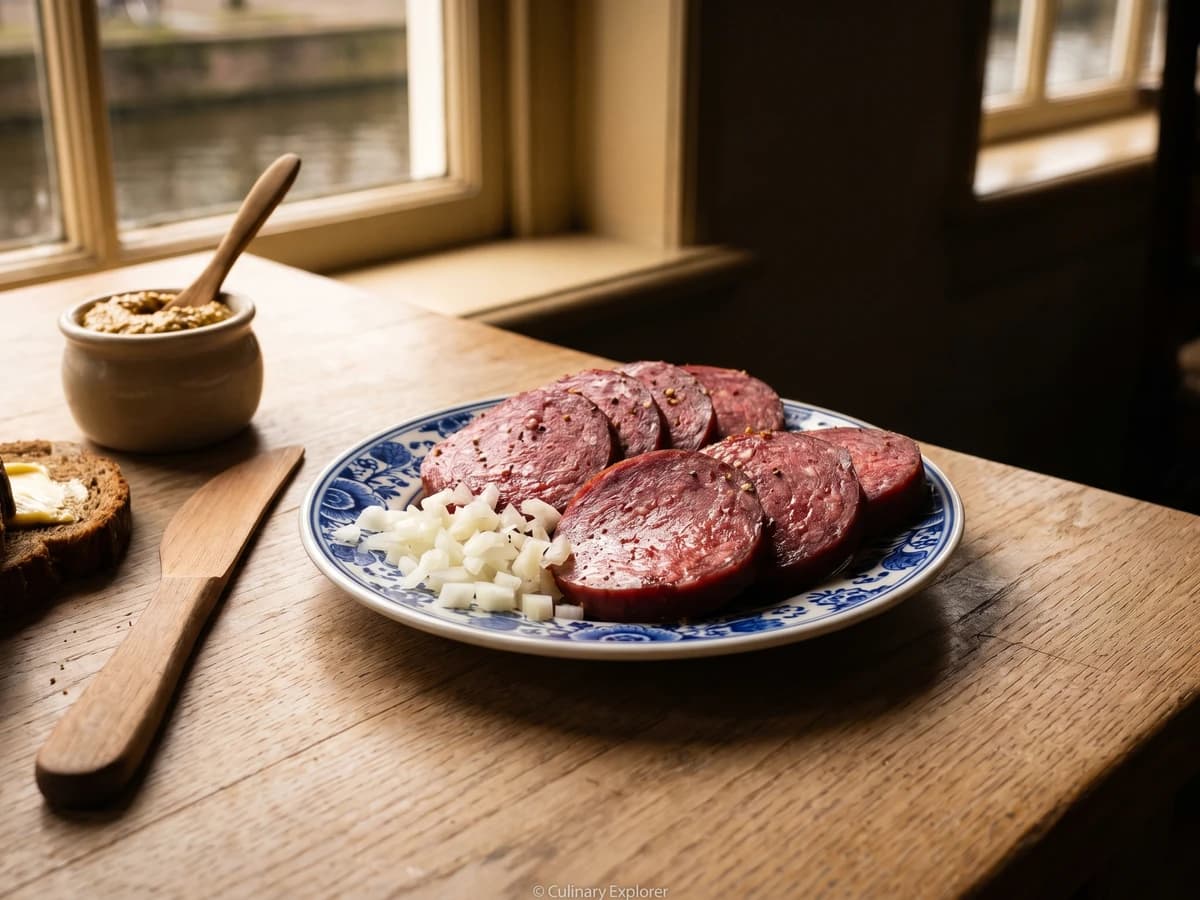
The name means ox sausage, but the real story is Amsterdam itself: cattle trade, Jewish butchers, VOC spices, and raw beef sliced thin with onion.
A cooking platform built around craft, culture, and the stories behind what we eat.
Created by
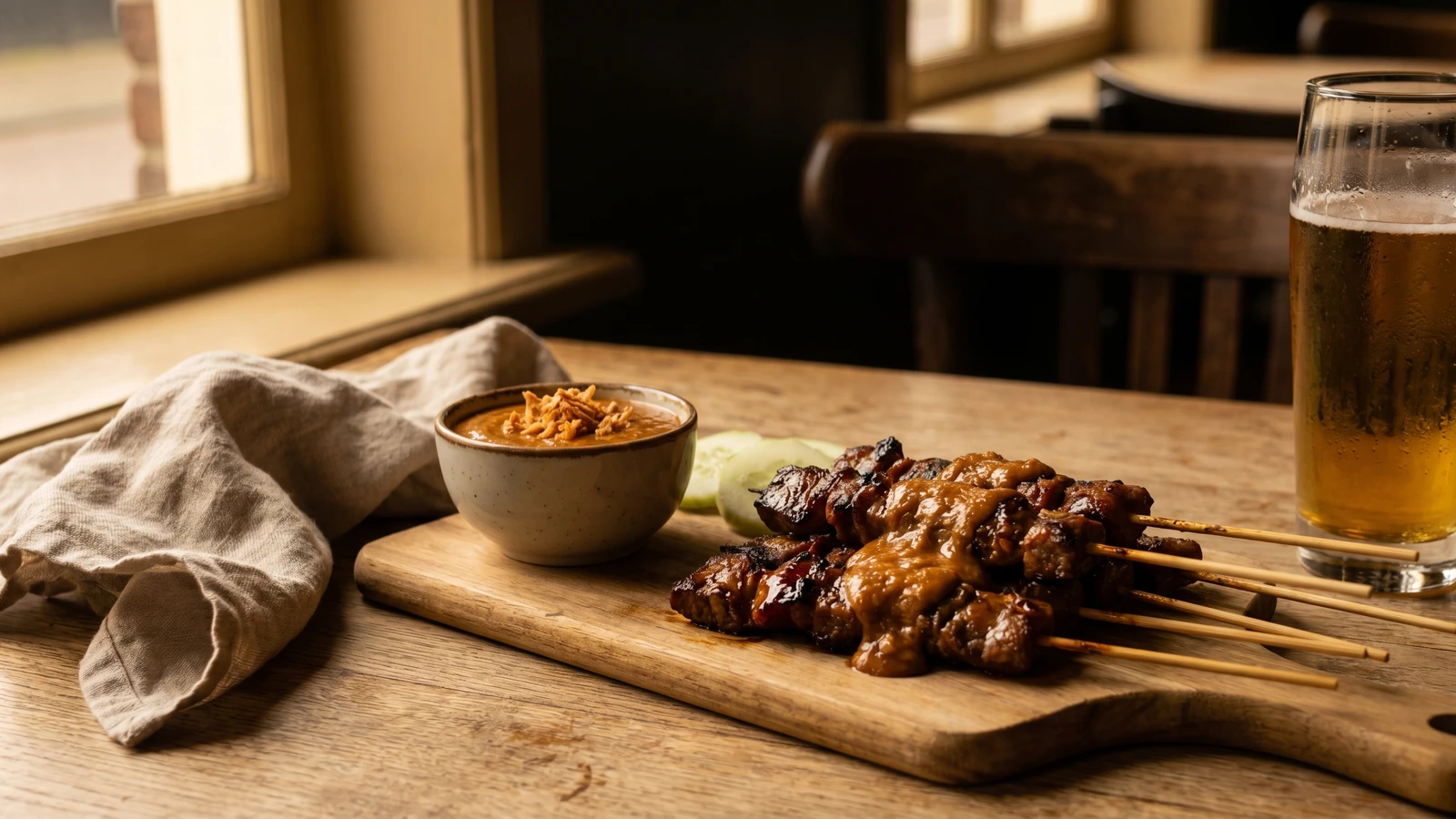
The name says it plainly, beef on skewers, but on the Dutch table saté sapi carries Java, colonial appetite, and the sweet black gloss of ketjap manis.
During my manuscript year in Fez I learned a useful thing about skewers: every old cooking culture has a way of putting meat near fire and calling it sensible. But saté sapi came to the Dutch table by another route, not through Arabic texts or Roman cookery, but through the Indo-Dutch household, where Indonesian food became part of Sunday meals, birthday tables, and the great crowded rijsttafel. History and cookery, they cannot be separated, especially when the grill smells of ketjap and garlic.
The name already tells you enough. Saté is the Dutch spelling of Indonesian sate, and sapi means cow or beef. No mystery, no Latin hiding behind the curtains. But let me tell you a secret: the importance of this dish in the Netherlands is not that it became foreign food we learned to eat. It became household food, the kind set beside chicken saté, pork saté, cucumber, kroepoek, and peanut sauce at a table where everyone reaches in at once.
The method asks for patience before it asks for fire. Beef needs time in ketjap manis, that sweet Indonesian soy sauce the Dutch learned to keep in the cupboard, with garlic, ginger, coriander, and a little acid to soften the edges. Then the grill must be hot and quick. Hou het altijd simpel, always keep it simple: small cubes, soaked skewers, a glossy marinade, and peanut sauce warm enough to spoon but not so thick it sits like mortar. This is food for a board in the middle of the table. Let the guests do the reaching.
Saté entered Dutch home cooking through the colonial connection with the Dutch East Indies, especially in the late nineteenth and twentieth centuries as Indonesian dishes moved from colonial households into Indo-Dutch family kitchens and, after Indonesian independence, into the wider Netherlands through repatriated communities. Sate sapi, literally beef satay in Indonesian, became one strand of the Dutch saté board alongside chicken, pork, and goat versions, usually served with pindasaus, peanut sauce. Its place at barbecues and borrel tables shows how Indo-Dutch cooking became part of everyday Dutch hospitality rather than a separate restaurant category.
Quantity
600g
cut into 2.5cm cubes
Quantity
4 tablespoons
Quantity
1 tablespoon
Quantity
2
finely grated
Quantity
2 teaspoons
finely grated
Quantity
1 teaspoon
Quantity
1/2 teaspoon
Quantity
1 tablespoon
Quantity
1 teaspoon
Quantity
1/2 teaspoon
Quantity
12
soaked for 30 minutes
Quantity
200ml
Quantity
120g
Quantity
2 tablespoons
Quantity
1 tablespoon
Quantity
1 teaspoon
Quantity
1 small
finely grated
Quantity
2 to 4 tablespoons
as needed
Quantity
to serve
Quantity
to serve
| Ingredient | Quantity |
|---|---|
| beef sirloin, rump, or bavettecut into 2.5cm cubes | 600g |
| ketjap manis | 4 tablespoons |
| neutral oil | 1 tablespoon |
| garlic clovesfinely grated | 2 |
| fresh gingerfinely grated | 2 teaspoons |
| ground coriander | 1 teaspoon |
| ground cumin | 1/2 teaspoon |
| lime juice or tamarind water | 1 tablespoon |
| sambal oelek (optional) | 1 teaspoon |
| salt | 1/2 teaspoon |
| bamboo skewerssoaked for 30 minutes | 12 |
| coconut milk | 200ml |
| smooth peanut butter | 120g |
| ketjap manis for peanut sauce | 2 tablespoons |
| lime juice or tamarind water for peanut sauce | 1 tablespoon |
| sambal oelek for peanut sauce | 1 teaspoon |
| garlic clove for peanut saucefinely grated | 1 small |
| warm wateras needed | 2 to 4 tablespoons |
| cucumber slices (optional) | to serve |
| crisp fried onions (optional) | to serve |
Stir the ketjap manis, oil, garlic, ginger, coriander, cumin, lime juice or tamarind water, sambal if using, and salt in a bowl. Add the beef cubes and turn them until every side is dark and glossy. Cover and refrigerate for at least 2 hours, or up to overnight. Beef is less forgiving than chicken; the marinade gives flavour, but the small cubes are what keep the skewers tender.
Put the coconut milk, peanut butter, ketjap manis, lime juice or tamarind water, sambal, and grated garlic in a small pan. Warm gently, stirring until smooth. Add warm water a spoonful at a time until the sauce falls from the spoon in a thick ribbon. Do not boil it hard; peanut sauce sulks when bullied.
Thread the beef onto the soaked bamboo skewers, leaving a little space between pieces so the heat can reach all sides. Keep the pieces close in size. A skewer is only as done as its largest cube, which is why uneven chopping has ruined more saté than weak fire ever did.
Heat a barbecue, grill pan, or heavy skillet until very hot. Grill the skewers for 2 to 3 minutes per side, turning until the edges are browned and the ketjap has gone lacquer-dark in spots. Stop while the beef still gives slightly when pressed. Saté sapi should taste of fire and sweet soy, not of apology.
Spoon the warm peanut sauce into a bowl and set the skewers beside it with cucumber slices and crisp fried onions. Serve at once, with extra sambal for those who want it. I prefer to keep it a bit more relaxed, in the Dutch way: everything on a board, everyone reaching, no ceremony pretending to be tradition.
1 serving (about 280g)
Culinary guides, cultural storytelling, and the editorial depth that makes cooking meaningful.
Discover Culinary ExplorerChef Joost
The name means ox sausage, but the real story is Amsterdam itself: cattle trade, Jewish butchers, VOC spices, and raw beef sliced thin with onion.

Chef Joost
The little yellow onion on the Amsterdam borrel board looks modest, until vinegar, turmeric, and patience turn it into the sharp bite that wakes cheese, herring, and sausage.

Chef Joost
The bear's claw of the northern snackbar: a seasoned gehaktbal, Dutch meatball, cut into thick discs, skewered with onion, fried until the edges catch, then dragged through peanut sauce.

Chef Joost
The name points to the drink, not the mood: bitterballen are crisp little balls of beef ragout made for the borrel table, mustard beside them, fingers slightly burned by impatience.