Chef Joost
Amsterdamse Ossenworst
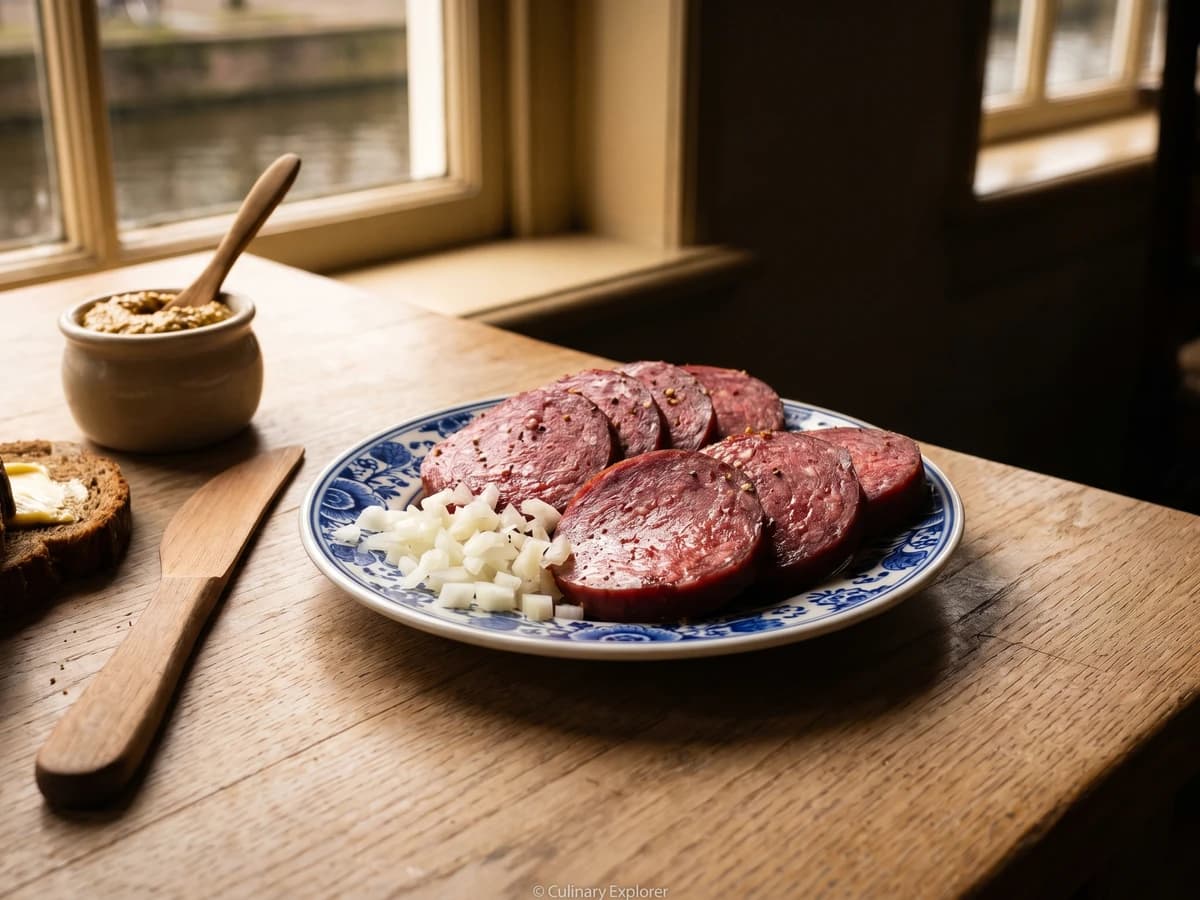
The name means ox sausage, but the real story is Amsterdam itself: cattle trade, Jewish butchers, VOC spices, and raw beef sliced thin with onion.
A cooking platform built around craft, culture, and the stories behind what we eat.
Created by
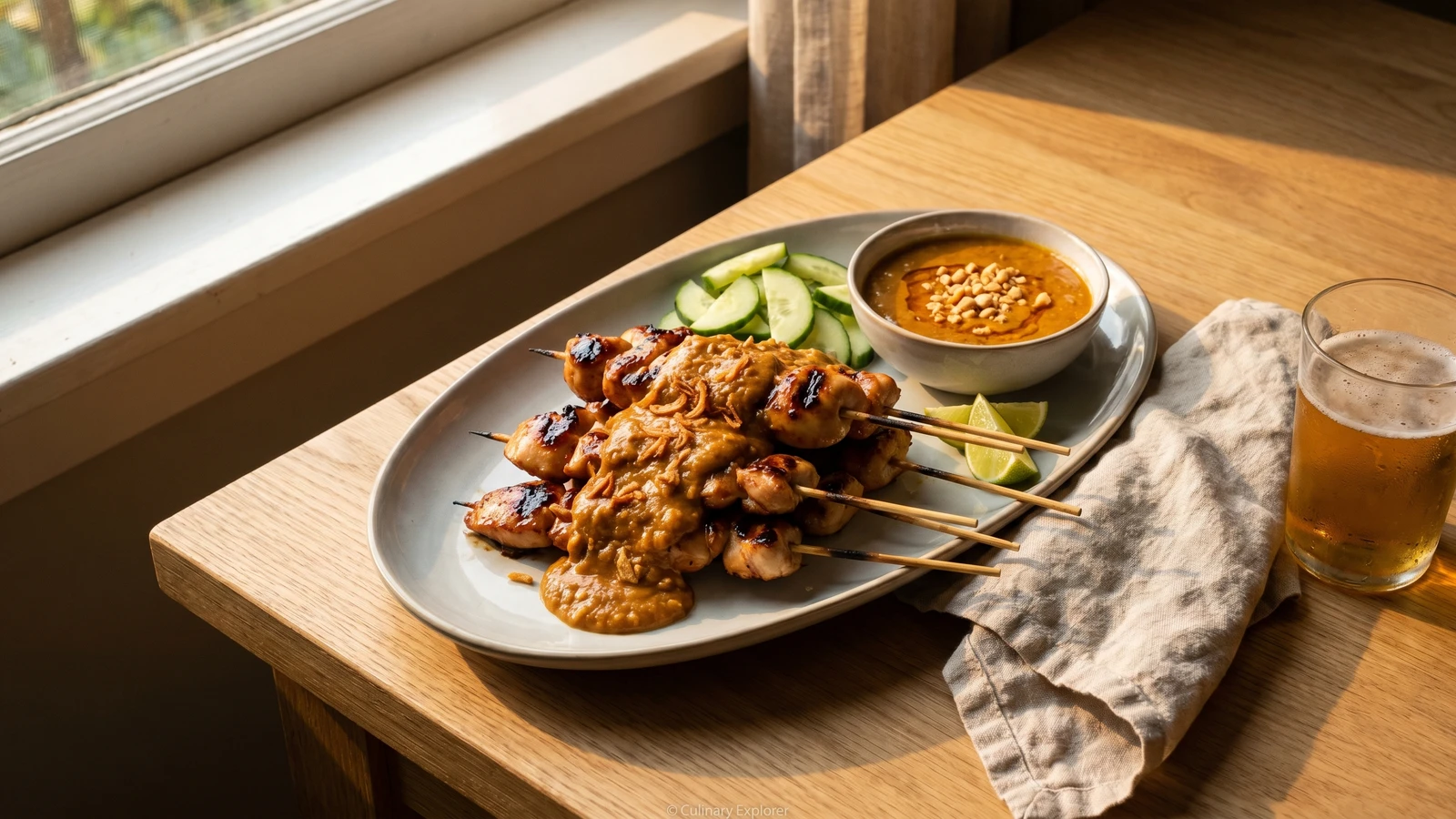
The old Dutch spelling says it plainly: Indonesian chicken skewers, carried home through the Indo-Dutch table, grilled until smoky at the edges and served with the thick, sweet peanut sauce Dutch parties now expect.
Some dishes make themselves so at home in the Netherlands that they begin to disappear into the wallpaper. Saté ajam met pindasaus is one of them: at the verjaardagsborrel, the birthday drinks table, beside the barbecue, on the rijsttafel, the rice-table spread. Its season is not a month but an occasion: coals in the garden, rain against the window, a platter passed before anyone has found enough forks. Everyone reaches for it. Fewer people ask how an Indonesian skewer became a Dutch party reflex.
The name already tells you you're reading an old travel document. Saté is the Dutch spelling of Indonesian sate; ajam is the older Dutch-colonial way of writing ayam, chicken, because our j carries that y sound. Pindasaus, peanut sauce, is the Dutch confession: we wanted more of it, thicker and sweeter, a bowlful rather than a brushstroke. It is the Indo-Dutch table speaking: keep the charcoal skewer, make the sauce generous with ketjap manis, and let it cling. But let me tell you a secret: nobody asks for less sauce.
Cook it simply. Chicken thigh, not breast, because the grill is honest and breast dries before the edges darken. The marinade needs salt, sugar, garlic, coriander, and ketjap to make a lacquer; the sauce needs low heat because peanuts split when bullied. Grill over coals if you can, under a fierce grill if weather has other opinions, and bring the skewers to the table with more sauce than seems scholarly. History and cookery, they cannot be separated, but neither should anyone run out of pindasaus.
Saté entered Dutch home cooking through the Netherlands' colonial relationship with the Dutch East Indies, especially Java, where sate ayam was a common street and market food long before it reached Dutch party tables. After Indonesian independence in 1945, Indo-European repatriates, Moluccan families, toko counters, and the Chinees-Indisch restaurant culture of the 1950s and 1960s made saté ajam with pindasaus familiar across the Netherlands. The spelling ajam preserves the Dutch-colonial rendering of modern Indonesian ayam, while the thick, sweet Dutch peanut sauce reflects the Indo-Dutch habit of ketjap manis and abundant sauce rather than a single Indonesian regional recipe.
Quantity
900g
cut into 2.5 cm pieces
Quantity
3 tablespoons
Quantity
1 tablespoon
Quantity
2 teaspoons
Quantity
2 cloves
grated
Quantity
1 teaspoon
finely grated
Quantity
1 teaspoon
Quantity
1/2 teaspoon
Quantity
1/2 teaspoon
Quantity
1 tablespoon
Quantity
1 tablespoon
Quantity
1 small
finely minced
Quantity
1 clove
grated
Quantity
1 teaspoon
finely grated
Quantity
200g
Quantity
300ml
plus more to loosen
Quantity
4 tablespoons
Quantity
1 tablespoon
Quantity
1 tablespoon tamarind or 2 tablespoons lime juice
Quantity
1 tablespoon
Quantity
1/2 teaspoon
Quantity
to taste
Quantity
to serve
Quantity
1/2
sliced into thin half-moons
Quantity
to serve
| Ingredient | Quantity |
|---|---|
| boneless skinless chicken thighscut into 2.5 cm pieces | 900g |
| ketjap manis (sweet soy sauce, for marinade) | 3 tablespoons |
| neutral oil (for marinade) | 1 tablespoon |
| sambal oelek (chilli paste, for marinade) | 2 teaspoons |
| garlic (for marinade)grated | 2 cloves |
| fresh ginger (for marinade)finely grated | 1 teaspoon |
| ground coriander | 1 teaspoon |
| ground cumin | 1/2 teaspoon |
| fine sea salt | 1/2 teaspoon |
| lime juice or tamarind water | 1 tablespoon |
| neutral oil (for sauce) | 1 tablespoon |
| shallotfinely minced | 1 small |
| garlic (for sauce)grated | 1 clove |
| fresh ginger (for sauce)finely grated | 1 teaspoon |
| smooth unsweetened peanut butter | 200g |
| waterplus more to loosen | 300ml |
| ketjap manis (sweet soy sauce, for sauce) | 4 tablespoons |
| sambal oelek (chilli paste, for sauce) | 1 tablespoon |
| tamarind concentrate or lime juice | 1 tablespoon tamarind or 2 tablespoons lime juice |
| palm sugar or dark brown sugar | 1 tablespoon |
| ground coriander (for sauce) | 1/2 teaspoon |
| salt | to taste |
| fried shallots (bawang goreng) (optional) | to serve |
| cucumber (optional)sliced into thin half-moons | 1/2 |
| lime wedges (optional) | to serve |
Whisk the ketjap manis, oil, sambal, garlic, ginger, coriander, cumin, salt, and lime juice or tamarind water in a bowl. Add the chicken and turn it until every piece is dark and glossy. Cover and refrigerate for at least 2 hours, or up to 12; the salt enters the meat, the sugar waits for the coals, and the garlic stops being raw.
For the pindasaus, warm the oil in a small saucepan over medium-low heat. Add the shallot and cook for 3 to 4 minutes, until soft and pale gold, not browned. Stir in the garlic, ginger, and coriander for 30 seconds, just until their smell rises from the pan.
Add the peanut butter, then pour in the water in slow splashes, stirring until the sauce loosens. Stir in the ketjap manis, sambal, tamarind or lime, and sugar. Let it murmur gently for 5 to 7 minutes, stirring often, until thick enough to coat the back of a spoon. Do not boil it hard. Peanut sauce splits when bullied, and no amount of scholarship will put it back together.
If using bamboo skewers, soak them in water for 30 minutes while the sauce rests. Thread 5 or 6 pieces of chicken onto each skewer, snug but not packed tight. A little space lets the heat reach the sides, and saté should cook all around, not only on the parts that touched the grate.
Prepare a medium-hot charcoal grill, or heat a heavy grill pan until a drop of water skitters away at once. Oil the grate lightly. Grill the skewers for 8 to 10 minutes, turning every couple of minutes, until the edges are dark and lightly charred and the thickest pieces register 74C. Discard the leftover marinade; it has done its work and must not come back to the table.
Warm the sauce gently and loosen it with a spoonful or two of water if needed. Lay the skewers on a platter, spoon a little pindasaus over them, and serve the rest in a bowl. Scatter with fried shallots if you like, add cucumber half-moons and lime wedges, and pass everything while the chicken is still glossy from the grill. Hou het altijd simpel: skewer, sauce, fingers, napkin.
1 serving (about 230g)
Culinary guides, cultural storytelling, and the editorial depth that makes cooking meaningful.
Discover Culinary ExplorerChef Joost
The name means ox sausage, but the real story is Amsterdam itself: cattle trade, Jewish butchers, VOC spices, and raw beef sliced thin with onion.

Chef Joost
The little yellow onion on the Amsterdam borrel board looks modest, until vinegar, turmeric, and patience turn it into the sharp bite that wakes cheese, herring, and sausage.

Chef Joost
The bear's claw of the northern snackbar: a seasoned gehaktbal, Dutch meatball, cut into thick discs, skewered with onion, fried until the edges catch, then dragged through peanut sauce.

Chef Joost
The name points to the drink, not the mood: bitterballen are crisp little balls of beef ragout made for the borrel table, mustard beside them, fingers slightly burned by impatience.