Chef Takumi
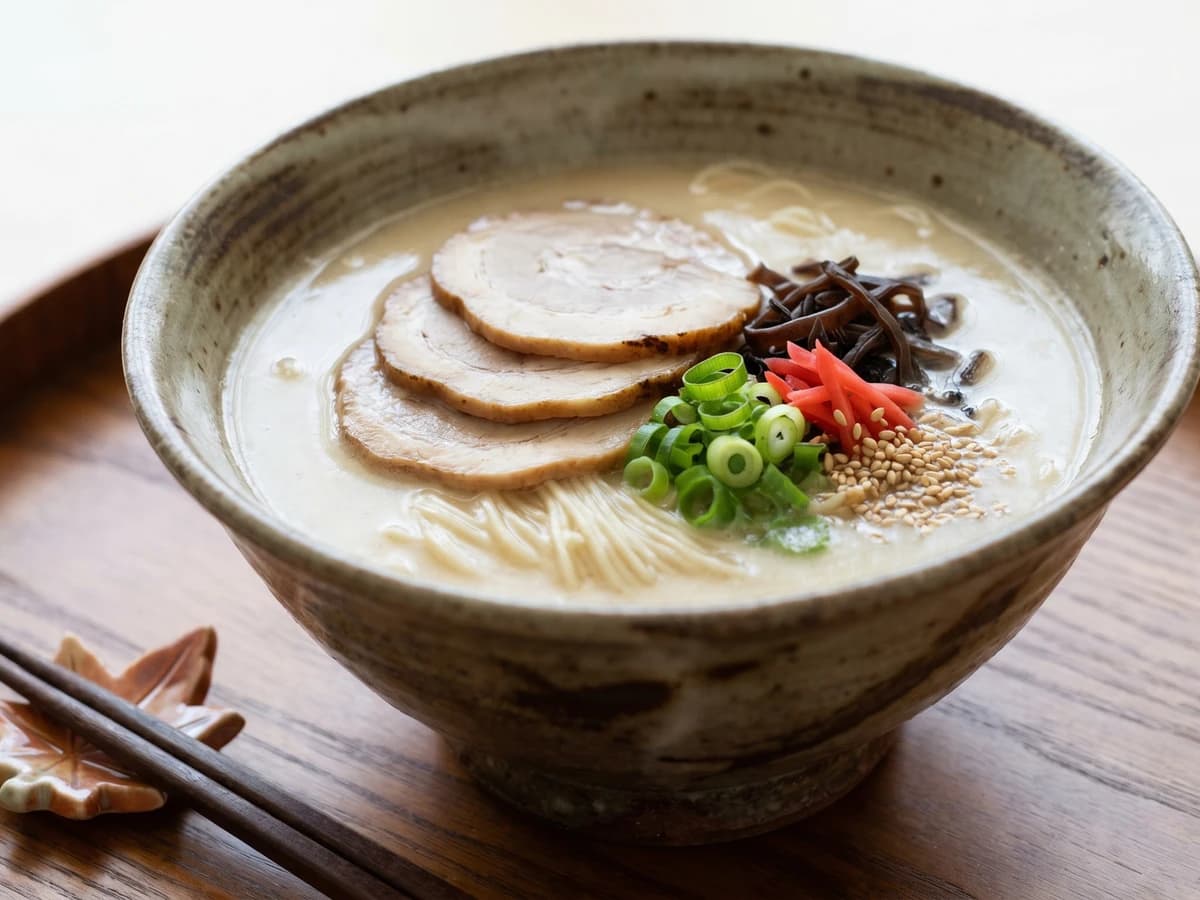
Hakata Tonkotsu Ramen (博多豚骨ラーメン)
The famous white broth is not magic. Clean the bones, then boil them hard enough to emulsify marrow and fat, and the thin noodles carry Hakata's fast, honest bowl.

Updated June 2, 2026
The everyday ramen bowl and its honest variants, from Tokyo shoyu to Hakata tonkotsu, with the regional ご当地 canon a home cook can reach and the brothless forms (tsukemen, abura soba, taiwan mazesoba, hiyashi chuka) that prove ramen is wider than a soup. Springy alkaline noodles, the broth as the decision, chashu and a half egg.
A cooking platform built around craft, culture, and the stories behind what we eat.
Chef Takumi
The famous white broth is not magic. Clean the bones, then boil them hard enough to emulsify marrow and fat, and the thin noodles carry Hakata's fast, honest bowl.

Chef Takumi
Hakodate shio ramen is a clear bowl, not a cloudy one: pork bones simmered quietly, konbu kept sweet, salt tare restrained, and straight thin noodles carrying the broth without getting in its way.

Chef Takumi
Sapporo miso ramen is a winter bowl, not a mystery: stir-fry pork and vegetables hard, wake the miso tare in fat, then let hot broth pull everything together.

Chef Takumi
Kumamoto ramen is tonkotsu made calmer, then sharpened with mayu. The broth turns milky from patience, while black garlic oil gives the bowl its deciding smoke.

Chef Takumi
Wakayama calls it chūka soba: a pork-shoyu bowl richer than Tokyo, gentler than Hakata, with thin noodles, chashu, scallion, and pressed mackerel sushi beside it.

Chef Takumi
This is Aomori's quiet shōyu bowl: dried sardines steeped until the broth turns strong-tea brown, clean noodles, a few toppings, and no heavy sauce hiding the fish.
Chef Takumi
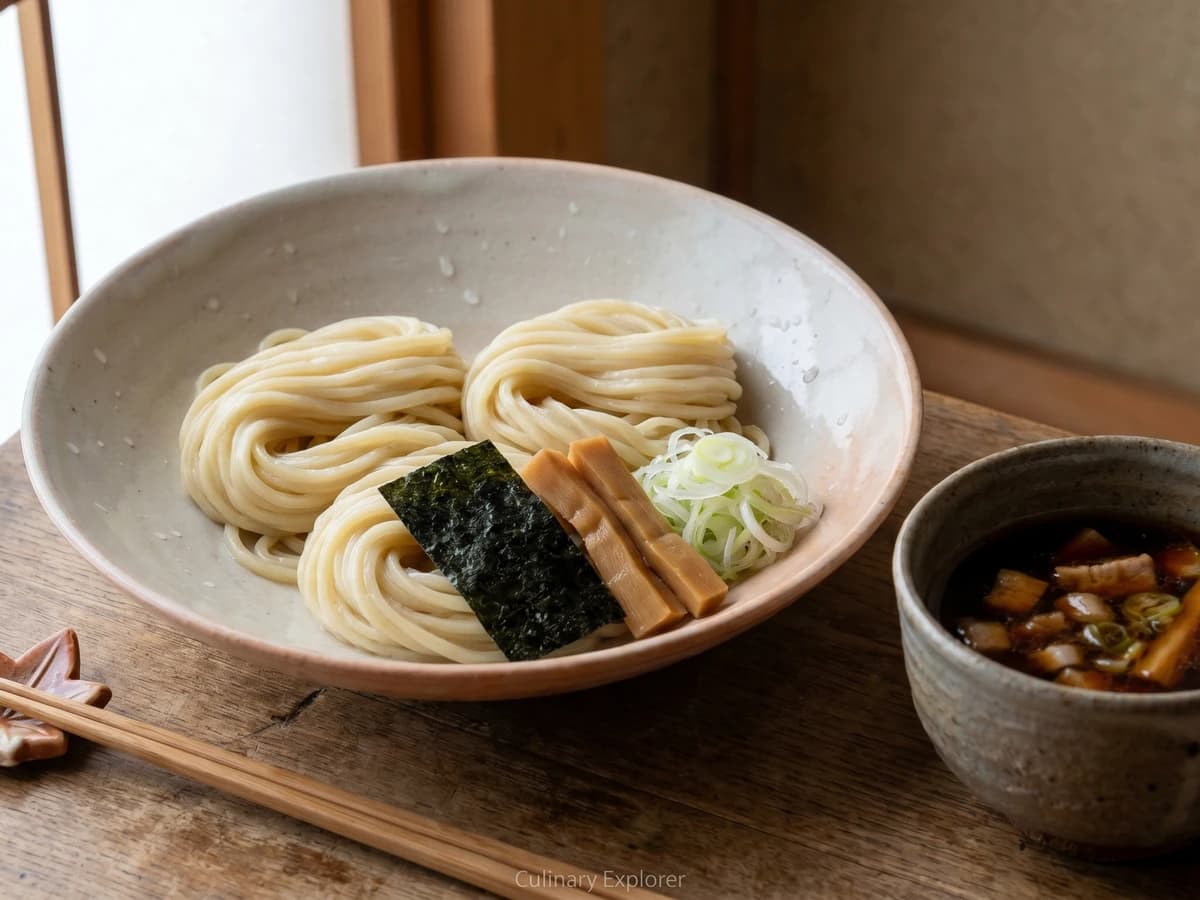
Tsukemen looks like ramen taken apart, and that is the point. Cold springy noodles meet a hot broth so strong you dip, not drink, until soup-wari softens the last mouthful.

Chef Takumi
The high-summer bowl is mostly cutting and rinsing: cold ramen noodles, crisp vegetables, thin omelet, ham, tomato, and a tart soy-vinegar tare that keeps everything awake.

Chef Takumi
Kitakata ramen begins with its noodle: flat, thick, and wavy enough to catch a clear shoyu broth scented with niboshi and pork, light enough for the morning table.

Chef Takumi
Abura soba is ramen without the hiding place of soup: hot noodles, strong shōyu tare, fragrant oil, and the discipline to mix while every strand is still hot.

Chef Takumi
The Seto Inland Sea sits quietly under the soy: clear chicken stock, a fish dashi edge, flat noodles, and pork back fat chopped fine enough to enrich without weighing the bowl down.

Chef Takumi
Tokyo's everyday ramen is not one magic pot. Build a clean chicken-dashi soup, season each bowl with soy tare, and let the noodles carry their spring.

Chef Takumi
Iekei ramen looks like a specialist's bowl, but the heart is plain: rich pork and chicken broth, firm thick noodles, shōyu tare, chicken oil, and toppings set with restraint.

Chef Takumi
Tokushima's brown ramen is a dark, sweet-salty pork bowl, not a mystery: steady stock, a soy tare that seasons the meat, and one raw egg to round the edge.

Chef Takumi
Nagoya's brothless noodle bowl is not a puzzle: thick ramen, spicy pork miso, nira, fish powder, garlic, and a yolk, mixed hard until the sauce clings to every strand.
Culinary guides, cultural storytelling, and the editorial depth that makes cooking meaningful.
Discover Culinary ExplorerChef Takumi is a fictional culinary guide to Japanese Washoku Cuisine, written with the assistance of AI.