
Chef Takumi
Abura Soba (油そば, brothless ramen)
Abura soba is ramen without the hiding place of soup: hot noodles, strong shōyu tare, fragrant oil, and the discipline to mix while every strand is still hot.
A cooking platform built around craft, culture, and the stories behind what we eat.
Created by
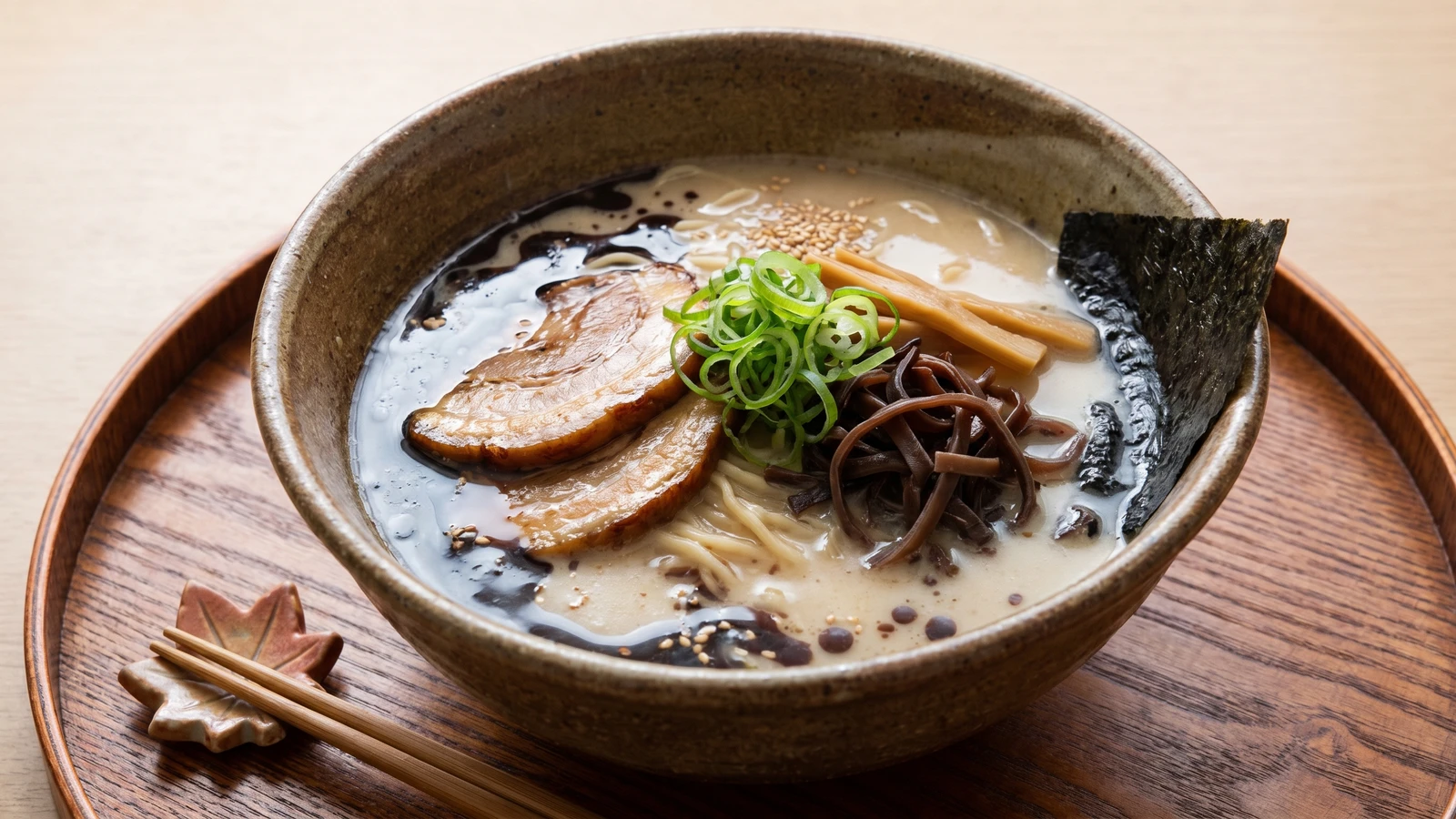
Kumamoto ramen is tonkotsu made calmer, then sharpened with mayu. The broth turns milky from patience, while black garlic oil gives the bowl its deciding smoke.
The black oil is what people remember. Mayu, the burnt-garlic oil of Kumamoto ramen, floats across the pale pork broth like ink, and it makes the bowl look more fearsome than it is. Don't be bullied by the color. The work is plain: clean bones, a steady boil, a careful tare, and garlic taken just to the edge without tipping into bitterness.
Tonkotsu asks for time, not cleverness. Pork bones give up their body only when water, heat, and movement break down collagen and fat into a cloudy broth. Start with dirty bones and you'll carry that muddiness all the way to the bowl, so we blanch and scrub first. That isn't fuss. It's the whole difference between a broth that tastes deep and one that tastes tired.
Kumamoto's ramen is not Hakata's quick, needle-thin bowl. The noodles are a little thicker, the broth often rounder, and the garlic announces itself without apology. This is weeknight food only if you make the broth ahead, which is how a sensible kitchen behaves. The one detail that decides it is the mayu: brown the garlic too politely and it tastes sweet, burn it carelessly and it tastes harsh. Take it to dark chestnut, strain it, and let that smoke do its proper work.
Kumamoto ramen developed after tonkotsu ramen moved south from Kurume through Tamana in the mid-twentieth century, then settled into its own local style in Kumamoto city. The addition of mayu, blackened garlic oil, became the signature difference, along with noodles thicker than Hakata's and a broth often softened with chicken or a milder pork base. Shops such as Keika and Kokutei helped carry the style beyond Kumamoto after the 1950s.
Quantity
2 kg
split if possible
Quantity
500g
Quantity
4.5 liters
plus more for blanching
Quantity
1
halved
Quantity
6
white parts for broth, green tops thinly sliced for garnish
Quantity
1 thumb-size piece
sliced
Quantity
10
6 peeled for broth, 4 thinly sliced for mayu
Quantity
1 sheet (about 10g)
Quantity
1/2 cup
Quantity
1/4 cup
Quantity
2 tablespoons
Quantity
1 tablespoon
plus more to taste
Quantity
1 teaspoon
Quantity
1/2 cup
Quantity
1 tablespoon
Quantity
4 portions (130 to 150g each)
Quantity
8 slices
Quantity
1/2 cup
rehydrated and thinly sliced
Quantity
1/2 cup
Quantity
4
halved
Quantity
4 teaspoons
Quantity
2
cut in half
| Ingredient | Quantity |
|---|---|
| pork femur, neck, or back bonessplit if possible | 2 kg |
| chicken backs or wings | 500g |
| waterplus more for blanching | 4.5 liters |
| yellow onionhalved | 1 |
| scallionswhite parts for broth, green tops thinly sliced for garnish | 6 |
| gingersliced | 1 thumb-size piece |
| garlic cloves6 peeled for broth, 4 thinly sliced for mayu | 10 |
| konbu (dried kelp) | 1 sheet (about 10g) |
| soy sauce | 1/2 cup |
| sake | 1/4 cup |
| mirin | 2 tablespoons |
| sea saltplus more to taste | 1 tablespoon |
| sugar | 1 teaspoon |
| neutral oil | 1/2 cup |
| sesame oil | 1 tablespoon |
| fresh medium-thick ramen noodles | 4 portions (130 to 150g each) |
| chāshū pork | 8 slices |
| dried kikuragerehydrated and thinly sliced | 1/2 cup |
| menma | 1/2 cup |
| soft-boiled ramen eggshalved | 4 |
| toasted sesame seeds | 4 teaspoons |
| nori sheetscut in half | 2 |
Put the pork bones and chicken in a large pot, cover with cold water, and bring to a hard boil for 10 minutes. Drain, then rinse the bones under running water, rubbing away any dark blood or gray scum. This first boil is not broth. It is washing by heat, and it keeps the final soup clean enough for the garlic to sit on top instead of fighting dirt underneath.
Return the cleaned bones and chicken to the pot with 4.5 liters fresh water. Bring to a strong boil, then keep it lively, not quiet, for 4 hours, adding hot water as needed to keep the bones mostly covered. A clear soup wants restraint, but tonkotsu wants movement. The rolling boil breaks fat and collagen into the liquid, turning it pale and milky.
Add the onion, scallion whites, ginger, and 6 garlic cloves. Boil 1 1/2 to 2 hours more, until the broth is opaque, rounded, and lightly sticky on your lips. Add the aromatics late so they sweeten the broth without cooking into a dull vegetable heaviness.
Strain the broth through a fine sieve, pressing lightly on the solids but not grinding them through. You want body, not grit. Keep the broth hot, and taste it before the tare goes in. It should taste porky and mild, a little under-seasoned, because the tare and mayu will finish the bowl.
Wipe the konbu with a damp cloth and put it in a small pan with the soy sauce, sake, mirin, salt, sugar, and 1/2 cup water. Warm slowly and pull the konbu out just before the liquid boils, when small bubbles gather at the edge. Boiling konbu can turn the tare bitter and slick, and this seasoning has to be sharp enough to guide the heavy broth. Simmer the tare 3 minutes, then take it off the heat.
Put the neutral oil and sliced garlic in a small pan over low heat. Cook slowly, stirring often, until the garlic passes golden and becomes dark chestnut, 12 to 18 minutes. Take the pan off the heat the moment it smells smoky and nutty, not acrid. The garlic keeps darkening in the hot oil, so courage must arrive a little before disaster. Strain, then stir in the sesame oil.
Warm the serving bowls with hot water, then empty them. Add 1 1/2 tablespoons tare and 1 teaspoon mayu to each bowl. Warming the bowl is small work, but ramen cools quickly, and a cold bowl steals heat before the noodles have even sat down.
Boil the medium-thick ramen noodles in plenty of water according to the maker's timing, usually 2 to 3 minutes. Stir as they enter the pot so they separate cleanly. Kumamoto noodles should keep a little bite, because they meet a richer broth than thin Hakata noodles and need enough body to stand in it.
Ladle about 1 1/2 cups hot broth into each bowl and whisk lightly with the tare and mayu. Drain the noodles hard, then lay them into the broth and lift once with chopsticks to settle them. Top each bowl with chāshū, kikurage, menma, egg halves, scallion greens, sesame, nori, and a final small spoon of mayu. Serve at once. Ramen forgives many things, but not waiting.
1 serving (about 850g)
Culinary guides, cultural storytelling, and the editorial depth that makes cooking meaningful.
Discover Culinary ExplorerChef Takumi
Abura soba is ramen without the hiding place of soup: hot noodles, strong shōyu tare, fragrant oil, and the discipline to mix while every strand is still hot.
Chef Takumi
Akadashi asks you to trust the dark miso. Build a clear dashi, loosen the Hatchō mame-miso gently, and the soup turns coffee-dark, savory, and clean.

Chef Takumi
Toast the rice until its skin is firm, then let it meet chicken broth, burdock, maitake, and seri. The pot looks grand, but the work is rice, broth, and patience.
Chef Takumi
Shottsuru nabe is Akita winter in one pot: clean dashi, hatahata at shun, tofu and napa cabbage carrying a salt-deep broth without anything heavy enough to hide the fish.