Culinary Explorer
A cooking platform built around craft, culture, and the stories behind what we eat.
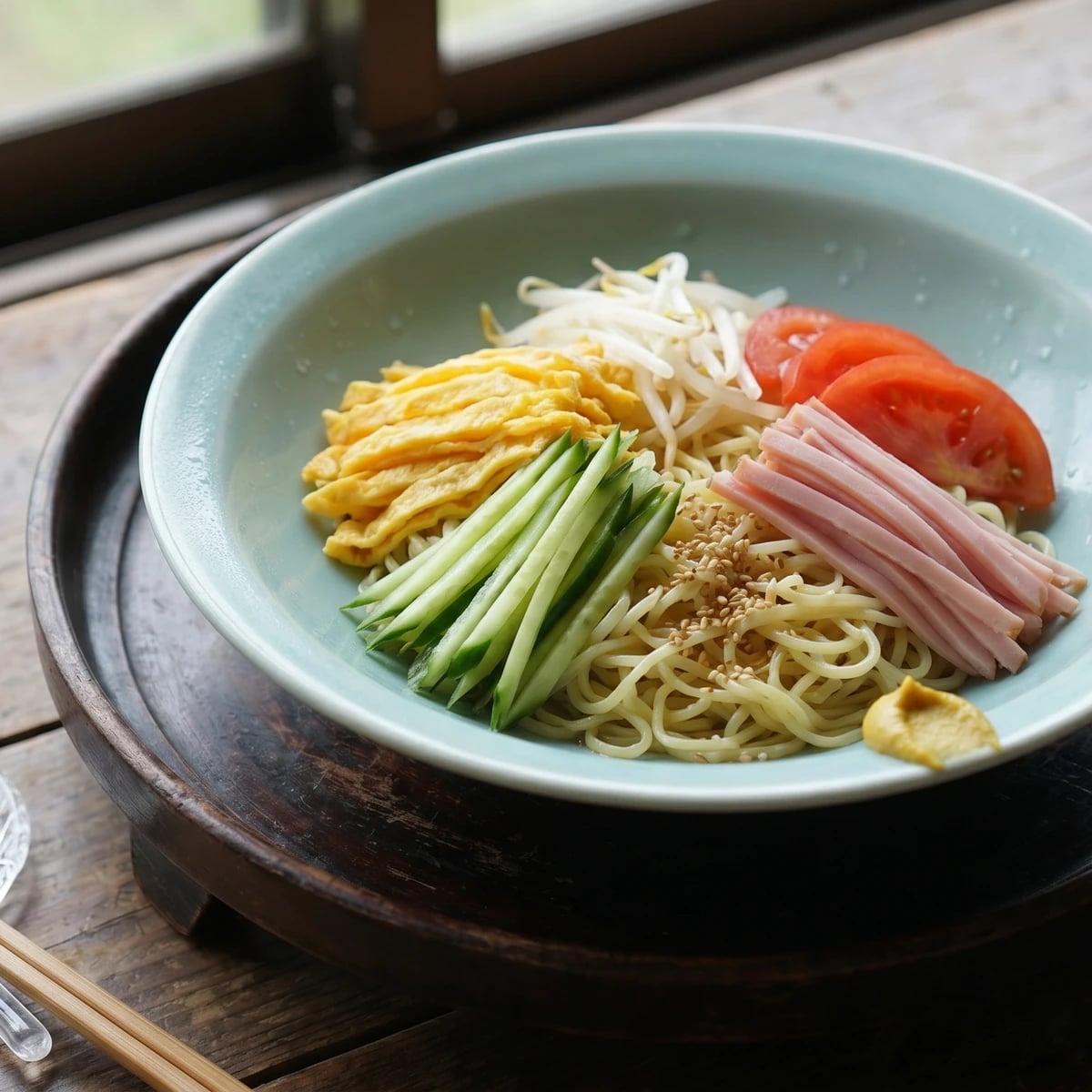
Hiyashi Chūka (冷やし中華, chilled Chinese-style noodles)
Created by Chef Takumi
The high-summer bowl is mostly cutting and rinsing: cold ramen noodles, crisp vegetables, thin omelet, ham, tomato, and a tart soy-vinegar tare that keeps everything awake.
Hiyashi chūka appears when the heat has stopped being charming. Cold noodles, bright vinegar, crisp cucumber, tomato at its prime. This is summer food that refuses to feel heavy, and it asks more of your knife and your sink than of your stove.
The dish looks arranged, so people mistake it for fuss. It isn't. The first secret is the noodle rinse. Boil the ramen, then wash it under cold running water until the surface starch is gone and the strands feel firm and clean. If you skip that washing, the tare clings as glue instead of dressing. A small tragedy, but still a tragedy.
The second thing is balance. The tare, a soy-vinegar sauce, should taste sharper than you expect before it meets the bowl. Cold dulls flavor, and the cucumber, egg, ham, and tomato all soften the edge. We let the sauce carry brightness, not weight. Nothing hidden, no heavy coating, just enough to make the noodles lively.
On a Japanese summer table, hiyashi chūka is the method, not the menu: cook, chill, cut, arrange. The toppings sit in clear bands because the eye should understand the season before the chopsticks move. Leave it room. A crowded bowl loses its cool before you take the first bite.
Ingredients
fresh ramen noodles
Quantity
4 portions (about 600g total)
large eggs
Quantity
2
sugar
Quantity
1 teaspoon
for the omelet
| Ingredient | Quantity |
|---|---|
| fresh ramen noodles | 4 portions (about 600g total) |
| large eggs | 2 |
| sugarfor the omelet | 1 teaspoon |
Where cooking meets culture.
Culinary guides, cultural storytelling, and the editorial depth that makes cooking meaningful.
Discover Culinary Explorer