
Chef Takumi
Abura Soba (油そば, brothless ramen)
Abura soba is ramen without the hiding place of soup: hot noodles, strong shōyu tare, fragrant oil, and the discipline to mix while every strand is still hot.
A cooking platform built around craft, culture, and the stories behind what we eat.
Created by
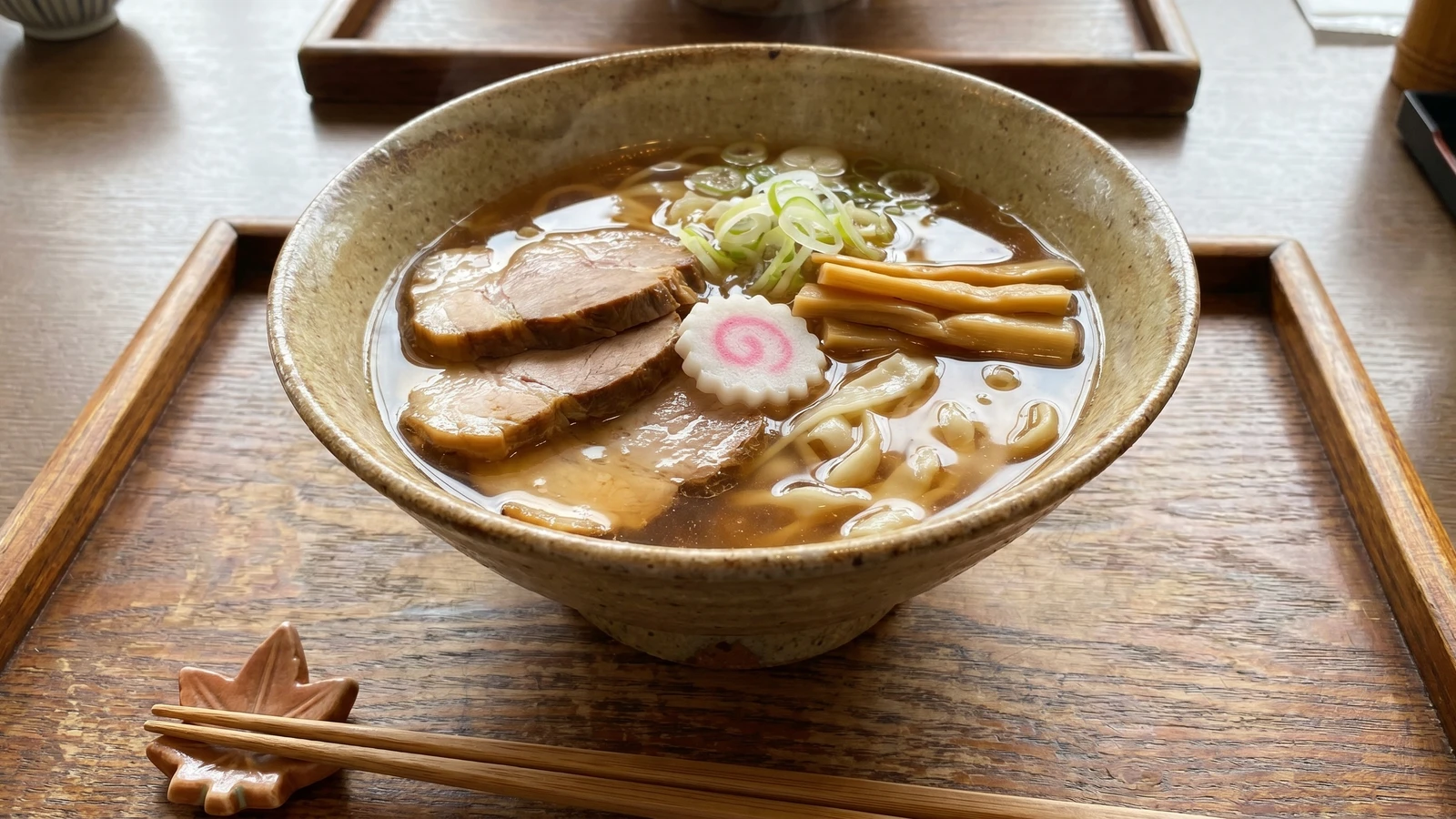
Kitakata ramen begins with its noodle: flat, thick, and wavy enough to catch a clear shoyu broth scented with niboshi and pork, light enough for the morning table.
Kitakata ramen begins with the noodle, not the soup. That sounds like heresy to people who have made broth their new religion, but in this Fukushima bowl the flat, high-hydration chijire men, wavy noodles, are the first secret. They drink up water, stay springy, and bend just enough to carry the light shoyu broth into every bite.
This isn't the heavy, opaque ramen many home cooks fear. Kitakata wants a clear pork stock, a clean niboshi dashi, and a shoyu tare that seasons without shouting. Blanch the pork bones so the broth stays bright. Pull the konbu before the boil. Leave the katsuobushi alone and don't squeeze. None of this is ceremony for its own sake. Each small restraint keeps bitterness, oil, and cloudiness out of a bowl that should be light enough for morning.
And morning matters here. In Kitakata they call it asa-rā, morning ramen, which is either practical wisdom or a very persuasive excuse to eat noodles before noon. The toppings stay plain: chashu, menma, scallion, sometimes narutomaki. Nothing hidden. The broth is clean, the noodle carries the work, and the whole thing proves again that honmono is often a matter of paying attention to one deciding detail.
Kitakata ramen is usually traced to Genraiken, opened in Kitakata, Fukushima Prefecture, in 1927 by Ban Kinsei, a Chinese-born cook serving Chinese-style noodle soup in what was then a storehouse and brewing town. The style became known for hirauchi jukusei taka-suimen, flat aged high-hydration noodles, and a clear shoyu soup often built from pork, chicken, niboshi, and local soy sauce. Its breakfast habit, asa-rā, grew from the city's early-working brewers, farmers, and shopkeepers, and is still part of how Kitakata identifies the bowl.
Quantity
900g
Quantity
700g
tied if loose
Quantity
12 cups, plus more for blanching
Quantity
1 small knob
sliced
Quantity
2
green tops separated
Quantity
20g
heads and dark bellies removed
Quantity
1 piece (about 10g)
Quantity
15g
Quantity
3 cups
Quantity
3/4 cup
Quantity
1/4 cup
Quantity
1/4 cup
Quantity
2 teaspoons
Quantity
1 teaspoon, plus more to taste
Quantity
4 portions (130-150g each)
Quantity
1 cup
drained
Quantity
4
white and pale green parts thinly sliced
Quantity
4 slices
Quantity
2 teaspoons
| Ingredient | Quantity |
|---|---|
| pork neck bones or pork back bones | 900g |
| pork belly block or pork shouldertied if loose | 700g |
| cold water | 12 cups, plus more for blanching |
| gingersliced | 1 small knob |
| scallionsgreen tops separated | 2 |
| niboshi (dried sardines)heads and dark bellies removed | 20g |
| konbu (dried kelp) | 1 piece (about 10g) |
| katsuobushi (bonito flakes) | 15g |
| cold water for fish dashi | 3 cups |
| koikuchi shoyu (regular Japanese soy sauce) | 3/4 cup |
| sake | 1/4 cup |
| mirin | 1/4 cup |
| sugar | 2 teaspoons |
| sea salt | 1 teaspoon, plus more to taste |
| fresh Kitakata-style thick flat wavy ramen noodles | 4 portions (130-150g each) |
| menma (seasoned bamboo shoots)drained | 1 cup |
| scallionswhite and pale green parts thinly sliced | 4 |
| narutomaki (optional) | 4 slices |
| clear pork fat skimmed from the broth (optional) | 2 teaspoons |
Pinch the heads from the niboshi and pull away the dark bellies if your fish still have them. Those small parts carry a hard bitterness that can bully a clear broth. Put the cleaned niboshi and konbu in 3 cups cold water and let them soak while the pork stock begins, or overnight in the refrigerator if you have time. Cold water draws out flavor gently, which is why the finished soup tastes clean rather than sharp.
Put the pork bones and pork belly or shoulder in a large pot, cover with cold water, and bring to a boil. Boil for 5 minutes, then drain. Rinse the bones, rinse the meat, and wash the pot. This feels fussy until you see the gray water go down the sink. Blood and loose proteins cloud the broth, and Kitakata ramen wants clarity, not a milky pork soup.
Return the clean bones and meat to the pot with 12 cups cold water, the sliced ginger, and the green scallion tops. Bring it slowly to a quiet simmer, then keep it there, with only a few lazy bubbles breaking the surface. Skim when foam appears. After 75 to 90 minutes, lift out the pork when a skewer slips in easily but the meat still holds its shape. Keep the bones simmering until the broth tastes lightly sweet and porky, about 3 hours total.
In a small pan, combine the shoyu, sake, mirin, sugar, sea salt, and 1/2 cup of hot pork stock. Bring just to a simmer for 3 minutes, enough to dissolve the sugar and soften the raw edge of the sake. This is the tare, the seasoning base. Keeping it separate lets you season each bowl precisely while the broth stays clear and unforced.
Put the hot cooked pork into a small dish or sturdy bag and pour over about 1/2 cup of the tare. Reserve the rest of the tare clean for the bowls. Turn the pork once or twice for 30 minutes, then chill it until firm enough to slice neatly. Hot pork drinks seasoning quickly; cold pork cuts cleanly. Both things matter.
Bring the soaked niboshi, konbu, and their soaking water slowly toward a simmer. Pull the konbu the moment the water trembles and small bubbles climb the sides of the pot. Let the niboshi simmer gently for 8 minutes, then take the pot off the heat, add the katsuobushi, and leave it alone for 2 minutes. Strain through a cloth or fine strainer. Don't squeeze. Squeezing presses bitter, oily flavors into the dashi, and you were guarding its clear edge from the beginning.
Strain the pork stock. For four bowls, warm 4 cups pork stock with 2 cups fish dashi, holding it just below a simmer. Taste it before adding tare. It should be clean and savory but not salty yet. Add the fish dashi near the end because niboshi aroma fades under long heat, and this ramen depends on that light dried-fish lift.
Slice the chashu thinly. Bring the menma to room temperature, slice the scallions, and set out the narutomaki if using. Warm the ramen bowls with hot water, then empty and dry them. A cold bowl steals heat from the soup before the noodles have had their say, which is a small tragedy and entirely avoidable.
Bring a large pot of unsalted water to a strong boil. Cook the fresh noodles according to the maker's timing, usually 2 to 3 minutes, stirring at the start so the waves don't cling together. Drain hard, shaking off water. Don't cook the noodles in the broth. Their starch would muddy the soup, and the broth has been treated too politely for that.
Put 1 1/2 tablespoons tare in each warmed bowl, plus 1/2 teaspoon clear pork fat if you want a little sheen. Add 1 1/2 cups hot combined broth and stir. Slide in one portion of noodles, lift and fold them once so they sit loosely, then top with three slices of chashu, a small stack of menma, scallion, and narutomaki if using. Serve at once. Ramen waits for no scholar, and certainly not for a long speech.
1 serving (about 800g)
Culinary guides, cultural storytelling, and the editorial depth that makes cooking meaningful.
Discover Culinary ExplorerChef Takumi
Abura soba is ramen without the hiding place of soup: hot noodles, strong shōyu tare, fragrant oil, and the discipline to mix while every strand is still hot.
Chef Takumi
Akadashi asks you to trust the dark miso. Build a clear dashi, loosen the Hatchō mame-miso gently, and the soup turns coffee-dark, savory, and clean.

Chef Takumi
Toast the rice until its skin is firm, then let it meet chicken broth, burdock, maitake, and seri. The pot looks grand, but the work is rice, broth, and patience.
Chef Takumi
Shottsuru nabe is Akita winter in one pot: clean dashi, hatahata at shun, tofu and napa cabbage carrying a salt-deep broth without anything heavy enough to hide the fish.