
Chef Lupita
Atole de Espiga
Oaxaca's seasonal atole built on fresh corn tassels and masa, grassy and faintly sweet, tied to a single fleeting moment in the agricultural year when the milpa flowers and the cooks of the Sierra Norte get to work.
Updated May 19, 2026
Tejate hand-foamed in jícaras, chocolate oaxaqueño whisked with a molinillo, atoles in dozens of flavors, and mezcal from the artisanal palenques.
A cooking platform built around craft, culture, and the stories behind what we eat.
Chef Lupita
Oaxaca's seasonal atole built on fresh corn tassels and masa, grassy and faintly sweet, tied to a single fleeting moment in the agricultural year when the milpa flowers and the cooks of the Sierra Norte get to work.

Chef Lupita
An atole from Oaxaca's Canada region, built on corn kernels toasted nearly black on the comal and ground with chilhuacle amarillo. Smoky, earthy, barely sweet. The morning drink of cooks who don't measure.

Chef Lupita
The Mixe ceremonial drink of Oaxaca's Sierra Norte. Toasted cacao, nixtamalized corn masa, and the foaming root cocolmeca whipped into a foam so dense you eat it with a spoon before you drink what is underneath.

Chef Lupita
The Zapotec ceremonial cacao drink of the Istmo de Tehuantepec, hand-foamed cold with toasted cacao, rice, canela, and the fragrant white petals of cacalosuchitl. The wedding cup of Juchitan and Tehuantepec.

Chef Lupita
A Oaxacan breakfast atole from the Mixteca, built on comal-toasted peanuts ground silky with masa and sweetened with piloncillo and canela. The cup that warms a cold morning in the sierra.

Chef Lupita
Pluma Hidalgo, the Zapotec coffee of Oaxaca's Sierra Sur, hand-roasted on a clay comal until the sugars caramelize and the bean smells of chocolate and citrus. Single-origin, single-method, single-state.

Chef Lupita
Oaxaca's wild mint, steeped hot for the morning after, chilled with lime for the afternoon under the jacarandas. The herb that ends every calenda and starts every recovery.

Chef Lupita
Oaxaca's quiet after-meal infusion, hoja santa leaf steeped with toasted canela and piloncillo into an anise-scented digestive that settles a heavy comida.

Chef Lupita
Oaxaca's home remedy for tired blood, brewed from the dark leaves of the muicle bush. The water turns the color of old wine within seconds, and the cure is in the cup.

Chef Lupita
Oaxaca's market agua fresca built on chilacayota squash, piloncillo, and Mexican canela, served cold with the spaghetti-like strands of squash and toasted seeds floating in the glass.

Chef Lupita
Oaxaca's loaded horchata, rice and almond and canela, layered with magenta tuna syrup, diced cantaloupe, and chopped pecans. Served in the mercados of Oaxaca City with a long spoon, because it is half drink and half dessert.

Chef Lupita
The Afro-Mexican drink of Oaxaca's Costa Chica, built on toasted cacao, rice, cinnamon, and piloncillo, then poured from a great height until it froths and served ice-cold in jicaras.

Chef Lupita
Oaxaca's two-day fermented agua of pineapple rind, piloncillo, canela, and clove. Fizzy, low-alcohol, and made from the part of the fruit you would have thrown away.

Chef Lupita
Oaxaca's deep-red hibiscus agua, steeped slow with piloncillo, canela, and a strip of orange peel. The pitcher that sits on every comedor table from Tlacolula to Juchitan.

Chef Lupita
The ceremonial drink of the Papaloapan basin, built on cold cacao, toasted rice, cinnamon, and the foaming root cocolmeca, whipped by hand into a thick white crown and served in a jícara at weddings and saint days.

Chef Lupita
Oaxaca's mezcal margarita, built on espadín from a small palenque, fresh Mexican lime, Oaxacan agave nectar, and a brick-red sal de gusano rim. The classic citrus-and-smoke balance, sipped slowly.

Chef Lupita
Oaxaca's green chaser for mezcal espadín, blended cold from ripe pineapple, cilantro, hierbabuena, and chile serrano. The bright sip that resets the palate between mezcales and that no Oaxaqueño would let you skip.

Chef Lupita
The traditional Oaxacan service of mezcal espadin: small sips from a clay veladora, half-moons of orange, and a mound of sal de gusano. Besitos, never shots. The salt-citrus-smoke triangle that has framed Oaxacan tables for generations.

Chef Lupita
Oaxaca's Mixteca curado, fresh pulque cut with red and green prickly pear, piloncillo, and lime. Lighter than the curados of central Mexico, served the day it is made in jicaras at the market table.

Chef Lupita
Oaxaca's foundational atole, the white canvas every regional atole builds from. Nixtamalized corn, water, a little salt, and the patience to whisk until the masa stops tasting raw.

Chef Lupita
The Zapotec wedding atole of Oaxaca's Valles Centrales, hot corn beneath a cold cloud of fermented pataxte cacao and toasted wheat, whipped by hand with a molinillo until the foam stands high above the rim of the jicara.

Chef Lupita
The white cacao atole of Arroyo de Banco in the Papaloapan basin of Veracruz, made only for Day of the Dead, with pataxte buried for months to ferment, then ground with nixtamal for a floral, faintly smoky drink that belongs to the altar before it belongs to the table.
Chef Lupita
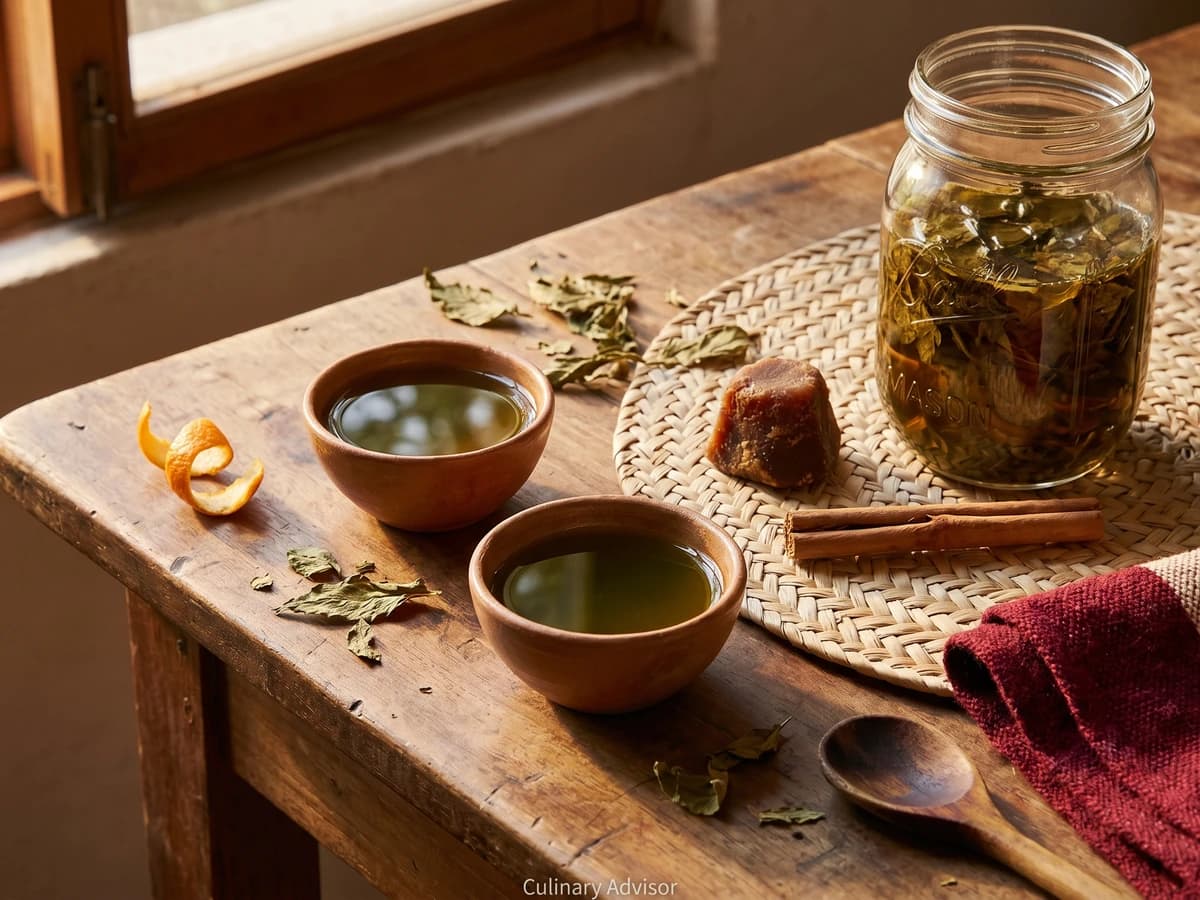
Tlaxiaco's home digestif from the Mixteca Alta of Oaxaca, cane aguardiente steeped for two months with wild damiana, piloncillo, and canela, served in copitas at the end of the night.
Chef Lupita
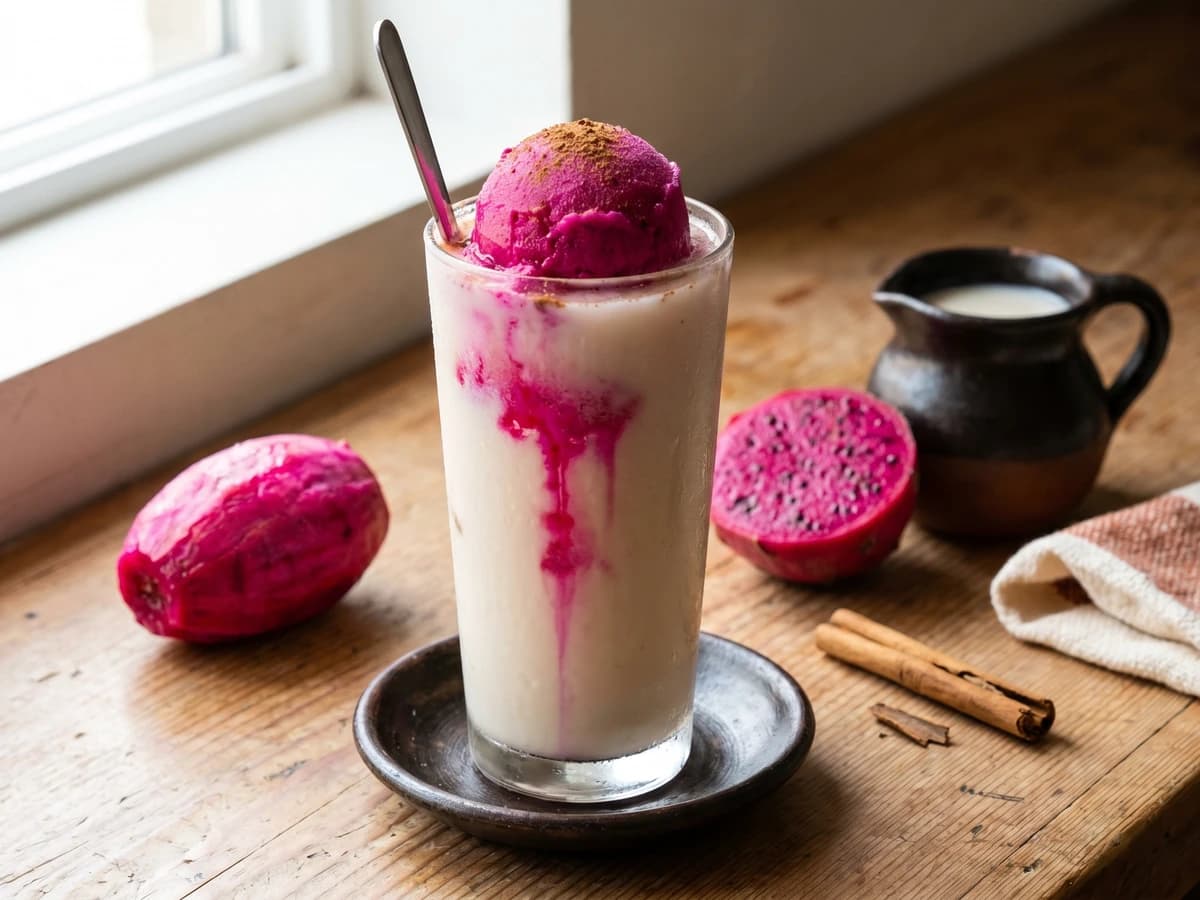
Oaxaca's mercado float, a tall glass of cold rice horchata crowned with a scoop of magenta prickly pear nieve, eaten with a long spoon while the colors bleed into each other.

Chef Lupita
Oaxaca's breakfast licuado, the salmon-pink flesh of ripe mamey blended with cold milk and Mexican canela until it is thick enough to eat with a spoon, sweetened only by the fruit itself.

Chef Lupita
Oaxaca's chocolate-pudding fruit, blended with cold milk, Mexican vanilla, and a squeeze of orange. The naturally dark, naturally dessert-sweet licuado that southern markets have served forever, no sugar needed.
Culinary guides, cultural storytelling, and the editorial depth that makes cooking meaningful.
Discover Culinary ExplorerChef Lupita is a fictional culinary guide to Regional Mexican Cuisine, written with the assistance of AI.