Culinary Explorer

A cooking platform built around craft, culture, and the stories behind what we eat.
Discover Culinary Explorer
Pulque Curado de Tuna

Pulque Curado de Tuna

Created by

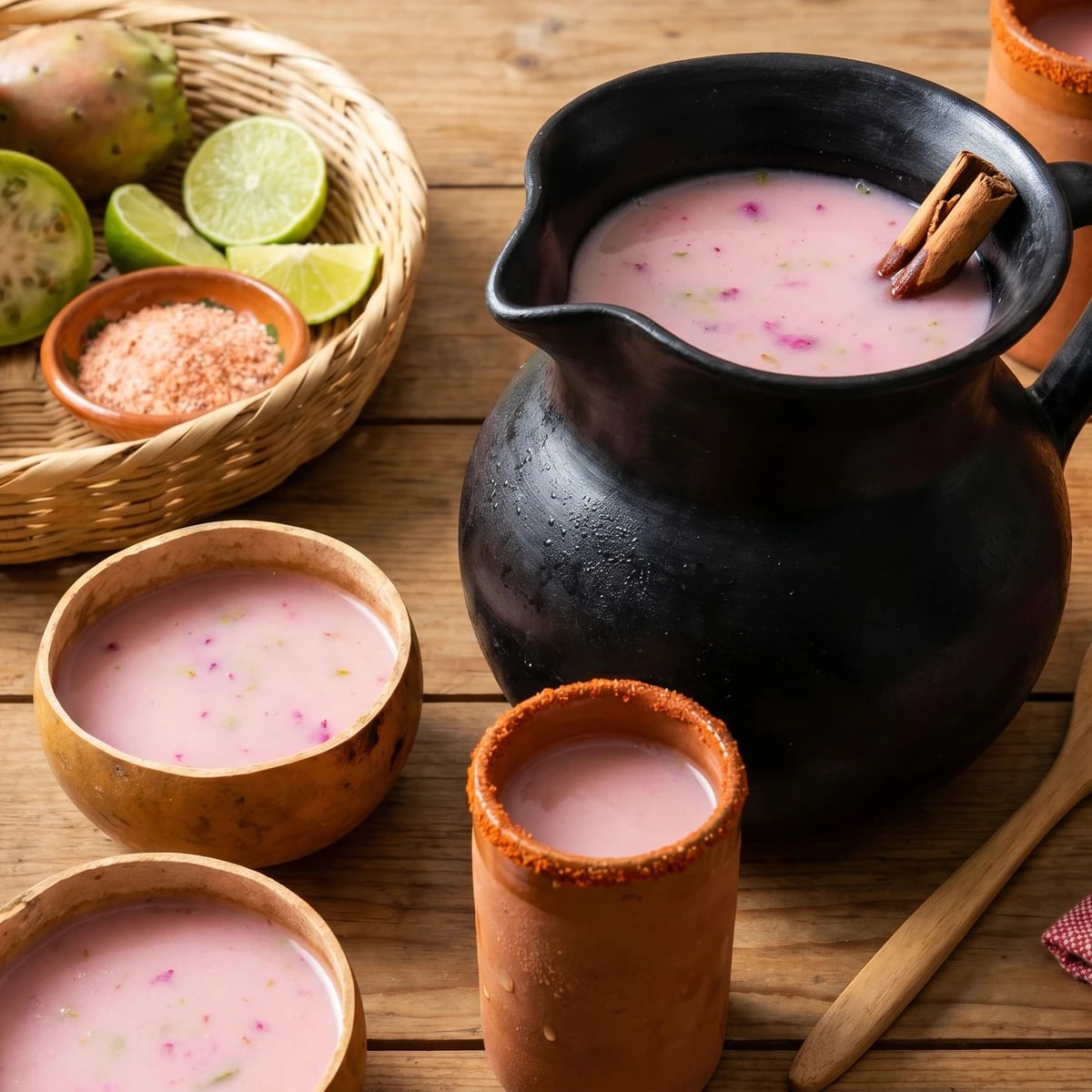
Oaxaca's Mixteca curado, fresh pulque cut with red and green prickly pear, piloncillo, and lime. Lighter than the curados of central Mexico, served the day it is made in jicaras at the market table.

Beverages
Mexican
Dinner Party
Outdoor Dining
20 min
Active Time
0 min cook20 min total
Yield6 servings (about 2 liters)

This is from the Mixteca, the high country that runs through western Oaxaca and parts of Puebla and Guerrero. Pulque belongs to all of central Mexico, but the Mixteca version of curado de tuna is its own animal: lighter on the tongue, less viscous, more fruit-forward than the dense, almost custard-like curados of Hidalgo and Tlaxcala. The pulquerias in Huajuapan and Tlaxiaco serve it in clay jicaras at midday, when the tunas are coming off the nopales and the heat asks for something cold.

Pulque is alive. It is the fermented sap of the maguey, scraped out of the heart of the plant by a tlachiquero with a long gourd called an acocote, and it does not travel well or keep long. If your pulque is more than three or four days old, it is not pulque anymore, it is vinegar with ambitions. This is the ingredient that decides whether you can make this drink or not. La cocina no es decoracion, es trabajo, and the work here begins with finding pulque you trust.

The tuna is the easy part. Red and green prickly pears, both, because the red gives you color and sweetness and the green gives you a clean, almost cucumber edge that keeps the curado from going syrupy. Piloncillo, not refined sugar. Lime, not lemon. A pinch of canela because the women in the Mixteca markets put it there and they are not wrong.

My mother did not make this. She was from Jalisco and Jalisco does not have a pulque culture the way the central states do. I learned this drink in a pulqueria in Tlaxiaco from a senora named Eulalia who poured it from a clay jarro into a hollowed gourd and told me to drink it before the foam settled. She was right. Saber cocinar es saber vivir, and saber beber pulque is part of the same lesson.

Pulque, called 'octli' in Nahuatl, predates the Spanish conquest by at least two thousand years and was a sacred beverage in Mexica religious life, restricted in classical times to priests, the elderly, pregnant women, and ceremonial contexts under penalty of severe punishment for unauthorized consumption. The 'curado' tradition of flavoring pulque with fruit, nuts, herbs, and grains emerged in the colonial and post-independence periods, particularly in the pulque-producing belt of Hidalgo, Tlaxcala, Mexico State, and Puebla, where pulquerias became working-class social institutions in the 19th and early 20th centuries before nearly collapsing under beer industry pressure and government campaigns that branded pulque as unsanitary. Oaxaca's Mixteca region, geographically isolated from the great pulque haciendas of central Mexico, developed its own lighter style of curado tied to the local prickly pear harvest and the smaller-scale production of family tinacales, a tradition that has survived precisely because it never industrialized.

The technique, the tradition, and the story behind every dish.

Discover Culinary Explorer

Ingredients

fresh pulque natural

Quantity

2 liters

cold, no older than 3 days from the tinacal

tuna roja (red prickly pear)

Quantity

8 medium

peeled and roughly chopped

tuna verde (green prickly pear)

Quantity

4 medium

peeled and roughly chopped

piloncillo

Quantity

1/2 cup

grated, or to taste

fresh lime juice

Quantity

1/4 cup (about 3 limes)

cinnamon stick (canela de Ceylan)

Quantity

1 small

broken in half

cold filtered water (optional)

Quantity

1/4 cup

if needed to loosen

sea salt

Quantity

a pinch

lime wedges (optional)

Quantity

for serving

sal de gusano (optional)

Quantity

for rimming the jicaras

Equipment Needed

  • Heavy-duty kitchen gloves for peeling the tunas
  • Sharp paring knife
  • Blender
  • Medium-mesh strainer
  • Wide glass or clay pitcher (avoid metal)
  • Wooden spoon
  • Jicaras or tall clay jarros for serving

Instructions

  1. 1

    Find pulque you trust

    Pulque is alive. It does not survive long trips and it does not survive heat. The pulque you want is fresh from the tinacal, no more than three days from when the tlachiquero scraped the maguey. In Oaxaca you go to a pulqueria in the Mixteca or to a market vendor who sells from a barrel. Outside Mexico, this is the hardest ingredient. Without good pulque there is no curado. No me vengas con atajos. Beer is not pulque. Tepache is not pulque. If you cannot find it, wait until you can.

    Smell it. Fresh pulque smells faintly of bread dough and wet earth. If it smells sour like vinegar or sharp like alcohol, it has turned. Pour it out.
  2. 2

    Peel the tunas

    Wear gloves. Tuna spines are invisible until they are in your fingers. Slice off both ends of each prickly pear. Run a knife down the length of the skin and peel it back in one strip. The flesh inside is jewel-bright, magenta in the tuna roja and pale green in the tuna verde. Roughly chop everything, seeds and all. The seeds are part of the texture in the Mixteca version. They settle at the bottom of the jicara and that is fine.

  3. 3

    Blend the fruit

    Put the chopped tunas, the lime juice, the piloncillo, and the pinch of salt into a blender. Pulse, do not puree. You want the fruit broken down into a rough pulp with the seeds still mostly intact. Twenty seconds, not a minute. Over-blending crushes the seeds and turns the curado bitter.

  4. 4

    Strain the pulp

    Pour the fruit pulp through a medium-mesh strainer set over a wide pitcher. Press gently with a wooden spoon. You are catching the seeds and the toughest fibers, not the pulp itself. The Mixteca curado keeps body. This is not a clear juice. The liquid that passes through should be a deep rose color, thick with fruit but pourable.

    Save what stays in the strainer. Squeezed over a clay bowl with a little more lime and salt, it makes a quick agua de tuna for the cook.
  5. 5

    Cure the pulque

    Pour the cold pulque slowly into the pitcher with the fruit pulp. Slowly, because pulque foams. Drop in the broken cinnamon stick. Stir gently with a wooden spoon, never metal. Metal kills the live cultures in the pulque and dulls the flavor. Taste. The Oaxacan version is lighter and less viscous than the curados of Hidalgo or Tlaxcala. If your pulque is dense, loosen with a few tablespoons of cold water. If the curado tastes flat, more lime. If it tastes shy, more piloncillo. The fruit, the acid, and the pulque should each be tasted separately on the tongue.

  6. 6

    Rest briefly and serve

    Cover the pitcher with a clean cloth, not a tight lid. Pulque is fermenting and needs to breathe. Rest in the refrigerator for fifteen minutes so the flavors marry and the cinnamon perfumes the liquid. Pull the cinnamon stick out before serving so the spice does not take over. Serve in jicaras or tall clay jarros, the rim dipped in sal de gusano if you have it. Pour from a height to wake up the curado. A wedge of lime on the side. Drink it the day you make it. Asi se hace y punto.

Chef Tips

  • Pulque is the entire dish. Sourcing is everything. In Mexico, find a pulqueria or a tianguis vendor who sells from a wooden barrel and who can tell you which day the maguey was scraped. Outside Mexico, a few specialty importers ship pulque in cans, which is a compromise. Canned pulque has been pasteurized and is no longer fermenting, so the texture and the bread-dough aroma are flatter, but it is closer than nothing.
  • The tunas should be in season. In Oaxaca that is late summer through early fall. Out of season, the fruit is pale, the seeds are hard, and the curado is thin. Cook what the mercado is selling today, not what you wanted last week. If tuna is not in season, make a curado de guayaba or de pina instead, both are traditional in the Mixteca.
  • Never stir pulque with a metal spoon. Wooden spoons or jicara halves only. The metal reacts with the live cultures and the curado loses its complexity. This is not superstition. The pulqueros in Apan have known it for centuries.
  • Curado de tuna does not keep. Drink it the day you make it. The pulque continues to ferment in the pitcher and by the next day the fruit has soured and the texture has gone wrong. This is a same-day drink and that is part of why it tastes the way it does.

Advance Preparation

  • The tunas can be peeled and chopped up to four hours ahead and held covered in the refrigerator. Past that, they oxidize and turn dull.
  • The fruit pulp can be blended and strained up to one hour before serving. Combine with the pulque only at the last moment, because the moment they meet the clock starts.
  • Do not make this dish ahead. Pulque curado is a same-day preparation. The fermentation continues in the pitcher and the balance you tasted at noon is gone by evening.

Frequently Asked Questions

Nutrition Information

1 serving (about 340g)

Calories
250 calories
Total Fat
0 g
Saturated Fat
0 g
Trans Fat
0 g
Unsaturated Fat
0 g
Cholesterol
0 mg
Sodium
60 mg
Total Carbohydrates
36 g
Dietary Fiber
3 g
Sugars
28 g
Protein
3 g

Note: Chef personas and recipes are created with AI assistance. Cook with care: follow safe food-handling practices, check doneness with a thermometer when needed, and adapt for allergies and your kitchen.

Where cooking meets culture.

Culinary guides, cultural storytelling, and the editorial depth that makes cooking meaningful.

Discover Culinary Explorer

More from Oaxacan Beverages

Browse the full collection