
Chef Lupita
Agua de Alfalfa
Ciudad de México's highland market agua fresca, fresh alfalfa blended with pineapple and lime until bright green, strained clean, and poured cold from the vitrolero.
A cooking platform built around craft, culture, and the stories behind what we eat.
Created by
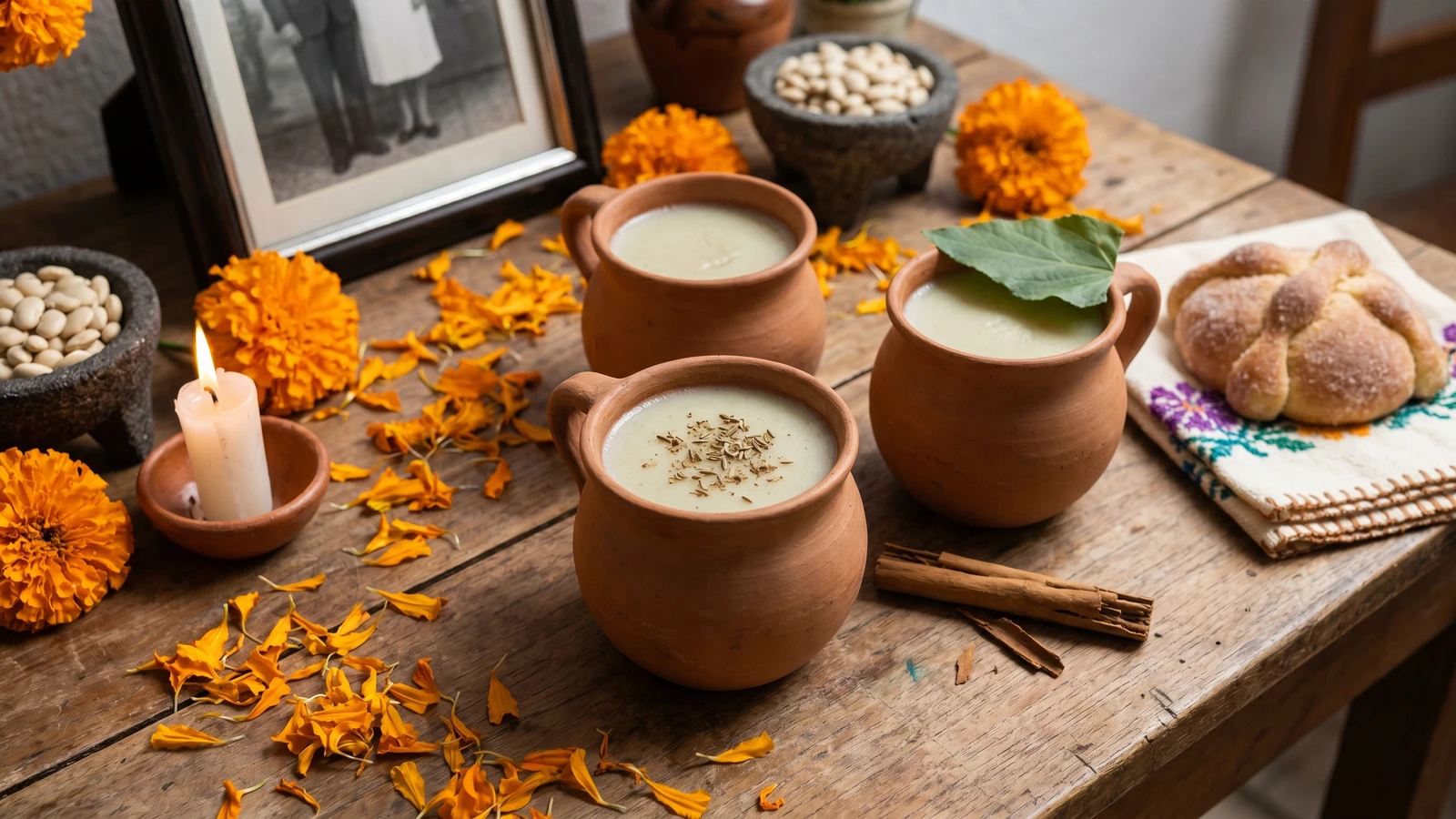
The white cacao atole of Arroyo de Banco in the Papaloapan basin of Veracruz, made only for Day of the Dead, with pataxte buried for months to ferment, then ground with nixtamal for a floral, faintly smoky drink that belongs to the altar before it belongs to the table.
This is from Arroyo de Banco, a small community in the Papaloapan basin of southern Veracruz, on the lowland side of the river that splits the state from Oaxaca. Not from Veracruz the city. Not from Xalapa. From the rural, Afro-Mexican and indigenous Mazatec corner of the state where the cacao trees grow alongside the corn and where November is the month the dead come home.
The ingredient that defines this atole is pataxte, Theobroma bicolor, a pale cousin of cacao with a thick white shell and a flavor that has nothing to do with chocolate. Floral. Slightly smoky. Cured tobacco and dried jasmine in the same sip. The women of Arroyo de Banco bury the pods in damp earth or pack the beans in clay tinajas wrapped in banana leaf for two to four months, and that long fermentation is what turns pataxte from a bitter wild seed into something worthy of the altar. Unfermented pataxte is not the ingredient. Cacao is not the ingredient. If your vendor cannot tell you when and how the beans were fermented, find a different vendor. Si no conoces el mercado, no conoces la cocina.
This atole is made once a year. The first days of November, when the marigolds are cut and the bread of the dead is baked and the altars go up in the houses along the river. The jarritos of pataxte sit beside the photographs of the muertos because the dead recognize the smell. That is what the senoras in Tlacotalpan told me when I went looking for the recipe in 2017, and I wrote it down exactly the way they said it.
My mother never made this. She was from Jalisco and she made champurrado with dark chocolate and never knew pataxte existed. Most Mexicans have not tasted it. That is the point of the work. Esto no es comida de un solo Mexico. Cada estado, su propia cocina, and inside each state there are towns like Arroyo de Banco where the recipe is held by twenty women and dies if nobody writes it down.
Pataxte (Theobroma bicolor), known in Mesoamerican botany as the white cacao or jaguar tree, was cultivated alongside true cacao (Theobroma cacao) for at least three thousand years across the Gulf coast lowlands and into Chiapas, Guatemala, and Oaxaca, and the Olmecs and later the Mexica used both species in ritual beverages tied to death, fertility, and the underworld. After the conquest, pataxte fell out of commercial favor because Spanish traders preferred the higher cacao butter content of Theobroma cacao, and by the 18th century pataxte cultivation had retreated to a handful of indigenous and Afro-Mexican communities along the Papaloapan and the lower Coatzacoalcos. Its survival in Day of the Dead atoles in towns like Arroyo de Banco, Tlacotalpan, and Otatitlan represents one of the longest continuous ritual food traditions in Mexico, predating Spanish contact by more than a millennium and surviving precisely because the ceremony refused to substitute the ingredient.
Quantity
1 cup
shells removed
Quantity
1 1/2 cups
Quantity
2 tablespoons
for nixtamalizing the corn
Quantity
12 cups, divided
Quantity
1 stick, about 4 inches
Quantity
1 cup
chopped, or to taste
Quantity
1 tablespoon
lightly toasted
Quantity
1/2 teaspoon
Quantity
1 small piece, about 1 inch
for the altar version
| Ingredient | Quantity |
|---|---|
| fermented pataxte beans (white cacao, Theobroma bicolor)shells removed | 1 cup |
| dried white corn, preferably criollo from the Papaloapan basin | 1 1/2 cups |
| cal (food-grade calcium hydroxide)for nixtamalizing the corn | 2 tablespoons |
| water | 12 cups, divided |
| canela mexicana (Mexican cinnamon) | 1 stick, about 4 inches |
| piloncillochopped, or to taste | 1 cup |
| anise seedlightly toasted | 1 tablespoon |
| kosher salt | 1/2 teaspoon |
| fresh hoja santa (optional)for the altar version | 1 small piece, about 1 inch |
Pataxte is not cacao. It is Theobroma bicolor, cacao's pale cousin, with a thick white shell and a flavor closer to flower water and cured tobacco than to chocolate. In Arroyo de Banco the women bury the pods in damp earth or pack the beans in tinajas wrapped in banana leaf for two to four months. The fermentation is what makes the atole. Unfermented pataxte tastes like raw nuts and bitter wood. If your pataxte has not been fermented, you do not have the ingredient yet. Find a vendor in the Mercado de Tlacotalpan or order through a Papaloapan cooperative. No me vengas con atajos.
Combine the dried white corn with 6 cups of water and the cal in a heavy non-reactive pot. The water will turn cloudy and yellow. Bring to a gentle simmer over medium heat for 20 minutes, then turn off the heat, cover, and let the corn rest in the cal water overnight, at least 8 hours. The skins will loosen and the kernels will swell and turn a soft cream color. This is nixtamal, and it is what separates an atole that tastes like Veracruz from a thin gruel made of cornstarch.
Drain the corn into a colander and rinse under cold running water, rubbing the kernels between your hands until the loosened skins float away and the water runs clear. Some cooks in the Papaloapan leave a little of the skin for color and depth. Suit yourself, but rinse off the chalky cal residue completely. What you have now is nixtamal ready to grind.
Heat a dry comal over medium-low. Toast the fermented pataxte beans gently for 8 to 10 minutes, turning often, until they smell like dried jasmine and the inside has darkened from cream to soft tan. Do not rush the heat. Pataxte burns faster than cacao and burned pataxte tastes like ash. The smell when it is right is the smell of the November altars in Tlacotalpan, floral and slightly smoky. That smell is the dish.
Combine the toasted pataxte, the rinsed nixtamal, the toasted anise seed, and 2 cups of water in a high-powered blender. Blend on high for a full three minutes, scraping down the sides as you go, until you have a thick, pale, ivory paste with no grit when you rub a drop between your fingers. In Arroyo de Banco the senoras still take this paste to the molino on the corner for a second pass through the stone. If you have access to a metate, use it. The texture is closer to what the dish wants.
Pour the paste through a fine-mesh sieve into a heavy clay olla or a non-reactive pot, pressing with the back of a wooden spoon and adding the remaining 4 cups of water gradually to push everything through. Discard whatever pataxte skins and corn hulls stay behind in the sieve. The liquid in the pot should be the color of old ivory, with the faint grey-green cast that gives Papaloapan atoles their honest look. White cornstarch atole is not this. Asi se hace y punto.
Add the canela stick, the piloncillo, the salt, and the hoja santa if using. Set the pot over medium-low heat and stir constantly with a wooden spoon, always in the same direction. This is not optional. Atole that is not stirred constantly will catch on the bottom and the entire pot will taste of scorched corn. After 20 to 25 minutes the atole will thicken and coat the back of the spoon. Lower the heat further. Cook another 15 minutes at the slowest possible simmer, still stirring, until the raw corn taste cooks out and the floral pataxte rises forward. Taste for piloncillo. The Papaloapan cooks keep it barely sweet. The pataxte is not chocolate. You are not making champurrado.
Fish out the canela and the hoja santa. Ladle the atole into small clay jarritos, the kind sold in the Tlacotalpan market for a few pesos. The clay matters. It holds the temperature and gives the atole the faint earthen finish that the cooks of Arroyo de Banco expect. On the altar, set the jarritos beside the bread of the dead and the marigolds for the souls who come back on the first and second of November. At the table, drink it slowly. This is a ceremonial drink. It is not breakfast. Saber cocinar es saber vivir.
1 serving (about 300g)
Culinary guides, cultural storytelling, and the editorial depth that makes cooking meaningful.
Discover Culinary ExplorerChef Lupita
Ciudad de México's highland market agua fresca, fresh alfalfa blended with pineapple and lime until bright green, strained clean, and poured cold from the vitrolero.

Chef Lupita
Aguascalientes' Lenten agua fresca, jewel-red from cooked beet and full of apple, banana, orange, lettuce, and ground peanuts, served cold when Holy Week meets the Feria de San Marcos.

Chef Lupita
Sonora and Sinaloa's creamy malted barley water, built on toasted cebada perla, Mexican canela, vanilla from Papantla, and evaporated milk. Pink-beige, rich, and served cold over heavy ice in a heavy glass tumbler. Liquid cookie comfort the northwest way.

Chef Lupita
Yucatán's everyday tonic of boiled chaya leaves blended with lima agria, sugar, and ice. The bright green jarra that sits on every Peninsula table from Mérida to Valladolid.