
Chef Lupita
Agua de Alfalfa
Ciudad de México's highland market agua fresca, fresh alfalfa blended with pineapple and lime until bright green, strained clean, and poured cold from the vitrolero.
A cooking platform built around craft, culture, and the stories behind what we eat.
Created by
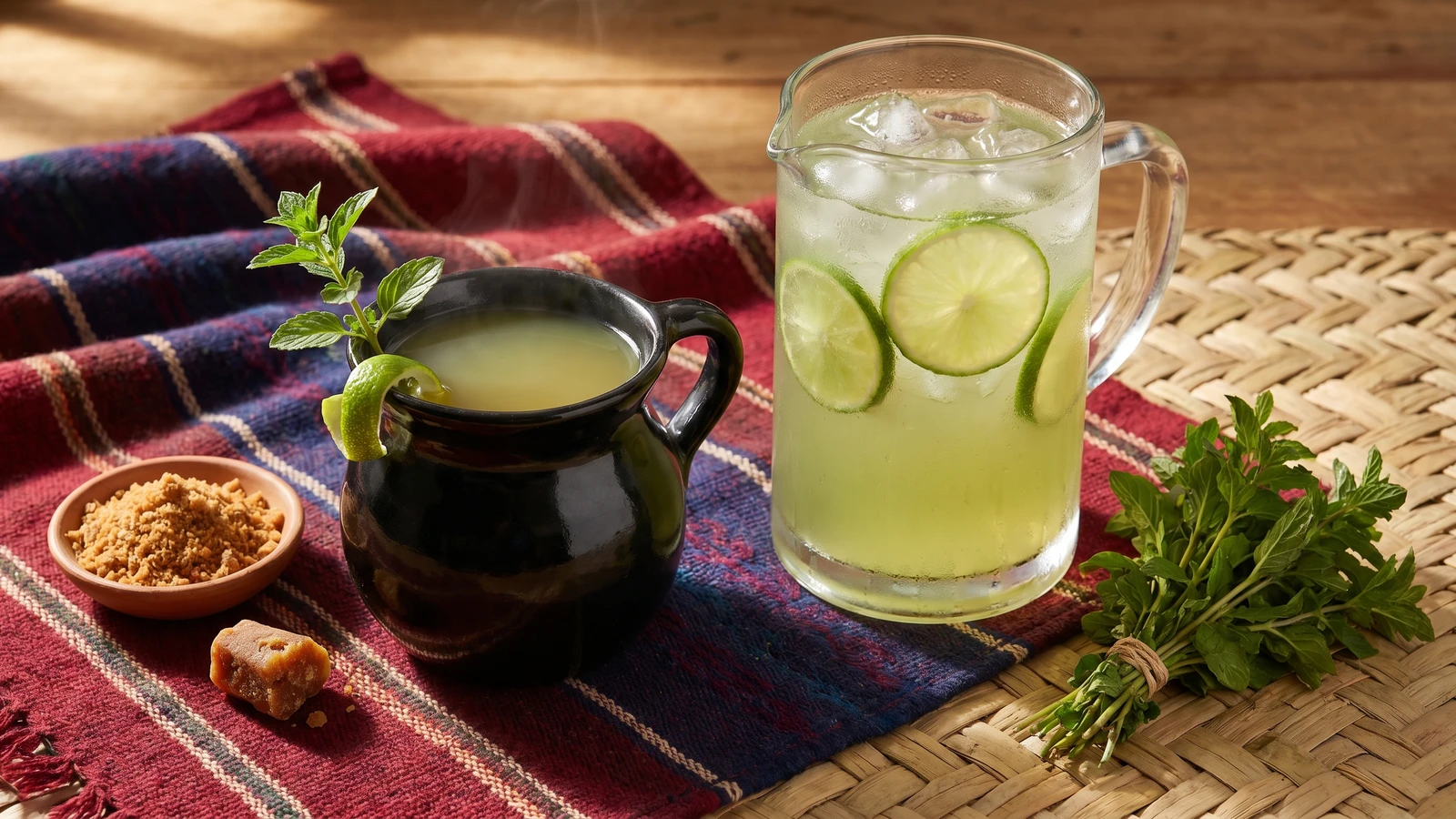
Oaxaca's wild mint, steeped hot for the morning after, chilled with lime for the afternoon under the jacarandas. The herb that ends every calenda and starts every recovery.
Poleo belongs to Oaxaca. It grows wild in the Sierra Norte and the Sierra Sur, along the streams that run through the Mixe and Zapotec villages, and the women who walk those hills know which patches to cut and which to leave for the next season. This is not the spearmint your market sells in plastic clamshells. Poleo is sharper, almost medicinal, with a pulegone note that grabs the back of your throat the moment you smell it. Esto no es comida de un solo Mexico. This is Oaxacan, specifically.
The tea is what you drink the morning after a mezcal night. The senoras at the Mercado de Etla pour it from clay ollas into barro cups and they do not ask if you want sugar, they look at your face and decide. If you look bad enough, you get it bitter. The chilled limonada de poleo is the other side of the same plant, the version poured at the end of a calenda when the band has stopped and the dancers need something cold and herbaceous to bring them back.
Use fresh poleo if you can find it. Dried works, and is what most cooks outside Oaxaca will have to use, but the fresh herb has a brightness the dried version cannot match. Do not boil it. Hot water, not boiling, the same rule that applies to dried chiles. Boiling bruises the oils and you end up with a flat, grassy tea instead of the medicinal, floral one this is supposed to be. Saber cocinar es saber vivir, and that includes knowing how to make the tea that fixes what last night broke.
Poleo (Clinopodium macrostemum, sometimes classified as Satureja macrostema) is a wild Oaxacan mint distinct from European pennyroyal, though Spanish colonizers gave both plants the same name based on aromatic similarity. Pre-Columbian Zapotec and Mixe healers used poleo as a digestive and respiratory remedy, and the herb appears in 16th-century Codex de la Cruz-Badiano entries describing indigenous medicinal botany compiled at the Colegio de Santa Cruz de Tlatelolco. The herb's role in modern Oaxacan culture is inseparable from mezcal: the pairing of poleo tea as a digestive and hangover remedy after mezcal consumption is a tradition that dates at least to the colonial period, when distilled agave became commercial in the Valles Centrales.
Quantity
1 small bunch (about 1/4 cup loosely packed leaves and tender stems)
or 2 tablespoons dried poleo
Quantity
4 cups
Quantity
2 to 3 tablespoons
grated, or raw cane sugar to taste
Quantity
1 strip
no pith
Quantity
to finish
Quantity
1/2 cup (about 6 to 8 Mexican limes)
Quantity
3 cups
Quantity
for serving
Quantity
for serving
Quantity
for garnish
| Ingredient | Quantity |
|---|---|
| fresh poleo (Oaxacan wild mint)or 2 tablespoons dried poleo | 1 small bunch (about 1/4 cup loosely packed leaves and tender stems) |
| water | 4 cups |
| piloncillograted, or raw cane sugar to taste | 2 to 3 tablespoons |
| fresh lime peelno pith | 1 strip |
| Sierra Norte honey (optional) | to finish |
| fresh lime juice (for chilled limonada) (optional) | 1/2 cup (about 6 to 8 Mexican limes) |
| cold water or sparkling mineral water (for chilled limonada) (optional) | 3 cups |
| ice (optional) | for serving |
| lime wheels (optional) | for serving |
| fresh poleo sprigs (optional) | for garnish |
If you are working with fresh poleo, rinse the bunch under cold water and shake it dry. Do not strip the leaves from the stems. The tender stems carry the same oils as the leaves and they belong in the pot. The plant grows wild along the streams in the Sierra Norte and Sierra Sur of Oaxaca, and the women who gather it do not bother separating leaf from stem. Neither should you.
Bring four cups of water to a strong simmer in a small clay olla or a stainless pot. Do not let it reach a hard rolling boil. Boiling water bruises the volatile oils in the poleo and you lose the floral nose that makes the tea worth drinking. Hot but gentle. The bubbles should break the surface lazily, not crash.
Pull the pot off the heat. Drop in the poleo and the strip of lime peel. Cover the pot and let it steep for eight to ten minutes. The water will turn a pale gold green and the kitchen will smell like the high country after a rain. That smell is the menthol and the pulegone working. This is why poleo is the herb people in Oaxaca reach for after too much mezcal, after a heavy plate of mole, after a long night of dancing at a calenda. The oils settle the stomach and clear the head.
Stir the grated piloncillo into the hot tea while it is still in the pot. Piloncillo is the right sugar here. Refined white sugar will sweeten the tea but it will flatten the herb. Piloncillo carries the smoke of the cane reduction and it talks to the poleo. Taste and adjust. The tea should be sweet enough to soften the medicinal edge but not so sweet that it becomes a syrup.
Pour the tea through a fine-mesh strainer into small clay jarros. The barro of Atzompa or the black clay of San Bartolo Coyotepec are the cups this drink belongs in. Glass works. Ceramic from another state works. But the tea tastes more like itself out of Oaxacan clay and that is not a romantic claim, the porous walls of the barro hold the temperature differently and the mineral notes of the clay meet the herb. Drink it hot. Add a spoon of Sierra Norte honey at the table if you want it.
To turn the tea into the chilled limonada that is poured at the end of every calenda and at every Guelaguetza stand, let the steeped, sweetened tea cool completely on the counter, then refrigerate until cold. Combine the cold poleo tea with the fresh lime juice and three cups of cold water or mineral water in a large pitcher. Stir. Taste for sweetness, the lime will pull the sugar back. Add more piloncillo dissolved in a splash of warm water if it needs it.
Fill tall glasses with ice. Pour the limonada de poleo over and finish each glass with a lime wheel and a small sprig of fresh poleo. Drink immediately. The herb fades within an hour or two of being mixed with the lime, so this is not a drink you make in the morning for the afternoon. Asi se hace y punto.
1 serving (about 460g)
Culinary guides, cultural storytelling, and the editorial depth that makes cooking meaningful.
Discover Culinary ExplorerChef Lupita
Ciudad de México's highland market agua fresca, fresh alfalfa blended with pineapple and lime until bright green, strained clean, and poured cold from the vitrolero.

Chef Lupita
Aguascalientes' Lenten agua fresca, jewel-red from cooked beet and full of apple, banana, orange, lettuce, and ground peanuts, served cold when Holy Week meets the Feria de San Marcos.

Chef Lupita
Sonora and Sinaloa's creamy malted barley water, built on toasted cebada perla, Mexican canela, vanilla from Papantla, and evaporated milk. Pink-beige, rich, and served cold over heavy ice in a heavy glass tumbler. Liquid cookie comfort the northwest way.

Chef Lupita
Yucatán's everyday tonic of boiled chaya leaves blended with lima agria, sugar, and ice. The bright green jarra that sits on every Peninsula table from Mérida to Valladolid.