
Chef Lupita
Agua de Alfalfa
Ciudad de México's highland market agua fresca, fresh alfalfa blended with pineapple and lime until bright green, strained clean, and poured cold from the vitrolero.
A cooking platform built around craft, culture, and the stories behind what we eat.
Created by
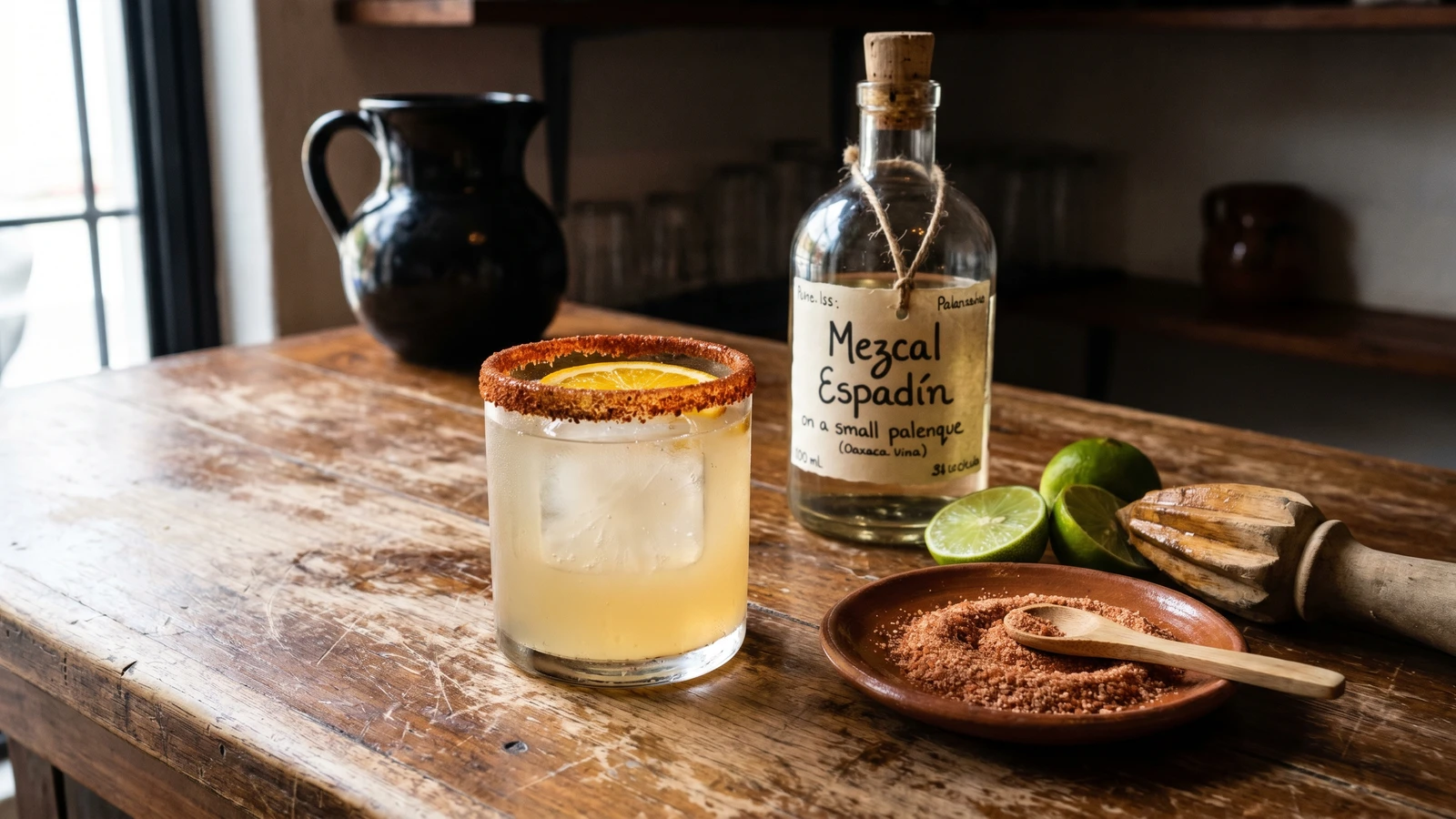
Oaxaca's mezcal margarita, built on espadín from a small palenque, fresh Mexican lime, Oaxacan agave nectar, and a brick-red sal de gusano rim. The classic citrus-and-smoke balance, sipped slowly.
This is a Oaxacan drink. The mezcal is from Oaxaca, the agave nectar is from Oaxaca, the sal de gusano on the rim is from Oaxaca. Take any one of those ingredients out of context and you have something else. The mezcalita is not a tequila margarita with a smoky substitution. It is its own cocktail, built around a spirit that has been distilled in clay and copper stills in the Valles Centrales for centuries.
The mezcal must be espadín. Tobalá is too precious, too floral, and too expensive to mix with lime. Espadín is the agave that the maestros mezcaleros plant for the everyday work of feeding the palenque, and it is the agave that handles a cocktail without losing itself. Buy it joven, unaged, from a small producer who names the village on the label. The smoke comes from roasting the piñas in earth pits lined with hot volcanic stones, and that smoke is the whole point. Cover it with too much sweetener and you have wasted the mezcal.
The sal de gusano on the rim is not a gimmick. It is a Oaxacan condiment with a long tradition: maguey worms toasted, ground with sea salt and chile costeño, served alongside mezcal at every village fiesta in the Sierra Sur. The brick-red color is the chile. The depth is the worm. Lick a little before you sip and the cocktail makes sense. Saber cocinar es saber vivir, and that includes knowing how to drink properly.
My mother did not drink mezcal. She was from Jalisco and she drank tequila like a Jalisciense, neat with a sangrita on the side. The first time I sat in a Oaxacan mezcaleria, in 1998, an older woman behind the counter taught me the mezcalita and refused to let me shoot it. She said: si lo tomas de un trago, ¿para qué viniste? Cada estado, su propia cocina. And every state, its own way of drinking.
Mezcal predates tequila by centuries and is produced across at least nine Mexican states under the official Denominación de Origen, but Oaxaca accounts for roughly 85 percent of national production and is the spirit's cultural and geographic heart. The word 'mezcal' derives from the Nahuatl 'mexcalli,' meaning oven-cooked agave, a reference to the pre-Hispanic practice of roasting agave hearts in earth pits, a method maestros mezcaleros in villages like Santiago Matatlán still use today. Sal de gusano, the chile-and-worm salt traditionally served alongside mezcal, originates in the Sierra Sur and Valles Centrales of Oaxaca, where the maguey worm (the larva of Comadia redtenbacheri or Aegiale hesperiaris) has been a protein source and ceremonial seasoning since pre-Columbian times.
Quantity
2 ounces
Oaxacan, 45 to 48 percent ABV
Quantity
1 ounce
about 2 limes
Quantity
1/2 ounce
Quantity
1/2 ounce
Naranja or a quality triple sec
Quantity
1 tablespoon
worm salt blended with chile costeño
Quantity
1
for the rim and garnish
Quantity
1
for garnish
Quantity
as needed
large and clear if possible
| Ingredient | Quantity |
|---|---|
| mezcal espadín jovenOaxacan, 45 to 48 percent ABV | 2 ounces |
| fresh-squeezed Mexican lime juiceabout 2 limes | 1 ounce |
| light agave nectar from Oaxaca | 1/2 ounce |
| orange liqueurNaranja or a quality triple sec | 1/2 ounce |
| sal de gusanoworm salt blended with chile costeño | 1 tablespoon |
| lime wedgefor the rim and garnish | 1 |
| thin orange slice (optional)for garnish | 1 |
| ice cubeslarge and clear if possible | as needed |
Buy mezcal espadín from Oaxaca, joven, made by a small palenque. The label should name the maestro mezcalero and the village. Santiago Matatlán, San Dionisio Ocotepec, Tlacolula. If the bottle says nothing about where it came from or who made it, leave it on the shelf. Espadín is the workhorse agave of Oaxaca and the right starting point for a mezcalita. Save the tobalá and the tepeztate for sipping neat. No me vengas con atajos.
Pour the sal de gusano onto a small flat plate and spread it in a thin even layer. Real sal de gusano is brick-red, ground from toasted maguey worms, sea salt, and chile costeño. It tastes earthy, smoky, faintly bitter. If you have only seen it sold as a novelty in tourist shops, that version is fine for the look but weak on flavor. Buy it from a Oaxacan vendor who can tell you which palenque it came from.
Run the cut side of the lime wedge around the outside edge of a chilled rocks glass or small copita, wetting only the outer rim. Press the outside of the rim into the sal de gusano, rotating slowly so the salt clings in an even line. Never wet the inside of the glass. Salt that drops into the cocktail will overpower the lime. The rim is for the lip, not for the drink.
Fill a cocktail shaker two-thirds with ice. Add the mezcal, the fresh lime juice, the agave nectar, and the orange liqueur. Seal the shaker and shake hard for ten to twelve seconds. You want it cold and properly diluted, not bruised. The lime juice must be fresh-squeezed, today, from Mexican limes if you can find them. Bottled lime juice tastes of metal and will ruin the balance.
Place a large clear ice cube in the rimmed glass. Strain the mezcalita over the ice. Lay the orange slice and the lime wedge across the rim. Serve at once. Sip it, do not shoot it. Mezcalita is a sipping cocktail. The smoke from the espadín, the bite of the lime, the salt and chile from the gusano on your lip, that is the architecture. Rush it and you taste nothing. Asi se hace y punto.
1 serving (about 130g)
Culinary guides, cultural storytelling, and the editorial depth that makes cooking meaningful.
Discover Culinary ExplorerChef Lupita
Ciudad de México's highland market agua fresca, fresh alfalfa blended with pineapple and lime until bright green, strained clean, and poured cold from the vitrolero.

Chef Lupita
Aguascalientes' Lenten agua fresca, jewel-red from cooked beet and full of apple, banana, orange, lettuce, and ground peanuts, served cold when Holy Week meets the Feria de San Marcos.

Chef Lupita
Sonora and Sinaloa's creamy malted barley water, built on toasted cebada perla, Mexican canela, vanilla from Papantla, and evaporated milk. Pink-beige, rich, and served cold over heavy ice in a heavy glass tumbler. Liquid cookie comfort the northwest way.

Chef Lupita
Yucatán's everyday tonic of boiled chaya leaves blended with lima agria, sugar, and ice. The bright green jarra that sits on every Peninsula table from Mérida to Valladolid.