
Chef Lupita
Agua de Chilacayota
Oaxaca's market agua fresca built on chilacayota squash, piloncillo, and Mexican canela, served cold with the spaghetti-like strands of squash and toasted seeds floating in the glass.
A cooking platform built around craft, culture, and the stories behind what we eat.
Created by
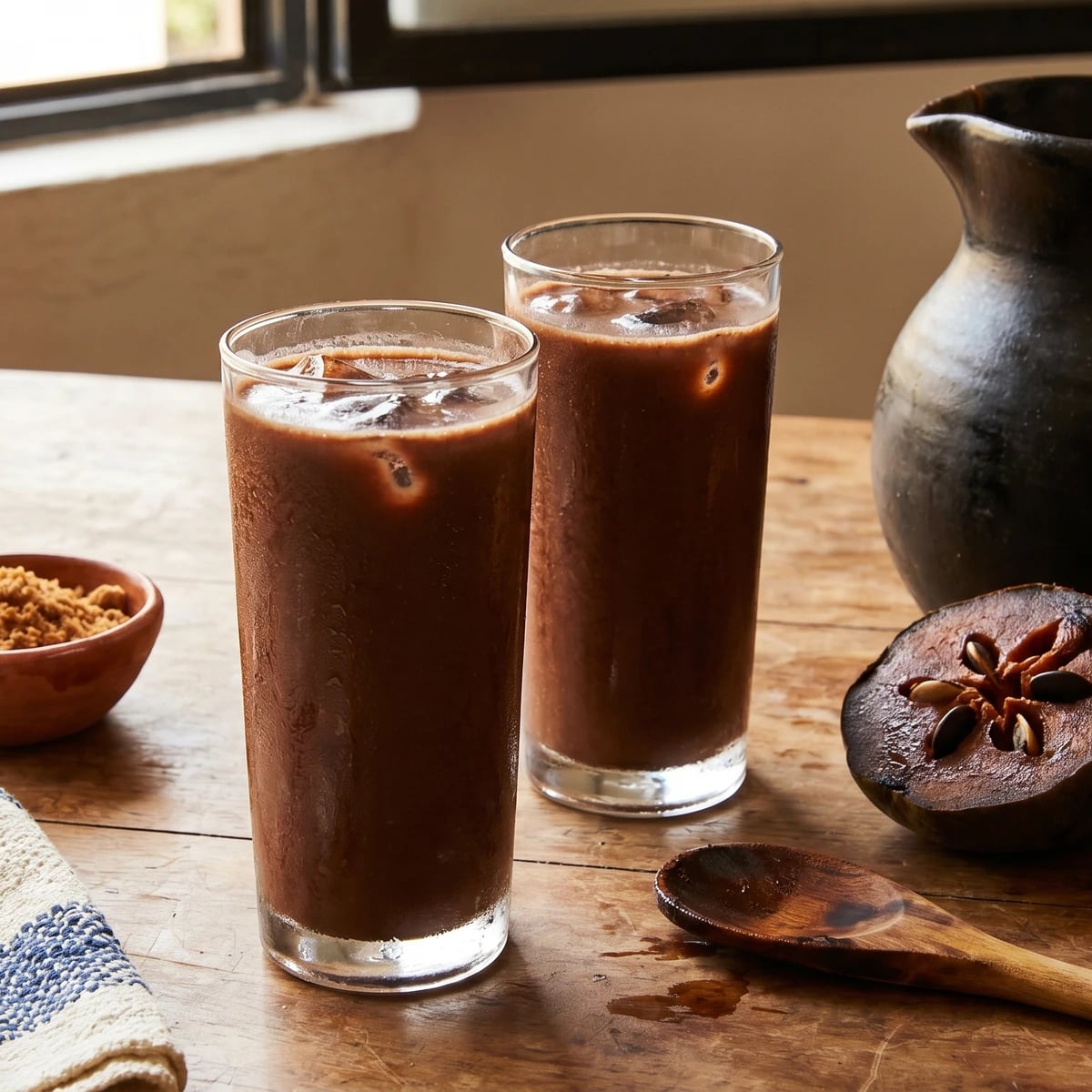
Oaxaca's chocolate-pudding fruit, blended with cold milk, Mexican vanilla, and a squeeze of orange. The naturally dark, naturally dessert-sweet licuado that southern markets have served forever, no sugar needed.
The zapote negro grows in southern Oaxaca, in Veracruz, in Chiapas, in the warm lowlands where the trees take their time and the fruit ripens to something that looks and tastes like chocolate pudding. It is not chocolate. It has nothing to do with cacao. But the pulp is dark brown, soft, and naturally sweet, and the resemblance is so close that the rest of the country has been blending it into licuados for as long as anyone remembers.
This is one of those recipes where the work is at the market, not at the stove. If you bring home a ripe zapote negro, the licuado makes itself in five minutes. If you bring home an underripe one, you have made nothing and you cannot fix it. The fruit must be soft enough that it feels like it might burst in your hand. The skin should be olive-brown and wrinkled. A pretty, firm, green-skinned zapote on a market display is not ready. Preguntale a las senoras del mercado, they will press the fruit and tell you to come back in three days.
My mother kept a page in her notebook for licuados, and zapote negro was on it with a single line of instruction: 'leche fria, naranja, vainilla, nada mas.' Cold milk, orange, vanilla, nothing else. She did not add sugar because a ripe zapote does not need it. The orange juice does two things: it brightens the dark, slightly earthy flavor of the pulp, and the citric acid keeps the fruit from turning gray on you while you drink it. Saber cocinar es saber vivir, and sometimes living well is a tall cold glass of something dark and sweet at ten in the morning.
Diospyros nigra, the black sapote, is native to the lowland tropical forests of southern Mexico and Central America, and was cultivated by the Maya and the peoples of the Gulf Coast long before the Spanish arrived. Sixteenth-century chroniclers including Francisco Hernandez recorded the fruit under its Nahuatl name 'tzapotl iztac' and noted its use as a fresh fruit and as a sweetener mixed with maguey wine. The licuado as a format, fresh fruit blended with milk and served cold at breakfast, is a 20th-century convention that spread with the arrival of household electric blenders in the 1940s and 1950s, transforming dozens of regional fruits, including mamey, guanabana, chicozapote, and zapote negro, into the standard repertoire of Mexican market juice stands.
Quantity
2 (about 1 pound total)
very soft to the touch, almost collapsing in the hand
Quantity
2 cups
Quantity
1/4 cup (from 1 small orange)
Quantity
1 teaspoon
Quantity
2 tablespoons, grated, or to taste
grated on a microplane
Quantity
pinch
Quantity
for serving
| Ingredient | Quantity |
|---|---|
| ripe black sapotes (zapote negro)very soft to the touch, almost collapsing in the hand | 2 (about 1 pound total) |
| cold whole milk | 2 cups |
| fresh orange juice | 1/4 cup (from 1 small orange) |
| Mexican vanilla extract | 1 teaspoon |
| piloncillo (optional)grated on a microplane | 2 tablespoons, grated, or to taste |
| fine sea salt | pinch |
| ice cubes (optional) | for serving |
The zapote negro must be completely ripe. The skin should be olive-brown and wrinkled, the fruit so soft it feels like a water balloon in your hand. An underripe black sapote is bitter, astringent, and inedible. There is no rescuing it. If your fruit is still firm, leave it on the counter for three to five more days until it gives completely under light pressure. Asi se hace y punto.
Cut each zapote in half across the equator with a paring knife. Inside you will find dark brown, almost black flesh the color of cocoa pudding and three or four flat black seeds. Pull out the seeds with the tip of the knife and discard them. Scoop the soft pulp into the blender with a spoon, scraping the skin clean. You should have about one and a quarter cups of pulp.
Add the cold milk, orange juice, vanilla, piloncillo if using, and the pinch of salt to the blender. Blend on high for 30 to 45 seconds until completely smooth. The color will be a deep chocolate brown, almost black, and the texture should be thick but pourable. Taste it. If your zapote was at peak ripeness, you will not need any sugar at all. If it tastes flat, add a little more piloncillo and blend again.
Pour into two tall glasses over a few ice cubes. Drink it right away. The orange juice keeps the pulp from oxidizing for a little while, but a licuado is not something that waits. La cocina no es decoracion, es trabajo, and a licuado is breakfast or merienda, made and drunk in the same ten minutes.
1 serving (about 515g)
Culinary guides, cultural storytelling, and the editorial depth that makes cooking meaningful.
Discover Culinary Explorer
Chef Lupita
Oaxaca's market agua fresca built on chilacayota squash, piloncillo, and Mexican canela, served cold with the spaghetti-like strands of squash and toasted seeds floating in the glass.

Chef Lupita
Oaxaca's deep-red hibiscus agua, steeped slow with piloncillo, canela, and a strip of orange peel. The pitcher that sits on every comedor table from Tlacolula to Juchitan.

Chef Lupita
Oaxaca's mercado float, a tall glass of cold rice horchata crowned with a scoop of magenta prickly pear nieve, eaten with a long spoon while the colors bleed into each other.

Chef Lupita
Tlaxiaco's home digestif from the Mixteca Alta of Oaxaca, cane aguardiente steeped for two months with wild damiana, piloncillo, and canela, served in copitas at the end of the night.