
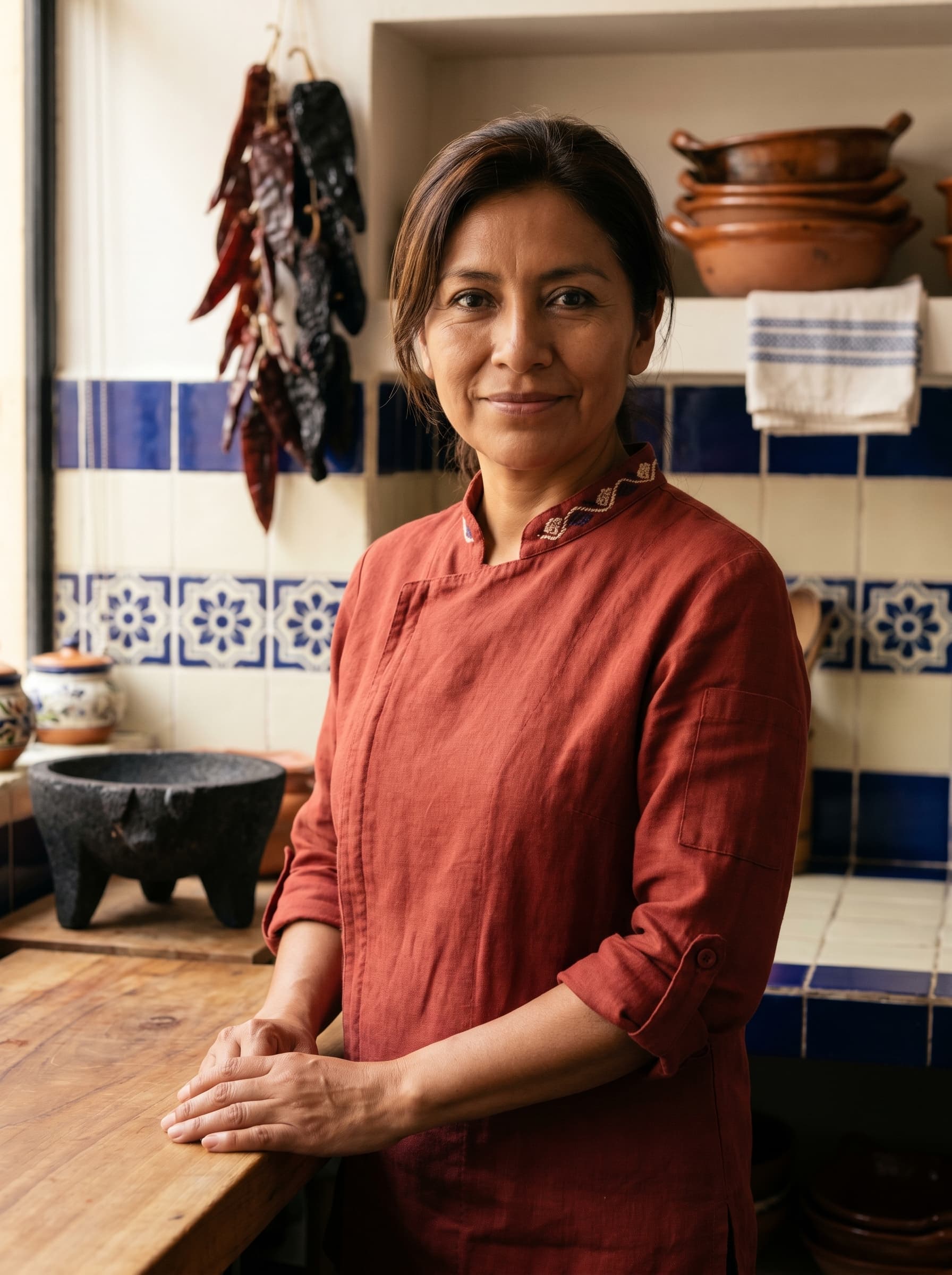
Chef Lupita
Salsa de Chicatanas
From the Mixteca Oaxaqueña after the first June rains, toasted flying ants ground on the molcajete with chile costeño, garlic, and charred tomate. Earthy, deep, almost like truffle.
Updated May 19, 2026
Chile pastes and table salsas that live alongside every Oaxacan meal. Chintextle, salsa de chicatanas, salsa de chile pasilla oaxaqueño, encurtidos with chile de agua, and the finishing salts of gusano and chapulín that anchor the mezcal ritual. Foundational recipes used across the rest of the Oaxaqueño archive.
A cooking platform built around craft, culture, and the stories behind what we eat.
Chef Lupita
From the Mixteca Oaxaqueña after the first June rains, toasted flying ants ground on the molcajete with chile costeño, garlic, and charred tomate. Earthy, deep, almost like truffle.
Chef Lupita
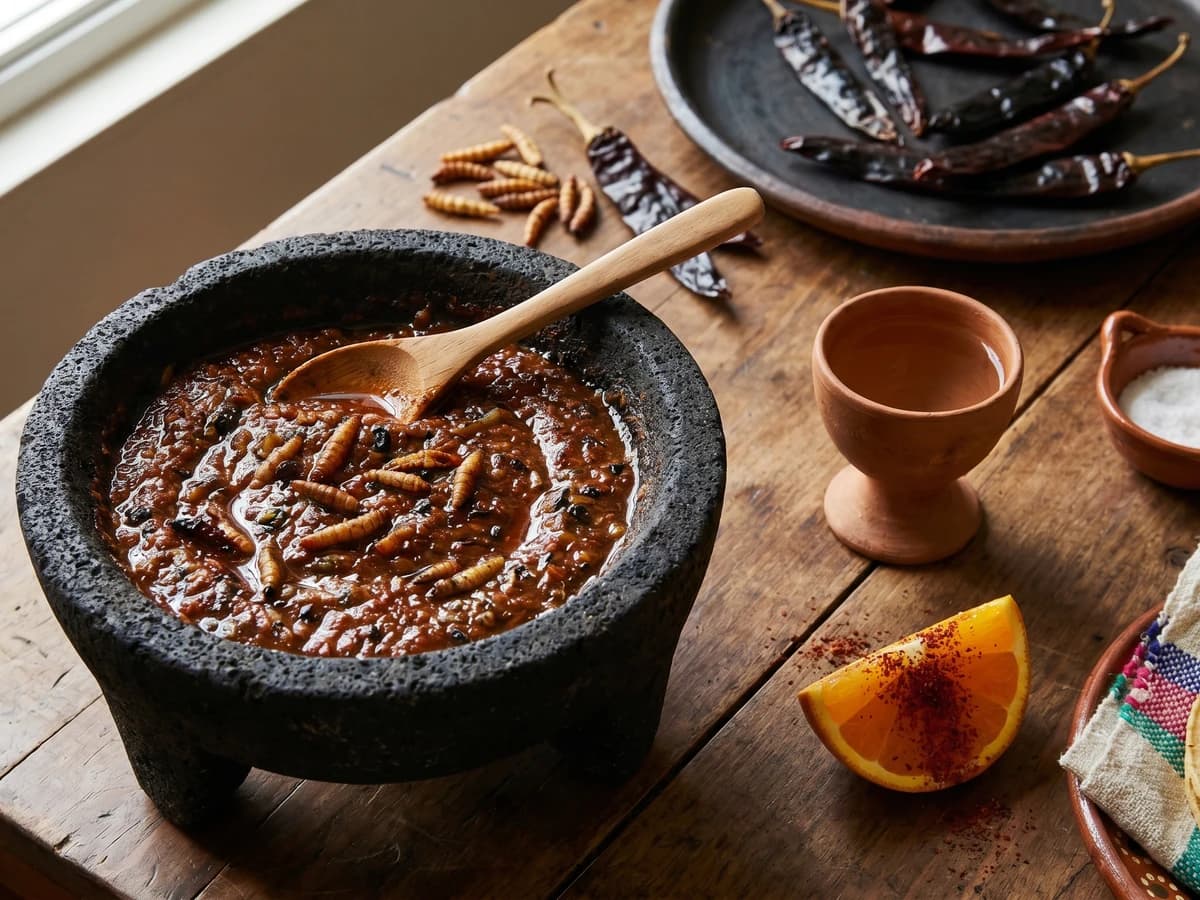
Oaxaca's smoky salsa of toasted gusanos de maguey ground in the molcajete with chile pasilla oaxaqueño, charred garlic, and lime. The umami partner that makes mezcal taste like home.

Chef Lupita
From the Sierra Mixe of Oaxaca: the endemic chile pasilla oaxaqueño, smoke-dried over oak, ground in the molcajete with charred tomate and garlic. Raisiny, smoky, the soul of Oaxacan salsas.

Chef Lupita
An Oaxacan table salsa from the Valles Centrales, built on the heirloom chile de agua, charred on a comal with tomate verde and garlic, ground rough in the molcajete and eaten the same day.
Chef Lupita
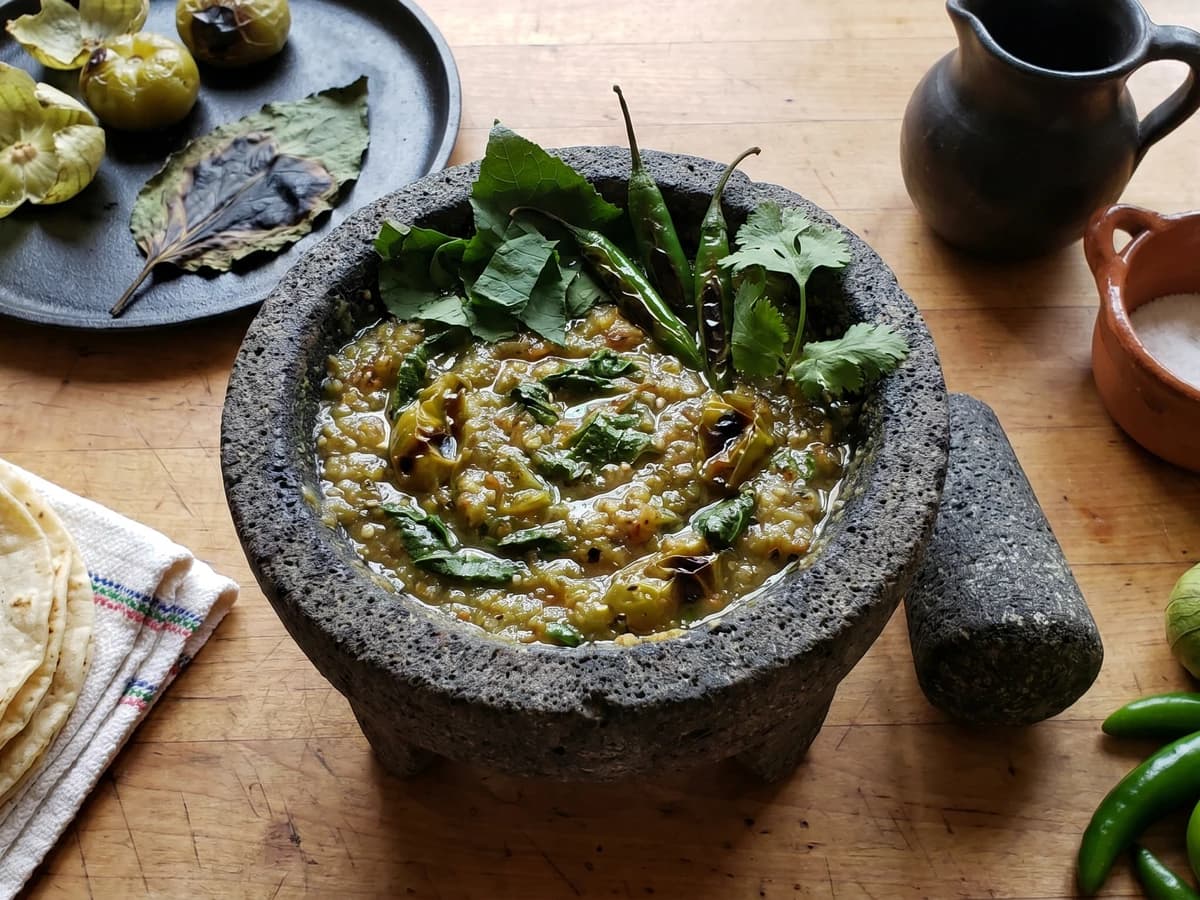
Oaxaca's molcajete-ground salsa verde, built on charred tomate verde, serrano, and the fresh hoja santa leaf that makes it unmistakably oaxaqueña. For memelas, enmoladas, and grilled fish.

Chef Lupita
Oaxaca's shelf-stable chile oil, cascabel and pasilla oaxaqueño steeped in warm oil with toasted garlic, sesame, and peanut. A jar that earns its place on the table for weeks.

Chef Lupita
The Valles Centrales table salsa for tlayudas, charred tomate and chile serrano ground by hand in the volcanic stone molcajete, chunky and smoky, the way the senoras at Mercado 20 de Noviembre have made it for generations.

Chef Lupita
Oaxaca's salsa borracha built on smoke-dried pasilla mixe rehydrated and ground with mezcal joven, charred garlic, and orange juice. The salsa that lives next to barbacoa de chivo and on the table at every mezcal-pairing meal worth attending.

Chef Lupita
From the Costa Chica of Oaxaca, dried chile costeño rojo toasted on the comal and ground with charred tomato and garlic. The salsa that lives on the table when there is grilled fish or a tlayuda in front of you.

Chef Lupita
From the Istmo de Tehuantepec, a dark, earthy salsa built on the rare chile chocolate, charred tomato, and red onion ground on the metate and finished in pork lard. The Istmeñas of Juchitán made this their own.

Chef Lupita
From Juchitan in the Istmo de Tehuantepec: fresh cuajada folded with sun-dried chile pasado and coarse salt, ground on the metate and spread on the great toasted corn discs the Zapotec call totopos del Istmo.

Chef Lupita
The Papaloapan basin's working salsa, charred tomato, ancho, and guajillo cooked down with hoja santa and fried in lard, the sauce that goes inside piltes wrapped in banana leaf and steamed until the kitchen smells like the river.

Chef Lupita
From Huautla de Jimenez in Oaxaca's Sierra Mazateca. Yellow chile canario ground in the molcajete with toasted garlic, onion, and lime. Fruity heat that creeps up on you, slow at first and then everywhere.

Chef Lupita
Oaxaca's iconic finishing salt of toasted chinicuiles, sea salt from the Istmo, and chile de árbol, ground on the metate. The salt that frames every copita of mezcal in the Valles Centrales.

Chef Lupita
Oaxaca's bright cousin to sal de gusano, ground from toasted chapulines, sal de mar from the Istmo, chile de árbol, charred garlic, and lime zest. The salt that finishes a mezcalita and a plate of fruit.

Chef Lupita
Oaxaca's smoked pasilla mixe ground fine with sea salt. The finishing condiment that lives on the tables of the Sierra Mixe and rims the mezcal glasses of Oaxaca City.

Chef Lupita
The smoke-dried chile paste of the Sierra Mixe, ground on the metate with camarón seco, toasted garlic, and avocado leaf, then bound with manteca. Travel food that turns a tlayuda into supper.

Chef Lupita
The Mixteca's foundational garlic-chile paste from Huajuapan de Leon, built on toasted guajillo and ancho, comal-charred garlic, and the spice rack of colonial Oaxaca, ground thick with vinegar to coat meats, vegetables, and tortillas for weeks.

Chef Lupita
The wedding paste of the Istmo de Tehuantepec, where Zapotec cooks grind toasted chiles with cinnamon, cloves, raisins, pineapple, and pan resobado bread for the ceremonial beef estofado that anchors a Oaxacan wedding feast.

Chef Lupita
Oaxaca's Costa Chica adobo of toasted chile costeño rojo, garlic, cumin, and vinegar, ground into a sharp red paste that coats whole snapper before it goes over charcoal.
Chef Lupita
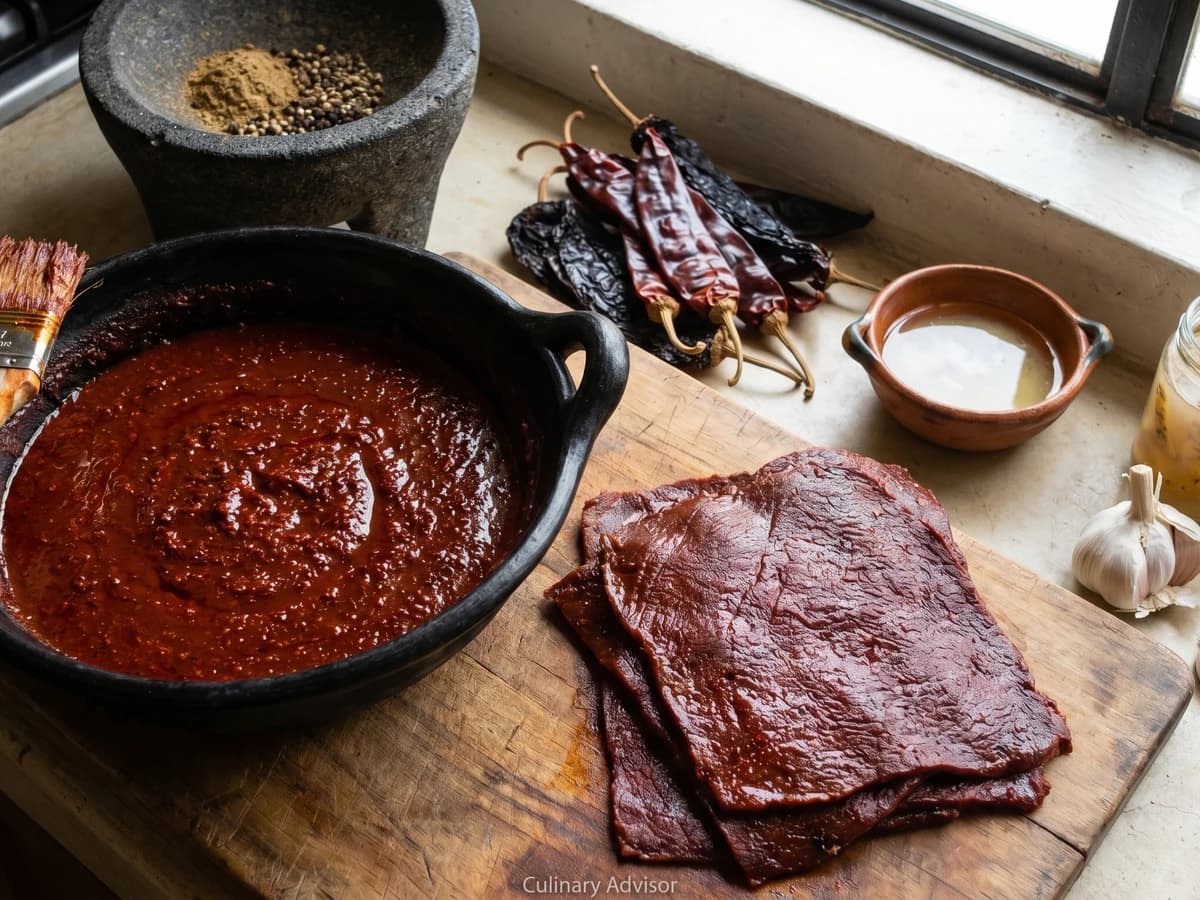
The Oaxacan adobo that turns thin sheets of beef red and smoky over the coals. Toasted guajillo and ancho with chile pasilla oaxaqueño, cumin, oregano, and vinegar, brushed on palomilla and dried overnight before it ever sees fire.

Chef Lupita
Oaxaca's foundational dry spice base, canela, peppercorns, cloves, allspice, and oregano de monte, toasted on the comal and ground fine. The hidden DNA inside the seven moles and a dozen adobos.

Chef Lupita
Oaxaca's red recado, built on toasted guajillo, ancho, and costeño rojo with metate-ground spices and pineapple vinegar. The base paste for mole rojo, enchiladas, and meat that the cooks of the Valles Centrales reach for first.

Chef Lupita
Oaxaca's pickled red onions cut with chile de agua and pineapple vinegar, the bright acidic crunch that finishes tlayudas, tortas, and any plate of grilled meat from the Valles Centrales.

Chef Lupita
The chile de agua of Oaxaca's Valles Centrales pickled whole with cauliflower, carrots, and onion in vinagre de piña, set with lard and oregano de Oaxaca. The jar that sits next to the cecina and the tasajo.

Chef Lupita
Oaxaca's market jar of jalapeños, carrots, cauliflower, nopales, and onion seared in lard and packed in white vinegar with bay, Oaxacan oregano, and piloncillo. Three months in the refrigerator and they only get better.

Chef Lupita
Oaxaca's homemade pineapple vinegar, built from skins and piloncillo and patience, fermented in clay for two weeks until it carries the soul of every escabeche the state has ever made.

Chef Lupita
Oaxaca's late-autumn quince, poached slowly in piloncillo syrup with canela and clove until the flesh turns rose-colored. Served cold with queso fresco from Etla or spooned over pan de yema.
Culinary guides, cultural storytelling, and the editorial depth that makes cooking meaningful.
Discover Culinary ExplorerChef Lupita is a fictional culinary guide to Regional Mexican Cuisine, written with the assistance of AI.