Culinary Explorer

A cooking platform built around craft, culture, and the stories behind what we eat.
Discover Culinary Explorer
Sal de Pasilla Oaxaqueño

Sal de Pasilla Oaxaqueño

Created by

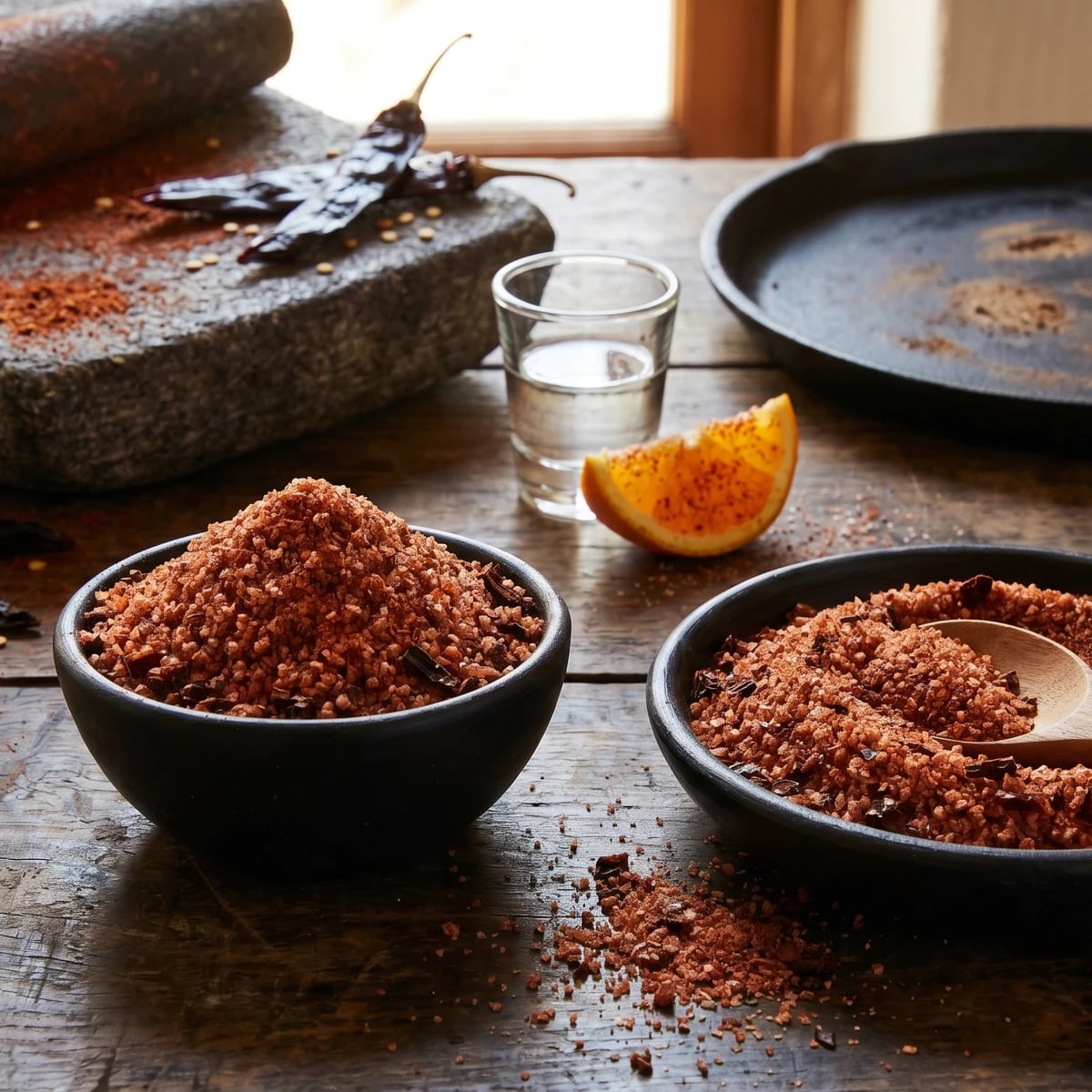
Oaxaca's smoked pasilla mixe ground fine with sea salt. The finishing condiment that lives on the tables of the Sierra Mixe and rims the mezcal glasses of Oaxaca City.

Sauces & Condiments
Mexican
Make Ahead
Batch Cooking
10 min
Active Time
5 min cook15 min total
YieldAbout 1 cup

This salt is from Oaxaca. Specifically from the Sierra Mixe, the high country in the north of the state where the chile pasilla mixe is grown and smoke-dried in the same wood-fired chambers that have been used for generations. Without that chile, you do not have this salt. You have something else.

Understand the chile first. The pasilla you find in most US supermarkets is chile pasilla negro from central Mexico, a long wrinkled chile that is dried but not smoked. It is a fine chile for mole and adobo. It is not pasilla oaxaqueño. The Oaxacan version, also called pasilla mixe, is shorter, fatter, deeply wrinkled, and carries the flavor of woodsmoke baked into its skin. Open one and you should smell raisin, tobacco, and a campfire all at once. If you do not, you have the wrong chile and no amount of toasting will fix it.

The technique is straightforward and the technique is everything. Toast the chiles briefly on a comal until the smoky oils release. Cool them completely. Grind them, ideally on a metate, with a few toasted seeds and a touch of oregano de Oaxaca. Mix with good sea salt. That is the recipe. The depth comes from sourcing, not from steps.

My mother did not know this salt. She was from Jalisco. I learned it from a senora named Doña Eufemia at a tlayuda stand near the Mercado 20 de Noviembre, who kept a small clay jar of it next to her comal and dusted it on grilled cecina the moment the meat hit the plate. She told me her mother ground it on a metate that had been in the family for four generations. Cada estado, su propia cocina, and within Oaxaca, every cook has her own version of this salt.

Chile pasilla oaxaqueño, known locally as pasilla mixe, is grown almost exclusively in the Sierra Mixe and Sierra Norte regions of Oaxaca, where the Mixe and Zapotec communities have practiced wood-smoke drying of chiles since pre-Columbian times. The smoking method, hanging the chiles over fires of oak and pine in dedicated drying rooms, predates the Spanish arrival and was originally a preservation strategy in a humid mountain climate where sun-drying was unreliable. Sal de pasilla as a finishing salt belongs to the broader Oaxacan tradition of seasoned salts, sales sazonadas, that includes sal de gusano (with ground chinicuiles, the agave worm) and sal de chicatana (with toasted flying ants); each is tied to specific regional ingredients and is served alongside mezcal as a structured tasting ritual codified in the 20th century by the state's mezcaleros.

The technique, the tradition, and the story behind every dish.

Discover Culinary Explorer

Ingredients

dried chile pasilla oaxaqueño (pasilla mixe)

Quantity

8

stemmed and seeded

flaky sea salt or coarse sal de Colima

Quantity

3/4 cup

small clove garlic (optional)

Quantity

1

peeled

dried Mexican oregano, preferably oregano de Oaxaca (optional)

Quantity

1/2 teaspoon

Equipment Needed

  • Cast iron comal or heavy skillet for toasting
  • Metate, or a dedicated spice grinder if you do not have one
  • Kitchen scissors for stemming and seeding
  • Wide ceramic mixing bowl
  • Small glass jar with a tight-sealing lid for storage

Instructions

  1. 1

    Know your chile

    Make sure what you have in your hand is chile pasilla oaxaqueño, also called pasilla mixe. It is grown in the Sierra Mixe of northern Oaxaca and smoked over wood as it dries. It is wrinkled, the color of dried tobacco, and it smells of raisin and woodsmoke when you break one open. The pasilla you find in most US markets, chile pasilla negro from central Mexico, is a different chile. It is not smoked. It will not give you this salt. No me vengas con atajos. If you cannot find pasilla mixe, write down the name and order it from a Oaxacan supplier. Then come back.

    At the Mercado 20 de Noviembre in Oaxaca City, the chile vendors will let you smell before you buy. The real pasilla mixe smells smoky the moment you put it near your face. If you have to ask whether it is smoky enough, it is not the right chile.
  2. 2

    Stem and seed the chiles

    Pull off the stems with your fingers. Slice each chile open lengthwise with kitchen scissors and shake out the seeds. Save the seeds in a separate small bowl. You will toast a few of them later for the salt. The veins inside carry most of the heat, leave them or trim them depending on how hot you want the finished salt.

  3. 3

    Toast the chiles on a comal

    Heat a dry comal or heavy cast iron skillet over medium-low. Open each chile flat and press it against the comal for 10 to 15 seconds per side, no more. The smoky oils will wake up and the chile will become brittle and pliant. Pasilla mixe burns faster than other dried chiles because it is already smoked. The line between toasted and burned is narrow. Watch the smoke coming off the comal. When it shifts from sweet and raisiny to acrid, you have gone too far. Pull them off the second the kitchen smells like a Oaxacan campfire.

    Burned chile turns the salt bitter. There is no fixing it once it happens. If one chile blackens, throw it out and toast another. La cocina no es decoracion, es trabajo.
  4. 4

    Toast a few seeds and the oregano

    Drop a tablespoon of the reserved seeds onto the same comal. Toast for about 30 seconds, shaking the pan, until they turn golden and smell nutty. Do the same with the oregano if using, just 10 seconds, until it releases its aroma. The seeds carry the heat and the toasted note that makes this salt taste like it was ground in a Oaxacan kitchen. If using garlic, toast the unpeeled clove on the comal for two or three minutes, turning, until the skin is charred and the inside is soft. Peel it once it cools.

  5. 5

    Cool the chiles completely

    Spread the toasted chiles on a plate and let them cool for at least five minutes. They have to be brittle and bone dry before you grind them. Warm chile turns to paste in the grinder, not powder. Patience here. Pasilla mixe will turn from leathery to crackling-crisp as it cools.

  6. 6

    Grind on a metate or in a spice grinder

    If you have a metate, this is what it is for. Break the chiles into pieces, scatter them across the stone with the toasted seeds, oregano, and garlic, and grind in long even strokes until you have a coarse powder. The metate gives you a texture no machine can match: uneven, fragrant, alive. If you are using a spice grinder, work in small batches and pulse, do not run it continuously. You want a fine powder with a little texture, not dust. Do not grind the salt yet.

    A coffee grinder dedicated to spices works. A blender does not. The blade is too far from the chile and you will end up with chunks and powder, not an even grind. The metate is the tradition. Asi se hace y punto.
  7. 7

    Combine with the salt

    In a wide bowl, combine the chile powder with the sea salt. Mix with your fingers, not a spoon. You want to feel the texture and break up any small clumps as you go. The ratio is roughly one part chile powder to two parts salt by volume. Taste a pinch on the back of your hand. It should hit you with smoke, then heat, then salt, in that order. If the smoke is faint, your chile was wrong or your toast was timid. If the heat overwhelms, you left too many seeds. Adjust the next batch.

  8. 8

    Store and use

    Transfer to a clean, dry glass jar with a tight lid. Stored away from light and heat, sal de pasilla holds its character for two months. After that the smoke fades and the chile loses its edge. Make small batches. Use it on grilled meats the moment they come off the fire, on a fried egg, on slices of mango or jicama, on roasted elote, on the rim of a mezcal glass. This is finishing salt, not cooking salt. It goes on at the end. Saber cocinar es saber vivir.

Chef Tips

  • Source the chile correctly or do not make this salt. Chile pasilla oaxaqueño from a Oaxacan supplier, online or in person, is the only acceptable starting point. If your dried chile is not smoky on the nose before you toast it, you have chile pasilla negro, not pasilla mixe. They are different chiles. No me vengas con atajos.
  • Use real sea salt with texture, not table salt. Flaky Maldon works, sal de Colima is better, and a coarse Pacific sea salt from Oaxaca's coast is best. The salt is half the dish. Treat it like an ingredient.
  • Make small batches and make them often. Sal de pasilla is at its peak for the first two months. After that the smoke softens and the chile loses its edge. Half a cup at a time is plenty for most kitchens.
  • This is a finishing salt. Do not cook with it. The smoke and the chile are volatile and high heat strips them out. Add it the moment food comes off the heat, not before. On grilled steak, on a fried egg, on mango with lime, on the rim of a mezcal glass.

Advance Preparation

  • Sal de pasilla is a make-ahead condiment by design. Stored in a clean dry jar away from light and heat, it holds its character for about two months.
  • The chiles can be toasted and cooled one day before grinding. Hold them in an airtight container so they stay crisp.
  • Double the batch if you are giving jars as gifts. A small jar of sal de pasilla is one of the most respected gifts a Oaxacan cook can offer.

Frequently Asked Questions

Nutrition Information

1 serving (about 2g)

Calories
0 calories
Total Fat
0 g
Saturated Fat
0 g
Trans Fat
0 g
Unsaturated Fat
0 g
Cholesterol
0 mg
Sodium
660 mg
Total Carbohydrates
0 g
Dietary Fiber
0 g
Sugars
0 g
Protein
0 g

Note: Chef personas and recipes are created with AI assistance. Cook with care: follow safe food-handling practices, check doneness with a thermometer when needed, and adapt for allergies and your kitchen.

Where cooking meets culture.

Culinary guides, cultural storytelling, and the editorial depth that makes cooking meaningful.

Discover Culinary Explorer

More from Oaxacan Sauces & Condiments

Browse the full collection