
Chef Lupita
Aceite de Chiltepin Bajacaliforniano
Baja California's wild chiltepin steeped in olive oil with garlic, orejon, and lime peel, until the oil turns ruby-amber and carries the slow, sneaky burn of the desert coast.
A cooking platform built around craft, culture, and the stories behind what we eat.

Created by
From the Mixteca Oaxaqueña after the first June rains, toasted flying ants ground on the molcajete with chile costeño, garlic, and charred tomate. Earthy, deep, almost like truffle.
This is a salsa from the Mixteca, the mountain region that crosses Oaxaca, Puebla, and Guerrero. It is made once a year, and only once. The chicatanas, the large winged leaf-cutter ants, fly out of their colonies on a single night each spring, the night after the first hard rains of the season, usually late May or early June in the Mixteca Oaxaqueña. Whole families go out with flashlights and buckets to catch them as they emerge from the wet ground. If you miss that window, you wait until next year. Cocina what the mercado is selling today.
The ant itself is the ingredient. Toasted on a comal until the bodies turn deep brown and the fat releases, the chicatana smells of forest floor and toasted coffee and tastes like nothing else in this cuisine. Earthy, smoky, with the deep umami people from outside Mexico call truffle because they have no other reference. In Oaxaca and the Mixteca Poblana they have always called it chicatana. They did not need a French comparison.
The salsa is built on the molcajete with chile costeño rojo, the small fierce chile of Oaxaca's Costa Chica, charred garlic, and a tomate criollo blistered on the comal. Costeño is not chile de árbol and it is not guajillo. It has its own particular sharp heat and clean fruit, and if you cannot find it, wait until you can. Cada estado, su propia cocina, and this one belongs to the Mixteca.
My mother never made this salsa. She was from Jalisco. I learned it from doña Berta in San Pedro Yucunama, who showed me how to pinch the wings off and how to grind the chicatanas slow on the molcajete so the bodies stay visible in the red. She told me a salsa that becomes paste is no longer chicatana, it is just salsa. She was right.
Chicatanas, known scientifically as Atta mexicana, have been gathered and eaten across central and southern Mexico for thousands of years, with archaeological evidence of insect consumption dating to pre-agricultural Mesoamerican societies. The Mixtec, Zapotec, Nahua, and Popoluca peoples all developed distinct preparations, but the molcajete-ground salsa with chile costeño is most strongly associated with the Mixteca region spanning Oaxaca, southern Puebla, and eastern Guerrero. The 2010 UNESCO inscription of Traditional Mexican Cuisine specifically cited the role of insects, including chicatanas, escamoles, and chapulines, as integral to the country's pre-Columbian culinary inheritance, though commercial scarcity and habitat loss have made chicatanas increasingly expensive. A kilo at the markets of Huajuapan or Tlaxiaco can now sell for several thousand pesos in a poor rainfall year.
Quantity
1/2 cup
wings and legs removed
Quantity
6
stemmed and seeded
Quantity
3
unpeeled
Quantity
1 small tomate, or 4 tomatillos
husked if using tomatillos
Quantity
1 1/2 teaspoons, plus more to taste
Quantity
2 to 3 tablespoons, as needed
Quantity
for serving
Quantity
for serving
| Ingredient | Quantity |
|---|---|
| chicatanas (large winged leaf-cutter ants)wings and legs removed | 1/2 cup |
| dried chile costeño rojostemmed and seeded | 6 |
| garlic clovesunpeeled | 3 |
| tomate criollo or tomatillos milperoshusked if using tomatillos | 1 small tomate, or 4 tomatillos |
| sea salt | 1 1/2 teaspoons, plus more to taste |
| water | 2 to 3 tablespoons, as needed |
| hand-pressed corn tortillas (optional) | for serving |
| sliced avocado (optional) | for serving |
Spread the chicatanas on a clean dry cloth. Pinch off the wings and the long back legs. The wings turn to dust on the comal and the legs catch in your teeth. The body and the head are what you want, that is where the fat lives. The fat is the salsa.
Heat a dry comal over medium-low. Spread the cleaned chicatanas in a single layer. Toast for five to seven minutes, shaking the comal often, until they turn deep brown, almost black, and the kitchen smells of roasted earth, of forest floor, of something between coffee and toasted nuts. This is the smell that tells the women of San Pedro Yucunama that the salsa is going to be right.
Push the chicatanas to one side of the comal or remove them. Lay the chile costeño flat. Toast for about 20 seconds per side, pressing gently with a spatula. The skin will blister and the chile will turn glossy red-brown. Costeño is thin and burns fast. If one goes black, throw it out and toast another. Burned chile is bitter chile, and bitter ruins this salsa.
On the same comal, char the unpeeled garlic and the tomate criollo. The garlic skin should blacken in patches and the cloves should soften inside, about eight minutes, turning often. The tomate should blister and collapse, the juices catching dark on the comal. Peel the garlic when cool enough to handle. Leave the tomate skin on. The char is flavor.
This salsa is made on the molcajete. Not in a blender. The blender turns the chicatanas to paste and you lose the texture that is the whole point. Start with the salt and the garlic. Crush them into a rough paste. Add the chile costeño, broken into pieces, and grind in circles until the chiles break down and the paste turns deep red. Now add the chicatanas and grind again, slower this time. You want them broken but still recognizable, the small bodies still visible in the salsa. Last, work in the charred tomate. Loosen with water a tablespoon at a time until you have a coarse, spreadable salsa. Taste for salt. Asi se hace y punto.
Let the salsa rest in the molcajete for ten minutes before serving. The fat from the chicatanas works through the chile and the salt and everything settles. Serve directly in the molcajete with hot hand-pressed corn tortillas and sliced avocado. A spoonful of this salsa on a tortilla with avocado is one of the great tastes of the Mixteca. People who have not eaten chicatana think Mexican food is chile and lime. They are wrong. Saber cocinar es saber vivir.
1 serving (about 35g)
Culinary guides, cultural storytelling, and the editorial depth that makes cooking meaningful.
Discover Culinary ExplorerChef Lupita
Baja California's wild chiltepin steeped in olive oil with garlic, orejon, and lime peel, until the oil turns ruby-amber and carries the slow, sneaky burn of the desert coast.

Chef Lupita
Puebla's Lenten convent adobo, a brick-red vinegar chile paste of ancho, guajillo, garlic, oregano, and comino made to dress fish for the meatless calendar.
Chef Lupita
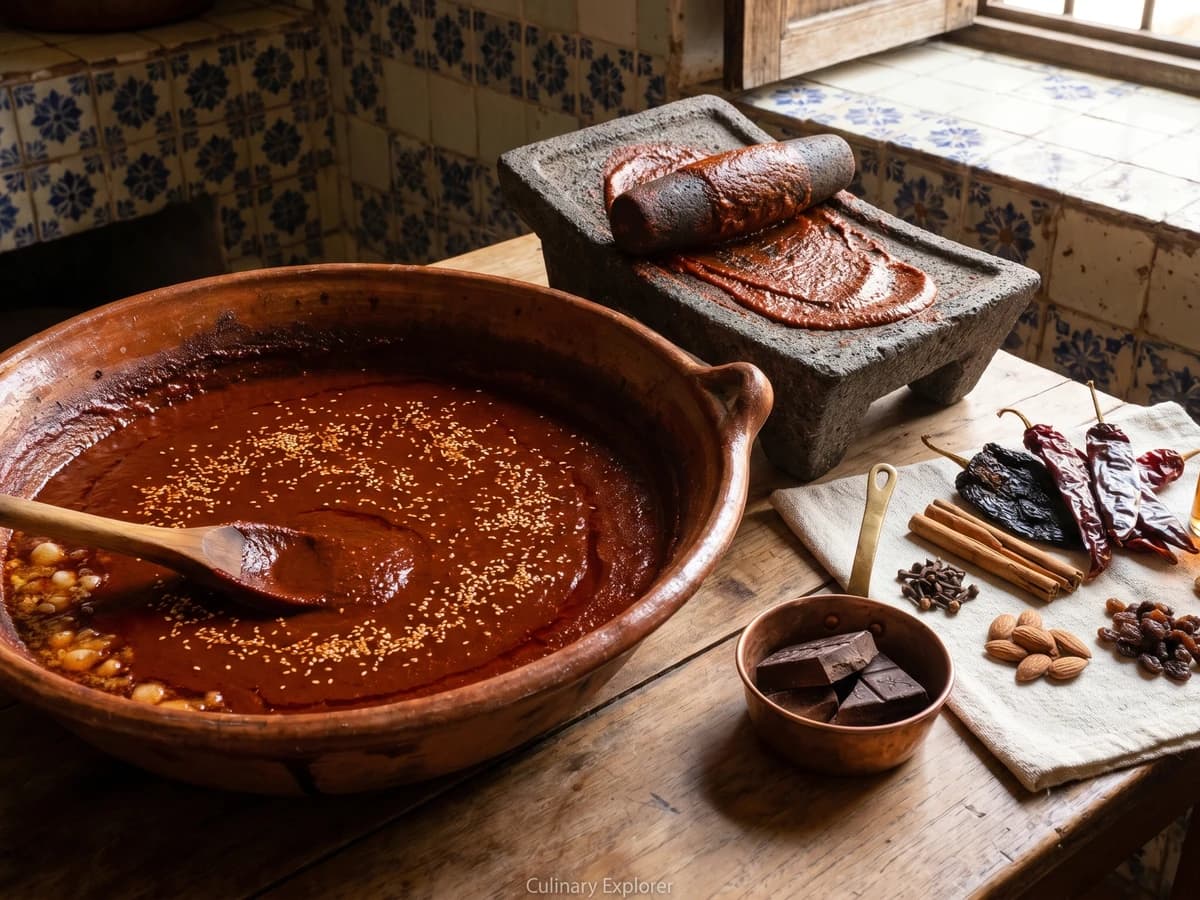
Zacatecas' wedding-table adobo, built from toasted guajillo and ancho, piloncillo, sour orange, chocolate, canela, clavo, almonds, sesame, and lard.

Chef Lupita
Puebla's convent kitchens built this adobo with ancho, guajillo, jerez, almonds, raisins, clove, and lard, a baroque marinade that stains pork loin and finishes as the sauce.