
Chef Lupita
Aceite de Chiltepin Bajacaliforniano
Baja California's wild chiltepin steeped in olive oil with garlic, orejon, and lime peel, until the oil turns ruby-amber and carries the slow, sneaky burn of the desert coast.
A cooking platform built around craft, culture, and the stories behind what we eat.

Created by
The Oaxacan adobo that turns thin sheets of beef red and smoky over the coals. Toasted guajillo and ancho with chile pasilla oaxaqueño, cumin, oregano, and vinegar, brushed on palomilla and dried overnight before it ever sees fire.
This is from Oaxaca. Specifically from the smoke alley at Mercado 20 de Noviembre in the centro, where you walk past stalls of marchantas holding up sheets of red beef and yelling for you to pick yours so they can throw it on the coals while you stand there. The adobo is the difference between cecina and cecina enchilada. Without it, you have salted dried beef. With it, you have the dish that perfumes a city block.
The chile that makes it Oaxacan and not generic is the pasilla oaxaqueño from the Sierra Mixe, dried over wood smoke until the skin turns wrinkled and dark and the smoke goes into the chile permanently. This is not the pasilla you find in most US markets. The mixe pasilla is its own thing, smoky, sweet, with a heat that builds slow. If you cannot find it, the adobo will still be good. It will not be Oaxacan. Know what you are missing and why.
My mother did not cook Oaxacan food. She was from Jalisco. But the first time I ate cecina enchilada, in 2009, at a stall run by a woman named Doña Reyna who had been working that same comal for thirty-one years, I understood why every traveler I had ever met who had been to Oaxaca came back talking about it. Doña Reyna let me write down her adobo on the back of a flyer. She told me the secret was the manteca stirred into the paste at the end. Not for flavor, she said. For the way it carries the chile into the meat as it dries. She was right. No me vengas con atajos. Saber cocinar es saber vivir.
Cecina as a preservation method arrived in Mexico with the Spanish, who carried the tradition of salt-cured air-dried meats from Extremadura and Castilla. In Oaxaca, the technique met the indigenous practice of chile-coating meats and fish for both flavor and preservation, and the resulting cecina enchilada became codified as a regional specialty by the 19th century, particularly in the Valles Centrales. The chile pasilla oaxaqueño that gives Oaxacan adobos their distinctive smoke is grown almost exclusively in the Sierra Mixe and is smoke-dried in wood-fired chambers called tapancos, a process that bears no relationship to the chile pasilla (also called chile negro) of central Mexico despite the shared name.
Quantity
10
stemmed and seeded
Quantity
6
stemmed and seeded
Quantity
2
stemmed and seeded
Quantity
1
cloves separated and peeled
Quantity
1 tablespoon
Quantity
2 tablespoons
Quantity
6
Quantity
4
Quantity
1 stick (about 2 inches)
broken
Quantity
3
Quantity
1/3 cup
Quantity
1/2 cup, plus more as needed
Quantity
2 tablespoons
melted
Quantity
1 tablespoon, plus more to taste
Quantity
1 teaspoon
Quantity
3 pounds
butterflied into thin sheets about 1/4 inch thick
| Ingredient | Quantity |
|---|---|
| dried chile guajillostemmed and seeded | 10 |
| dried chile anchostemmed and seeded | 6 |
| dried chile pasilla oaxaqueño (mixe)stemmed and seeded | 2 |
| head of garliccloves separated and peeled | 1 |
| whole cumin seeds | 1 tablespoon |
| dried Mexican oregano (oregano oaxaqueño if available) | 2 tablespoons |
| whole black peppercorns | 6 |
| whole cloves | 4 |
| Mexican canelabroken | 1 stick (about 2 inches) |
| dried bay leaves | 3 |
| apple cider vinegar or vinagre de piña casero | 1/3 cup |
| water | 1/2 cup, plus more as needed |
| manteca de cerdomelted | 2 tablespoons |
| kosher salt | 1 tablespoon, plus more to taste |
| piloncillo, grated, or dark brown sugar | 1 teaspoon |
| beef top round (palomilla)butterflied into thin sheets about 1/4 inch thick | 3 pounds |
Heat a dry comal over medium. Toast the guajillo and ancho separately, about 20 to 30 seconds per side, pressing them flat with a spatula. The skin will puff and go fragrant. Pull them off the moment the kitchen smells like a chile vendor's stall. Toast the pasilla oaxaqueño last and watch it. It is thinner and smokier than the others and it burns in a blink. Burned chile is bitter chile and there is no fixing it later.
Place all the toasted chiles in a heatproof bowl. Cover with hot tap water, not boiling. Boiling water cooks the skin and turns the adobo bitter. Hot water softens the flesh and lets the flavor come through clean. Weigh the chiles down with a small plate so they stay submerged. Soak for 20 minutes.
On the same comal over medium-low, toast the cumin, peppercorns, cloves, and canela together for about a minute, shaking the pan, until the cumin smells nutty. Add the oregano for the last 15 seconds, just to wake it up. Tip the spices onto a plate to stop the toasting. Crush the canela stick with the back of a knife so the blender can handle it.
Drain the chiles and transfer them to a blender. Add the garlic, the toasted spices, bay leaves, vinegar, water, salt, and piloncillo. Blend on high for two to three minutes, stopping to scrape down the sides, until you have a smooth, thick paste the color of dark brick. If the blender struggles, add water one tablespoon at a time. The adobo should coat the back of a spoon and slowly drip off, not run.
Push the adobo through a fine-mesh sieve set over a bowl, working it with the back of a ladle. Discard the skins and seeds left behind. Stir the melted manteca de cerdo into the strained paste. La manteca es el sabor and it is also what carries the chile into the meat as the cecina dries. Taste for salt. The adobo should taste aggressive on its own. Once it is on the meat, half of that punch disappears.
Lay the butterflied beef sheets flat on a work surface. Brush a generous coat of adobo on both sides of each sheet, working it into the meat with your hands. Every centimeter of beef should be stained dark red. Stack the coated sheets on a tray, separated by squares of parchment so they do not stick to each other.
Cover the tray loosely with a clean kitchen towel and refrigerate for at least 12 hours, ideally 24. The vinegar and salt cure the meat and the chile color sets into a deep mahogany. The surface should turn from wet red to a darker, drier red with a slight tack. This is what makes it cecina enchilada and not just marinated beef. Asi se hace y punto.
Cook the cecina the way they do at Mercado 20 de Noviembre on the smoke alley: directly over hot wood or charcoal coals, two to three minutes per side, until the edges char and the surface glistens. On a home stovetop, a screaming-hot cast iron comal works. Do not crowd the pan. The meat should sizzle the second it lands. Serve with hand-pressed corn tortillas, salsa de chile pasilla oaxaqueño, guacamole, and fresh-squeezed lime.
1 serving (about 140g)
Culinary guides, cultural storytelling, and the editorial depth that makes cooking meaningful.
Discover Culinary ExplorerChef Lupita
Baja California's wild chiltepin steeped in olive oil with garlic, orejon, and lime peel, until the oil turns ruby-amber and carries the slow, sneaky burn of the desert coast.

Chef Lupita
Puebla's Lenten convent adobo, a brick-red vinegar chile paste of ancho, guajillo, garlic, oregano, and comino made to dress fish for the meatless calendar.
Chef Lupita
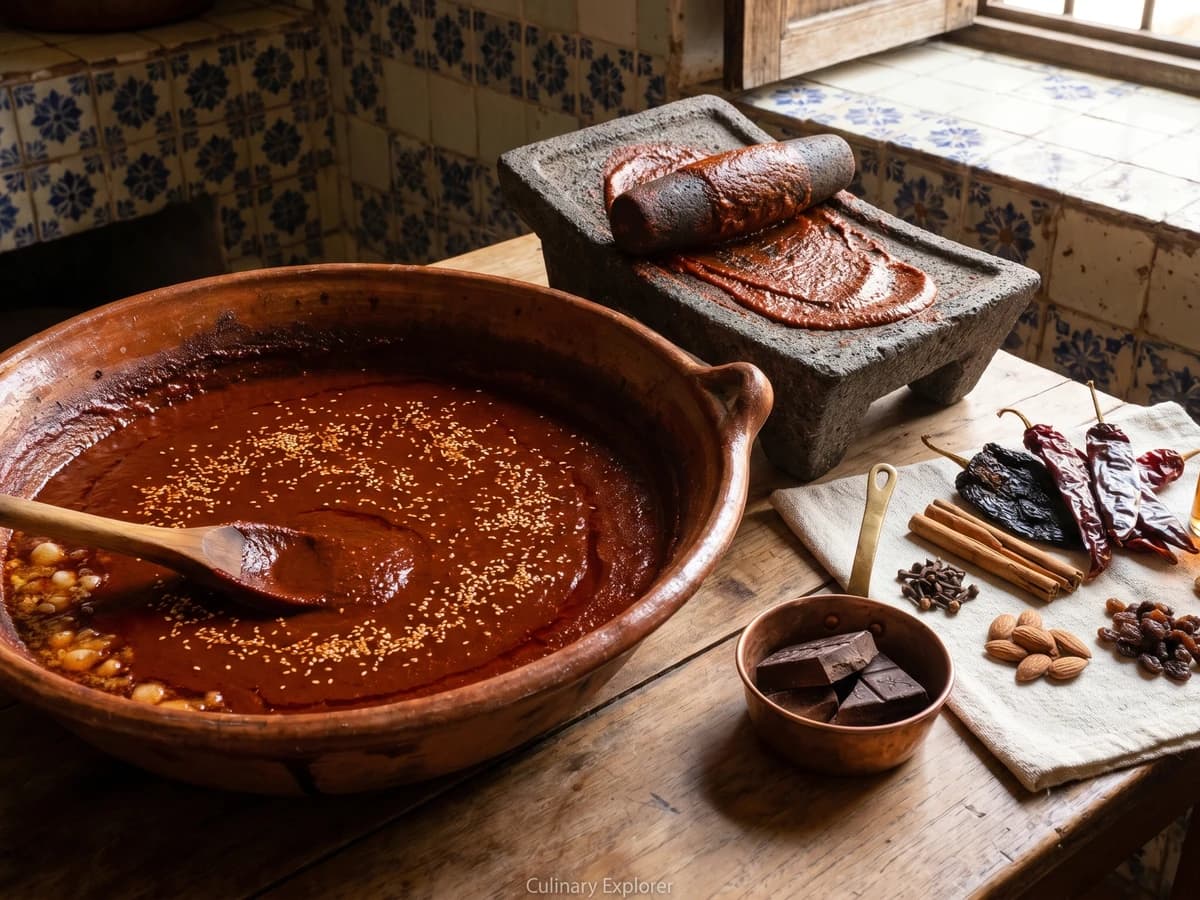
Zacatecas' wedding-table adobo, built from toasted guajillo and ancho, piloncillo, sour orange, chocolate, canela, clavo, almonds, sesame, and lard.

Chef Lupita
Puebla's convent kitchens built this adobo with ancho, guajillo, jerez, almonds, raisins, clove, and lard, a baroque marinade that stains pork loin and finishes as the sauce.