
Chef Lupita
Aceite de Chiltepin Bajacaliforniano
Baja California's wild chiltepin steeped in olive oil with garlic, orejon, and lime peel, until the oil turns ruby-amber and carries the slow, sneaky burn of the desert coast.
A cooking platform built around craft, culture, and the stories behind what we eat.

Created by
Oaxaca's shelf-stable chile oil, cascabel and pasilla oaxaqueño steeped in warm oil with toasted garlic, sesame, and peanut. A jar that earns its place on the table for weeks.
Salsa macha is from Oaxaca. There are versions in Veracruz too, and good ones, but the Oaxacan version is the one built around the chile pasilla oaxaqueño, the smoked, wrinkled chile grown in the Mixe sierra and sold dry by the kilo at Mercado 20 de Noviembre. That smoke is what separates this salsa from every other chile oil in Mexico.
This is not a salsa you make for tonight. It is a jar that lives on the kitchen table for weeks and finishes everything you eat. Quesadillas. Memelas. A bowl of black beans. A fried egg in the morning. The cook does the work once, and the salsa pays it back over and over. That is the whole logic of macha. Saber cocinar es saber vivir.
The technique looks simple and it is, but the margins are tight. The oil cannot be hot or the chiles burn and the salsa goes bitter. The sesame goes in off the heat or it scorches. The garlic comes out the second it turns gold. And do not put it in a blender. Macha is texture: shards of cascabel, halved peanuts, whole sesame seeds suspended in rust-red oil. A blender turns it into paste, and paste is not macha.
My mother did not make this. She was from Jalisco. I learned macha from a señora named Doña Estela who runs a stall in the Sierra Norte and who insisted, the first time I watched her make it, that I throw out my first batch because I had let one cascabel go black. She was right. Esto no es comida de un solo Mexico, and within Oaxaca, this is one of the dishes that proves it.
Salsa macha is a relatively young salsa in the Mexican canon, with documented origins in the Sierra de Zongolica region of Veracruz in the early 20th century, where coffee farmers preserved chiles and seeds in oil as a portable, shelf-stable condiment for long days in the fields. The Oaxacan version evolved separately around the chile pasilla oaxaqueño, an heirloom smoked chile grown almost exclusively in the Mixe communities of the Sierra Norte, where it is dried over wood fires in the same chimney structures used to cure pasilla mixe for moles. The word "macha" likely derives from the Nahuatl-influenced Spanish for "crushed" or "ground," referring to the coarse, broken texture that distinguishes it from a smooth salsa, a texture that early cooks achieved on the metate and that purists still defend against the blender today.
Quantity
1 1/2 cups, plus more if needed
Quantity
2 ounces (about 25 to 30 small chiles)
stemmed
Quantity
1 ounce (about 4 to 5 chiles)
stemmed and seeded
Quantity
1 ounce (about 15 chiles)
stemmed, adjust to heat preference
Quantity
8
peeled and left whole
Quantity
1/2 cup
Quantity
1/4 cup
Quantity
2 tablespoons
Quantity
1 1/2 teaspoons, plus more to taste
Quantity
1 teaspoon, finely grated (or dark brown sugar)
| Ingredient | Quantity |
|---|---|
| neutral oil (safflower or grapeseed) | 1 1/2 cups, plus more if needed |
| dried chile cascabelstemmed | 2 ounces (about 25 to 30 small chiles) |
| dried chile pasilla oaxaqueñostemmed and seeded | 1 ounce (about 4 to 5 chiles) |
| dried chile de árbolstemmed, adjust to heat preference | 1 ounce (about 15 chiles) |
| garlic clovespeeled and left whole | 8 |
| raw skinless peanuts (cacahuates) | 1/2 cup |
| raw white sesame seeds (ajonjolí) | 1/4 cup |
| apple cider vinegar | 2 tablespoons |
| fine sea salt | 1 1/2 teaspoons, plus more to taste |
| piloncillo | 1 teaspoon, finely grated (or dark brown sugar) |
Wipe the cascabel, pasilla oaxaqueño, and chile de árbol with a dry cloth. Stem the cascabel and the árbol. Stem and seed the pasilla oaxaqueño, this one is smoked over wood in the Mixe sierra and the seeds carry too much harsh heat for a steeped salsa. Tear the larger pasilla pieces in half so they fit in the pot. Do not rinse the chiles. Water on a dried chile bound for hot oil is a kitchen accident waiting to happen.
Pour the oil into a heavy 2-quart saucepan or small cazuela and warm over medium-low heat. The oil should be just hot enough that a single sesame seed dropped in floats and sizzles gently, around 250°F. Add the whole garlic cloves and the peanuts. Cook for 4 to 5 minutes, stirring often, until the garlic turns pale gold and the peanuts smell toasted. Pull both out with a slotted spoon onto a plate. Burning the garlic now ruins the entire batch. Watch the pot.
Lower the heat slightly. Add the cascabel, the pasilla oaxaqueño, and the árbol to the warm oil all at once. They should sizzle quietly, not violently. Stir and submerge them with a wooden spoon. Cook for 2 to 3 minutes, no longer. The chiles will swell, deepen in color, and release their oils into the oil. The kitchen will smell like a Oaxacan market the morning the chile vendors are unpacking. That smell is the recipe.
Pull the pan off the burner. Add the sesame seeds directly to the hot oil with the chiles. The residual heat will toast them in 30 to 45 seconds, you will see them turn golden in the oil. Toasting them off the heat is how you keep them from scorching, since sesame goes from raw to burnt in seconds. Let the whole pan rest, undisturbed, for 20 minutes so the oil pulls flavor from everything in it.
Return the cooled garlic and peanuts to the pan. Pour the entire contents into a molcajete in batches and grind to a coarse, rubbly texture, or pulse in a food processor with short bursts. You want a salsa with body, not a smooth paste. The chiles should be in shards, the peanuts in halves and quarters, the sesame intact, the oil rust-red and glossy. A blender turns it to baby food. Do not use one.
Stir in the vinegar, salt, and grated piloncillo while the salsa is still warm. Taste it. It should be smoky, nutty, sharp at the edges from the vinegar, with a slow heat that builds and stays. Adjust salt. If it tastes flat, add another half teaspoon of vinegar. Transfer to a clean glass jar with a tight lid. Let it sit at room temperature for at least 24 hours before you eat it. The flavors marry overnight. The salsa you taste tomorrow is not the salsa you taste tonight.
Spoon salsa macha over quesadillas, memelas, tlayudas, fried eggs, beans, grilled meat, or a wedge of queso fresco. Do not cook with it. The chiles and the sesame are already toasted, and reheating turns the oil bitter and the texture grainy. This is a finishing salsa. The cook does the work once, and the jar earns its place on the table for weeks. Recetas probadas y garantizadas.
1 serving (about 38g)
Culinary guides, cultural storytelling, and the editorial depth that makes cooking meaningful.
Discover Culinary ExplorerChef Lupita
Baja California's wild chiltepin steeped in olive oil with garlic, orejon, and lime peel, until the oil turns ruby-amber and carries the slow, sneaky burn of the desert coast.

Chef Lupita
Puebla's Lenten convent adobo, a brick-red vinegar chile paste of ancho, guajillo, garlic, oregano, and comino made to dress fish for the meatless calendar.
Chef Lupita
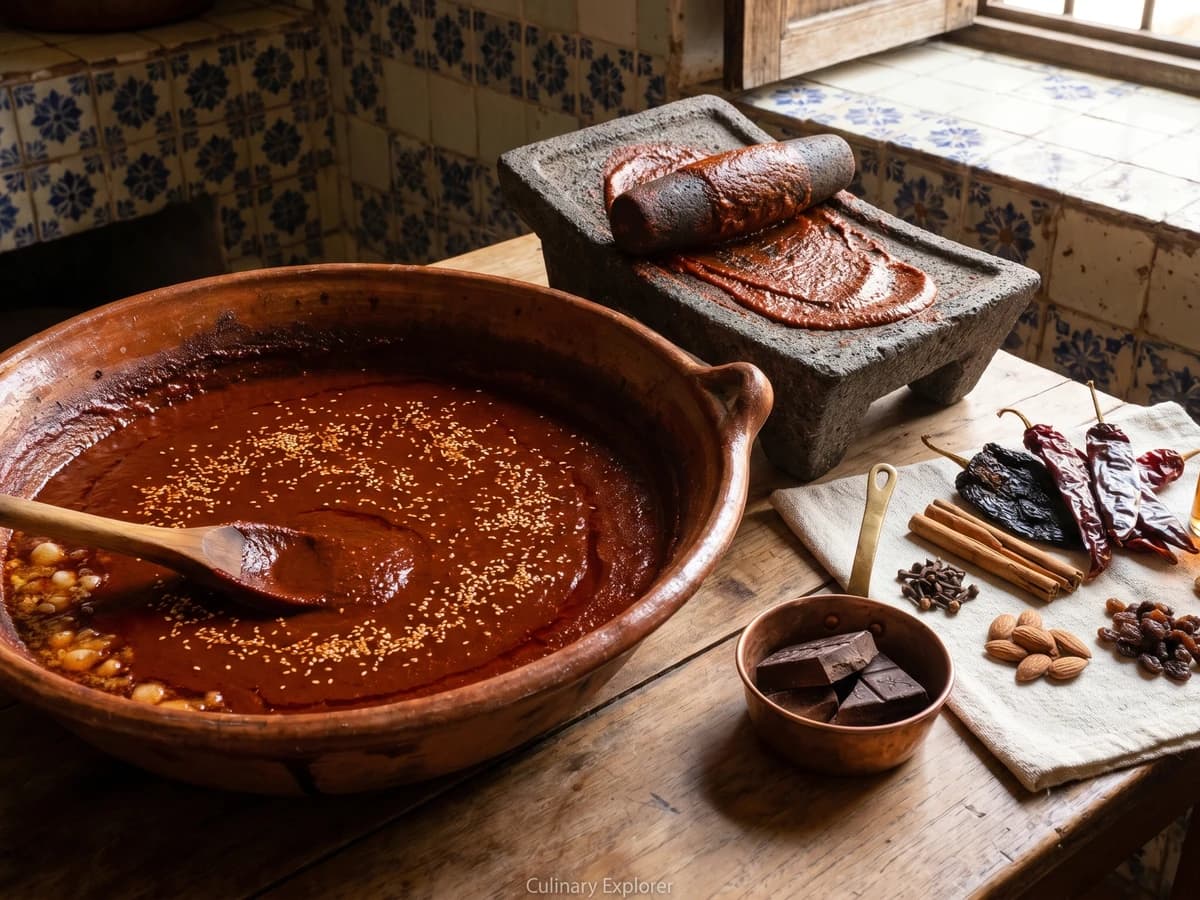
Zacatecas' wedding-table adobo, built from toasted guajillo and ancho, piloncillo, sour orange, chocolate, canela, clavo, almonds, sesame, and lard.

Chef Lupita
Puebla's convent kitchens built this adobo with ancho, guajillo, jerez, almonds, raisins, clove, and lard, a baroque marinade that stains pork loin and finishes as the sauce.