
Chef Lupita
Aceite de Chiltepin Bajacaliforniano
Baja California's wild chiltepin steeped in olive oil with garlic, orejon, and lime peel, until the oil turns ruby-amber and carries the slow, sneaky burn of the desert coast.
A cooking platform built around craft, culture, and the stories behind what we eat.
Created by
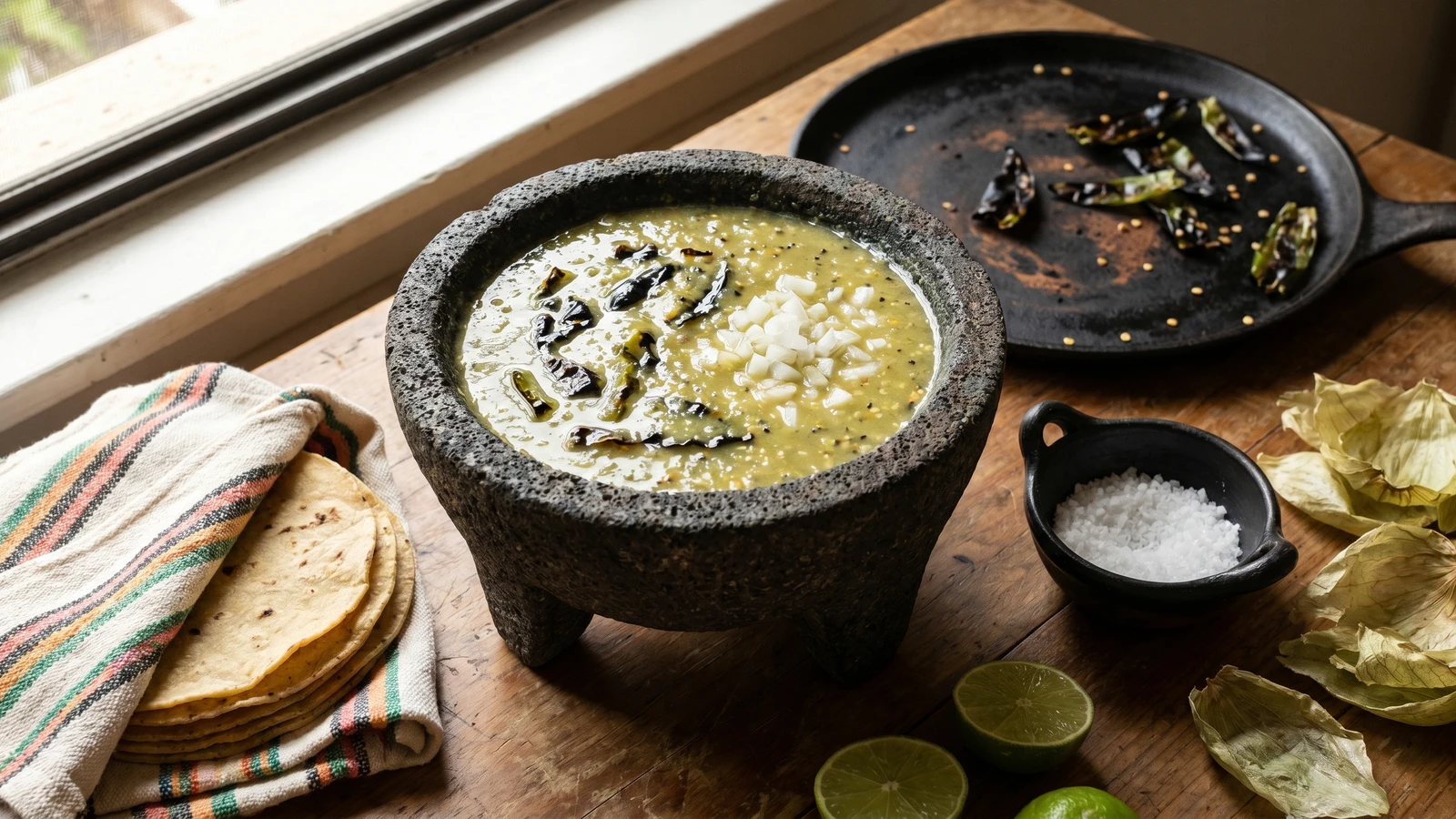
An Oaxacan table salsa from the Valles Centrales, built on the heirloom chile de agua, charred on a comal with tomate verde and garlic, ground rough in the molcajete and eaten the same day.
This salsa is from Oaxaca. Specifically from the Valles Centrales, the high valleys around the capital where the chile de agua is grown and where, outside that small geography, you will not find it. Etla, Tlacolula, Ocotlan, Zaachila. The chile is named for the irrigation it demands and the moisture it carries. It does not travel well, it does not dry well, and it does not exist in most US markets. If you do not live in Oaxaca or have a vendor who imports from there, you may never taste this salsa the way it is meant to taste, and that is part of the truth of Mexican regional cuisine. Cada estado, su propia cocina, and within Oaxaca, this salsa belongs to one valley.
The chile de agua is pale green, broad-shouldered, thin-skinned, and it carries a heat that arrives clean and leaves quickly. It is not the heat of a habanero or a manzano. It is sharp and immediate. The senoras at Mercado 20 de Noviembre will tell you the salsa needs nothing more than chile, tomate verde, garlic, salt, and lime. No cilantro. No cumin. No olive oil. The chile is the dish and everything else is there to frame it.
My mother never made this salsa. Jaliscienses do not have chile de agua. The first time I tasted it I was twenty-three and a senora named Dona Eustolia in Tlacolula put a molcajete down in front of me with the salsa still warm from the grinding. She told me to eat it with a fresh tortilla and nothing else. No me vengas con atajos. The blender does not make this salsa. The molcajete does. The grinding releases the seeds and bruises the skins and gives the salsa a texture you cannot get any other way. Saber cocinar es saber vivir.
The chile de agua (Capsicum annuum var. 'de agua') is an heirloom landrace cultivated almost exclusively in the Valles Centrales of Oaxaca, with documented production dating to the colonial period and probable pre-Columbian roots in the same microregion; outside Oaxaca it has no commercial cultivation of consequence. Unlike most Mexican chiles, it is consumed only fresh and never dried, because its thin walls collapse and lose flavor when dehydrated, which is why it has remained a regional rather than national ingredient. The salsa itself follows the older Mesoamerican molcajete tradition of roasted-and-ground sauces, a technique that predates Spanish contact and survives essentially unchanged in Oaxacan home kitchens, where the volcanic stone mortar remains the daily tool, not the museum piece it has become elsewhere.
Quantity
6
stemmed (do not seed)
Quantity
4 medium
husked and rinsed
Quantity
3
unpeeled
Quantity
1/4 medium
finely chopped
Quantity
2 tablespoons, or to taste
Quantity
1 teaspoon, plus more to taste
Quantity
2 tablespoons
only if needed to loosen
| Ingredient | Quantity |
|---|---|
| fresh chile de aguastemmed (do not seed) | 6 |
| tomate verde (tomatillos)husked and rinsed | 4 medium |
| garlic clovesunpeeled | 3 |
| white onionfinely chopped | 1/4 medium |
| fresh lime juice | 2 tablespoons, or to taste |
| sea salt | 1 teaspoon, plus more to taste |
| cold water (optional)only if needed to loosen | 2 tablespoons |
Set a dry comal or heavy cast iron skillet over medium heat for five minutes until it is evenly hot. No oil. The chile de agua is meant to char on dry metal, not fry. If your comal is too hot the skin blackens before the flesh cooks and the salsa turns acrid. Medium, patient, even.
Lay the chiles on the comal whole, stems still attached at this point if you like. Turn them with tongs every minute or so. You want the skin blistered and spotted with black, not uniformly burned. The flesh underneath should soften and the chile should give a little when you press it. About six to eight minutes total. The kitchen will smell green, sharp, vegetal. That is the smell of chile de agua and it is unlike any chile you have roasted before.
Push the chiles to a cooler edge of the comal and add the husked tomate verde and the unpeeled garlic. The tomatillos should char in patches and start to slump and release their juice, about five to seven minutes, turning once. The garlic skins will toast and the cloves inside will soften. Pull each ingredient as it is ready. Nothing roasts at the same speed and nothing forgives you for forgetting it.
Move the chiles to a bowl and cover with a plate or a clean kitchen cloth for five minutes. The trapped heat finishes loosening the skins. Peel the garlic. Stem the chiles now if you have not already. Do not rinse the chiles or the tomatillos. The char is the flavor. Water washes it down the drain.
Drop the garlic and salt into a volcanic stone molcajete and grind to a rough paste. Add the chiles and work them down with the tejolote until the flesh breaks open and the seeds release into the salsa. Add the tomate verde one at a time, crushing each one against the stone. You are looking for a salsa with body, not a puree. Some seeds, some flecks of charred skin, some pieces you can still recognize. La cocina no es decoracion, es trabajo.
Stir in the chopped white onion and the lime juice. Taste. The salsa should be hot, bright, and a little sweet from the chile itself. Adjust salt. If it is too thick to spoon, loosen with a tablespoon of cold water at a time. Let it sit for ten minutes so the onion mellows and the flavors find each other. Serve in the molcajete itself. Eat it the same day. Chile de agua loses its character overnight, and there is no point pretending otherwise.
1 serving (about 55g)
Culinary guides, cultural storytelling, and the editorial depth that makes cooking meaningful.
Discover Culinary ExplorerChef Lupita
Baja California's wild chiltepin steeped in olive oil with garlic, orejon, and lime peel, until the oil turns ruby-amber and carries the slow, sneaky burn of the desert coast.

Chef Lupita
Puebla's Lenten convent adobo, a brick-red vinegar chile paste of ancho, guajillo, garlic, oregano, and comino made to dress fish for the meatless calendar.
Chef Lupita
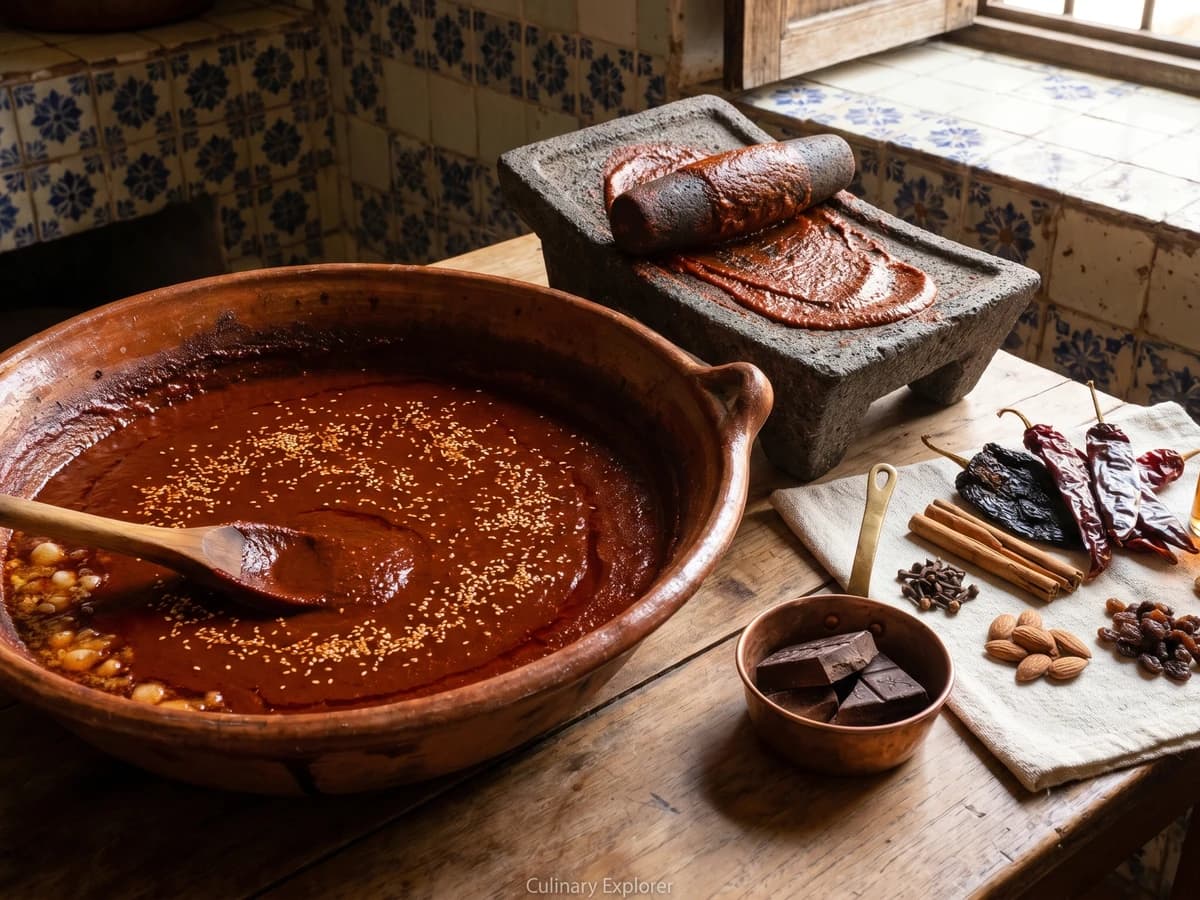
Zacatecas' wedding-table adobo, built from toasted guajillo and ancho, piloncillo, sour orange, chocolate, canela, clavo, almonds, sesame, and lard.

Chef Lupita
Puebla's convent kitchens built this adobo with ancho, guajillo, jerez, almonds, raisins, clove, and lard, a baroque marinade that stains pork loin and finishes as the sauce.