
Chef Lupita
Aceite de Chiltepin Bajacaliforniano
Baja California's wild chiltepin steeped in olive oil with garlic, orejon, and lime peel, until the oil turns ruby-amber and carries the slow, sneaky burn of the desert coast.
A cooking platform built around craft, culture, and the stories behind what we eat.

Created by
Oaxaca's bright cousin to sal de gusano, ground from toasted chapulines, sal de mar from the Istmo, chile de árbol, charred garlic, and lime zest. The salt that finishes a mezcalita and a plate of fruit.
This is from Oaxaca. Not from a generic 'Mexico,' not from the souvenir aisle at the airport, from Oaxaca, where chapulines have been eaten since long before anyone called this place Mexico. The Valles Centrales, specifically. The grasshoppers come off the alfalfa fields outside the city, get rinsed, get cured the same day with lime, garlic, and salt on a comal, and end up in baskets at Mercado 20 de Noviembre by the kilo. That is where this salt begins.
Most people outside Oaxaca know sal de gusano, the deep red salt made from the worms that live inside the maguey. It is smoky, mineral, slightly funky. Sal de chapulín is its brighter sister. Lime-forward, citric, alive. The chapulín itself carries an almost shrimp-like quality from its diet of green alfalfa, and when you grind it with sea salt and toasted chile de árbol, you get a finishing salt that wakes up everything it touches. On jícama. On mango. On the rim of a glass of mezcal espadín. Anywhere you would have used plain salt and lime, this does the same job and does it louder.
My mother never made this. She was Jalisciense and Jalisco does not have this tradition. I learned sal de chapulín from a senora named Doña Soledad who has a stall at 20 de Noviembre and grinds her chapulines on a metate her grandmother gave her. She watched me try it for the first time and corrected my grip three times before I got the rocking motion right. The metate is not optional in her version. The salt that comes out of a metate has a texture that a blender cannot give you, layered, uneven, with the chapulín still recognizable in flecks. Cada estado, su propia cocina, and within Oaxaca, every cook has her own grind.
Chapulines (Sphenarium purpurascens) have been part of the Oaxacan diet since at least 500 BCE, with archaeological evidence of grasshopper consumption documented in the Valles Centrales and the Mixteca Alta. The Spanish chronicler Bernardino de Sahagún described their preparation in the 16th century in the Florentine Codex, noting that the Mexica and Zapotec peoples toasted them on comales of clay and seasoned them with salt and chile. The modern practice of curing chapulines with garlic, lime, and salt, and then grinding the toasted insects into a finishing salt, is a Zapotec tradition that traveled with mezcal culture out of Oaxaca in the late 20th century, when sal de gusano and sal de chapulín began appearing alongside artisanal mezcales in tasting rituals across Mexico and abroad.
Quantity
1 cup
already cured with lime juice, garlic, and salt
Quantity
1/2 cup
preferably from Salinas del Istmo
Quantity
8
stemmed
Quantity
4
peeled
Quantity
zest of 2
Quantity
1 teaspoon
oregano oaxaqueño if you can find it
| Ingredient | Quantity |
|---|---|
| chapulines from Oaxacaalready cured with lime juice, garlic, and salt | 1 cup |
| sal de mar gruesa (coarse Mexican sea salt)preferably from Salinas del Istmo | 1/2 cup |
| dried chile de árbolstemmed | 8 |
| garlic clovespeeled | 4 |
| limones criollos (Mexican key limes) | zest of 2 |
| dried Mexican oreganooregano oaxaqueño if you can find it | 1 teaspoon |
Heat a dry comal over medium-low. Spread the chapulines in a single layer and toast them for three to four minutes, shaking the comal often. They are already cured and lightly toasted from the mercado, but you want them dry and crisp enough to crumble between your fingers. The kitchen will smell faintly of smoke and lime. Pull them off the moment the legs snap clean. Burned chapulines turn the salt bitter.
On the same comal, toast the chile de árbol for about 20 seconds per side. They turn from dull red to deep brick red and the kitchen sharpens with that nose-tickling smell of toasted árbol. Move them off. Add the peeled garlic cloves whole and let them blacken in spots, turning them every minute, until the skin chars and the inside softens. Five minutes total. The char is what gives this salt its bottom note.
Zest the limones criollos onto a small plate. Let the zest sit at room temperature for ten minutes while everything else cools. You want the surface moisture to evaporate so the zest grinds down clean instead of clumping into the salt. This is a small step that most home cooks skip. Skip it and your salt will cake within a week.
Begin with the chiles, garlic, and oregano on the metate. Grind in long strokes until you have a coarse paste. Add the chapulines and grind again. They will break down into a rust-colored powder with little flecks of leg and wing still visible. Now the salt and the lime zest go in. Grind everything together until the salt turns pale orange-red and the texture is uniform but still gritty. If you do not have a metate, a heavy molcajete will get you most of the way there. A spice grinder works too, in short pulses, but the texture is flatter. The metate gives you the layered crush that makes Oaxacan condiments taste the way they do.
Spread the finished salt on a clean dry plate or sheet pan and leave it at room temperature for two to three hours. The garlic and lime are still releasing moisture. Letting them air-cure prevents clumping. Once the salt feels dry between your fingers, transfer it to a clean glass jar with a tight lid. It keeps for two months at room temperature without losing its sharpness, longer in the refrigerator.
Sprinkle on jícama batons, mango spears, cucumber, or pineapple. Rim a glass with lime and dip it into the salt for a mezcalita. Serve a small dish of it next to a copita of mezcal and let people pinch with their fingers. Asi se hace y punto.
1 serving (about 16g)
Culinary guides, cultural storytelling, and the editorial depth that makes cooking meaningful.
Discover Culinary ExplorerChef Lupita
Baja California's wild chiltepin steeped in olive oil with garlic, orejon, and lime peel, until the oil turns ruby-amber and carries the slow, sneaky burn of the desert coast.

Chef Lupita
Puebla's Lenten convent adobo, a brick-red vinegar chile paste of ancho, guajillo, garlic, oregano, and comino made to dress fish for the meatless calendar.
Chef Lupita
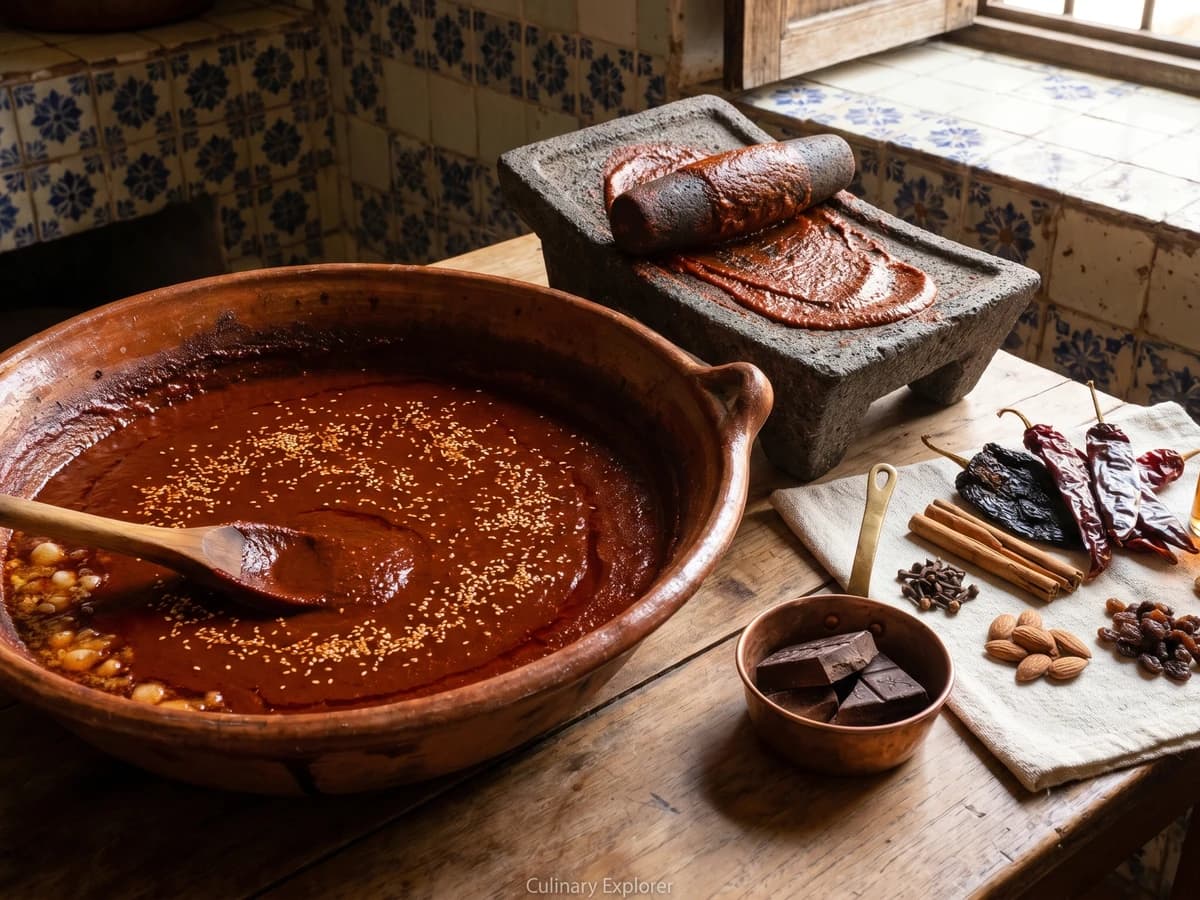
Zacatecas' wedding-table adobo, built from toasted guajillo and ancho, piloncillo, sour orange, chocolate, canela, clavo, almonds, sesame, and lard.

Chef Lupita
Puebla's convent kitchens built this adobo with ancho, guajillo, jerez, almonds, raisins, clove, and lard, a baroque marinade that stains pork loin and finishes as the sauce.