
Chef Lupita
Aceite de Chiltepin Bajacaliforniano
Baja California's wild chiltepin steeped in olive oil with garlic, orejon, and lime peel, until the oil turns ruby-amber and carries the slow, sneaky burn of the desert coast.
A cooking platform built around craft, culture, and the stories behind what we eat.

Created by
From Huautla de Jimenez in Oaxaca's Sierra Mazateca. Yellow chile canario ground in the molcajete with toasted garlic, onion, and lime. Fruity heat that creeps up on you, slow at first and then everywhere.
This salsa is from the Sierra Mazateca, the cloud-wrapped mountains in the north of Oaxaca where the Mazatec people have lived since long before the conquest. Specifically Huautla de Jimenez, the town that sits at fifteen hundred meters and grows the chile canario in the cool air the plant prefers. Most of Mexico cannot grow this chile well. The Mazateca can. That is why the salsa belongs there.
The chile canario, also called manzano or peron depending on which state you are in, is the strange one of the family. It is the only domesticated chile in Mexico with black seeds. Yellow, plump, thick-walled, round as a small apple. The heat is not the dry sting of a chile de arbol or the sharp bite of a serrano. It is fruity, almost floral on the front, and then it builds. By the third tortilla you are sweating and you do not know exactly when it started. That is canario. Cada estado, su propia cocina, and within Oaxaca, cada sierra su propio chile.
This is a table salsa, not a cooked sauce. The chile is toasted on a comal, ground in the molcajete with garlic and onion that have also been dry-roasted, then loosened with lime and a little water. Nothing else. No tomate. No tomatillo. The chile is the dish. If your canario is not bright yellow and firm, do not make this salsa today. Cook with what the mercado is selling, not what you want it to be. The senoras at the Huautla market will not sell you a green canario, and they are right.
My mother never made this salsa. She was from Jalisco and the chile canario was not on her map. I learned it in 2014 from a Mazatec cook named Dona Eulalia in Huautla, who ground it in a molcajete black with thirty years of use and told me the only rule that mattered: no le pongas tomate. No tomato. The chile canario does not need help. Saber cocinar es saber vivir.
The chile canario (Capsicum pubescens) is one of the five domesticated species of capsicum and the only one with black seeds and woolly leaves, traits that distinguish it from all other Mexican chiles. Unlike Capsicum annuum, the species that gives Mexico the vast majority of its chiles, C. pubescens does not interbreed with other species and is genetically closer to wild Andean chiles, which is why it grows best at altitude in cool, humid climates such as the Sierra Mazateca, the highlands of Michoacan, and parts of Veracruz. In the Sierra Mazateca, the chile has been cultivated as a household crop since at least the colonial period, with cooks favoring it for raw and lightly cooked salsas because its thick walls hold up to grinding without dissolving the way thinner-walled chiles do.
Quantity
6
stemmed, seeds left in
Quantity
3
unpeeled
Quantity
1/4 medium
Quantity
1/4 cup (about 3 limones criollos)
Quantity
1/4 teaspoon, plus more to taste
Quantity
2 tablespoons, as needed
| Ingredient | Quantity |
|---|---|
| fresh chile canario (chile manzano or perón)stemmed, seeds left in | 6 |
| garlic clovesunpeeled | 3 |
| white onion | 1/4 medium |
| fresh lime juice | 1/4 cup (about 3 limones criollos) |
| kosher salt | 1/4 teaspoon, plus more to taste |
| cold water | 2 tablespoons, as needed |
The chile canario is yellow, thick-walled, with round black seeds. In the Sierra Mazateca it is sold by the handful in the Huautla market, picked from plants growing in the cool mountain air at fifteen hundred meters. It is the only domesticated chile in Mexico with black seeds. If the chile is green or just turning yellow, leave it. You want the bright canary yellow, the color the chile takes its name from. Anything less and the fruity sweetness has not developed yet.
Heat a dry comal or heavy skillet over medium. Put the whole chiles, the unpeeled garlic, and the onion piece directly on the dry surface. Turn them as they blister. The chiles will soften and char in spots, about four to five minutes. The garlic skin will darken and the clove inside will turn golden and fragrant, about six minutes. The onion needs blackened edges. This is dry-roasting, the way sierra cooks have always done it. No oil. Asi se hace y punto.
Slip the garlic out of its papery skins. Discard the skins. The flesh inside should be soft and sweet from the comal. If it is still raw at the center, give it another minute on the heat. Raw garlic in this salsa will dominate everything and bury the fruit of the chile.
Start with the salt and the toasted garlic in the molcajete. Grind to a paste. Add the onion and grind it down. Now the chiles, in batches. Work the tejolote in slow circles, pressing down. The salsa will turn a beautiful sunshine yellow streaked with the char from the comal. You want texture, not puree. Small flecks of seed and skin should be visible. La cocina no es decoracion, es trabajo, and the molcajete is part of the work.
Stir in the lime juice and a tablespoon or two of cold water to loosen the salsa to the consistency you want. Mazateca cooks keep it on the thicker side, almost a paste. Taste for salt now. The lime will fight the heat for a second and then both settle. Let the salsa sit for fifteen minutes before serving. The chile canario carries a fruity heat that creeps up on you, slow at first and then everywhere. Resting lets the flavors marry.
Spoon into a small molcajete or a clay cazuelita and set it on the table. This salsa goes with everything in the Mazateca: tlayudas, tasajo, beans from the pot, eggs in the morning, a hot tortilla and nothing else. Recetas probadas y garantizadas.
1 serving (about 45g)
Culinary guides, cultural storytelling, and the editorial depth that makes cooking meaningful.
Discover Culinary ExplorerChef Lupita
Baja California's wild chiltepin steeped in olive oil with garlic, orejon, and lime peel, until the oil turns ruby-amber and carries the slow, sneaky burn of the desert coast.

Chef Lupita
Puebla's Lenten convent adobo, a brick-red vinegar chile paste of ancho, guajillo, garlic, oregano, and comino made to dress fish for the meatless calendar.
Chef Lupita
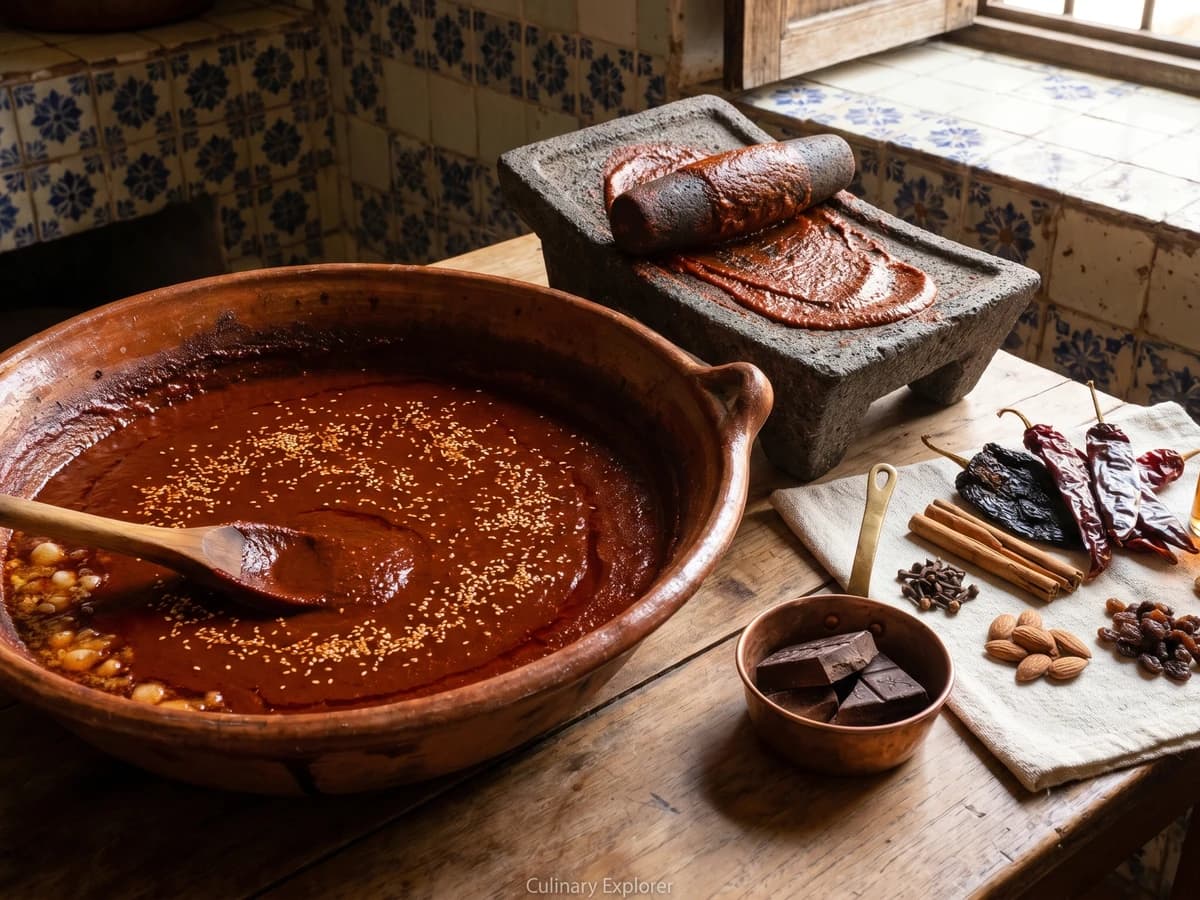
Zacatecas' wedding-table adobo, built from toasted guajillo and ancho, piloncillo, sour orange, chocolate, canela, clavo, almonds, sesame, and lard.

Chef Lupita
Puebla's convent kitchens built this adobo with ancho, guajillo, jerez, almonds, raisins, clove, and lard, a baroque marinade that stains pork loin and finishes as the sauce.