
Chef Lupita
Aceite de Chiltepin Bajacaliforniano
Baja California's wild chiltepin steeped in olive oil with garlic, orejon, and lime peel, until the oil turns ruby-amber and carries the slow, sneaky burn of the desert coast.
A cooking platform built around craft, culture, and the stories behind what we eat.
Created by
From the Costa Chica of Oaxaca, dried chile costeño rojo toasted on the comal and ground with charred tomato and garlic. The salsa that lives on the table when there is grilled fish or a tlayuda in front of you.
This salsa is from the Costa Chica of Oaxaca. Pinotepa Nacional, Jamiltepec, the small towns along the Pacific between the Sierra Sur and the sea. It is not a Mexico City salsa. It is not even a Valles Centrales salsa. The chile that defines it grows in this stretch of coast and nowhere else, and the salsa carries the place in every spoonful.
Chile costeño rojo is the whole point. Thin-skinned, sharp-heat, grassy and bright, it is what makes this salsa what it is. If you substitute chile de arbol because it looks similar, you have made a different salsa. The costeño is the recipe. Toast it carefully on a dry comal, just enough to wake the oils, never enough to blacken. Burned costeño is bitter and the salsa cannot recover. No me vengas con atajos.
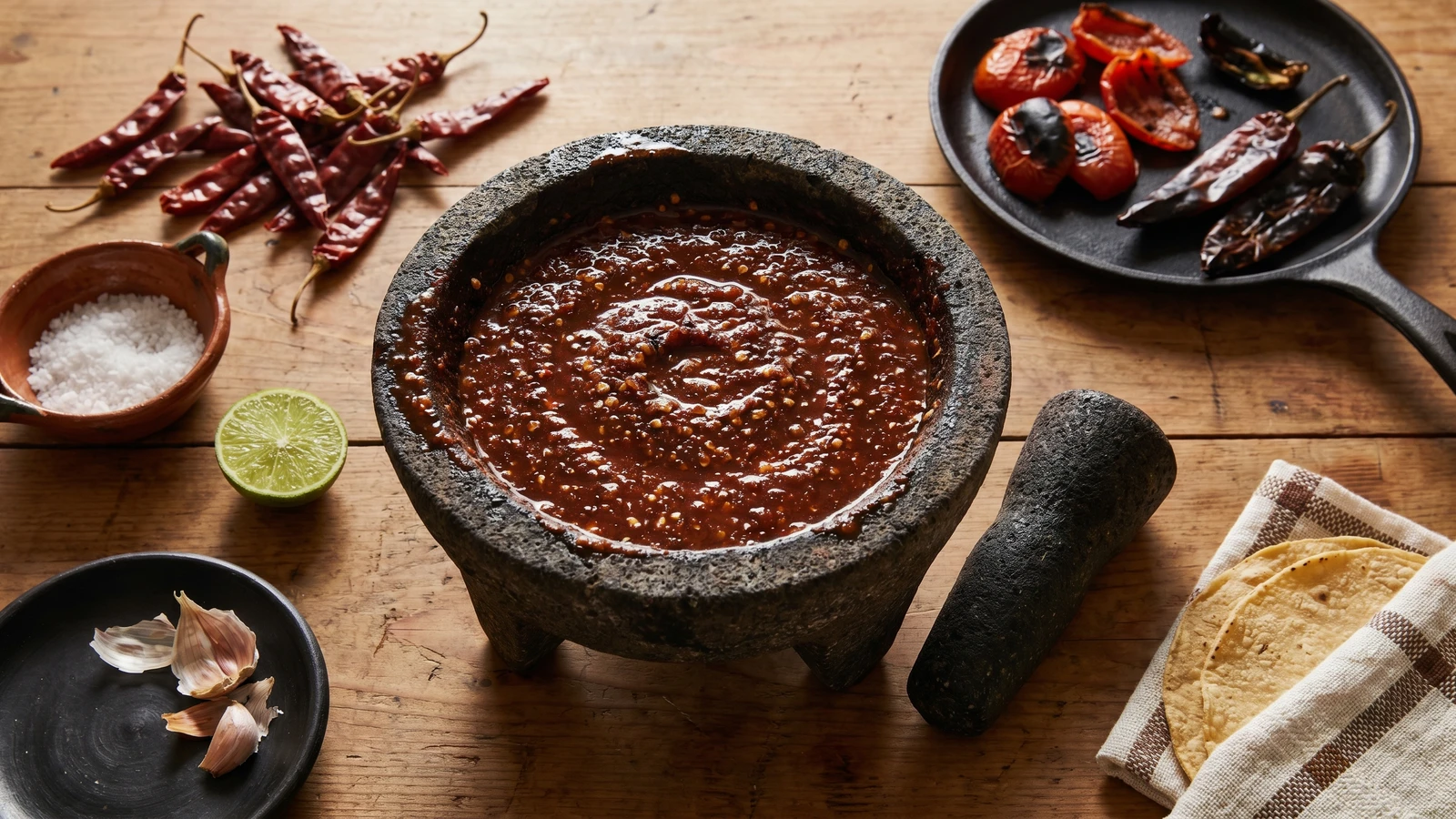
The technique is mercado technique. Char the tomato, garlic, and onion on the comal until the skins blister and the kitchen smells like a market stall in Pinotepa. Steep the chiles briefly in hot water, not boiling, just enough to soften them. Grind everything in a molcajete, the volcanic stone, where the salsa develops the rough, seeded texture you cannot get from a blender. The senoras on the Costa Chica grind their salsa in molcajetes that have been in the family for three generations. The stone is part of the flavor.
This is the salsa that goes on grilled fish pulled off a wood fire on the beach. The salsa for tlayudas costeñas, the larger, thinner version of the tlayuda you find in Oaxaca City, dressed with asiento and beans and whatever the cook has that day. It is the salsa my notebook has under three different names because every cook I met on that coast called it something a little different. Cada estado, su propia cocina, and within Oaxaca, every coast and every sierra has its own.
Chile costeño is an heirloom variety of Capsicum annuum cultivated for centuries along Oaxaca's Pacific coast, particularly in the Costa Chica region inhabited by Afro-Mexican and indigenous Mixtec, Amuzgo, and Chatino communities. The chile exists in two principal forms, costeño rojo (red) and costeño amarillo (yellow), and both have been documented in Oaxacan cooking since at least the colonial period, though the red is more associated with the coastal salsas and the yellow with the inland mole amarillo. Unlike chiles such as ancho or guajillo that have been commercially propagated across central Mexico and the United States, costeño remains regionally bound, dried on petates in the sun and sold primarily through Oaxacan markets, which is why a true costeño salsa is difficult to replicate outside of the state without specifically sourcing the chile.
Quantity
20
stemmed, seeds left in
Quantity
4 medium (about 1 pound)
Quantity
4
unpeeled
Quantity
1/2 small
in one thick wedge
Quantity
1 1/2 teaspoons, plus more to taste
Quantity
1/4 cup, plus more as needed
Quantity
1 tablespoon
| Ingredient | Quantity |
|---|---|
| dried chile costeño rojostemmed, seeds left in | 20 |
| roma tomatoes | 4 medium (about 1 pound) |
| garlic clovesunpeeled | 4 |
| white onionin one thick wedge | 1/2 small |
| sea salt | 1 1/2 teaspoons, plus more to taste |
| hot water | 1/4 cup, plus more as needed |
| fresh lime juice (optional) | 1 tablespoon |
Before you turn on the comal, look at your chiles. Chile costeño rojo is small, thin-skinned, and the color of dried brick. It comes from the Costa Chica of Oaxaca, the Pacific stretch around Pinotepa Nacional and Jamiltepec. It is not chile de arbol. It is not guajillo. The skin is thinner than both, the heat is sharper, and the flavor is grassy and bright in a way no other chile gives you. If your bag says 'costeño' but the chiles are fat and dark, you have the wrong thing. Send them back.
Heat a heavy comal or cast iron skillet over medium-high until a drop of water dances. Lay the whole tomatoes, the unpeeled garlic, and the onion wedge directly on the dry surface. No oil. Let them blacken in patches, turning every few minutes, until the tomato skin splits and slips and the garlic feels soft inside its papery shell. The onion should be charred on the cut sides and translucent in the middle. This takes 10 to 12 minutes. The black spots are flavor. Don't be afraid of them.
Lower the heat to medium. The comal is already hot from the vegetables. Lay the chiles flat on the surface, a handful at a time. Press them down with a spatula for two seconds, flip, press again. Total time on the comal: about 15 seconds per chile. They will turn fragrant and the skin will lift slightly. They should not blacken. Costeño is thin-skinned and burns in a heartbeat. Burned costeño is bitter costeño and there is no fixing it later. No me vengas con atajos. Toast them right.
Drop the toasted chiles into a heatproof bowl and pour the 1/4 cup of hot water over them. Hot tap water, not boiling. Let them sit for five minutes only. This is not a guajillo soak. The costeño softens fast and you do not want to wash the flavor out into the water. The water becomes part of the salsa. Do not throw it away.
Start with the salt and the peeled roasted garlic in a volcanic stone molcajete. Grind until the garlic disappears into a paste. Add the chiles, a few at a time, with their soaking water, and grind in slow circles, pressing the chiles against the stone. The skin will start to break down into a thick, brick-red paste flecked with seed. Add the charred onion and grind it in. Finally, work in the tomato in pieces, peel and all, until you have a rough, glossy salsa with visible texture from the seeds and the chile skin. This is what costeño salsa looks like at the table in Pinotepa.
Taste with a piece of warm tortilla, not a spoon. The salt should land first, the chile heat should bloom on the back of the tongue, and the smoked tomato should sit underneath as the body. If it tastes flat, more salt. If it tastes tight and one-note, a tablespoon of lime juice will open it up, though many cooks on the Costa Chica leave it out. If it is too thick to spoon onto a tlayuda, loosen with a tablespoon of hot water at a time. Asi se hace y punto.
Let the salsa sit for at least 15 minutes before serving. The flavors marry quickly. Spoon it into a small clay cazuela or directly into the molcajete and bring it to the table. It is the salsa for grilled fish from the coast, for tlayudas costeñas, for a simple plate of beans and tortillas. Recetas probadas y garantizadas.
1 serving (about 70g)
Culinary guides, cultural storytelling, and the editorial depth that makes cooking meaningful.
Discover Culinary ExplorerChef Lupita
Baja California's wild chiltepin steeped in olive oil with garlic, orejon, and lime peel, until the oil turns ruby-amber and carries the slow, sneaky burn of the desert coast.

Chef Lupita
Puebla's Lenten convent adobo, a brick-red vinegar chile paste of ancho, guajillo, garlic, oregano, and comino made to dress fish for the meatless calendar.
Chef Lupita
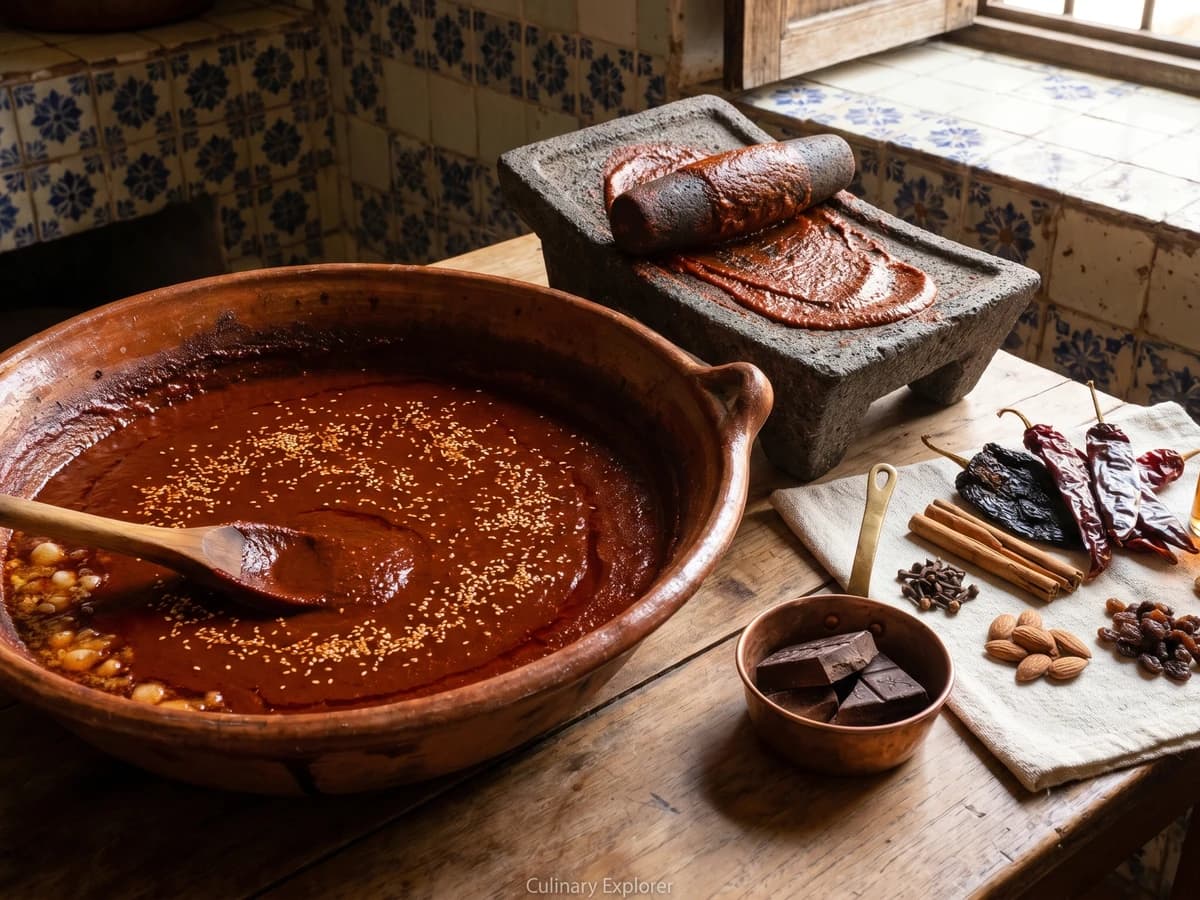
Zacatecas' wedding-table adobo, built from toasted guajillo and ancho, piloncillo, sour orange, chocolate, canela, clavo, almonds, sesame, and lard.

Chef Lupita
Puebla's convent kitchens built this adobo with ancho, guajillo, jerez, almonds, raisins, clove, and lard, a baroque marinade that stains pork loin and finishes as the sauce.